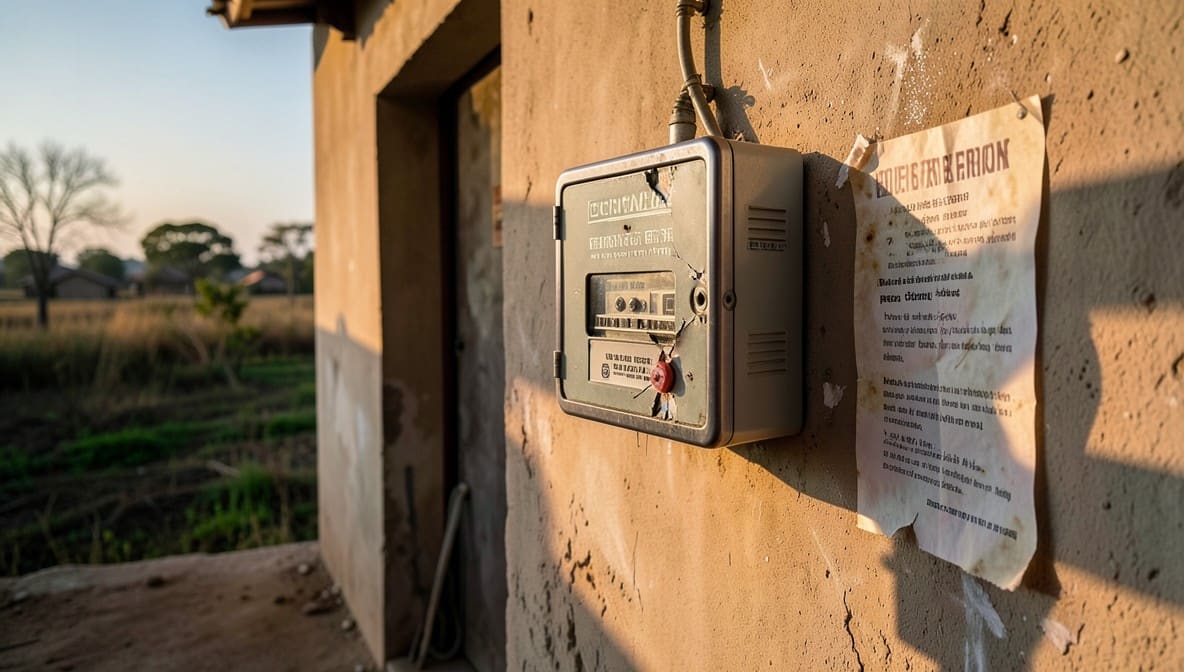
The Punjab and Haryana High Court has reaffirmed that utility providers cannot disconnect electricity without notice or due process, and that allegations of theft must be substantiated with verifiable documentary evidence - not uncorroborated oral testimony. This judgment reinforces the principle that procedural fairness is non-negotiable in public service delivery.
Background & Facts
The Dispute
The respondent, Shri Prem Nath, was a consumer of the Punjab State Electricity Board with electric connection bearing Account No. MS175. He had been regularly paying energy charges. On 20.09.1988, employees of the appellant-Board disconnected his electricity supply without serving any prior notice. The respondent filed a suit for mandatory and permanent injunction seeking restoration of the connection. The Trial Court granted the injunction, directing restoration of the supply. The Board appealed, but both the Trial Court and the First Appellate Court upheld the decree.
Key Facts
- The respondent’s electricity connection was disconnected on 20.09.1988 without any notice or opportunity to be heard.
- On 11.10.1988, Board officials allegedly returned to the respondent’s premises at 9:00 a.m., forcibly entered the meter room, broke open the meter box seals, disconnected the supply, and removed the meter.
- The respondent approached the Sub-Divisional Officer (SDO) for redressal on 12.10.1988, but received no relief.
- The Board claimed that on 10.10.1988, a Flying Squad inspection at Kapurthala revealed tampering with the meter cupboard seal, current transformer chamber seal, and two MNTS seals on the meter.
- The Board alleged that the respondent had been committing theft of electricity since 10.09.1987 and demanded payment of Rs. 1,04,592/-.
- The respondent denied all allegations, asserting that the inspection report was fabricated in retaliation for his successful court action against the Board’s prior unlawful disconnection.
- The Board’s evidence relied on the testimony of DW-1, an Assistant Electrical Engineer, who claimed to have carried sample seal impressions and compared them with the seals on site.
- Documents Ex.D1 (register entry) and Ex.D2 (site report) contained no reference to the possession or comparison of sample seal impressions.
- Post-raid consumption records showed lower energy usage than before, contradicting the claim of theft.
Procedural History
- 20.09.1988: Electricity connection disconnected without notice.
- 11.10.1988: Board officials allegedly broke into meter room and removed meter.
- 12.10.1988: Respondent approached SDO for redressal - no action taken.
- 10.10.1988: Flying Squad inspection conducted at respondent’s premises.
- 1988: Suit filed before the Court of Additional Senior Sub-Judge, Ludhiana.
- 1990: Trial Court decreed the suit, ordering restoration of connection.
- 1992: First Appellate Court dismissed the appeal, upholding the Trial Court’s decree.
- 11.07.1996: Regular Second Appeal (RSA-6-1996) admitted before the Punjab and Haryana High Court.
- 18.03.2026: Judgment pronounced by Justice Virinder Aggarwal.
The Parties' Positions
For the Appellant (Punjab State Electricity Board)
- Argued that the respondent committed theft of electricity by tampering with meter seals.
- Relied on the testimony of DW-1, who claimed to have compared seal impressions.
- Contended that the Courts below erred in disbelieving DW-1’s testimony.
- Asserted that disconnection was lawful under statutory provisions for theft.
- Claimed that the respondent’s prior litigation against the Board justified the retaliatory action.
For the Respondent (Shri Prem Nath)
- Denied all allegations of theft.
- Argued that the inspection report was fabricated after the disconnection.
- Highlighted that Ex.D1 and Ex.D2 contained no mention of seal impressions or comparison.
- Emphasized that the timing of the raid - immediately after his successful court action - indicated malice.
- Pointed out that post-raid consumption data showed reduced usage, inconsistent with theft.
- Contended that disconnection without notice violated principles of natural justice.
Relief Sought
The respondent sought restoration of the electricity connection, damages for wrongful disconnection, and costs. The Board sought reversal of the decree and confirmation of the Rs. 1,04,592/- demand. The respondent had deposited the disputed amount on 11.07.1996, subject to refund with 12% interest if the appeal failed.
The Legal Issue
The central question was whether a public utility can disconnect electricity without notice, and whether allegations of electricity theft can be sustained solely on the uncorroborated testimony of an official, when documentary evidence fails to support the claim.
Arguments Presented
For the Appellant
The appellant relied on the testimony of DW-1 to establish theft of electricity. It was argued that the Flying Squad’s inspection was conducted in accordance with procedure, and that the tampering of seals was evident from the physical condition of the meter. The Board contended that the Trial Court and First Appellate Court erred in rejecting DW-1’s testimony without valid reason. It was submitted that the absence of reference to seal impressions in Ex.D1 and Ex.D2 was not fatal, as the report was prepared retrospectively. The Board further argued that the respondent’s prior litigation created a motive for retaliation, which justified the action.
For the Respondent
The respondent countered that the Board’s actions were arbitrary and retaliatory. He emphasized that no notice was issued before disconnection, violating Section 12 of the Electricity Act, 2003 (as applicable by analogy) and principles of natural justice. He pointed out that the Board failed to produce evidence that DW-1 had obtained sample seal impressions from the Ludhiana office, as required for proper verification. The absence of any mention of seal comparison in Ex.D1 and Ex.D2 rendered DW-1’s testimony unreliable. The respondent also highlighted that the consumption data after the alleged tampering showed a decline, not an increase, undermining the theft claim.
The Court's Analysis
The Court undertook a meticulous review of the evidence and the concurrent findings of the lower courts. It emphasized that in a Regular Second Appeal under Section 41 of the Punjab Courts Act, 1918, interference is permissible only if the findings are perverse, based on no evidence, or involve a material error of law.
The Court found that the testimony of DW-1, the sole witness for the Board, was fundamentally undermined by the documentary record. The site report (Ex.D2) and register entry (Ex.D1) contained no reference to the possession of sample seal impressions or their comparison with the seals on the meter. The Court observed:
"Had DW-1 actually possessed impressions of the sample seals and compared them with the seals affixed on the meter and the cupboard, such a material fact would ordinarily have been recorded in both the aforesaid documents."
The Court further noted that DW-1 belonged to the enforcement wing stationed at Kapurthala, and there was no evidence that he had obtained the sample impressions from the Ludhiana office - a necessary procedural step. The absence of such evidence rendered the claim of verification speculative.
The Court also examined the consumption data. It observed that if the respondent had been stealing electricity by tampering with the meter, the post-rectification consumption would have shown a sharp increase. Instead, the records showed a decline, which supported the respondent’s version that no theft had occurred.
The Court also considered the timing of the raid - occurring just days after the respondent had obtained a favorable court order against the Board. The Court held:
"The possibility, as noted by both the Courts below, that the subsequent action was motivated by a sense of grievance or hostility on the part of the officials of the appellant-Board cannot be altogether ruled out."
The Court concluded that the concurrent findings of the lower courts were neither perverse nor based on no evidence. The Board had failed to discharge its burden of proof. The disconnection without notice was held to be a violation of natural justice and procedural fairness, which are fundamental to public utility operations.
The Verdict
The appeal was dismissed. The Punjab and Haryana High Court upheld the decrees of the lower courts, affirming the mandatory injunction for restoration of the electricity connection. The Board was directed to restore the connection immediately. The deposit of Rs. 1,04,592/- made by the respondent on 11.07.1996 shall be refunded by the Board within four weeks, along with interest at 12% per annum from the date of deposit until the date of refund. All interlocutory applications are extinguished.
What This Means For Similar Cases
Notice Is Mandatory Before Disconnection
- Practitioners must argue that any disconnection of essential services - electricity, water, gas - without prior notice violates Article 14 and Article 21 of the Constitution.
- Public utilities must issue written notice specifying the alleged violation, the opportunity to respond, and the consequences of non-compliance.
- Failure to comply renders the disconnection illegal, regardless of the underlying allegation.
Documentary Evidence Trumps Oral Testimony in Utility Cases
- In cases involving alleged theft of electricity or water, oral testimony by enforcement officers is insufficient without contemporaneous documentation.
- Site reports, inspection logs, seal comparison records, and consumption data must be contemporaneously prepared and preserved.
- Courts will disbelieve claims where the documentary record is silent on critical assertions - especially when those assertions are introduced only during litigation.
Retaliation Against Litigants Is a Ground for Invalidation
- Actions taken by public authorities against individuals who have successfully challenged them in court are presumed to be retaliatory unless proven otherwise.
- Practitioners should raise the doctrine of malice in law in such cases to shift the burden of proof to the authority.
- Timing of adverse action - immediately following litigation - is a material circumstance that courts must weigh heavily.