An intra-Court appeal before the High Court of Punjab & Haryana clarified that a supplementary electricity demand raised after the discovery of short billing is not barred by the two-year limitation in Section 56(2) of the Electricity Act 2003, reinforcing the principle that the limitation clock starts when the bill is first issued, not when the consumption occurred.
Background & Facts
The Dispute
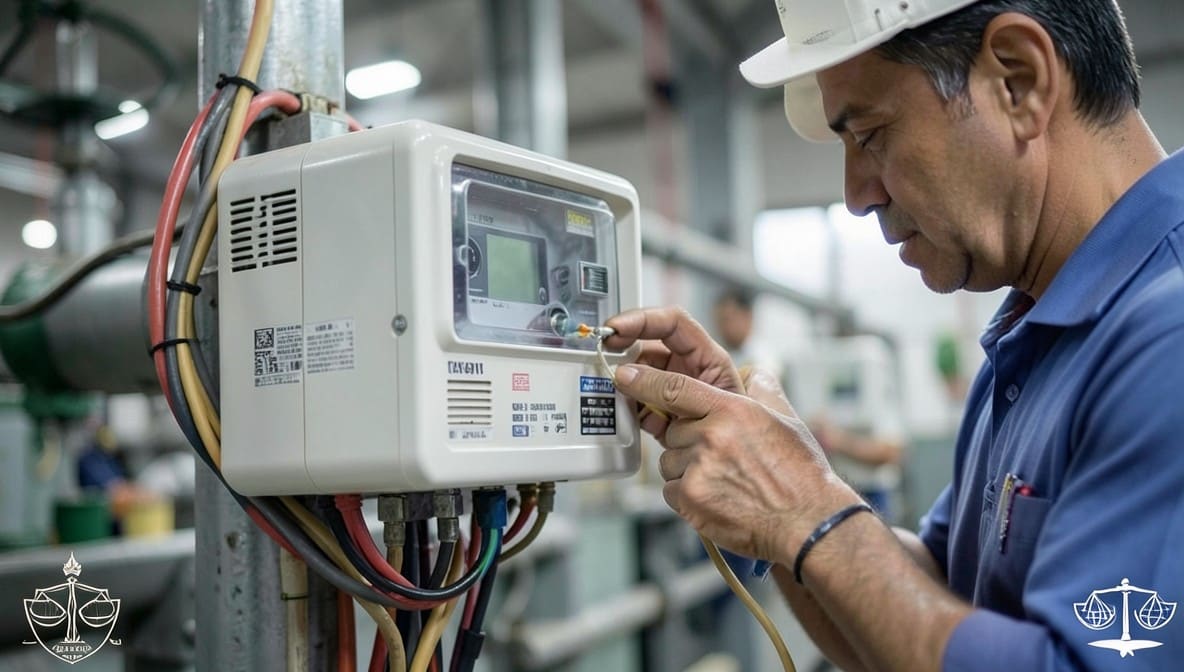
The respondent (Consumer No.2) is a non-domestic electricity consumer of Uttar Haryana Bijli Vitran Nigam Limited (UHBVN). His electricity meter was found defective and was replaced on 09.10.2012. Despite the replacement, the electricity account was not revised to reflect the corrected consumption.
Key Facts
- 09.10.2012: Defective meter replaced.
- October 2015: Internal audit uncovered a short-billing deficit of Rs. 59,195 for billing months of 2012; the amount was added to the consumer’s bill on 06.10.2015.
- 15.06.2016: Further audit covering February 2011 to October 2013 identified an additional short-billing amount of Rs. 1,67,635, which was incorporated in the subsequent bill.
- 21.07.2016: UHBVN issued a notice demanding the additional amount from the consumer.
- The consumer filed an application before the Permanent Lok Adalat for Public Utility Services (PLA) under Section 22-C of the Legal Services Authorities Act, 1987. The PLA restrained UHBVN from recovering the demand, invoking Section 56(2) of the Electricity Act, 2003.
- UHBVN challenged the PLA award by filing a writ petition. The Single Judge dismissed the writ petition on 26.10.2021.
Procedural History
- 09.10.2012 - Meter replacement.
- October 2015 - First audit discovers short-billing of Rs. 59,195.
- 06.10.2015 - First supplementary demand raised.
- 15.06.2016 - Second audit discovers additional short-billing of Rs. 1,67,635.
- 21.07.2016 - Notice of demand issued to consumer.
- Date not specified - Consumer approaches PLA under Section 22-C, PLA issues award restraining recovery (award dated 06.04.2021).
- 26.10.2021 - Single Judge of the High Court dismisses writ petition filed by UHBVN.
- 10.08.2026 - Appeal reserved under Clause X of the Letters Patent.
- 20.08.2026 - Appeal pronounced.
Parties' Positions
- Appellants (UHBVN): Argue that the demand became payable only when the bill was first raised (October 2015 and July 2016) and therefore the two-year limitation under Section 56(2) had not expired. Reliance placed on Supreme Court decisions in Assistant Engineer (D1) Ajmer Vidyut Vitran Nigam Ltd. v. Rahamatullah Khan (2020), Prem Cottex v. Uttar Haryana Bijli Vitran Nigam Ltd. (2021), K.C. Ninan v. Kerala State Electricity Board (2023) and Smt. Ridhima Miglani v. Punjab State Power Corporation Ltd. (2026).
- Respondent No.2 (Consumer): Contends that Section 56(2) bars recovery because the alleged short-billing relates to consumption that occurred more than two years before the supplementary demand, and that UHBVN failed to plead any error or mistake on its part.
Relief Sought
- Consumer: Sought a restraining order preventing UHBVN from recovering the supplementary demand, invoking the limitation provision.
- UHBVN: Sought setting aside of the PLA award and the Single Judge’s dismissal, and permission to recover the total short-billing amount of Rs. 2,26,830.
The Legal Issue
The central question was whether a supplementary electricity demand raised after the discovery of short billing is barred by the two-year limitation prescribed in Section 56(2) of the Electricity Act, 2003, or whether the limitation period commences only when the bill is first issued.
Arguments Presented
For the Appellants
The appellants submitted that the liability to pay arises at the moment the licensee quantifies the amount in a bill; consequently, the limitation period under Section 56(2) starts when the bill is first raised. They relied heavily on Supreme Court pronouncements that the phrase “first due” refers to the issuance of the bill, not the date of consumption, and that the statutory bar does not preclude a supplementary demand.
For the Respondent
The respondent argued that Section 56(2) is intended to protect consumers from recovery of amounts relating to consumption that occurred more than two years earlier, and that UHBVN had not demonstrated any error or mistake on its part. Accordingly, the supplementary demand should be treated as time-barred.
The Court's Analysis
The Court began by examining the language of Section 56(2) of the Electricity Act, 2003, focusing on the expression “first due”. It noted that the Supreme Court, in Assistant Engineer (D1) Ajmer Vidyut Vitran Nigam Ltd. v. Rahamatullah Khan (2020), held that the liability arises upon consumption but the obligation to pay crystallises when a bill quantifying the amount is raised. The Court reiterated the principle from Prem Cottex v. Uttar Haryana Bijli Vitran Nigam Ltd. (2021) that the limitation does not commence until the demand is raised, and that the statutory remedy of disconnection is the only aspect circumscribed by Section 56(2).
"The statutory expression “first due” cannot be read as “first consumed”.
The Court further cited K.C. Ninan v. Kerala State Electricity Board (2023) and Smt. Ridhima Miglani v. Punjab State Power Corporation Ltd. (2026) to underscore that the two-year limitation starts from the date of the first bill, irrespective of when the electricity was actually consumed. Applying these precedents, the Court found that the demands of Rs. 59,195 (October 2015) and Rs. 1,67,635 (July 2016) were “first due” on the dates they were raised, and therefore the limitation period had not elapsed.
The Court concluded that the Single Judge’s finding that the demand was barred was contrary to the settled Supreme Court line of authority. Consequently, the appeal was allowed.
The Verdict
The appeal is allowed. The judgment dated 26.10.2021 and the PLA award dated 06.04.2021 are set aside. Uttar Haryana Bijli Vitran Nigam Ltd. is entitled to recover the supplementary demand of Rs. 2,26,830; any amount already deposited by the consumer shall be adjusted. All pending applications, if any, are to be disposed of.
What This Means For Similar Cases
Limitation Commences on First Bill
- Practitioners must argue that the limitation under Section 56(2) starts when the licensee first issues a bill, not when the electricity is consumed.
- Drafting of demand notices should clearly state the billing date to anchor the limitation period.
Supplementary Demands Are Not Automatically Barred
- A supplementary demand, even if it relates to earlier consumption, is enforceable provided it is raised within two years of the first bill.
- Courts will look for a clear audit trail showing when the short-billing was discovered and when the bill was issued.
PLA and Consumer Forum Relief Is Not Absolute
- While a PLA may restrain recovery on the ground of limitation, such orders can be overturned if the statutory interpretation favours the licensee.
- Counsel should be prepared to cite the Supreme Court line of cases to counter PLA awards.
Practical Checklist for Utilities
- Maintain detailed audit records indicating the date of discovery of short billing.
- Issue the first supplementary bill promptly and document the issuance date.
- Ensure that any consumer notice references the statutory basis for recovery.