A landmark ruling by the Madras High Court affirms that judicially established co-ownership rights in a shared electricity service connection cannot be nullified by administrative rules restricting name inclusion or device installation. This judgment reinforces the primacy of civil rights over bureaucratic procedures in matters of essential utility access.
Background & Facts
The Dispute
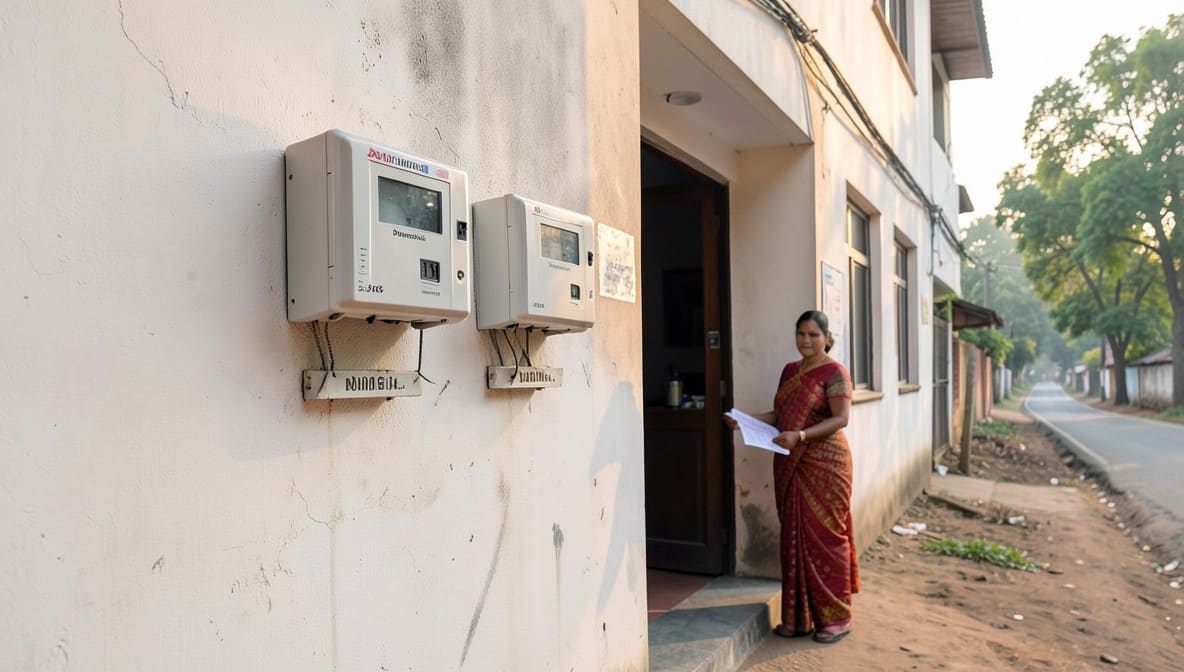
The dispute arose over Service Connection No. 197, which supplied electricity to a common well used for irrigation by multiple landowners in Agrahara Venkarai Village, Velur Taluk, Namakkal District. The plaintiffs, respondents 1 and 2, claimed a one-third share in the well and its associated electrical infrastructure, including the electric motor pump set and the changeover switch. The 5th defendant, appellant herein, held the service connection in his name alone under Tamil Nadu Electricity Board (TNEB) records, but did not dispute the plaintiffs’ ownership interest in the well.
Key Facts
- The plaintiffs’ one-third right in the common well, motor pump set, and irrigation rights was declared by a final decree in O.S. No. 139 of 2003, dated 26.04.2004.
- In late October 2006, the 5th defendant installed a bore well and compressor on his land, necessitating a changeover switch for the existing service connection.
- The TNEB installed a single changeover switch for Service Connection No. 197, which was physically located on the 5th defendant’s land.
- In response, the plaintiffs dug their own bore well and compressor in early 2007 and sought to use the existing changeover switch.
- The 5th defendant obstructed their access, claiming exclusive control over the switch.
- The plaintiffs applied to TNEB on 07.02.2007 to include their names as co-sharers in Service Connection No. 197.
- By letter dated 26.02.2007, TNEB refused the request, stating that inclusion required the written consent of the 5th defendant, who refused to provide it.
- The plaintiffs filed O.S. No. 80 of 2007 on 15.03.2007 seeking: (1) a mandatory injunction directing TNEB to include their names in the service connection, and (2) a permanent injunction restraining the 5th defendant from interfering with their use of the changeover switch.
- The trial court decreed the suit on 13.03.2009.
- The 5th defendant appealed to the Subordinate Judge, who dismissed the appeal on 28.11.2012, upholding the trial court’s decree.
- The 5th defendant filed Second Appeal No. 363 of 2014 before the Madras High Court on 08.04.2014.
Procedural History
- 26.04.2004: Final decree passed in O.S. No. 139 of 2003 recognizing plaintiffs’ one-third right in common well and associated infrastructure.
- October 2006: 5th defendant installs compressor and changeover switch on Service Connection No. 197.
- 07.02.2007: Plaintiffs apply to TNEB to include their names in Service Connection No. 197.
- 26.02.2007: TNEB responds, requiring 5th defendant’s consent.
- 15.03.2007: Plaintiffs file O.S. No. 80 of 2007.
- 13.03.2009: District Munsif-cum-Judicial Magistrate, Paramathi, decrees the suit.
- 28.11.2012: Subordinate Judge, Namakkal, dismisses appeal (A.S. No. 34 of 2009), confirming trial court decree.
- 08.04.2014: Madras High Court admits Second Appeal on substantial questions of law.
- 24.03.2026: Judgment pronounced by the Madras High Court.
The Parties' Positions
Plaintiffs/Respondents 1 & 2: Argued that their adjudicated co-ownership in the well and its infrastructure extended to the changeover switch and service connection. They sought only practical access to the existing switch, not a new connection, and were willing to bear one-third of operational costs.
5th Defendant/Appellant: Contended that since the service connection and changeover switch were registered solely in his name, he alone had the right to control access. He argued that administrative rules prohibited multiple switches or co-holder names.
TNEB/Respondents 3 - 6: Stated that their rules permitted only one changeover switch per service connection and that name changes required the existing holder’s consent. They maintained that internal arrangements between co-owners were beyond their purview.
Relief Sought
The plaintiffs sought: (1) a mandatory injunction directing TNEB to include their names as co-sharers in Service Connection No. 197, and (2) a permanent injunction restraining the 5th defendant from obstructing their use of the changeover switch. The trial court granted both reliefs.
The Legal Issue
The central question was whether adjudicated civil rights of co-ownership in a shared electricity service connection can be overridden by administrative provisions of the Tamil Nadu Electricity Supply Code that restrict name inclusion or limit the number of changeover switches per connection.
Arguments Presented
For the Appellant
The appellant argued that Service Connection No. 197 was legally registered only in his name under Clause 27(2) of the Tamil Nadu Electricity Distribution Code, 2004. He contended that the plaintiffs were not "consumers" under Section 2(g) of the Tamil Nadu Electricity Supply Code and therefore had no standing to demand inclusion in the service records. He further asserted that TNEB regulations explicitly prohibited more than one changeover switch per connection and that the switch was physically located on his land, making access by others impractical and legally impermissible.
For the Respondents
The respondents argued that the plaintiffs’ rights were not derived from administrative rules but from a final civil decree recognizing their co-ownership. They emphasized that the changeover switch was an integral component of the service connection, not a standalone asset. They contended that administrative restrictions could not nullify rights already established by a court of law, and that the plaintiffs’ request for access to the existing switch was reasonable and necessary for the enforcement of their adjudicated rights.
The Court's Analysis
The Court rejected the appellant’s narrow interpretation of "consumer" under Section 2(g) of the Tamil Nadu Electricity Supply Code. It held that the present dispute was not about the grant of a new service connection but about the enforcement of a pre-existing civil right. The Court observed that the plaintiffs’ co-ownership was not a claim under the Electricity Code but a judicially recognized property right.
"The attempt of the 5th defendant to bifurcate the service connection from its operational apparatus is legally unsustainable."
The Court emphasized that the changeover switch, being an inseparable component for the effective use of the service connection, formed part of the common property. It further held that the location of the switch on the appellant’s land did not confer exclusive control, as co-owners are entitled to reasonable access to common appurtenances.
The Court distinguished between administrative convenience and substantive rights, stating:
"Administrative provisions governing grant of service connection cannot override or dilute adjudicated civil rights."
It invoked Section 13 of the General Clauses Act, noting that statutory terms in the singular include the plural, thereby supporting the interpretation that "consumer" may encompass multiple co-owners in a shared arrangement. The Court found that the 5th defendant’s unilateral installation of the switch without notice to the plaintiffs amounted to an attempt to appropriate a common facility.
The Court concluded that denying the plaintiffs access to the changeover switch would render the earlier declaratory decree in O.S. No. 139 of 2003 illusory and unenforceable. The concurrent findings of the lower courts were upheld as legally sound and factually supported.
The Verdict
The Second Appeal was dismissed. The judgment and decree dated 28.11.2012 of the Subordinate Judge, Namakkal, confirming the trial court’s order dated 13.03.2009, were upheld. The Court directed the Tamil Nadu Electricity Board to include the names of respondents 1 and 2 as co-sharers in Service Connection No. 197 within 6 weeks. The 5th defendant was permanently restrained from obstructing their reasonable access to the existing changeover switch. Costs of Rs. 25,000 were awarded to the respondents.
What This Means For Similar Cases
Civil Rights Trump Administrative Restrictions
- Practitioners must argue that judicial decrees establishing co-ownership in utility infrastructure override restrictive administrative rules on name inclusion or device allocation.
- Administrative bodies cannot refuse to update records when a court has already recognized shared rights.
- The burden shifts to the authority to demonstrate a compelling public interest to override a civil right, not merely to cite procedural rules.
Access to Common Appurtenances Is a Right, Not a Privilege
- Co-owners of shared infrastructure (wells, pumps, transformers, switches) are entitled to reasonable access to all integral components, regardless of physical location.
- Obstruction by one co-owner, even if the apparatus is on their land, constitutes a violation of co-ownership rights.
- Courts will not permit a party to benefit from their own wrongful act of exclusive control over a shared asset.
Practical Implications for Utility Disputes
- Landowners with shared irrigation systems should seek declaratory decrees early to establish rights before administrative disputes arise.
- Applications for service connection modifications should be accompanied by certified copies of civil decrees to preempt refusals.
- Electricity Boards must be directed to comply with court orders, not administrative manuals, when rights are judicially established.