Topic

departmental enquiry

A departmental enquiry in Indian law is an internal administrative proceeding against a government employee for alleged misconduct, governed by service rules like the CCS (CCA) Rules, 1965, and principles of natural justice.

41 articlesLatest August 2026
Ajay Kumar Chaudhary Precedent | Indefinite Departmental Suspension Without Timely Enquiry Illegal: MP HC Directs 4-Week Review
Case Law Analysis
|Madhya Pradesh High Court

Ajay Kumar Chaudhary Precedent | Indefinite Departmental Suspension Without Timely Enquiry Illegal: MP HC Directs 4-Week Review

MP High Court reinforces that prolonged suspension without concluding departmental enquiry violates natural justice, relying on the Supreme Court's Ajay Kumar Chaudhary judgment. The court directed expeditious disposal of the suspension review within four weeks, setting a critical timeline for service law compliance affecting government employees.

Gross Misconduct in CRPF | Repeated Absenteeism and On-Duty Liquor Consumption Justify Removal from Service: Bombay HC Aurangabad
Case Law Analysis
|Bombay High Court

Gross Misconduct in CRPF | Repeated Absenteeism and On-Duty Liquor Consumption Justify Removal from Service: Bombay HC Aurangabad

The Bombay High Court upholds the removal of a CRPF constable for chronic absenteeism and being found under the influence of liquor while on duty, affirming that such conduct constitutes gross misconduct under service law. This ruling reinforces that disciplinary authorities may impose major penalties without requiring proof of operational harm, as the breach of discipline itself undermines institutional integrity.

Departmental Enquiry Post-Retirement | No Continuation Without Explicit Service Regulation Provision: MP HC
Case Law Analysis
|Madhya Pradesh High Court

Departmental Enquiry Post-Retirement | No Continuation Without Explicit Service Regulation Provision: MP HC

MP High Court rules that departmental enquiries cannot proceed against retired employees unless service regulations explicitly permit post-retirement continuation. The ruling quashes a charge-sheet issued after retirement, emphasizing that employer-employee relationship terminates upon retirement in the absence of such provisions, while allowing alternative legal action for alleged misconduct.

Criminal Acquittal Does Not Bar Departmental Action | Service Law: MP HC Jabalpur
Case Law Analysis
|Madhya Pradesh High Court

Criminal Acquittal Does Not Bar Departmental Action | Service Law: MP HC Jabalpur

The Madhya Pradesh High Court has held that even when a government employee is acquitted in a criminal case, the departmental enquiry can proceed independently on the same facts, as the standards of proof differ - criminal acquittal under beyond reasonable doubt does not equate to exoneration under preponderance of probabilities. This reaffirms that public service discipline remains a separate sphere, affecting all state employees facing parallel proceedings.

Natural Justice in Departmental Enquiries | Oral Evidence Mandatory for Punishment Under Service Law: Bombay HC
|Bombay High Court

Natural Justice in Departmental Enquiries | Oral Evidence Mandatory for Punishment Under Service Law: Bombay HC

Bombay High Court quashed MSEDCL’s punishment order, ruling that documentary evidence alone is insufficient in departmental enquiries without examining witnesses or allowing cross-examination. The judgment reinforces that natural justice principles require oral proof for disciplinary actions, impacting service law proceedings across public sector employment.

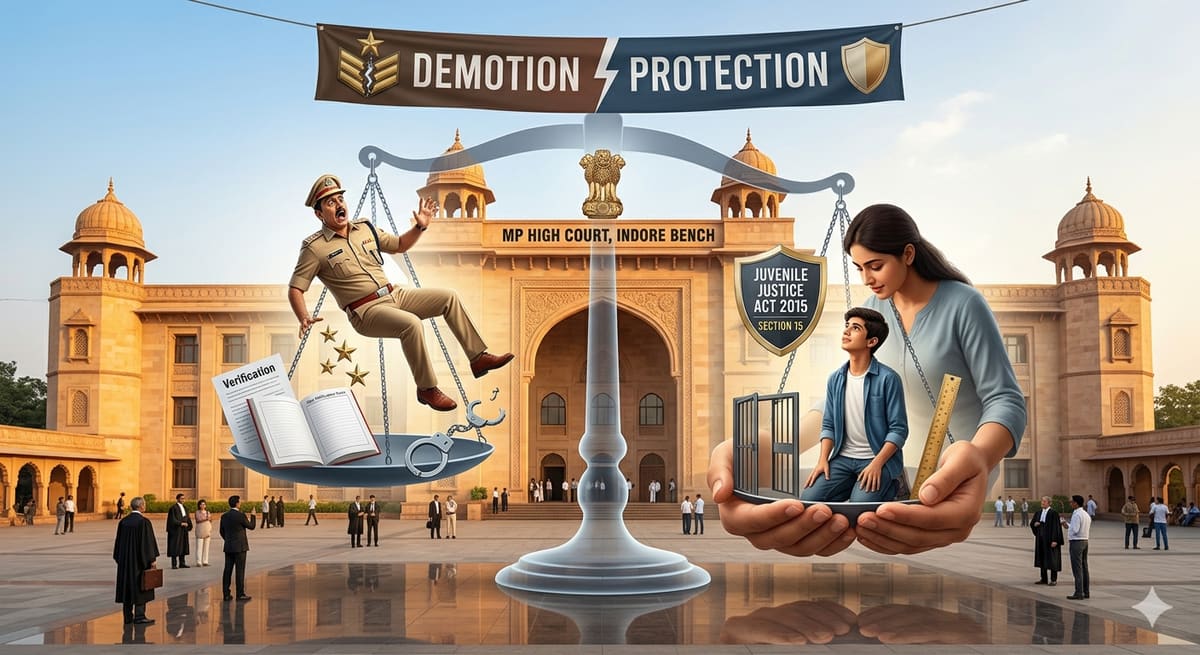
Juvenile Justice Act 2015 Section 15 | SHO Liable for Demotion for Failing to Verify Age & Protect Juvenile in Police Custody : MP HC Indore
Case Law Analysis
|Madhya Pradesh High Court

Juvenile Justice Act 2015 Section 15 | SHO Liable for Demotion for Failing to Verify Age & Protect Juvenile in Police Custody : MP HC Indore

The Madhya Pradesh High Court has upheld the demotion of a Station House Officer for gross supervisory negligence in detaining a 16-year-old juvenile without verifying his age or transferring him to a juvenile justice board, violating mandatory safeguards under Section 15 of the Juvenile Justice Act, 2015. This ruling establishes that police officers bear direct accountability for procedural failures affecting juveniles - even when subordinates commit the immediate violations.

Rule 23 MP Civil Services (Conduct) Rules | On-Duty Intoxication Justifies Termination Without Proving Performance Impact : MP HC Jabalpur
Case Law Analysis
|Madhya Pradesh High Court

Rule 23 MP Civil Services (Conduct) Rules | On-Duty Intoxication Justifies Termination Without Proving Performance Impact : MP HC Jabalpur

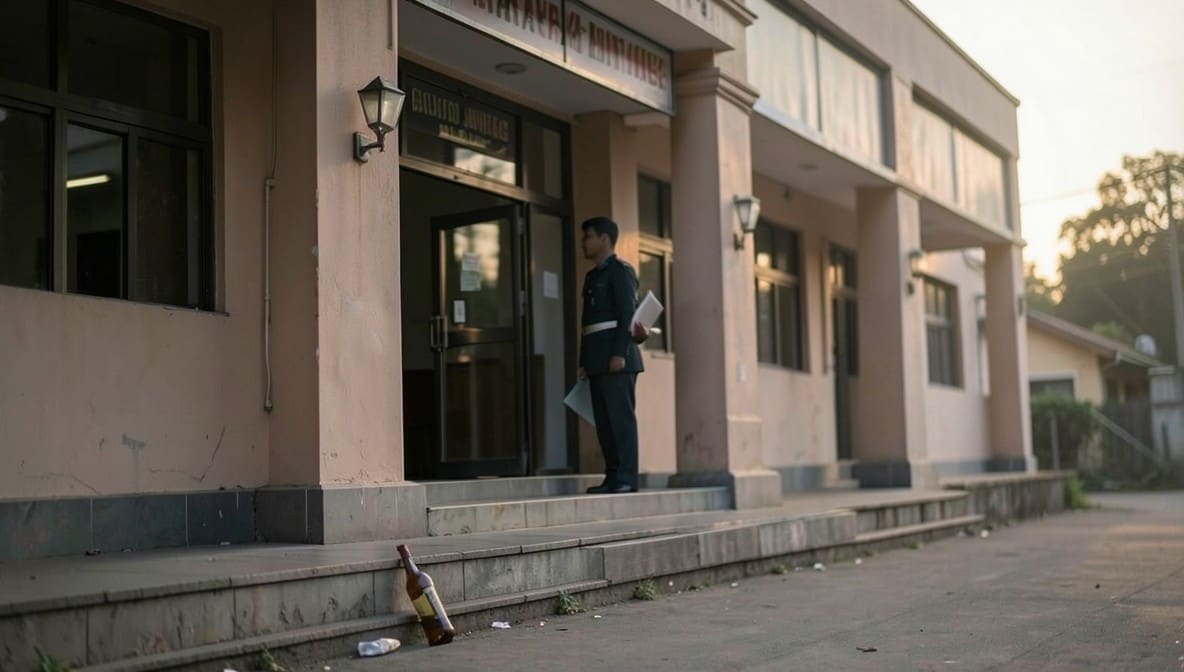
The Madhya Pradesh High Court has ruled that government servants found under the influence of liquor while on duty can be terminated without the department needing to prove their work performance was impaired. This establishes Rule 23 as a strict conduct standard, not a performance-based one, significantly raising the bar for discipline in public service and affecting all state employees in Madhya Pradesh.

Rule 16(i)(b) MP Civil Services Rules | Disciplinary Authority Must Form Opinion on Enquiry Necessity Before Imposing Minor Penalty : MP HC
Case Law Analysis
|Madhya Pradesh High Court

Rule 16(i)(b) MP Civil Services Rules | Disciplinary Authority Must Form Opinion on Enquiry Necessity Before Imposing Minor Penalty : MP HC

Madhya Pradesh High Court quashes minor penalty orders for violating Rule 16(i)(b) of the MP Civil Services Rules, 1966, holding that disciplinary authorities must explicitly record an opinion on whether an enquiry is necessary before imposing minor penalties. The ruling reinforces procedural safeguards in departmental proceedings, impacting all government employees in Madhya Pradesh.

Natural Justice in Departmental Enquiries | Absence of Delinquent Cannot Shift Burden of Proof: Rajasthan HC
Case Law Analysis
|Rajasthan High Court

Natural Justice in Departmental Enquiries | Absence of Delinquent Cannot Shift Burden of Proof: Rajasthan HC

Rajasthan High Court rules that departmental enquiries must strictly adhere to principles of natural justice, even if the delinquent is absent. The department cannot rely on unverified documents to prove charges, and procedural lapses render the enquiry void. The ruling reinforces that the burden of proof remains with the department, protecting employees from arbitrary dismissals.

G.O.Ms.No.91 | Departmental Enquiry Must Conclude Within Two Months; Four-Year Delay Violates Article 21 and Renders Suspension Invalid : Andhra Pradesh HC
Case Law Analysis
|Andhra Pradesh High Court

G.O.Ms.No.91 | Departmental Enquiry Must Conclude Within Two Months; Four-Year Delay Violates Article 21 and Renders Suspension Invalid : Andhra Pradesh HC

The Andhra Pradesh High Court has ruled that failure to conclude a departmental enquiry within the mandatory two-month window under G.O.Ms.No.91 violates the right to speedy justice under Article 21, rendering any prolonged suspension unlawful unless supported by a separate, independent order. This sets a binding standard for all state departments conducting disciplinary proceedings against public employees in Andhra Pradesh.