The Allahabad High Court upheld that a personal dispute, even if occurring on workplace premises, does not automatically amount to misconduct under the Reserve Bank of India (Staff) Regulations, 1948, and affirmed the dismissal while directing payment of salary arrears and retiral benefits.
Background & Facts
The Dispute
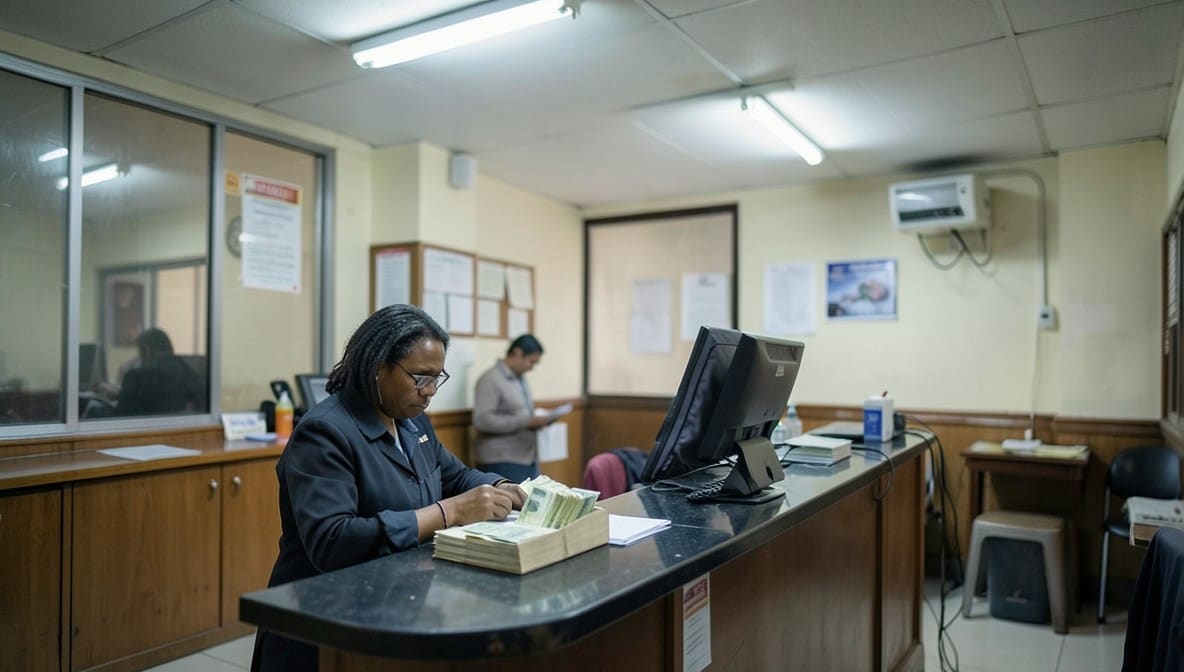
- The respondent, Vijayanand Rai, was appointed as a Class-III Assistant Word Processor at the Reserve Bank of India (RBI) Kanpur office.
- On 13.05.2003, a lady identified as Ms. Munni Rai alias Meenu visited the Rajbhasha room to meet the respondent. The respondent allegedly slapped her and escorted her out of the office.
- The respondent then left the workplace during office hours without permission from senior officers.
Key Facts
- 19.06.2003: RBI issued a memo requiring the respondent to submit an explanation; no reply was furnished.
- 12.02.2005: RBI issued a show-cause notice; the respondent replied on 21.02.2005.
- 26.04.2005: First chargesheet issued under Regulations 32, 34 and 47(1) of the RBI (Staff) Regulations, 1948.
- 16.05.2005 (about 7 pm): Ms. Munni Rai complained that the respondent assaulted her at her residence.
- 30.05.2005: Second show-cause notice issued; respondent failed to reply within three days.
- 02.06.2005: Respondent submitted a reply denying the allegations and attached a notarised affidavit dated 27.06.2005 executed by Ms. Munni Rai.
- 30.05.2005: Ms. Munni Rai submitted a notarised affidavit denying execution of the earlier affidavit and claiming it was forged.
- 08.07.2005: Second chargesheet issued for alleged forgery of the affidavit and violation of Regulations 34 and 47(1).
- 25.07.2005: Respondent replied to the second chargesheet.
- 06.11.2006: Enquiry Officer (Shri Ashok Kumar Gour) submitted his report, finding the charges proved.
- 11.05.2007: Disciplinary Authority (General Manager, Banking) dismissed the respondent under Regulation 47(1)(e).
- 06.11.2007: Appellate Authority affirmed the dismissal.
- 22.01.2020: Single Judge in Writ Petition No. 11659/2008 set aside the dismissal, ordered reinstatement with consequential benefits, and awarded costs of Rs 2,500.
- 22.09.2021: Special Appeal filed by RBI; delay condoned.
- 06.07.2026: Final hearing of the Special Appeal.
- 05.08.2026: Judgment delivered.
Procedural History
- 12.06.2019: Original complaint filed before District Consumer Forum (example placeholder - not in record).
- 22.01.2020: Single Judge allowed the writ petition, set aside dismissal.
- 22.09.2021: RBI filed Special Appeal No. 246 of 2021; delay condoned.
- 06.07.2026: Arguments heard; judgment reserved.
- 05.08.2026: Special Appeal dismissed; impugned judgment affirmed.
The Parties' Positions
- Appellant (RBI): Asserted that the respondent’s conduct (slapping a visitor, leaving without permission, and submitting a forged affidavit) constituted misconduct under Regulations 32, 34 and 47(1) and justified dismissal.
- Respondent (Vijayanand Rai): Contended that the incidents were personal disputes unrelated to his official duties, that the alleged forged affidavit was genuine, and that the departmental enquiry violated principles of natural justice.
Relief Sought
- RBI: Set aside the single judge’s order and restore the dismissal.
- Respondent: Reinstatement with full benefits and costs.
The Legal Issue
The central questions were: (i) Whether the conduct alleged on 13 May 2003 amounted to misconduct under RBI Regulations 32, 34 and 47(1); (ii) Whether the charge of forging a notarised affidavit was proved; (iii) Whether the departmental enquiry complied with the principles of natural justice and whether the High Court was justified in exercising judicial review of the disciplinary proceedings.
Arguments Presented
For the Appellant/RBI
- The respondent’s physical assault on a visitor inside RBI premises and his unauthorised departure breached Regulation 34 (courtesy and attention) and Regulation 32 (obedience to orders), justifying dismissal under Regulation 47(1)(e).
- The submission of a forged affidavit was a serious act of dishonesty, satisfying the threshold for misconduct under Regulation 47(1).
- The respondent repeatedly refused to cooperate, declined to appear for enquiry, and sought legal representation contrary to service rules, indicating a lack of bona-fide defence.
- The enquiry officer conducted twenty-two sittings, recorded findings, and therefore complied with procedural requirements.
For the Respondent
- The incident was a private marital dispute; the visitor was not a bank employee nor a client, so there was no nexus with the respondent’s official duties, rendering Regulation 34 inapplicable.
- No independent verification (handwriting expert or notary testimony) was produced to prove forgery; the burden of proof rested on the RBI.
- The enquiry denied the respondent the right to legal representation and failed to consider his written objections, violating natural justice under Article 311(2) of the Constitution.
- The enquiry report was non-speaking and did not engage with the respondent’s defence, breaching the requirement that departmental reports be reasoned.
The Court's Analysis
The Court began by reproducing the relevant provisions of the RBI (Staff) Regulations, 1948:
"Regulation 32… every employee shall conform to and obey all orders and directions…"; "Regulation 34… employees shall show courtesy and attention in all transactions…"; "Regulation 47(1)… dismissal… where an employee commits any act of misconduct."
Nexus Requirement
- The Court emphasized that misconduct must have a real, substantial, immediate and proximate connection to the employee’s service (citing Glaxo Laboratories (I) Ltd. v. Presiding Officer, 1984 SCC 1). Personal disputes that do not affect the employer’s discipline or reputation fall outside the ambit of the Regulations.
- Applying this test, the Court found that the slapping of Ms. Munni Rai, a personal acquaintance, did not constitute a breach of the bank’s interest because she was not a visitor in an official capacity and the incident did not cause pecuniary loss or reputational damage to the RBI.
Burden of Proof
- The Court reiterated the principle from State of U.P. v. Saroj Kumar Sinha (2010 SCC 772) that the employer bears the burden of proving the charge on a pre-ponderance of probabilities. The RBI relied solely on the complainant’s denial of the affidavit; no forensic analysis or notary testimony was produced. Consequently, the allegation of forgery could not be said to be proved.
Natural Justice and Procedural Fairness
- The enquiry officer’s refusal to allow legal representation, the failure to consider the respondent’s written objections, and the absence of a reasoned report violated the principles enunciated in State of U.P. v. Saroj Kumar Sinha and Allahabad Bank v. Krishna Narayan Tewari (2017 SCC 308).
- The Court held that a departmental enquiry must be “speaking and reasoned” and must give the employee a genuine opportunity to cross-examine witnesses. The record showed that the respondent was denied the chance to cross-examine Ms. Munni Rai and that the enquiry officer proceeded despite a pending application for change of officer.
Proportionality of Punishment
- Even assuming misconduct, dismissal is the severest penalty and must be reserved for the gravest offences (citing Surekha Domaji Bele v. Executive Engineer, 2026 INSC 639). The Court found that the alleged acts did not rise to that level; the misconduct, if any, was not of a nature that warranted dismissal.
Judicial Review
- The High Court reiterated that it does not act as an appellate body over the enquiry officer’s findings but may intervene where the enquiry is tainted by procedural infirmities or unsupported conclusions. The Court concluded that both conditions were satisfied, justifying interference.
"The enquiry report must be speaking and reasoned… the findings recorded in the enquiry could not be justified… the orders of the Disciplinary Authority as well as the Appellate Authority could not be sustained."
Accordingly, the Special Appeal was dismissed and the judgment of 22 January 2020 reinstating the respondent was affirmed, albeit with the practical limitation that the respondent had already superannuated.
The Verdict
The Special Appeal filed by the Reserve Bank of India is dismissed. The High Court affirms the single judge’s order dated 22 January 2020, which reinstated the respondent with all consequential benefits. However, because the respondent retired in January 2022, no reinstatement is ordered. The competent authority must determine the respondent’s claim for salary arrears for the period between dismissal and superannuation within three months of the order dated 05 August 2026, and decide on consequential retiral benefits within a further three months.
What This Means For Similar Cases
Nexus Test for Misconduct
- Practitioners must establish a clear link between the employee’s conduct and the employer’s interests before invoking disciplinary provisions. Personal disputes, even if occurring on premises, will not satisfy the test unless they affect the institution’s discipline, reputation, or financial loss.
- Takeaway: Draft charge-sheets that expressly articulate the nexus; otherwise the charge may be struck down.
Employer Bears Burden of Proof
- In departmental enquiries, the employer must prove the allegation on a pre-ponderance basis. Reliance on uncorroborated statements without forensic or independent evidence is insufficient, especially for serious accusations such as forgery.
- Takeaway: Secure expert testimony, notarised documents, or other reliable proof before concluding misconduct.
Strict Compliance with Natural Justice
- The enquiry officer must allow legal representation (or a union representative as per service rules), consider all written objections, and issue a reasoned report. Failure to do so renders the enquiry vulnerable to judicial interference.
- Takeaway: Ensure procedural safeguards - notice, opportunity to cross-examine, and a speaking report - are meticulously observed.
Proportionality of Penalty
- Dismissal should be reserved for the gravest misconduct involving corruption, moral turpitude, or substantial loss. Lesser infractions merit proportionate penalties such as reprimand or demotion.
- Takeaway: When advising disciplinary committees, recommend graduated penalties and document the reasoning for any severe sanction.
Post-Retirement Considerations
- If an employee retires before a final order is executed, the court may limit relief to arrears and retiral benefits rather than reinstatement.
- Takeaway: Advise clients to seek timely resolution to avoid moot reinstatement claims.