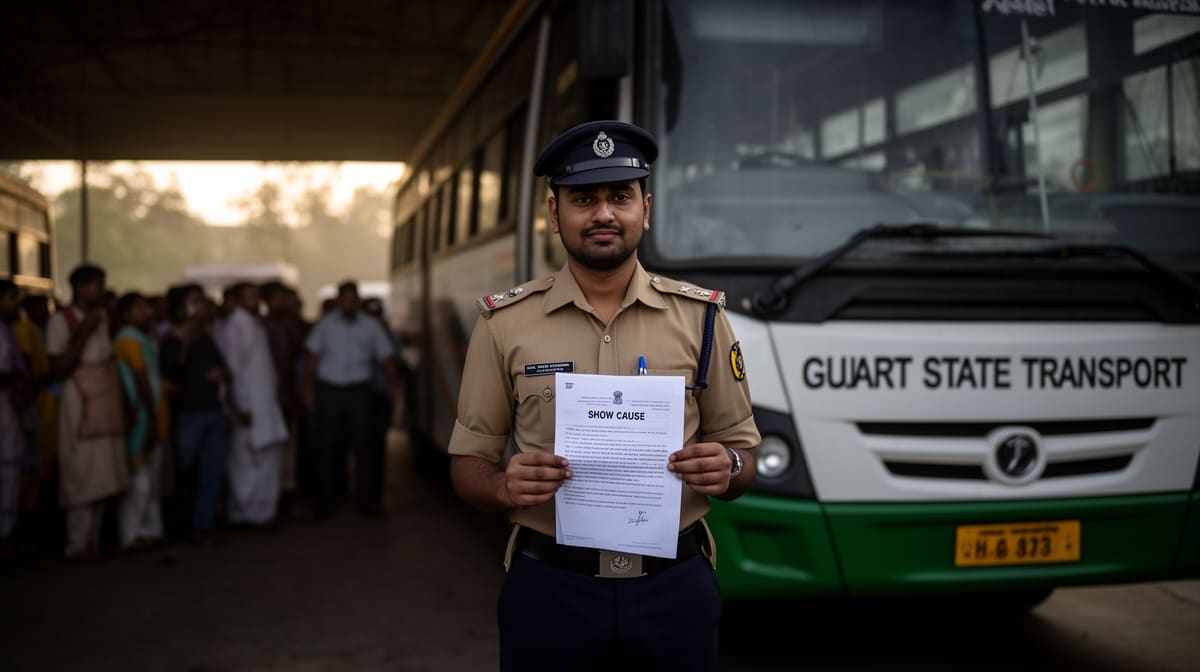
The Bombay High Court has affirmed that persistent absenteeism and consumption of liquor while on duty constitute gross misconduct warranting removal from service in a disciplined force like the CRPF. The judgment underscores the non-negotiable nature of discipline in central armed police forces and the limited scope of judicial interference in departmental proceedings where due process is followed.
Background & Facts
The Dispute
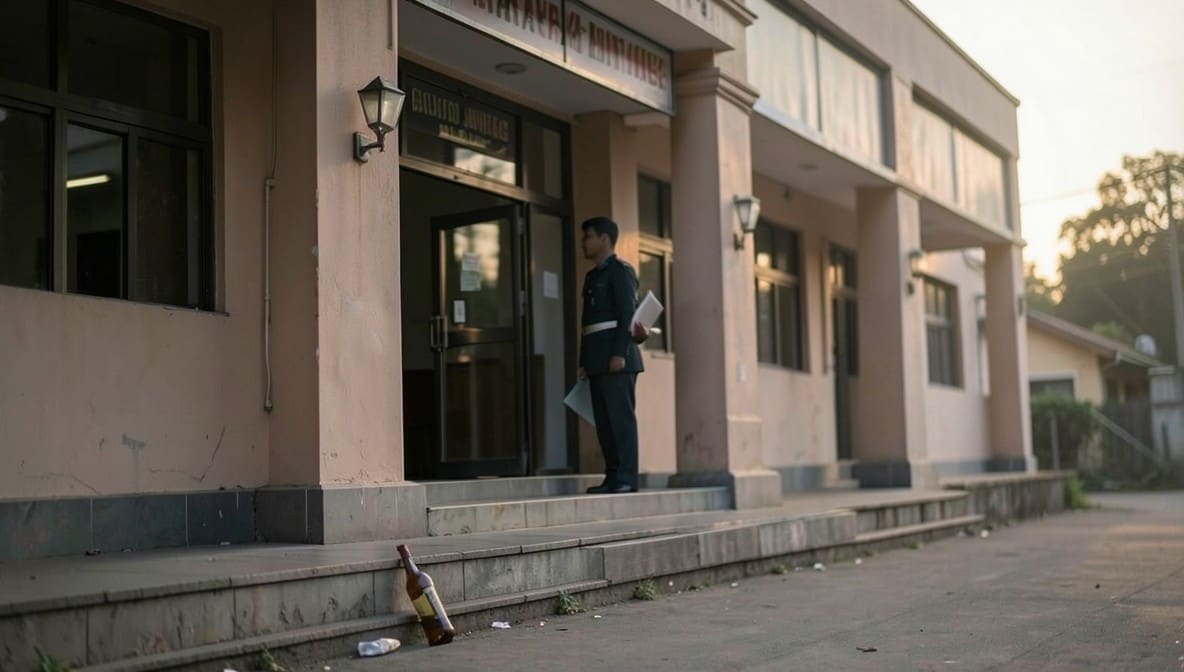
The petitioner, Vikas s/o Dagdu Kedar, was appointed as a Constable in the Central Reserve Police Force (CRPF) on 01.06.2004. On 24.01.2016, while on Quarter Guard duty, he was found missing from his post. He was later located 11 miles away from the battalion, under the influence of liquor. His conduct triggered a disciplinary proceeding for gross misconduct, including unauthorized absence and consumption of alcohol during duty hours.
Key Facts
- The petitioner was appointed as Constable on 01.06.2004
- On 24.01.2016, he was found intoxicated and absent from duty
- A preliminary enquiry was initiated on 29.01.2016
- Departmental enquiry commenced on 17.02.2016
- The petitioner was absent from 03.03.2016 to 01.04.2016 during the enquiry
- On 31.05.2016, he was granted 30 days medical rest, ending 29.06.2016
- On 11.07.2016, he requested 9 days casual leave for his sister’s marriage, ending 20.07.2016
- He failed to report for duty on 21.07.2016 despite multiple notices
- The initial departmental enquiry proceeded ex-parte due to his non-cooperation
- The Enquiry Officer submitted the report on 20.09.2016
- Punishment of removal was imposed on 24.10.2016
- First Appellate Authority set aside the order on 27.04.2017 and ordered a de-novo enquiry
- A new Enquiry Officer was appointed and directed the petitioner to appear on 24.06.2017
- The petitioner failed to appear; CRPF personnel were deputed to produce him on 26.08.2017
- On 25.08.2017, he was found heavily intoxicated and taken to hospital
- He left the hospital without permission on 25.08.2017, leading to an FIR on 04.09.2017
- He reported for duty on 13.09.2017, but was again referred to hospital for alcohol dependence syndrome
- On 06.11.2017, he submitted a written admission of charges citing domestic issues
- The enquiry report was served on 23.12.2017
- Punishment of removal was imposed on 31.01.2018
- First Appeal dismissed on 28.06.2018
- Second Appeal dismissed on 25.10.2018
- Writ Petition filed on 08.06.2019
- Judgment reserved on 08.06.2026, pronounced on 03.07.2026
Procedural History
- 01.06.2004: Appointment as Constable, CRPF
- 24.01.2016: Found intoxicated and absent from duty
- 29.01.2016: Preliminary enquiry ordered
- 17.02.2016: Departmental enquiry commenced
- 03.03.2016 - 01.04.2016: Petitioner absent during enquiry
- 31.05.2016 - 29.06.2016: Medical rest granted
- 11.07.2016 - 20.07.2016: Casual leave granted
- 21.07.2016: Failed to report for duty
- 20.09.2016: Ex-parte enquiry report submitted
- 24.10.2016: Punishment of removal imposed
- 27.04.2017: First Appellate Authority set aside punishment and ordered de-novo enquiry
- 24.06.2017: New Enquiry Officer directed petitioner to appear
- 25.08.2017: Petitioner found intoxicated; FIR lodged on 04.09.2017
- 13.09.2017: Petitioner reported for duty, referred to hospital
- 06.11.2017: Petitioner admitted charges in writing
- 23.12.2017: Enquiry report served
- 31.01.2018: Punishment of removal re-imposed
- 28.06.2018: First Appeal dismissed
- 25.10.2018: Second Appeal dismissed
- 08.06.2019: Writ Petition filed
- 03.07.2026: Judgment pronounced
The Parties' Positions
For the Petitioner
The petitioner contended that the departmental proceedings were vitiated by lack of fair opportunity, that the charges were not substantiated by evidence, and that the punishment of removal was grossly disproportionate. He relied on Union of India v. Giriraj Sharma, S. Dhanasekaran v. Commandant, and Union of India v. Suresh Kumar Singh to argue that minor lapses should not attract removal.
For the Respondents
The respondents argued that the petitioner’s conduct was not isolated but persistent, involving repeated absenteeism and intoxication on duty. They emphasized that the de-novo enquiry provided full opportunity, and the petitioner himself admitted the charges. They relied on Union of India v. Constable Sunil Kumar (19.01.2023) to assert that such misconduct in a disciplined force justifies removal.
Relief Sought
The petitioner sought quashing of the orders dated 31.01.2018, 28.06.2018, and 25.10.2018, reinstatement with full back wages and benefits, and a direction to treat his service as continuous.
The Legal Issue
The central question was whether repeated absenteeism and consumption of liquor on duty by a CRPF constable, coupled with deliberate non-cooperation in departmental proceedings and subsequent admission of guilt, justifies the punishment of removal from service under service law principles.
Arguments Presented
For the Petitioner
The petitioner’s counsel argued that the initial ex-parte enquiry violated principles of natural justice, and although a de-novo enquiry was ordered, the petitioner’s absence was due to medical conditions, not wilful defiance. He contended that the punishment was disproportionate to the alleged misconduct, citing Union of India v. Giriraj Sharma to argue that removal should be reserved for the most serious cases. He further claimed that the disciplinary authority failed to consider mitigating factors such as domestic stress, which the petitioner had disclosed in writing.
For the Respondent
The respondents countered that the petitioner’s conduct was not merely negligent but demonstrated a pattern of indiscipline over months. They emphasized that the de-novo enquiry was conducted with full procedural safeguards, including multiple opportunities to appear, submission of documents, and a written admission of guilt. The counsel stressed that CRPF, as a disciplined force, cannot tolerate conduct that undermines operational integrity and public trust. The judgment in Union of India v. Constable Sunil Kumar was cited to affirm that repeated violations of discipline, especially involving alcohol, warrant removal.
The Court's Analysis
The Court undertook a meticulous review of the entire disciplinary record and found that the petitioner’s conduct was neither isolated nor inadvertent. The initial ex-parte enquiry, while procedurally flawed, was set aside by the First Appellate Authority on 27.04.2017, and a fresh enquiry was ordered with strict adherence to natural justice. The second Enquiry Officer provided multiple opportunities for the petitioner to participate, including directing him to appear on 24.06.2017, arranging for his physical production on 26.08.2017, and granting him time to submit evidence and witnesses.
"The petitioner admitted the charges framed against him... In short, in both the departmental enquiries, the Enquiry Officer found that the petitioner is guilty of gross misconduct as the petitioner remained absent from duty on numerous occasions and he was also found under the influence of liquor on several occasions."
The Court noted that the petitioner’s admission on 06.11.2017, even if made under personal distress, was a clear acknowledgment of guilt. The Court held that such admissions, particularly in a service proceeding, carry significant weight and cannot be disregarded merely because they were made under emotional duress.
The Court further emphasized that the CRPF, as a paramilitary force, operates under strict discipline. The presence of intoxicated personnel on duty poses a direct threat to operational readiness and public safety. The Court rejected the argument that removal was disproportionate, observing that the petitioner’s conduct was not a single lapse but a sustained pattern of defiance.
The Court also distinguished the precedents cited by the petitioner, noting that Giriraj Sharma and Dhanasekaran involved isolated incidents or procedural irregularities not comparable to the petitioner’s repeated and deliberate non-compliance. The judgment in Union of India v. Constable Sunil Kumar was applied to affirm that removal is a valid and proportionate punishment for such conduct.
The Verdict
The writ petition was dismissed. The Court upheld the order of removal from service dated 31.01.2018, confirmed by the First Appellate Authority on 28.06.2018 and the Second Appellate Authority on 25.10.2018. The petitioner’s service was terminated with effect from 31.01.2018, and no back wages or reinstatement were ordered. The Court found no merit in the allegations of procedural unfairness or disproportionality.
What This Means For Similar Cases
Disciplinary Admissions Are Binding
- A written admission of misconduct during a departmental enquiry, even if made under personal stress, constitutes conclusive evidence of guilt unless retracted with credible justification
- Practitioners must advise clients that admissions in service proceedings are not easily withdrawn and carry significant legal weight
Repeated Absenteeism + Intoxication = Grounds for Removal
- In central armed police forces, repeated absenteeism combined with consumption of alcohol on duty constitutes gross misconduct warranting removal, irrespective of prior service record
- Single incidents may attract lesser penalties; persistent conduct justifies termination
Judicial Restraint in Service Matters
- Courts will not interfere with concurrent findings of fact in departmental proceedings unless there is patent illegality or violation of natural justice
- The availability of a de-novo enquiry cures prior procedural defects, making judicial intervention unwarranted
- The burden shifts to the employee to demonstrate that the second proceeding was unfair - mere absence without valid excuse will not suffice