The Punjab and Haryana High Court has affirmed that distribution licensees are strictly liable for electrocution injuries to children, regardless of contributory negligence or policy-based compensation caps. In a landmark ruling, the Court awarded over Rs.99 lakh in comprehensive compensation to a six-year-old girl who lost her right arm, emphasizing that humanitarian policies cannot override constitutional rights to life and dignity under Article 21.
Background & Facts
The Dispute
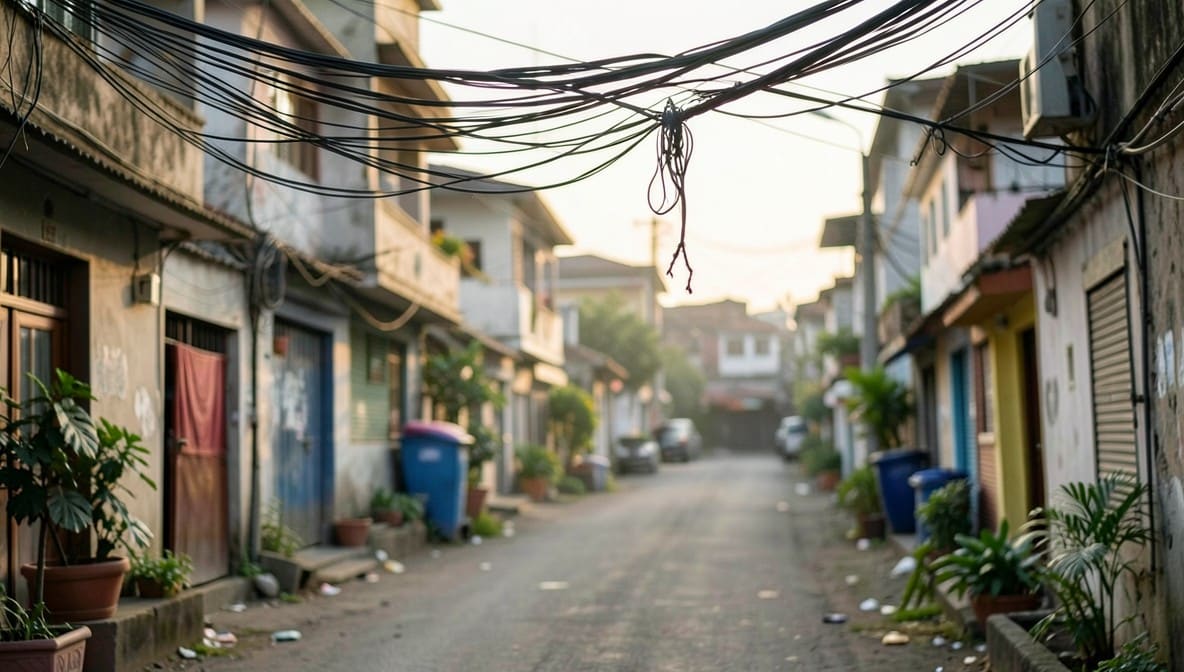
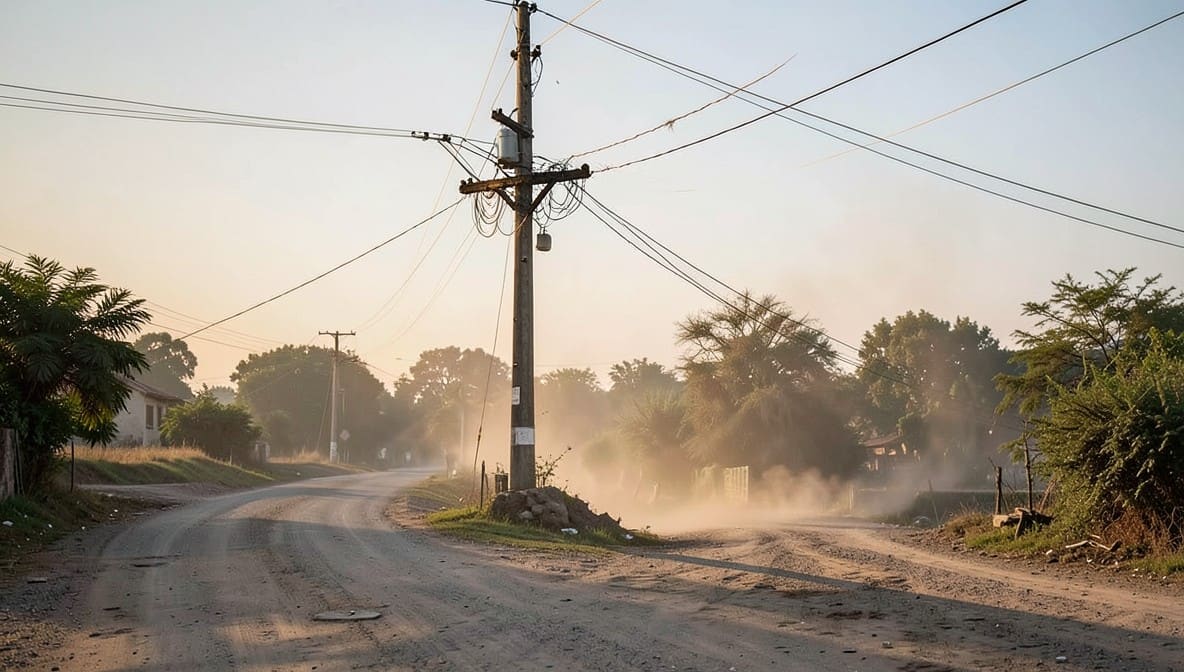
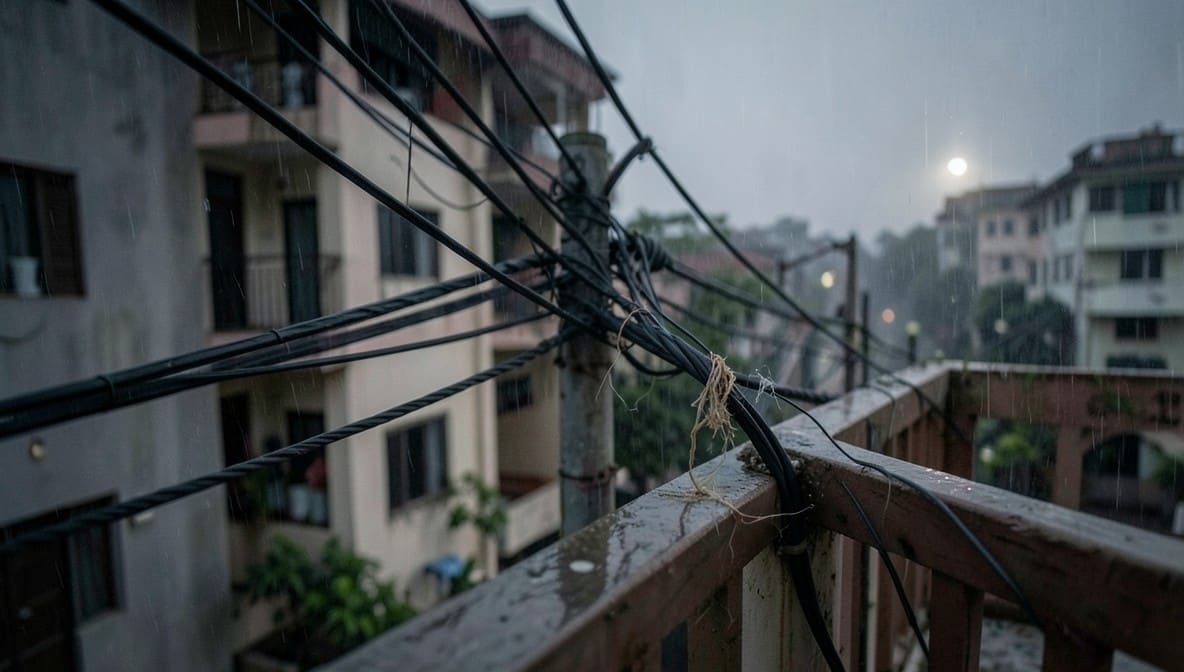
The petitioner, Anshu, a six-year-old girl residing in Mahendragarh, Haryana, suffered catastrophic injuries on 25.01.2022 when she came into contact with an 11 kV high tension (HT) electric line running perilously close to the balcony of her home. The line, operated and maintained by respondent No.3, Dakshin Haryana Bijli Vitran Nigam Ltd. (Nigam), was inadequately insulated and had deteriorated due to weathering. Despite repeated requests by her father to relocate the line, no action was taken. The line was positioned so close to the house that it nearly touched the grill, creating an obvious hazard.
Key Facts
- The incident occurred on 25.01.2022 at approximately 3:00 p.m. while the petitioner was playing on the terrace.
- She suffered severe burns and was immediately rushed to Soni Devi Hospital, Neemrana, and later transferred to PGIMER, Chandigarh on 27.01.2022.
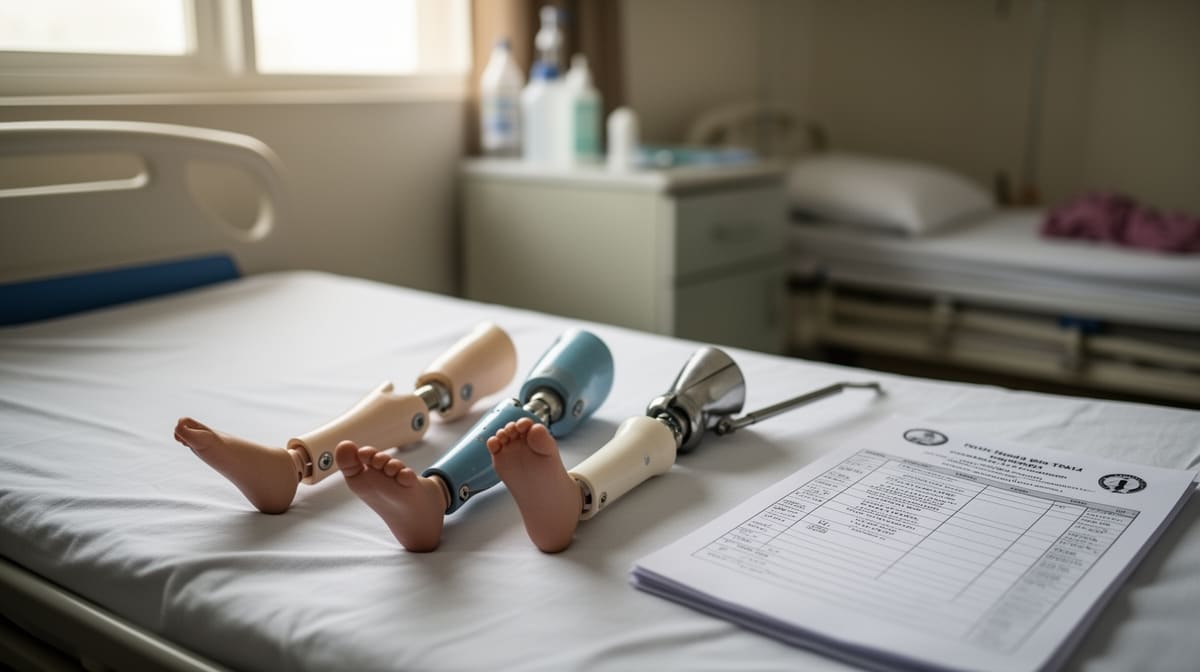
- Her right arm was amputated at the shoulder, and her left hand suffered contracture of the ring and little fingers.
- A disability certificate dated 20.08.2022 issued by the Medical Authority, Mahendragarh, certified 92% permanent locomotor disability under the Rights of Persons with Disabilities Act, 2016.
- The petitioner’s father filed multiple representations and criminal complaints, culminating in FIR No.0067 dated 01.03.2022 under Section 338 IPC at Police Station Ateli.
- On 23.09.2022, the Court granted liberty to the petitioner to approach Nigam for compensation under its policy dated 15.07.2019, without prejudice to her legal rights.
- On 19.12.2022, the petitioner submitted a claim under the policy.
- On 13.02.2023, Nigam awarded compensation of Rs.18,92,311/- under the policy, which the petitioner received under protest and deposited in five fixed deposit accounts.
- The petitioner filed the present writ petition on 20.12.2023 challenging the inadequacy of this compensation.
Procedural History
- 25.01.2022: Incident of electrocution.
- 26/27.01.2022: Hospitalization at PGIMER, Chandigarh.
- 01.03.2022: FIR registered under Section 338 IPC.
- 23.09.2022: Court order in CWP No.22063/2022 permitting claim under policy dated 15.07.2019.
- 19.12.2022: Petitioner’s claim submitted to Nigam.
- 13.02.2023: Nigam’s compensation order of Rs.18,92,311/- issued.
- 20.12.2023: Present writ petition (CWP-17880/2023) filed.
- 24.02.2026: Judgment reserved.
- 16.03.2026: Judgment pronounced and uploaded.
The Parties' Positions
For the Petitioner
- Argued that the compensation under the policy dated 15.07.2019 was grossly inadequate and mechanically applied the Employees’ Compensation Act, 1923, which is designed for wage-earning adults, not children.
- Contended that the policy ignored critical heads of compensation: future prospects, inflation, lifelong medical needs, mental trauma, loss of marriage prospects, attendant care, and special diet.
- Relied on M.C. Mehta v. Union of India, M.P. Electricity Board v. Shail Kumari, and Naval Kumar v. State of H.P. to establish strict liability and the need for holistic compensation.
- Emphasized that a child of tender age cannot be held liable for contributory negligence, citing M.P. State Road Transport Corporation v. Abdul Rahaman.
- Stated that the policy’s clause stating compensation is "on humanitarian grounds" and "not enforceable in court" cannot override statutory and constitutional duties.
For the Respondent (Nigam)
- Argued that the petitioner had already received full and final compensation under the policy dated 15.07.2019.
- Claimed that the petitioner’s father had illegally extended the balcony towards the HT line, thereby contributing to the accident.
- Asserted that the policy was a voluntary, liberalized scheme and its terms could not be judicially interfered with.
- Maintained that the compensation was calculated in accordance with the Employees’ Compensation Act, 1923, and that no further liability existed.
Relief Sought
The petitioner sought:
- A declaration that the policy dated 15.07.2019 is arbitrary and violative of Article 14.
- Enhancement of compensation to Rs.2 crore.
- Compensation under heads including future prospects, inflation, lifelong medical expenses, attendant care, pain and suffering, loss of marriage prospects, and transportation/special diet.
- Interest on the enhanced amount.
- Directions for structured disbursement of compensation to ensure lifelong care.
The Legal Issue
Can a distribution licensee rely on a humanitarian compensation policy to limit its liability for electrocution injuries to a child, when the policy excludes critical heads of damages and applies adult-centric statutory norms? Does the principle of strict liability under Article 21 and Section 68 of the Electricity Act, 2003, entitle a child victim to full compensation beyond the policy’s arbitrary caps?
Arguments Presented
For the Petitioner
The petitioner’s counsel argued that the policy dated 15.07.2019, while appearing liberal, was fundamentally flawed. It treated children under 16 years of age identically to adults by applying the Employees’ Compensation Act, 1923, which assumes wage-earning capacity - a concept inapplicable to a six-year-old. The policy ignored non-pecuniary losses such as lifelong pain, loss of amenities, mental trauma, and the inability to marry or bear children. Reliance was placed on M.C. Mehta to establish that hazardous activities like electricity distribution attract strict liability. The Court was urged to follow Naval Kumar and Baby Sakshi Greola, where compensation for children with similar injuries was enhanced to reflect life-long deprivation. The argument emphasized that the policy’s clause stating compensation is "over and above" applicable law (Clause 4) explicitly preserved the right to claim additional damages under public law.
For the Respondent
Nigam’s counsel contended that the policy was a voluntary, non-contractual concession made on humanitarian grounds and was not intended to be legally enforceable. They argued that the petitioner had accepted the compensation without protest and that judicial interference would undermine administrative discretion. The defense also attempted to shift blame to the petitioner’s father for extending the balcony, though no documentary evidence was produced to substantiate this claim. The counsel maintained that the policy’s structure, though imperfect, was the best available mechanism and that courts should not substitute their judgment for that of the distribution licensee.
The Court's Analysis
The Court conducted a meticulous analysis of the policy, statutory duties, and precedents. It began by affirming that electricity distribution is an inherently hazardous activity, and under Section 68 of the Electricity Act, 2003, the distribution licensee owes a statutory duty to ensure public safety. The Court held that the Nigam’s failure to maintain safe clearance of the HT line, despite repeated complaints, constituted negligence and triggered strict liability.
"Electricity is a dangerous commodity and it is statutory duty of the distribution licensee... to put in place all protective measures and to abide by the statutory provisions in that regard."
The Court rejected the argument that the petitioner’s father’s alleged balcony extension absolved Nigam of liability. No evidence was placed on record to substantiate this claim, and the Chief Electricity Inspector’s report had already attributed responsibility to Nigam. The Court further held that contributory negligence cannot be attributed to a child of tender age, citing M.P. State Road Transport Corporation v. Abdul Rahaman: "A child functions according to his own reasoning and his intelligence. Logicality and rationality are not expected from a child."
The Court then turned to the policy dated 15.07.2019. While acknowledging its humanitarian intent, it emphasized Clause 4, which explicitly states: "The compensation allowed under these instructions is over and above the benefits otherwise admissible to the concerned categories as per the terms of employment/contract/applicable law." This clause, the Court held, preserved the petitioner’s right to claim additional compensation under common law and constitutional principles.
The Court applied the principles laid down in R.D. Hattangadi, Rekha Jain, and Kajal v. Jagdish Chand to determine compensation. It rejected the policy’s use of the Employees’ Compensation Act, 1923, for children, noting that the Act’s wage-based formula is irrelevant for a six-year-old. Instead, it adopted the approach in Sandeep Kaur and Baby Sakshi Greola, fixing a notional monthly income of Rs.20,000/- and applying a 40% future prospects addition. With a multiplier of 18 (as per Sarla Verma), the Court calculated the loss of earning capacity at Rs.60,48,000/-, reduced to 70% functional disability, yielding Rs.42,33,600/-.
The Court awarded:
- Rs.21,60,000/- for one full-time attendant for life (multiplier 18);
- Rs.15,00,000/- for pain and suffering, following K.S. Muralidhar;
- Rs.5,00,000/- for loss of marriage prospects, following Baby Sakshi Greola;
- Rs.5,00,000/- for future medical expenses;
- Rs.1,00,000/- for transportation and special diet;
- Rs.10,00,000/- for a prosthetic limb and its maintenance, following Anoop Maheshwari.
The total compensation was fixed at Rs.99,93,600/-. The Court explicitly held that the Rs.18,92,311/- already paid under the policy would not be deducted, as it was a separate humanitarian concession.
The Verdict
The petitioner succeeded. The Court awarded a total compensation of Rs.99,93,600/-, inclusive of all heads of damages, with interest at 7.5% per annum from the date of filing the writ petition (20.12.2023) until realization. Ninety percent of the amount shall be deposited in a fixed deposit in the petitioner’s name, jointly guarded by her parents, with monthly interest disbursements of Rs.30,000/- for her upkeep. The remaining 10% shall be held in a separate fixed deposit for future medical or prosthetic needs. The respondent Nigam shall deposit the entire amount within three months, and the petitioner shall furnish bank details within four weeks. No deduction shall be made for the prior payment of Rs.18,92,311/-. The petitioner may apply for additional funds for unforeseen medical contingencies.
What This Means For Similar Cases
Compensation for Children Must Reflect Lifelong Impact
- Practitioners must argue that compensation for child victims of electrocution or similar accidents must account for lifelong dependency, loss of future opportunities, and psychological trauma - not just medical bills.
- The use of the Employees’ Compensation Act, 1923, to calculate compensation for children under 16 is legally indefensible and must be challenged in every case.
- Courts must adopt notional income based on average earnings for minors, with 40% future prospects, as established in Sandeep Kaur and Baby Sakshi Greola.
Policy-Based Compensation Is Not a Bar to Legal Claims
- Any policy that claims to be "final and binding" or "non-enforceable" cannot override statutory or constitutional rights.
- Clause 4 of the Nigam policy - stating compensation is "over and above" applicable law - is a critical safeguard. Practitioners must highlight such clauses to preserve the right to seek enhanced damages.
- Humanitarian policies are not shields against liability; they are supplements.
Strict Liability Applies Even Without Proven Negligence
- In cases involving hazardous utilities, the burden shifts to the operator to prove safety compliance.
- The doctrine of res ipsa loquitur applies when the hazard is under the exclusive control of the defendant and the injury would not occur without negligence.
- Courts will not accept speculative defenses (e.g., balcony extension) without documentary proof.
Structured Disbursement Is Now a Judicial Norm
- Courts are increasingly mandating structured disbursement of compensation for minors, with fixed deposits and monthly disbursements to prevent misuse.
- Practitioners should routinely seek such directions in cases involving child victims with lifelong disabilities.
- The model used here - monthly Rs.30,000/- from interest, quarterly reinvestment, and access to principal for medical needs - is likely to become a template.