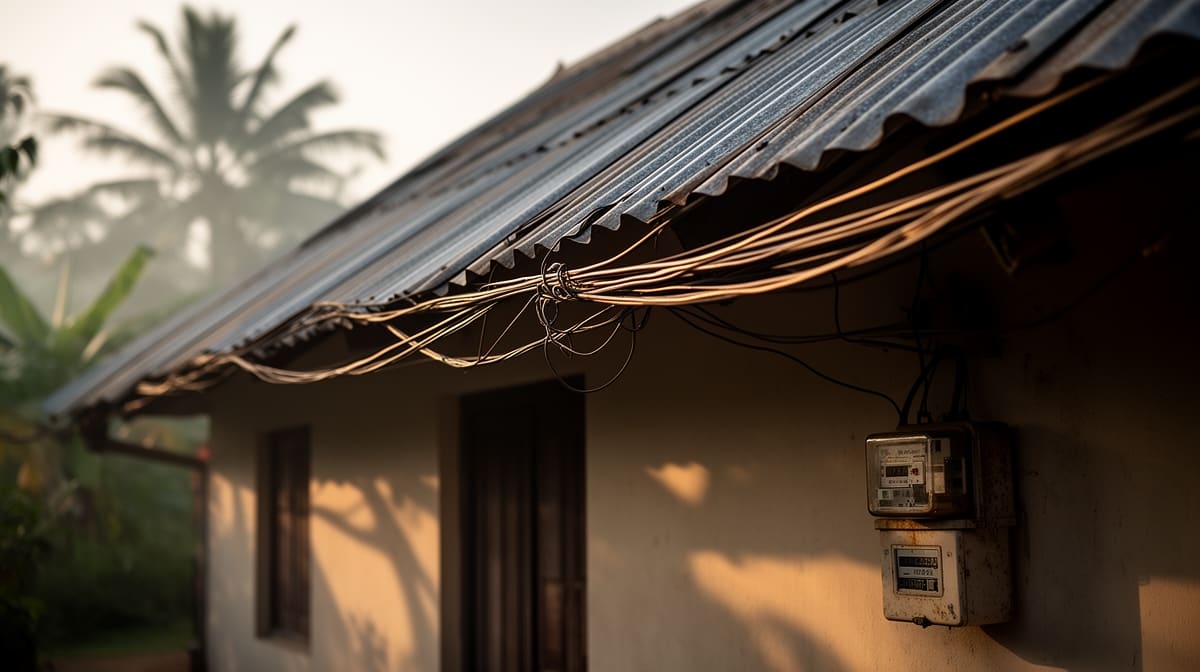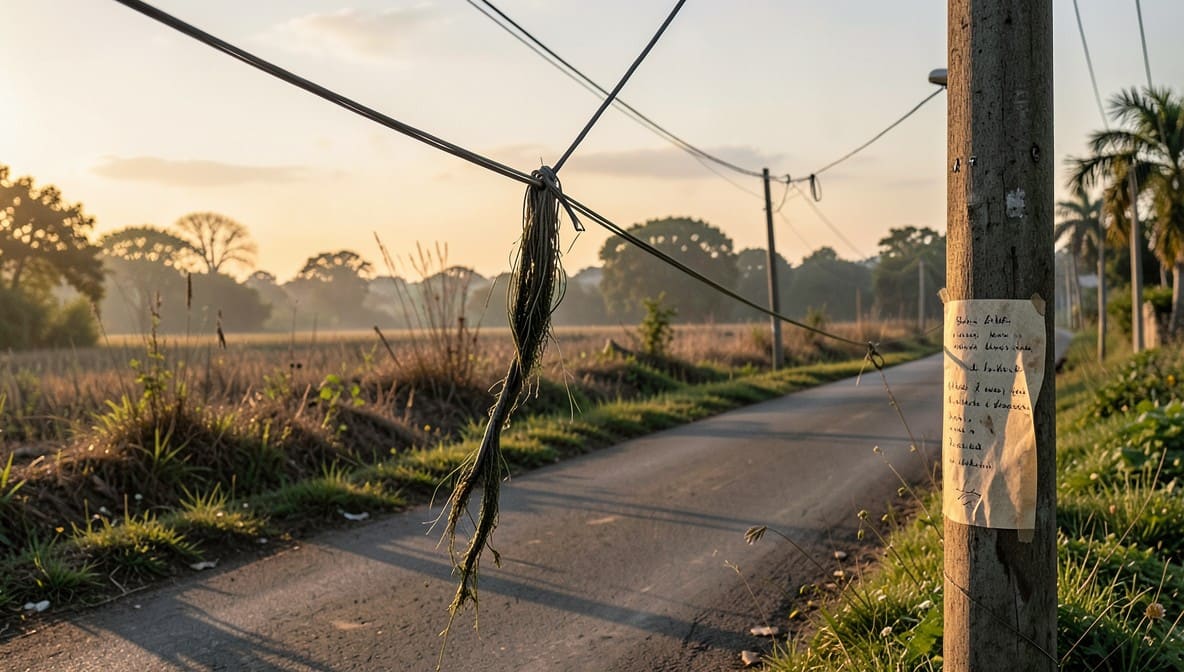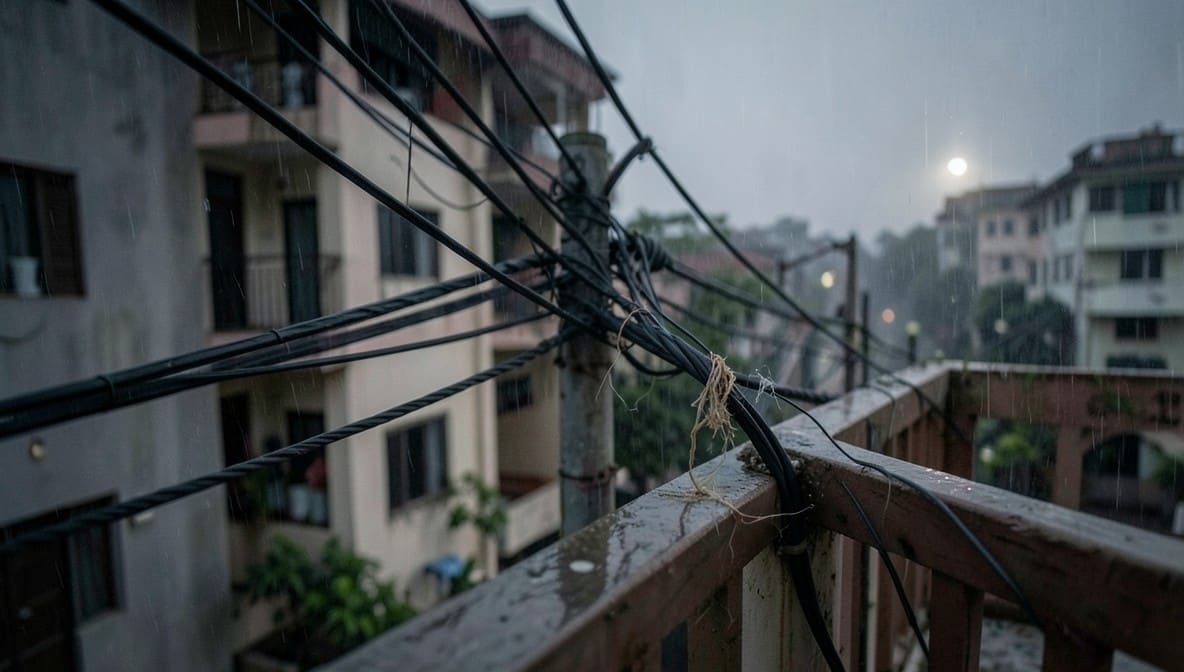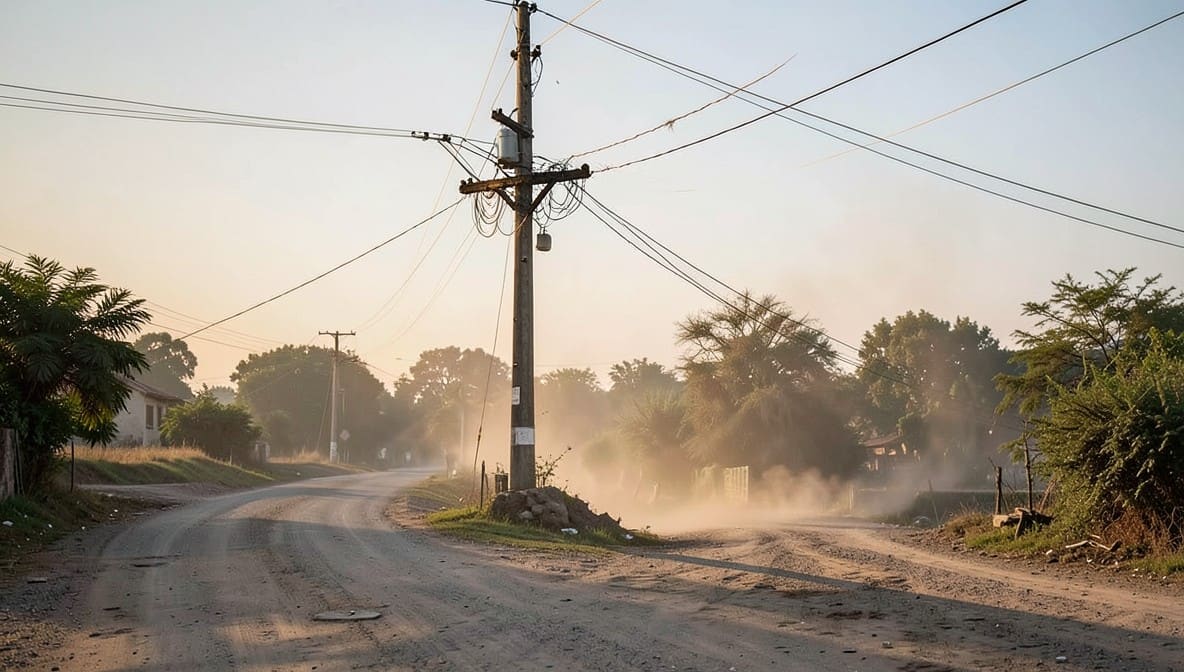
The Madhya Pradesh High Court has reaffirmed the doctrine of strict liability in cases of electrocution caused by public electricity infrastructure, holding that the electricity supplier bears absolute responsibility for harm arising from inherently dangerous activities, irrespective of negligence. This ruling reinforces the legal obligation of utility providers to ensure public safety when handling hazardous energy systems.
Background & Facts
The Dispute
The plaintiffs, respondents No.1 and 2, filed a civil suit seeking compensation for the death of their daughter, Ku. Rajkumari, who was electrocuted on 28.06.2008 while returning from a garden belonging to defendant No.1. She had touched a supporting iron wire of an electricity pole, resulting in fatal electrocution. The postmortem report confirmed entry and exit burns consistent with electric shock.
Key Facts
- The incident occurred on 28.06.2008 at a garden adjacent to a public road in Basoda, District Vidisha
- The deceased, Ku. Rajkumari, was approximately 12 years old at the time of death
- The electricity pole was installed to support 440-volt transmission lines serving the area
- The supporting wire, made of iron, was connected to the pole and was not insulated at the junction
- Postmortem report (Ex. P-3) recorded:
- Entry wound: 2 inch × ½ inch burn on palmar surface of right middle finger
- Exit wound: 3 inch × 2 inch burn on posterior surface of left forearm and back of left elbow
- Defendant No.1 claimed no ownership of the garden or the electricity infrastructure
- Defendant No.2, the Executive Engineer of the Madhya Pradesh Electricity Board, was sued as the statutory supplier of electricity
Procedural History
- 28.06.2008: Incident of electrocution leading to death of Ku. Rajkumari
- 2010: Civil Suit No. 4-A/2010 filed before the Court of Second Additional District Judge, Fast Track Court, Basoda
- 30.08.2011: Trial Court held defendant No.2 liable and awarded compensation of Rs. 2,00,000/-
- 12.09.2011: Decree passed directing defendant No.2 to deposit court fee of Rs. 36,000/- and remaining decretal amount of Rs. 1,64,000/-
- 06.04.2026: First Appeal No. 336 of 2011 reserved for judgment
- 08.04.2026: Judgment pronounced by the High Court at Gwalior
The Parties' Positions
Plaintiffs/Respondents: Argued that the electricity board, as the statutory supplier, was strictly liable for maintaining safe infrastructure. The presence of live current on the supporting wire, a known risk, rendered the board liable regardless of fault.
Defendant No.2 (Appellant): Contended that no electricity flowed through the supporting wire due to insulation at joints, and that maintenance responsibility lay with Madhya Pradesh Vidyut Vitran Company. Also argued that the wire was not part of the transmission system.
Relief Sought
The plaintiffs sought compensation of Rs. 3,00,000/- with 12% interest from the date of death. The trial court awarded Rs. 2,00,000/- with no explicit interest direction, but ordered the appellant to deposit court fees and the balance amount.
The Legal Issue
The central question was whether the electricity supplier, as the operator of an inherently dangerous activity, is strictly liable under the rule in Rylands v. Fletcher for death caused by electrocution from a supporting wire of an electricity pole, even in the absence of proven negligence.
Arguments Presented
For the Appellant
Counsel for the Executive Engineer argued that the supporting wire was not part of the active transmission system and was insulated at joints, making current flow impossible. Relied on the testimony of DW-1, who claimed routine maintenance practices prevented current leakage. Asserted that liability, if any, rested with the distribution company (Vidyut Vitran), not the Executive Engineer. Also contended that the doctrine of strict liability does not apply where the harm results from an unforeseeable act or defective installation by a third party.
For the Respondent
Counsel for the respondents relied on the postmortem findings and the admission by DW-1 that iron supporting wires can conduct electricity. Emphasized that the electricity board, as the statutory supplier, holds exclusive control over the entire infrastructure. Cited M.P. Electricity Board v. Shail Kumari to argue that the burden of safety lies entirely with the supplier, and that the doctrine of strict liability applies irrespective of fault or maintenance protocols.
The Court's Analysis
The Court conducted a meticulous review of the evidence, particularly the postmortem report (Ex. P-3) and the testimony of DW-1, Ramyagya, who was in charge of maintaining the electricity lines. DW-1 admitted that the supporting wires were made of iron and that electricity current could pass through them. He further conceded that he had not inspected the pole on the date of the accident.
The Court rejected the appellant’s claim that insulation at joints prevents current flow, noting that such assertions were unsupported by technical evidence and contradicted by the witness’s own admission. The Court observed:
"The contention of counsel for the appellant that the current cannot pass through the supporting wire is not correct and is contrary to the evidence of Ramyagya (DW-1)."
The Court then turned to the legal principle of strict liability, reaffirming the Supreme Court’s holding in M.P. Electricity Board v. Shail Kumari (2002) 2 SCC 162. It emphasized that the supply of electricity is an inherently dangerous activity, and the supplier is under a non-delegable duty to ensure public safety. The Court cited the landmark Rylands v. Fletcher doctrine and its adoption in Indian jurisprudence through Charan Lal Sahu v. Union of India and M.C. Mehta v. Union of India, noting that the latter case extended strict liability to absolute liability in hazardous activities.
The Court explicitly held that the exceptions to strict liability, such as act of a stranger, do not apply here, as the wire was part of the supplier’s own infrastructure. The Court concluded:
"It is the duty of the electricity department to maintain the electricity wire, therefore, the liability fixed by the trial Court is proper."
The Court found no error in the trial court’s appreciation of evidence or application of law.
The Verdict
The appeal was dismissed. The High Court affirmed the trial court’s judgment and decree dated 30.08.2011, upholding the liability of the Executive Engineer, representing the Madhya Pradesh Electricity Board, to pay compensation of Rs. 2,00,000/-. The appellant was directed to deposit the court fee of Rs. 36,000/- and the balance decretal amount of Rs. 1,64,000/- as ordered by the trial court. No interest was awarded, and no specific compliance deadline was imposed beyond the existing decree.
What This Means For Similar Cases
Strict Liability Applies to All Components of Electrical Infrastructure
- Practitioners must now argue that any part of the electricity supply system, including supporting wires, insulators, or poles, falls under the supplier’s strict liability if it causes harm
- Defense arguments based on division of maintenance roles between transmission and distribution entities are unlikely to succeed
- The burden shifts entirely to the utility to prove that the harm resulted from an unforeseeable act of a third party, not mere technicalities of ownership
Evidence of Conductive Materials Trumps Technical Denials
- Testimony admitting that iron wires can conduct electricity cannot be rebutted by unsubstantiated claims of insulation
- Postmortem findings correlating injury patterns with contact points are decisive in establishing causation
- Courts will not accept speculative defenses without technical or documentary evidence
Compensation Claims Must Be Framed Against the Statutory Supplier
- Lawsuits should name the electricity board or its designated executive officer as the primary defendant, not local distributors or contractors
- Claims for compensation under tort law do not require proof of negligence - only that the activity was hazardous and the harm was foreseeable
- Plaintiffs may now confidently seek compensation even where the exact cause of wire energization remains unclear, provided the wire was part of the supplier’s system