Case Law Analysis

Strict Liability Under Tort Law | Bombay HC Imposes 75% Liability on Railways for Unmanned Crossing Death, Awards Rs. 3.8 Crore Compensation : Bombay HC

Bombay High Court holds the Railways strictly liable for 75% of damages in a fatal accident at an unmanned railway crossing, awarding Rs. 3.8 crores to the victims' family. The ruling reinforces institutional accountability under tort law for failing to ensure safety at level crossings, setting a precedent for future compensation claims.

Cassie News NetworkCassie News Network
Jul 10, 2026, 5:51 PM(Updated: Nov 3, 2026)
•2 min read
Be the first to share in your circle
Strict Liability Under Tort Law | Bombay HC Imposes 75% Liability on Railways for Unmanned Crossing Death, Awards Rs. 3.8 Crore Compensation : Bombay HC

The Bombay High Court's judgment in Anitadevi Jindal v. Union of India marks a significant development in motor accident compensation jurisprudence, particularly concerning unmanned railway crossings. The Court applied the strict liability doctrine to hold the Railways 75% responsible for a fatal collision, enhancing compensation to Rs. 3.8 crores with 7.5% interest. This ruling underscores the heightened duty of care owed by public authorities in managing hazardous infrastructure, offering critical guidance for future claims involving institutional negligence.

Background & Facts

The Dispute

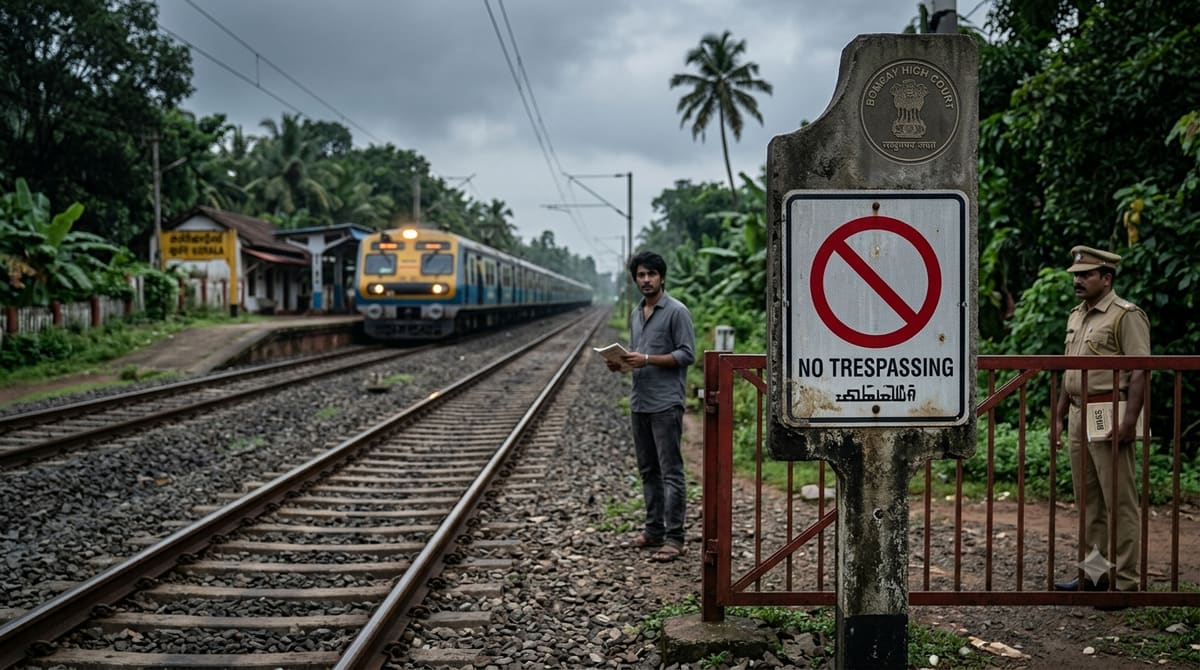
On 22.03.2009, a private car (MH-21-C-2349) carrying four occupants, including the driver Anil Jindal, attempted to cross Level Crossing No. 59 (LC-59) on the Aurangabad-Karmad railway track. The car collided with a passenger train (No. 3505) traveling from Aurangabad to Hyderabad, resulting in the deaths of all occupants. The claimants - Anil Jindal’s dependents - filed Motor Accident Claim Petition No. 152 of 2009 under Section 166 of the Motor Vehicles Act, 1988, seeking Rs. 6,25,00,000 in compensation from the Railways and the car’s insurer.

Key Facts

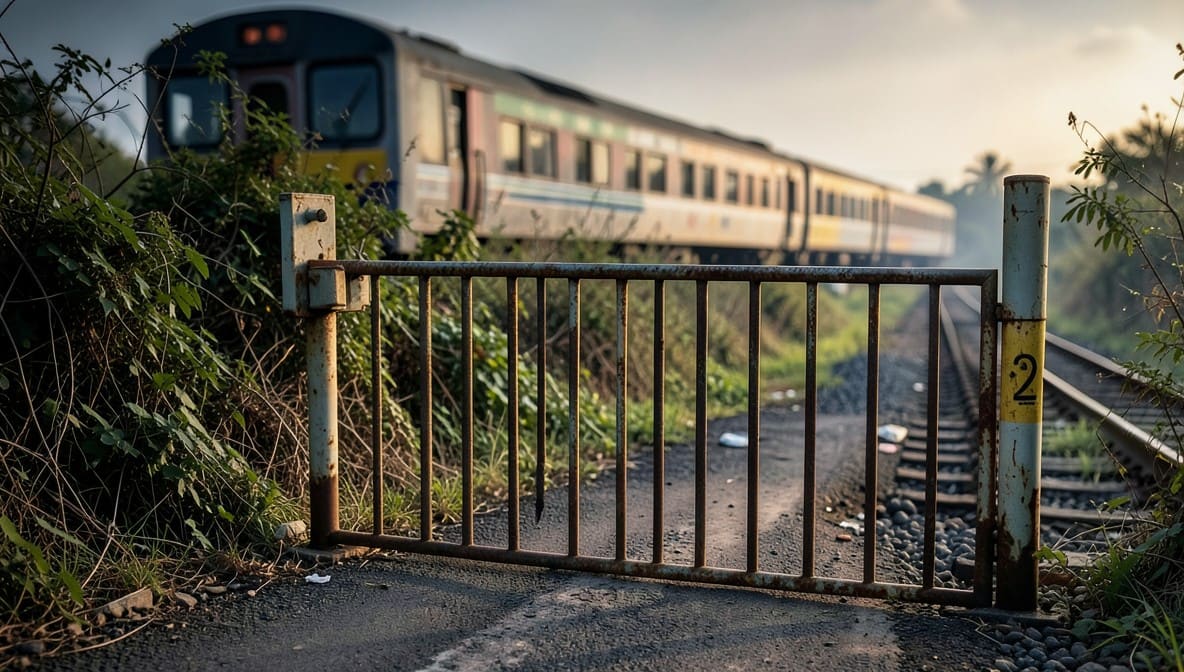
  • The accident occurred at LC-59, an unmanned railway crossing originally designated as a manned crossing.
  • The Railways had not deployed a gateman after the retirement of the last gateman, Mr. Shejul, despite the track’s conversion from meter-gauge to broad-gauge in 1991-1992.
  • The area surrounding LC-59 had seen increased vehicular traffic due to the establishment of a Five-Star Industrial Area and the proposed Delhi-Mumbai Industrial Corridor.
  • The car driver was familiar with the area, having visited it frequently for land purchases.
  • The train was traveling at 95 km/h at the time of the collision.

Procedural History

  • 13.02.2017: Motor Accident Claims Tribunal (MACT) dismissed the claim on jurisdictional grounds.
  • 28.02.2019: Bombay High Court (First Appeal No. 3273 of 2017) ruled that MACT had jurisdiction under the Motor Vehicles Act, 1988, remanding the case.
  • 20.05.2023: MACT partly allowed the claim
Case Details

Smt. Anitadevi Jindal & Ors. v. Union of India & Ors.

2026:BHC-AUG:26948-DB
PDF
Court
High Court of Judicature at Bombay, Bench at Aurangabad
Date
09 July 2026
Case Number
First Appeal No. 101 of 2024 (with First Appeal No. 1796 of 2024)
Bench
Kishore C. Sant, Ajit B. Kadethankar
Counsel
Pet: Mr. Mahesh R. Sonawane
Res: Mr. Uttam B. Bondar (for Railways), Mr. Dhananjay P. Deshpande (for Insurance Co.), Mr. M.V. Ghatge (for Respondent Nos. 5-6)

Frequently Asked Questions

Strict liability holds an entity liable for damages caused by hazardous activities, regardless of negligence. The Bombay High Court applied this principle in M.P. Electricity Board v. Shail Kumar (2002), stating that enterprises managing dangerous infrastructure (e.g., railways) are absolutely liable for accidents, with no exceptions for 'acts of strangers.' The Court emphasized that the Railways’ failure to man LC-59-despite its classification as a manned crossing-attracted strict liability.
The Court distinguished between individual negligence (e.g., loco pilots’ actions) and institutional negligence (e.g., Railways’ failure to man a crossing). In this case, the Railways’ 75% liability was upheld due to its breach of statutory duty (Railway Rule 924), while the car driver’s negligence was limited to 25%. Claimants can argue for higher apportionment where authorities violate safety mandates.
The Court followed the Sarla Verma (2009) and Pranay Sethi (2017) formulas
The Court rejected the certificate as it was not part of the original claim or income tax filings. Compensation must be based on documentary evidence submitted during trial (e.g., income tax returns). Claimants cannot introduce new evidence (e.g., CA certificates) post-judgment unless it was part of the initial filings.
0

Disclaimer

This article is for informational purposes only and does not constitute legal advice. The views expressed are based on the judgment analysis and should not be taken as professional counsel. Please consult with a qualified attorney for advice specific to your situation.