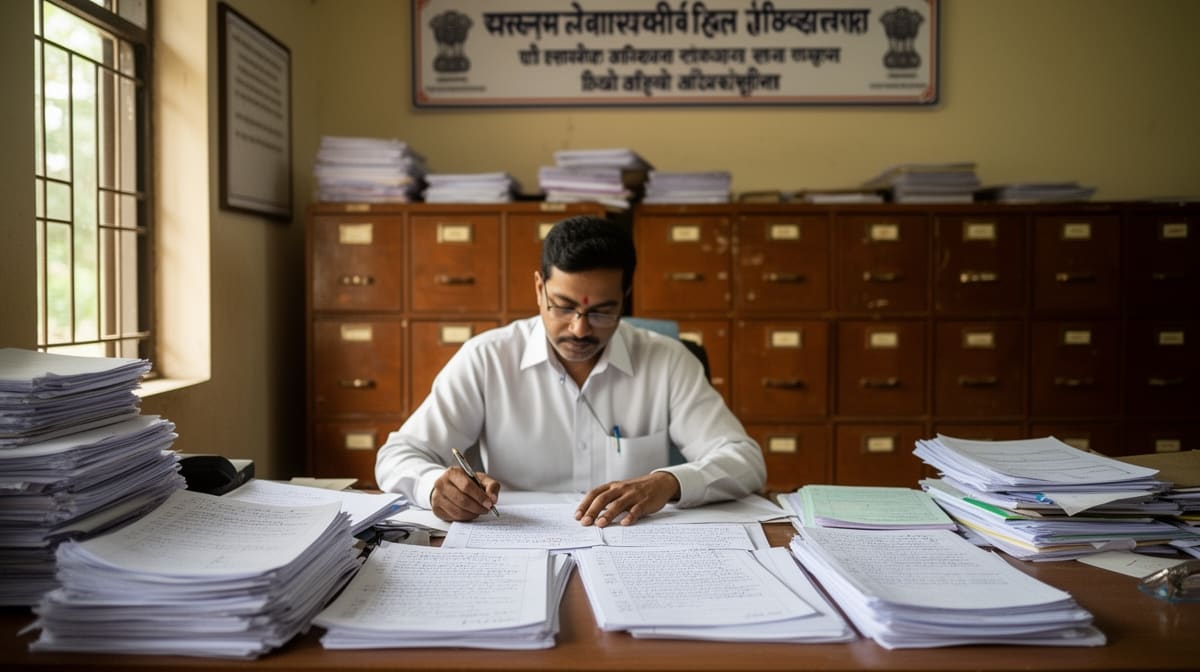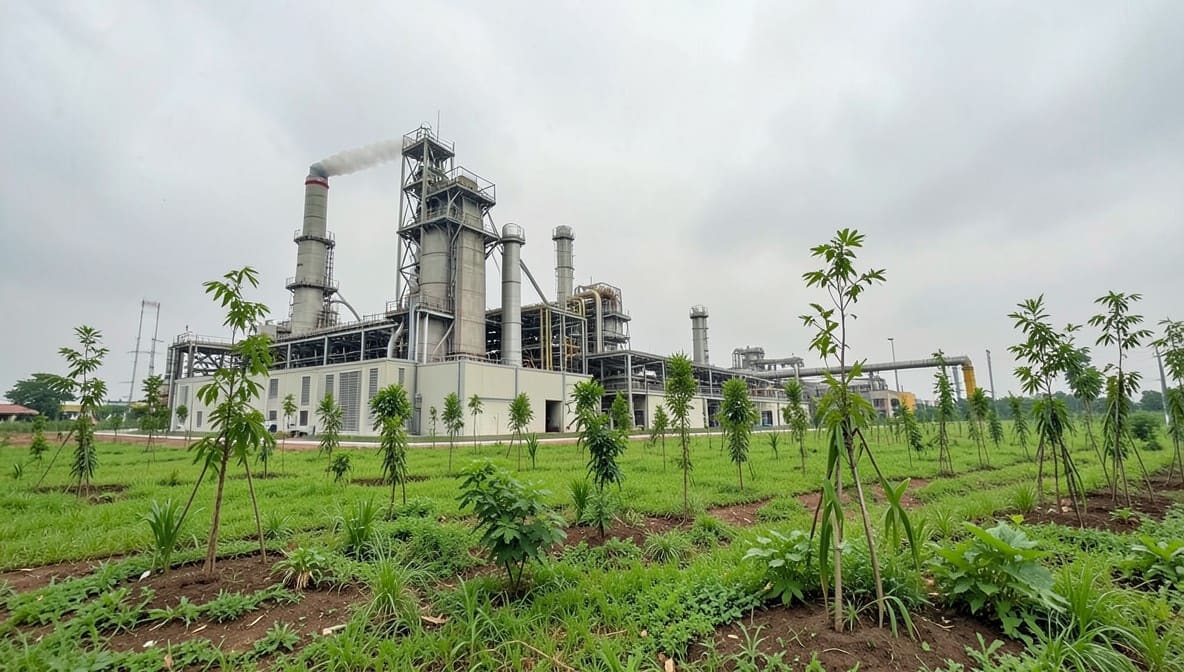
The High Court of Telangana has reinforced that administrative inaction on statutory clearances, even after long-standing project approvals, violates the principles of natural justice and Article 21. This judgment clarifies that authorities cannot exploit procedural delays to deprive legitimate applicants of their rights, especially when they have secured prior clearances over years.
Background & Facts
The Dispute
The petitioner, a mining entrepreneur, was granted a Letter of Intent (LOI) on 15 May 2019 for mining 14,900 hectares in Sy. No. 531/1 Part, Devnoor Village, Dharmasagar Mandal, Warangal Urban District. Following this, he pursued mandatory statutory clearances, including environmental clearance from the State Environmental Impact Assessment Authority (EIAA), which directed him to obtain a No Objection Certificate (NOC) from the Forest Department.
Procedural History
The petitioner’s efforts spanned over six years:
- 2019: LOI granted under the Telangana Mining Concession Rules
- 2019 - 2024: Obtained clearances from Revenue, Irrigation, and other departments
- 28 October 2021: First formal representation submitted to Forest Department for NOC
- 30 January 2026: Second representation filed, still unacknowledged
- 2026: Petition filed under Article 226 and Section 151 CPC seeking direction to consider the representation and maintain status quo
Relief Sought
The petitioner sought:
- A writ of mandamus directing the Forest Department to consider his NOC application
- An interim order to prevent re-allotment of the mining site to any third party
- Declaration that the delay in considering his representation was arbitrary and violative of natural justice
The Legal Issue
The central question was whether administrative delay in considering a statutory NOC application, after a six-year period of compliance and prior clearances, constitutes a violation of Article 21 and the principles of natural justice, particularly when the applicant has acted in good faith and the project remains viable.
Arguments Presented
For the Petitioner
Learned Senior Counsel A. Venkatesh argued that:
- The petitioner had diligently secured all statutory clearances over six years, including from Revenue and Irrigation departments as early as October 2024
- The Forest Department’s silence on the representation dated 28 October 2021 and 30 January 2026 amounted to constructive denial
- The delay was unreasonable and prejudicial, especially since the LOI had a 20-year validity
- Reliance was placed on Maneka Gandhi v. Union of India to assert that procedural fairness is an essential component of Article 21
For the Respondent
The Assistant Government Pleaders for Forests and Mines contended that:
- The petitioner had filed the NOC application at the eleventh hour, despite the LOI being issued in 2019
- A circular dated 16 December 2025 mandated submission of all clearances by 28 February 2026, implying the petitioner was non-compliant
- No legal right accrued until all statutory clearances were obtained, and the state retained discretion to re-allot the site
The Court's Analysis
The Court rejected the State’s argument that the petitioner’s delay invalidated his claim. It emphasized that good faith compliance over years cannot be nullified by a technical deadline imposed after the fact. The Court noted that the petitioner had obtained clearances from multiple departments, demonstrating sustained effort and investment.
"The State cannot remain silent on a statutory application for over four years and then invoke a circular issued in December 2025 to justify non-adjudication of a claim filed in January 2026."
The Court held that administrative inaction, especially when it prejudices a legitimate expectation formed over years of compliance, amounts to arbitrariness under Article 14 and violates natural justice. The Court distinguished State of U.P. v. Krishna Kumar where delay was attributed to applicant negligence, noting that here, the applicant had acted diligently.
The Court further observed that the principle of legitimate expectation, recognized in Food Corporation of India v. Kamdhenu Cattle Feed Industries, applies when an applicant has acted in reliance on state assurances and has fulfilled prior obligations. The petitioner’s LOI, coupled with prior clearances, created such an expectation.
The Court declined to adjudicate the merits of the NOC application itself but mandated that the Forest Department must now consider it within four weeks, under a duty of reasoned decision-making.
The Verdict
The petitioner succeeded. The Court held that administrative delay in considering statutory NOC applications after years of compliance violates natural justice and Article 21. It directed the Forest Department to consider the petitioner’s representation dated 30 January 2026 within four weeks and maintain the status quo on the mining site pending such consideration.
What This Means For Similar Cases
Procedural Fairness Trumps Technical Deadlines
- Practitioners can now argue that statutory deadlines imposed after prolonged compliance cannot be used to invalidate legitimate applications
- Authorities must act within a reasonable timeframe once an applicant has demonstrated consistent compliance
- Delay by the State cannot be weaponized to deny rights acquired through good faith effort
Legitimate Expectation Applies to Environmental Clearances
- Where an applicant has secured multiple clearances over years, a legitimate expectation arises for final approval
- This expectation is protected under Article 21 and cannot be extinguished by post-facto circulars
- Courts will scrutinize whether delays were caused by applicant negligence or administrative inertia
Status Quo Orders Are Justified in Environmental Projects
-
Interim status quo orders are appropriate where:
- A project has received prior statutory clearances
- The applicant has invested substantial resources
- Re-allotment would cause irreparable harm
-
Practitioners should routinely seek status quo in mining, infrastructure, and environmental cases where delay is attributable to the State
-
Always document all communications with statutory authorities
-
File representations with acknowledgment receipts to establish timeline
-
Cite Maneka Gandhi and Food Corporation of India to invoke legitimate expectation
-
Argue that administrative silence = constructive denial under S.P. Gupta v. Union of India