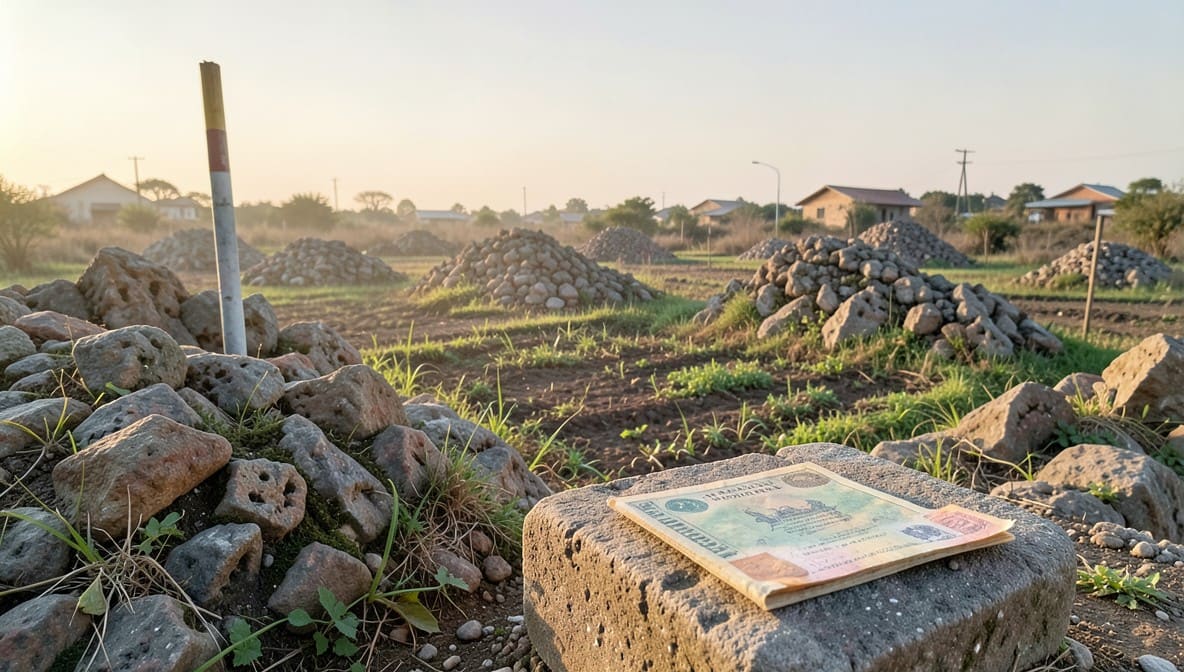
The High Court of Telangana has reaffirmed that administrative silence on requests for deletion of properties from prohibitory lists under the Registration Act constitutes a violation of natural justice. This judgment establishes a clear duty on revenue authorities to respond to such representations with reasoned orders, ensuring procedural fairness in land administration.
Background & Facts
The Dispute
The petitioner, Sriramdas Venu, sought deletion of Plot No. 260 (439 sq. yds.) in Survey Nos. 536, 657, and 658 from the prohibitory property list maintained by the Revenue Department under Section 22A of the Registration Act, 1908. The plot was subject to a prior administrative decision dated 27.08.2022 (Lr.B/E414345/2021) and consequential Memo No. 15738/G1/2022 issued by the District Registrar, which had previously facilitated deletion of similar plots in the same survey numbers.
Procedural History
- 14.03.2024: Petitioner submitted representation to the 3rd Respondent (District Collector) seeking NOC and deletion of Plot No. 260.
- 23.01.2026: Petitioner reiterated the request via formal representation.
- No response: The District Collector failed to act on either representation despite acknowledging receipt.
- 2025: A nearly identical petition (W.P. No. 22093 of 2025) was decided by the same Court, directing the District Collector to consider similar deletion requests with reasoned orders.
Relief Sought
The petitioner sought a writ of mandamus directing the respondents to consider the representation and delete the plot from the prohibitory list, in line with the precedent set in W.P. No. 22093 of 2025.
The Legal Issue
The central question was whether administrative inaction on a representation for deletion of property from a prohibitory list under Section 22A of the Registration Act, 1908, constitutes a violation of the principles of natural justice, and whether the Court can compel a reasoned decision within a stipulated timeframe.
Arguments Presented
For the Petitioner
Counsel relied on W.P. No. 22093 of 2025, where the Court had held that failure to consider such representations violates natural justice and mandates a reasoned order. The petitioner argued that the facts were materially identical: same survey numbers, same administrative precedent, same statutory framework, and same inaction by the District Collector. The petitioner emphasized that procedural fairness requires timely and reasoned responses to legitimate claims affecting property rights.
For the Respondent
The Assistant Government Pleader for Revenue did not dispute the factual similarity or the binding precedent. No substantive counter-argument was advanced, effectively conceding that the petitioner’s claim was legally valid under the established jurisprudence.
The Court's Analysis
The Court examined the principle that natural justice demands that no person be deprived of a legitimate expectation or property right without a fair hearing. The Court noted that the District Collector had previously acted favorably on identical claims in the same survey numbers, creating a legitimate expectation that similar requests would be treated consistently.
"The failure to consider a representation, especially when a precedent exists for similar relief, amounts to arbitrariness and violates the mandate of Article 14 and Article 21 of the Constitution."
The Court distinguished mere delay from total inaction. While administrative delays may be excusable under certain circumstances, complete non-adjudication - particularly after formal representation - crosses the threshold into arbitrariness. The Court emphasized that Section 22A does not confer an absolute right to deletion, but it does require that any decision - whether granting or denying - must be reasoned and communicated.
The Court also relied on the doctrine of stare decisis and the principle of equal treatment under law, holding that identical facts must attract identical outcomes unless there is a rational, documented distinction. Since no such distinction was offered, the Court was bound to extend the relief granted in W.P. No. 22093 of 2025.
The Verdict
The petitioner succeeded. The Court held that administrative inaction on NOC deletion requests violates natural justice and directed the District Collector to consider the representation within 60 days, pass a reasoned order, and communicate it to the petitioner. The Court declined to grant costs.
What This Means For Similar Cases
Reasoned Decisions Are Mandatory
- Practitioners must now treat any unexplained refusal or silence on NOC requests as a ground for writ relief under Article 226.
- Revenue authorities must document reasons for denial, even if the request is rejected, to avoid judicial intervention.
Precedent Binding in Administrative Matters
- When a prior administrative decision or judicial order establishes a pattern of relief for similar properties, subsequent applicants in identical circumstances are entitled to the same treatment.
- Authorities cannot arbitrarily distinguish cases without objective, documented justification.
60-Day Timeline Sets New Standard
-
The 60-day deadline for disposal sets a practical benchmark for administrative accountability in land-related matters.
-
Failure to comply may now attract contempt proceedings or further writ petitions seeking enforcement.
-
Practitioners should file writ petitions within 60 days of non-response to NOC requests.
-
Always cite W.P. No. 22093 of 2025 as binding precedent in similar cases.
-
Ensure representations are formally recorded and acknowledged to establish a clear record of administrative inaction.