The Karnataka High Court has clarified that a pending closure order under environmental laws cannot be used as grounds to withhold the renewal of a Consent for Operation (CFO). The Court directed the Karnataka State Pollution Control Board (KSPCB) to decide on the revocation of a closure order within four weeks, ensuring that the petitioner's industrial operations remain uninterrupted during this period.
Background & Facts
The Dispute
The petitioner, M/s. Lakshmipriya Steels Pvt. Ltd., operates a sponge iron manufacturing unit classified under the Red Category in Danayakanakere and Gollarahalli villages, Vijayanagara District. The unit was issued a closure notice dated 23.10.2025 by the Karnataka State Pollution Control Board (KSPCB) under Section 33(A) of the Water (Prevention and Control of Pollution) Act, 1974 and Section 31(A) of the Air (Prevention and Control of Pollution) Act, 1981, citing non-compliance with environmental measures, particularly the development of a greenbelt.
Key Facts
- The petitioner's unit was classified under the Red Category, requiring stringent environmental compliance
- A hearing was conducted by the KSPCB on 26.08.2025, following which a closure notice was issued on 23.10.2025
- The closure notice mandated the suspension of operations until compliance with environmental requirements
- A subsequent closure order was issued on 29.01.2026 after the petitioner failed to fully comply
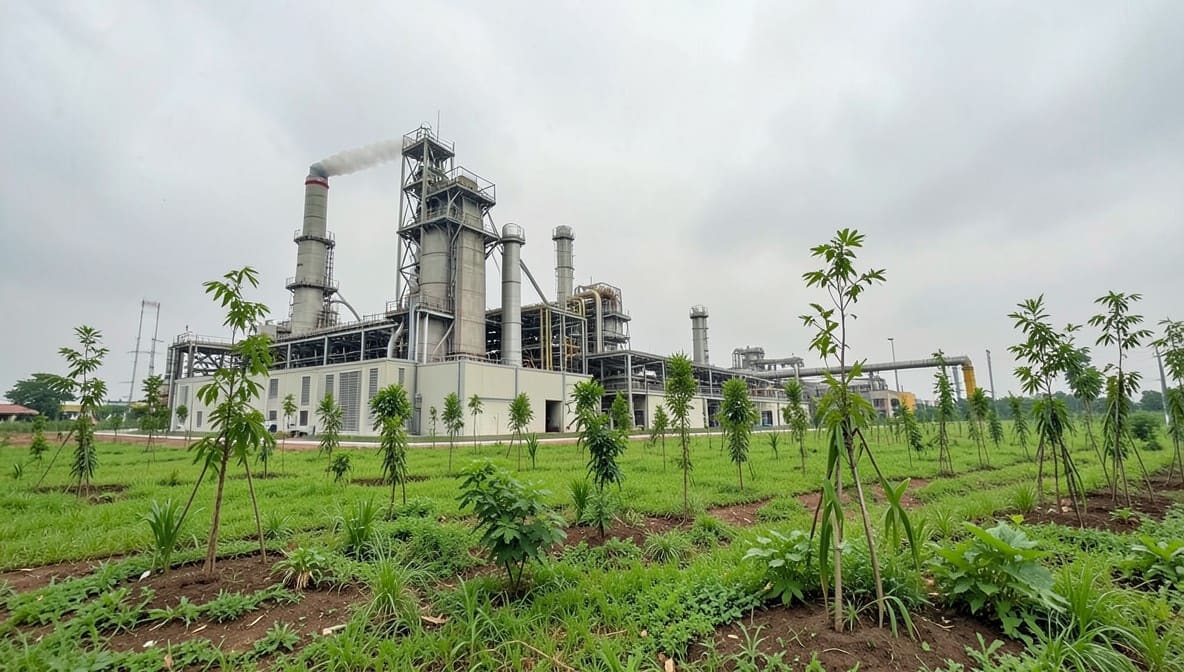
- An inspection conducted on 20.05.2026 revealed partial compliance, including the planting of approximately 6,000 saplings toward the greenbelt requirement
- The petitioner was required to develop a greenbelt covering 33% of the total project area, a condition unmet since 2018
- The petitioner sought renewal of its Consent for Operation (CFO) dated 11.08.2021, which was being withheld due to the pending closure order
Procedural History
- 23.10.2025: Closure notice issued by KSPCB citing non-compliance
- 29.01.2026: Closure order issued after continued non-compliance
- 20.05.2026: Inspection conducted, revealing partial compliance
- 05.05.2026: Petitioner filed a representation seeking revocation of the closure order
- 22.06.2026: Present writ petition filed under Articles 226 and 227 of the Constitution of India seeking quashing of the closure order and directions for renewal of CFO
Relief Sought
The petitioner sought the following reliefs:
- Quashing of the closure order dated 23.10.2025
- Directions to the KSPCB to decide its representation dated 05.05.2026 within seven working days
- Directions to renew the Consent for Operation (CFO) without delay, irrespective of the pending closure order
The Legal Issue
The central question before the Court was whether a closure order issued under environmental laws could justify the withholding of the renewal of Consent for Operation (CFO), and whether the KSPCB was obligated to decide on the revocation of the closure order within a reasonable timeframe.
Arguments Presented
For the Petitioner
The petitioner contended that:
- The closure order was issued without considering the partial compliance demonstrated during the inspection on 20.05.2026
- The withholding of the CFO renewal due to the pending closure order was arbitrary and unlawful, as the two issues were distinct
- The petitioner had taken significant steps toward compliance, including planting 6,000 saplings, and deserved an opportunity to rectify the remaining deficiencies
For the Respondents
The KSPCB, represented by its counsel, argued that:
- The petitioner had failed to comply with the greenbelt requirement since 2018, demonstrating prolonged non-compliance
- The closure order was justified under Section 33(A) of the Water Act, 1974 and Section 31(A) of the Air Act, 1981
- While the petitioner had taken some steps toward compliance, the measures were belated and insufficient
- The KSPCB agreed to consider revoking the closure order at its next meeting and assured that the CFO renewal would not be withheld on account of the closure order
The Court's Analysis
The Court observed that the closure notice dated 23.10.2025 was issued after a hearing on 26.08.2025, wherein the petitioner was found to be in non-compliance with environmental measures. The Court noted that while the petitioner had failed to develop the required greenbelt, it had taken steps to comply, as evidenced by the inspection report dated 20.05.2026. The Court emphasized the distinction between the closure order and the renewal of CFO, holding that the latter could not be withheld solely due to the former.
The Court relied on the principle of proportionality and natural justice, noting that the petitioner had demonstrated partial compliance and deserved an opportunity to rectify the remaining deficiencies. The Court also highlighted the importance of expeditious decision-making by the KSPCB, particularly in matters affecting industrial operations.
"The requirement regarding the development of a greenbelt has been met only partially. However, the petitioner has planted approximately 6000 saplings around the industrial premises. The greenbelt ought to have been developed way back in the year 2018, and therefore, the measures taken have been highly belated."
"The petitioner's application seeking renewal of the CFO shall not be withheld on account of the subsisting closure order. In the event there is any delay in applying for the renewal of CFO or processing the application, it shall be condoned."
The Verdict
The Court disposed of the writ petition with the following directions:
- The KSPCB was directed to take an informed decision regarding the revocation of the closure order within four weeks from the date of the judgment, based on the inspection report dated 20.05.2026
- The petitioner's operations shall not be interdicted during the said four-week period
- The renewal of the Consent for Operation (CFO) shall not be withheld on account of the pending closure order
- Any delay in applying for or processing the CFO renewal shall be condoned
What This Means For Similar Cases
Closure Orders and Consent for Operation Are Distinct
- The judgment clarifies that closure orders and Consent for Operation (CFO) renewals are separate legal issues. A pending closure order cannot justify the withholding of CFO renewal
- Practitioners should argue that environmental authorities cannot use closure orders as leverage to deny operational consents, particularly when partial compliance has been demonstrated
Expeditious Decision-Making Is Mandatory
- The Court emphasized the need for timely decision-making by pollution control boards, directing the KSPCB to decide on the revocation of the closure order within four weeks
- Industrial units facing closure orders should seek interim relief to ensure their operations are not unlawfully disrupted during the pendency of representations
Partial Compliance Must Be Considered
- The judgment establishes that partial compliance with environmental measures, such as the planting of saplings, must be considered by authorities when deciding on closure orders
- Industrial units should document all steps taken toward compliance, including photographs, inspection reports, and correspondence, to strengthen their case for revocation of closure orders