The Bombay High Court has affirmed that the State bears strict liability for custodial deaths arising from gross negligence in government-run mental health facilities, establishing a robust public law remedy under Article 21 of the Constitution. This judgment clarifies that compensation is not contingent on criminal conviction and must reflect the full extent of loss suffered by dependents, even in the absence of a specific statutory framework.
Background & Facts
The Dispute
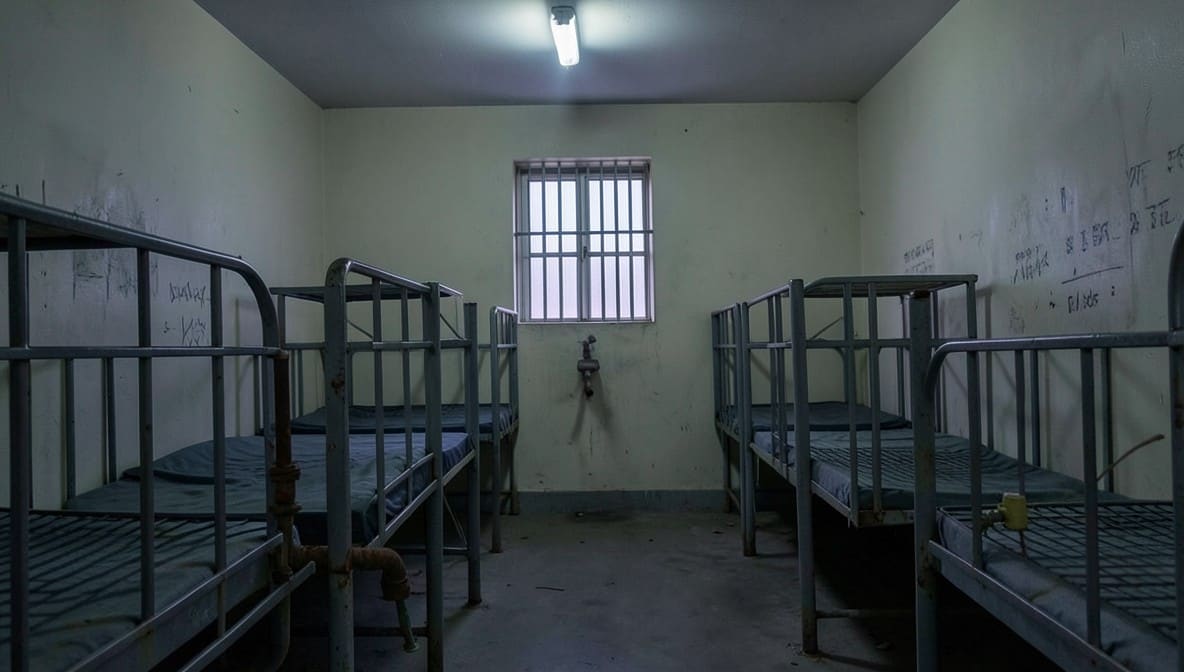
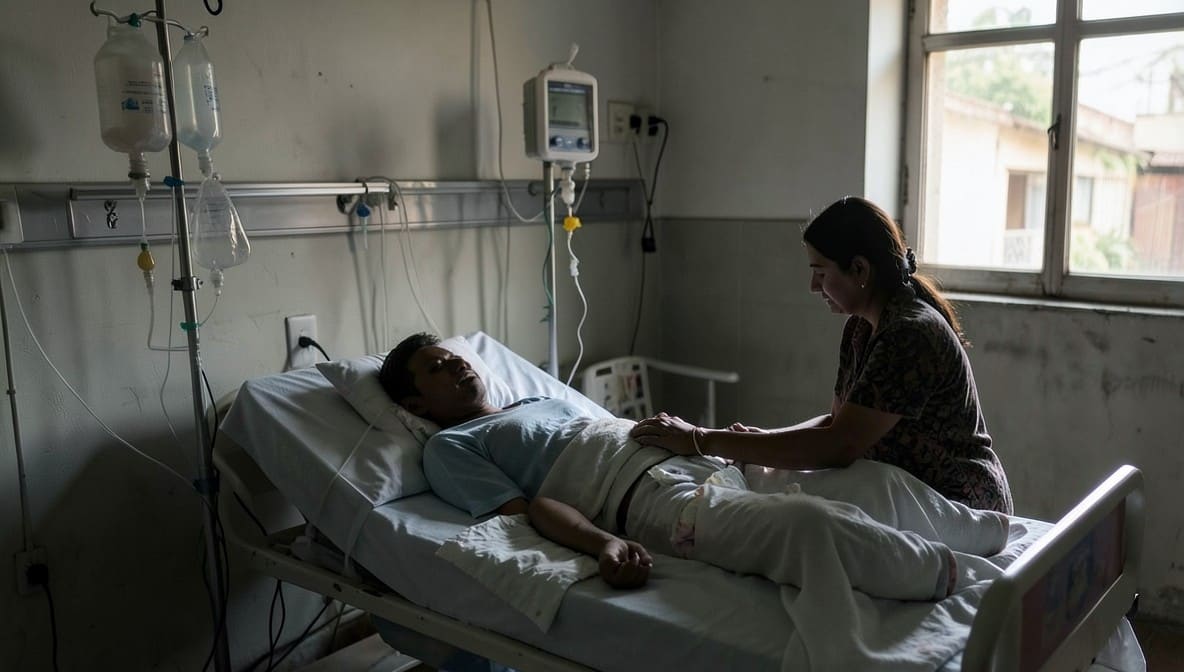
The petitioners, the widow and two children of a deceased man, seek monetary compensation after the deceased died due to a violent assault by another patient while undergoing treatment at Yerwada Mental Hospital, a State-run facility. The incident occurred on 20.11.2013, and the petitioners allege that the State’s failure to provide adequate staffing, segregation of violent patients, and timely medical response constituted a violation of the deceased’s fundamental right to life under Article 21.
Key Facts
- The deceased, born on 22.12.1961, was a licensed real estate agent operating a business under the Shops and Establishment Act, 1948.
- He was admitted to Yerwada Mental Hospital on 19.11.2013 for treatment of schizophrenia.
- On the night of 20.11.2013, another patient, Deepak Suravase, violently attacked him and another inmate in the observation ward, causing fatal head injuries and throttling.
- The postmortem report confirmed death due to head injury and throttling.
- The deceased’s wife, petitioner No.1, was informed of the death on 21.11.2013.
- The deceased’s son, petitioner No.3, suffers from 90% severe, permanent, non-progressive mental retardation, certified by a Government medical committee (Exhibit ‘H’).
- The deceased’s income tax returns for 2012-13 and 2013-14 showed net annual income of approximately Rs.1,90,095.
- The hospital had 72 patients in the observation ward on the night of the incident, with only three attendants on duty.
- The State admitted that the attendant-to-patient ratio of 1:5 mandated under Rule 22 of the State Mental Health Rules, 1990, was grossly violated.
- The incident was widely reported in media, and the petitioner had to file an RTI application to obtain information on staffing levels.
- An FIR was registered against Deepak Suravase, but proceedings remain suspended due to his mental illness.
Procedural History
- 19.11.2013: Deceased admitted to Yerwada Mental Hospital.
- 20.11.2013: Violent attack occurs; deceased dies.
- 21.11.2013: Petitioner No.1 informed of death.
- 03.05.2018: State, through Lokayukta order, agrees to pay Rs.1,00,000.
- 28.06.2018: Rs.1,00,000 paid to petitioner No.1.
- 2017: Writ Petition No. 6921 of 2017 filed before Bombay High Court.
- 25.03.2026: Judgment reserved.
- 08.06.2026: Judgment pronounced.
The Parties' Positions
Petitioners: Argued that the State’s failure to maintain minimum staffing, segregate violent patients, and ensure safety amounted to a clear violation of Article 21. They contended that compensation must be determined by analogy to motor accident claims, considering loss of dependency, future prospects, spousal and parental consortium, and the unique hardship of caring for a permanently disabled child.
Respondents: Conceded the incident but denied negligence, claiming staffing levels met norms. They relied on the Maharashtra Victim Compensation Scheme, 2014 (Rs.2,00,000) and Government Resolution dated 28.04.2025 (Rs.5,00,000 for custodial death), arguing these should cap compensation. They also claimed the deceased’s mental illness rendered him non-earning.
Relief Sought
The petitioners sought monetary compensation of Rs.29,30,000, inclusive of loss of dependency, future prospects, funeral expenses, spousal and parental consortium, and additional relief for the care of petitioner No.3. They also sought that the earlier payment of Rs.1,00,000 not be adjusted against the final award.
The Legal Issue
The central question was whether the State is liable to pay monetary compensation under Article 21 for the custodial death of a patient in a government mental hospital due to gross negligence, and if so, what is the appropriate methodology for determining the quantum of compensation in the absence of a specific statutory framework.
Arguments Presented
For the Petitioner
The petitioners relied on Rudul Sah v. State of Bihar, Nilabati Behera v. State of Orissa, and D.K. Basu v. State of West Bengal to argue that the State’s failure to protect life in custody triggers strict liability under public law. They contended that compensation must be calculated using the methodology from motor accident claims, as endorsed in Sarla Verma v. Delhi Transport Corporation and United India Insurance v. Satinder Kaur, to account for loss of dependency, future prospects, and consortium. They emphasized that the deceased’s income was proven via ITRs and that the permanent disability of petitioner No.3 demands additional compensation.
For the Respondent
The State argued that the compensation should be capped at Rs.5,00,000 under its 2025 Government Resolution for custodial deaths. It claimed that the deceased’s mental illness negated his earning capacity and that departmental inquiries and FIR registration absolved it of liability. It further contended that the petitioners’ reliance on motor accident formulae was inapplicable, as those statutes have specific statutory bases.
The Court's Analysis
The Court found that the State’s failure to comply with Rule 22 of the State Mental Health Rules, 1990 - which mandates a 1:5 attendant-to-patient ratio - was a clear breach of its duty of care. The presence of only three attendants for 72 patients, coupled with the failure to segregate a known violent patient, constituted gross negligence. The Court held that this negligence directly violated the deceased’s right to life under Article 21.
"The payment of compensation in such cases is not to be understood, as it is generally understood in a civil action for damages under the private law but in the broader sense of providing relief by an order of making ‘monetary amends’ under the public law for the wrong done due to breach of public duty."
The Court rejected the State’s reliance on its own compensation schemes as inadequate, noting they were designed for general victim compensation and not for systemic failures in custodial care. It affirmed that public law compensation is independent of criminal proceedings and must be determined by the actual loss suffered.
The Court adopted the methodology from motor accident claims, as endorsed in Sarla Verma, Pranay Sethi, and United India Insurance, to calculate loss of dependency. It accepted the amicus curiae’s calculation of net annual income at Rs.1,90,095, applied a 1/3 deduction for personal expenses, added 10% future prospects (despite age over 50), and used a multiplier of 11. The Court added Rs.15,000 for funeral expenses, Rs.40,000 for spousal consortium, and Rs.80,000 for parental consortium to each child, totaling Rs.16,83,433. Rounding this to Rs.17,00,000, the Court further awarded Rs.5,00,000 for the lifelong care burden of petitioner No.3, whose 90% mental disability was certified by Government doctors.
The Court emphasized that the State’s duty to protect life in custody is non-negotiable and that compensation must be restorative, not merely punitive. It held that the earlier payment of Rs.1,00,000 was a goodwill gesture and need not be adjusted.
The Verdict
The petitioners succeeded. The Court directed the State to pay Rs.22,00,000 as monetary compensation for the custodial death of the deceased, comprising Rs.17,00,000 for loss of dependency and consortium and Rs.5,00,000 for the lifelong care of petitioner No.3. The amount shall be paid within eight weeks from the date of judgment. If unpaid beyond this period, the amount shall carry interest at 9% per annum until payment. The earlier payment of Rs.1,00,000 shall not be adjusted against this award.
What This Means For Similar Cases
State Liability in Mental Health Custody Is Non-Negotiable
- Practitioners must now argue that any failure to meet statutory staffing norms in government mental hospitals constitutes per se negligence under Article 21.
- The burden shifts to the State to prove it took all reasonable steps to prevent harm - mere compliance with outdated norms is insufficient.
Compensation Must Reflect Real Loss, Not Administrative Caps
- Government compensation schemes cannot override judicial discretion when systemic negligence causes death.
- Courts may apply motor accident compensation formulae to calculate loss of dependency, future prospects, and consortium in custodial death cases.
- Future prospects must be included even for victims over 50 if earning capacity is proven via documentation like ITRs.
Permanent Disability of Dependents Demands Enhanced Compensation
- When a surviving dependent has permanent, severe disability, courts must award additional compensation beyond standard heads.
- Medical certification from Government authorities is conclusive evidence for such claims.
- The State cannot evade liability by citing the victim’s pre-existing condition - its duty is to protect all patients, regardless of vulnerability.