The Rajasthan High Court has reaffirmed the foundational role of habeas corpus in safeguarding the liberty of minors subjected to unlawful detention. In a swift and decisive order, the Court secured the release of a minor girl found in illegal custody in Delhi and directed her immediate return to her parents, underscoring the state’s non-negotiable duty to protect vulnerable individuals from extralegal confinement.
Background & Facts
The Dispute
The petitioner, Gyarsi Lal, filed a habeas corpus petition seeking the production and release of his minor daughter, identified as "Ms. K", who was allegedly held in illegal detention in Delhi. The petition named the State of Rajasthan, senior police officials, and five accused individuals as respondents, alleging that the girl had been wrongfully taken from her home in Tonk, Rajasthan, and transported to Delhi without legal authority or judicial oversight.
Key Facts
- The petitioner’s daughter, Ms. K, is a minor, aged below 18 years.
- She was last seen in her parental home in Banwara, District Tonk, Rajasthan.
- The petitioner lodged complaints with local police in Tonk and Jaipur, but no effective action was taken.
- The girl was located in Delhi, where she was being held in conditions described as unlawful and coercive.
- The accused respondents, including individuals residing in Jorawar Nagar, Jaipur, are alleged to have been involved in her abduction or unlawful confinement.
- No formal FIR or court order authorizing her detention was produced by any respondent.
Procedural History
- Date of disappearance: Not explicitly stated, but petition filed in early February 2026.
- 09.03.2026: The High Court issued an interim order directing the Jaipur Police to locate and produce the minor before the Court.
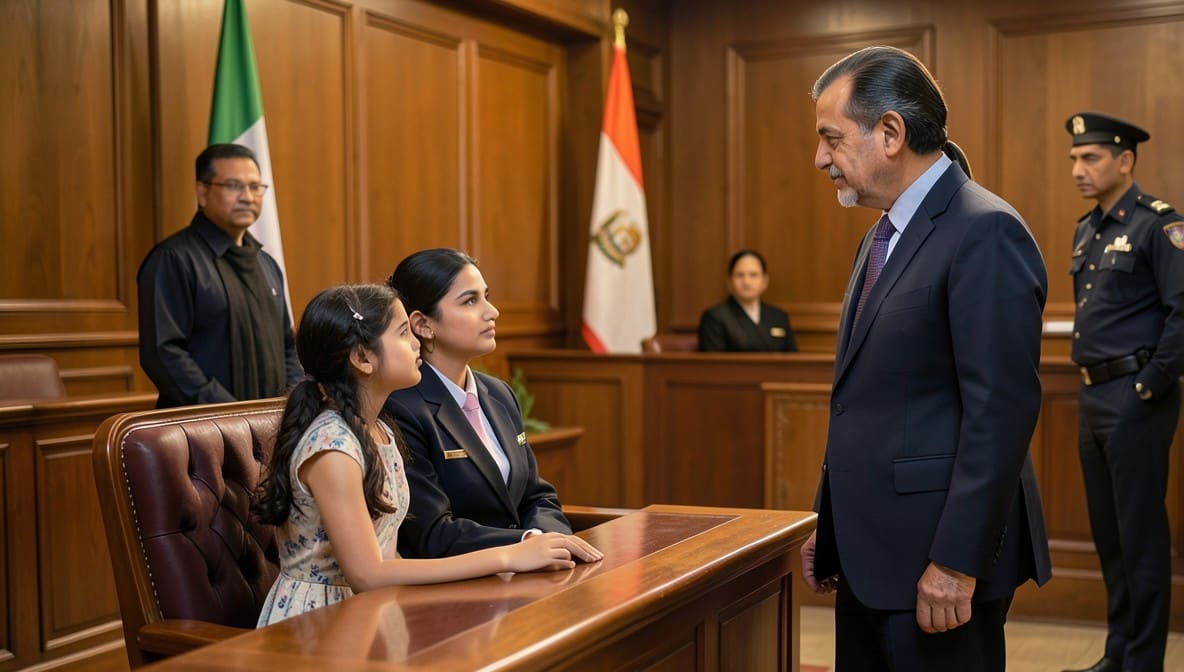
- 13.03.2026: The accused respondents, through the Police authorities, produced Ms. K before the Division Bench.
- On the day of hearing, the girl was brought from Delhi to Jaipur under police escort.
Relief Sought
The petitioner sought:
- Immediate production of the minor girl before the Court.
- Direction to the police to release her from illegal custody.
- Order for her safe return to her parents.
- Investigation into the circumstances of her detention and prosecution of those responsible.
The Parties' Positions
The petitioner contended that the detention of a minor without judicial sanction or parental consent violated Article 21 of the Constitution and the Juvenile Justice (Care and Protection of Children) Act, 2015. The respondents did not dispute the girl’s status as a minor or the fact of her detention in Delhi. The Public Prosecutor acknowledged the girl’s presence and confirmed she was brought to court under police custody.
The Legal Issue
The central question was whether the illegal detention of a minor outside judicial custody, without any lawful order or parental consent, justifies the invocation of habeas corpus to secure her immediate release and return to her lawful guardians.
Arguments Presented
For the Petitioner
The petitioner’s counsel, Mr. Veer Pratap Singh, argued that the detention of a minor without any judicial or statutory authority constitutes a clear violation of Article 21 and Article 15(3) of the Constitution. He cited Kishore Singh v. State of Rajasthan to emphasize that habeas corpus is a remedy available even against non-state actors when the state fails to prevent or remedy unlawful detention. He further contended that the failure of police to act on prior complaints amounted to dereliction of duty under Section 154 CrPC.
For the Respondent
The State’s representatives, including the Public Prosecutor and investigating officers, did not contest the factual assertions. They confirmed the girl was found in Delhi and produced before the Court. No legal justification for her detention was offered. The police admitted they had no warrant, no charge sheet, and no court order authorizing her custody.
The Court's Analysis
The Court did not engage in extended legal reasoning because the facts were undisputed and the detention was manifestly unlawful. The girl, a minor, was produced before the Court and unequivocally stated her desire to return to her parents. The Court noted that no legal basis existed for her continued custody by any authority.
"Indisputably, she is minor. On interaction, she submitted that the Police authorities have brought her from Delhi where, she was in illegal detention. She further stated that she wants to go with her parents-who are present in the Court."
The Court emphasized that the state, through its police machinery, has a constitutional obligation to protect minors from unlawful confinement, whether by private individuals or state agents. The absence of any judicial order, parental consent, or statutory provision rendered the detention void ab initio. The Court rejected any notion that the girl’s presence in Delhi or alleged association with the accused respondents could justify her detention without due process.
The Verdict
The petition was allowed. The Court directed the police authorities to immediately hand over the minor girl, Ms. K, to her parents present in court and ensure her safe return to her parental home in Banwara, District Tonk, Rajasthan. All pending applications were disposed of. No compensation or investigation order was issued, as the relief sought was fully satisfied by the girl’s release and return.
What This Means For Similar Cases
Habeas Corpus Is a Lifeline for Minors in Illegal Custody
- Practitioners must file habeas corpus petitions immediately when a minor is missing or suspected to be in unlawful detention, even if the detention occurs outside the state.
- Courts will prioritize such petitions and expect police to produce minors within 24 - 72 hours of being directed.
Police Cannot Act as Arbiters of Minor’s Welfare
- Police cannot detain minors based on suspicion, informal complaints, or alleged association with accused persons.
- Absence of a court order or statutory provision (e.g., under JJ Act) renders any detention illegal.
Parental Consent Is Paramount
- The expressed wish of a minor to return to parents, especially in the absence of abuse allegations, must be honored.
- Courts will not entertain claims of "protection" or "rehabilitation" without judicial scrutiny or child welfare committee involvement.