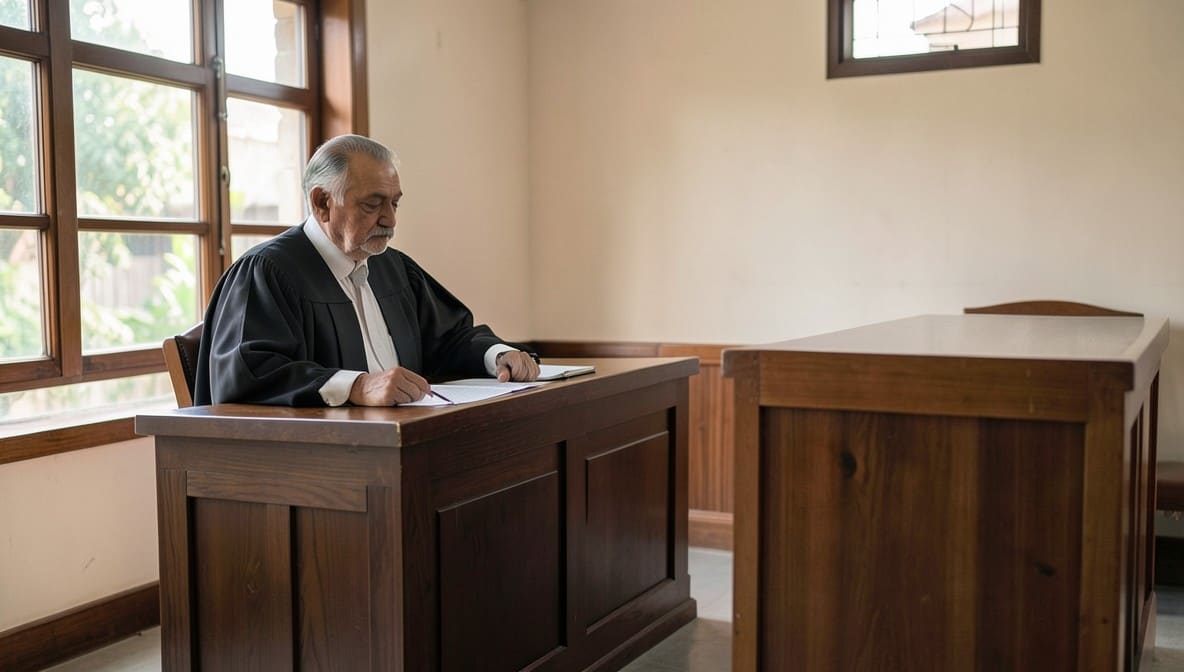
The Rajasthan High Court delivered a landmark judgment in Smt. Bhanwari Devi v. State of Rajasthan, holding a Tehsildar personally accountable for illegal detention of a detenue despite a valid suspension order under Section 91 of the Rajasthan Land Revenue Act, 1956. The Court awarded ₹2,00,000 compensation, directed a departmental inquiry, and barred the erring official from accessing revenue records pending investigation. This judgment reaffirms the inviolability of personal liberty under Article 21 and the principle that judicial orders must be obeyed without exception.
Background & Facts
The Dispute
The petitioner, Smt. Bhanwari Devi, sought redressal against the illegal detention of her husband, Shri Ghamandnath, who was sentenced to three months' civil imprisonment under Section 91(3) of the Rajasthan Land Revenue Act, 1956 for alleged encroachment on government land (Khasra No. 28/208, Village Nayagaon, District Nagaur). The Naib Tehsildar, Deh, passed the order on 05.03.2026, imposing imprisonment and a monetary penalty.
Key Facts
- 05.03.2026: Naib Tehsildar sentenced Shri Ghamandnath to 3 months' civil imprisonment
- 09.04.2026: District Collector dismissed the appeal against the sentence
- 15.04.2026: Additional Divisional Commissioner, Ajmer, suspended the sentence pending appeal (LR-75/No.103/2026) and directed release
- 15.04.2026 to 08.06.2026: Detenue remained confined despite suspension order, totaling 53 days of illegal detention
- 14.05.2026: Petitioner filed Habeas Corpus Petition (No. 282/2026) before Rajasthan High Court
- 15.05.2026: Coordinate Bench issued notice to respondents
- 01.06.2026: Tehsildar admitted knowledge of suspension order but took no action
- 08.06.2026: High Court directed immediate release of detenue
Procedural History
- 05.03.2026: Naib Tehsildar passed order under Section 91(3) of the Rajasthan Land Revenue Act, 1956
- 09.04.2026: District Collector dismissed appeal
- 15.04.2026: Additional Divisional Commissioner suspended sentence
- 14.05.2026: Habeas Corpus Petition filed
- 15.05.2026: High Court issued notice
- 01.06.2026: Tehsildar admitted knowledge of suspension order
- 08.06.2026: High Court ordered release
- 10.06.2026: Arguments concluded; order reserved
- 12.06.2026: Final judgment pronounced
The Parties' Positions
- Petitioner: Argued that the detenue's continued confinement, despite the suspension order, violated Articles 14 and 21 of the Constitution. Asserted that the Tehsildar had actual knowledge of the suspension order and wilfully disobeyed it. Sought compensation and disciplinary action.
- Respondent No. 4 (Tehsildar): Initially denied knowledge of the suspension order but later admitted acquiring knowledge on 01.06.2026. Offered no satisfactory explanation for the delay in releasing the detenue.
Relief Sought
The petitioner sought:
- Declaration of illegal detention
- Compensation for violation of fundamental rights
- Departmental inquiry against the Tehsildar
- Personal liability of the Tehsildar for compensation
- Interim relief preventing the Tehsildar from accessing revenue records pending inquiry
The Legal Issue
The central question was whether the continued detention of Shri Ghamandnath, despite a valid suspension order passed by the competent Appellate Authority, constituted illegal detention under Article 21 of the Constitution, and if so, what remedies including compensation and disciplinary action were warranted against the erring public official.
Arguments Presented
For the Petitioner
- Relied on Kanu Sanyal v. District Magistrate and ADM, Jabalpur v. Shivakant Shukla to argue that the writ of habeas corpus is a fundamental safeguard of personal liberty
- Contended that the suspension order dated 15.04.2026 was binding and its non-compliance rendered the detention illegal
- Highlighted the detenue's medical condition (HIV) and the petitioner's cancer diagnosis, arguing aggravated constitutional violation
- Cited Rudul Sah v. State of Bihar and Nilabati Behera v. State of Orissa to argue for compensatory relief under public law
- Urged that the Tehsildar's conduct amounted to wilful disobedience of judicial orders, warranting personal liability
For the Respondent/State
- Tehsildar: Initially denied knowledge of the suspension order but later admitted knowledge from 01.06.2026. Offered no justification for continued detention thereafter
- Additional Advocate General: Submitted that the Superintendent of Police had communicated the suspension order to the District Collector and concerned authorities
The Court's Analysis
The Court conducted a detailed examination of the constitutional, legal, and factual dimensions of the case:
Constitutional Backdrop of Habeas Corpus
The Court traced the historical and constitutional significance of the writ of habeas corpus, calling it "the most important safeguard of human freedom." It relied on:
"The writ of habeas corpus is essentially a procedural writ. It deals with the machinery of justice, not the substantive law. The object of the writ is to secure release of a person who is illegally restrained of his liberty." (Kanu Sanyal v. District Magistrate)
"The rule of law meets with its Waterloo when the State's minions become law-breakers and so the court, as the sentinel of the nation and the voice of the Constitution, runs down the violators with its writ." (Sunil Batra (2) v. State (UT of Delhi))
The Court emphasized that Article 21 guarantees personal liberty and that any deprivation must be strictly in accordance with procedure established by law, which must be "right, just, and fair" (Maneka Gandhi v. Union of India).
Nature of Illegal Detention
The Court distinguished between detention that was illegal from inception and detention that became illegal upon suspension of the sentence:
- Initial Detention (05.03.2026 to 15.04.2026): Lawful, as it was based on the Naib Tehsildar's order
- Post-Suspension Detention (15.04.2026 to 08.06.2026): Illegal, as the suspension order eclipsed the legal basis for confinement
The Court held that from 01.06.2026, when the Tehsildar admitted knowledge of the suspension order, the detention was provably illegal and constituted a continuing constitutional wrong.
Conduct of Respondent No. 4
The Court critically examined the Tehsildar's conduct:
-
Knowledge of Suspension Order: The Court rejected the Tehsildar's claim of ignorance, noting:
- The suspension order would ordinarily be communicated through official channels
- The petitioner personally presented the order
- Notice of the habeas corpus petition was issued on 15.05.2026, putting the State on notice
-
Wilful Disobedience: The Court held that the Tehsildar's continued detention of the detenue, despite admitted knowledge from 01.06.2026, was wilful, deliberate, and contumacious, describing it as "brazen defiance" of judicial authority.
"An officer who continues to confine a person in the face of a valid suspension order, repeated personal requests for release, institution of a writ petition in the High Court, and his own admitted knowledge of the order, cannot be heard to say that his misconduct was innocent or accidental."
Principle of 'Obey First, Appeal Later'
The Court relied on Atma Ram Properties (P) Ltd. v. Federal Motors (P) Ltd. and Daudayal v. State of Rajasthan to reiterate the foundational principle that judicial orders must be obeyed unless stayed by a superior authority:
"Once the detenue has been ordered to be released, the same has to be followed no matter what. The only scenario in which it would not be so done was if a superior Court has granted stay in the matter."
The Court held that the Tehsildar's failure to comply with the suspension order violated this principle and undermined the rule of law.
Compensation as Constitutional Remedy
The Court extensively discussed the jurisprudence of compensatory public law remedies:
- Rudul Sah v. State of Bihar: First case to award compensation for violation of Article 21
- Nilabati Behera v. State of Orissa: Held that compensation under public law is "in the nature of exemplary damages" for breach of public law duty
- Daudayal v. State of Rajasthan: Awarded ₹11,00,000 for 24 days of illegal detention
The Court held that compensation was necessary to:
- Acknowledge the constitutional wrong
- Provide meaningful relief to the victim
- Deter future misconduct
"The right to compensation is some palliative for the unlawful acts of instrumentalities which act in the name of public interest and which present for their protection the powers of the State as a shield."
Personal Liability of Public Officials
The Court broke new ground by directing that the compensation of ₹2,00,000 be paid personally by the Tehsildar, not the State. It held:
"The purpose of public law compensation would be subverted if the entire financial burden were always absorbed by the State... while the officer whose wilful misconduct caused the violation walks away without personal consequence."
The Court emphasized that personal liability was necessary for accountability and deterrence, particularly given the Tehsildar's wilful misconduct.
The Verdict
The Court issued the following directions:
-
Declaration: The detention of Shri Ghamandnath from 01.06.2026 to 08.06.2026 was declared illegal and violative of Article 21. The period from 15.04.2026 to 01.06.2026 would be determined based on the departmental inquiry.
-
Compensation: Respondent No. 4 (Tehsildar) was directed to pay ₹2,00,000 personally to the detenue within 45 days. The State was barred from reimbursing or facilitating the payment.
-
Departmental Inquiry: The Additional Chief Secretary, Revenue, was directed to conduct a time-bound inquiry into:
- Official communication of the suspension order
- Personal presentation of the order by the petitioner
- Constructive/actual knowledge of the Tehsildar
- Wilful disobedience of the suspension order
-
Interim Relief: The Tehsildar was relieved of his field posting and barred from accessing the Tehsil office or revenue records pending inquiry.
-
Disposal: The Habeas Corpus Petition was disposed of with all pending applications.
What This Means For Similar Cases
Personal Liability of Public Officials for Constitutional Violations
- Landmark Precedent: This judgment establishes that public officials can be held personally liable for compensation where their wilful misconduct results in violation of fundamental rights. Practitioners should cite this case to argue for personal liability in appropriate cases.
- Deterrent Effect: The direction that the Tehsildar pay compensation from his own income serves as a strong deterrent against executive impunity.
- Scope of Application: While the case arose under the Rajasthan Land Revenue Act, 1956, the principle of personal liability extends to all contexts where public officials wilfully disobey judicial orders.
The Sanctity of Judicial Orders
- Non-Negotiable Compliance: The principle of 'obey first, appeal later' is reaffirmed with absolute clarity. No public official can justify non-compliance with a judicial order on grounds of ignorance or administrative delay.
- Constructive Knowledge: The Court imputed knowledge of the suspension order to the Tehsildar through multiple channels:
- Official communication from appellate authority
- Personal presentation by the petitioner
- Notice of habeas corpus proceedings
- Implications for Revenue and Criminal Proceedings: Revenue officers and police officials must ensure immediate compliance with suspension/release orders. Failure to do so may result in contempt proceedings and departmental action.
Compensation for Illegal Detention
- Quantum Factors: Courts will consider:
- Duration of illegal detention
- Vulnerability of the detenue (medical condition, economic status)
- Impact on family members
- Degree of official misconduct (negligence vs. wilful disobedience)
- Medical Vulnerability: The detenue's HIV status and the petitioner's cancer diagnosis were aggravating factors in determining compensation.
- Public Law Remedy: Compensation under Article 226 is independent of private law remedies and serves both restorative and deterrent purposes.
Departmental Accountability
- Mandatory Inquiry: The Court directed a time-bound departmental inquiry, setting a precedent that constitutional violations by public officials must trigger disciplinary proceedings.
- Interim Measures: The Tehsildar was relieved of his posting pending inquiry, signaling that officials accused of grave misconduct may face immediate administrative consequences.
- Stringent Penalties: The Court indicated that findings of guilt would warrant "the most stringent disciplinary penalty available."
Practical Takeaways for Practitioners
- Documentary Evidence: Always obtain and preserve certified copies of judicial orders and proof of presentation to authorities.
- Immediate Action: Upon non-compliance with release orders, file contempt petitions or habeas corpus petitions without delay.
- Medical Records: Document the detenue's medical condition to argue aggravated violation of Article 21.
- Personal Liability Arguments: In cases of wilful misconduct, argue for personal liability of erring officials, citing this judgment.
- Departmental Inquiry: Request courts to direct time-bound inquiries with specific terms of reference.