The Gauhati High Court has clarified that railway administrations cannot evade liability for wet damage to perishable goods merely because the consignment was booked at owner’s risk. The judgment reinforces that negligence in transit - such as failure to maintain wagon integrity or delayed movement despite knowledge of perishability - trumps contractual risk allocations under the Railways Act.
Background & Facts
The Dispute
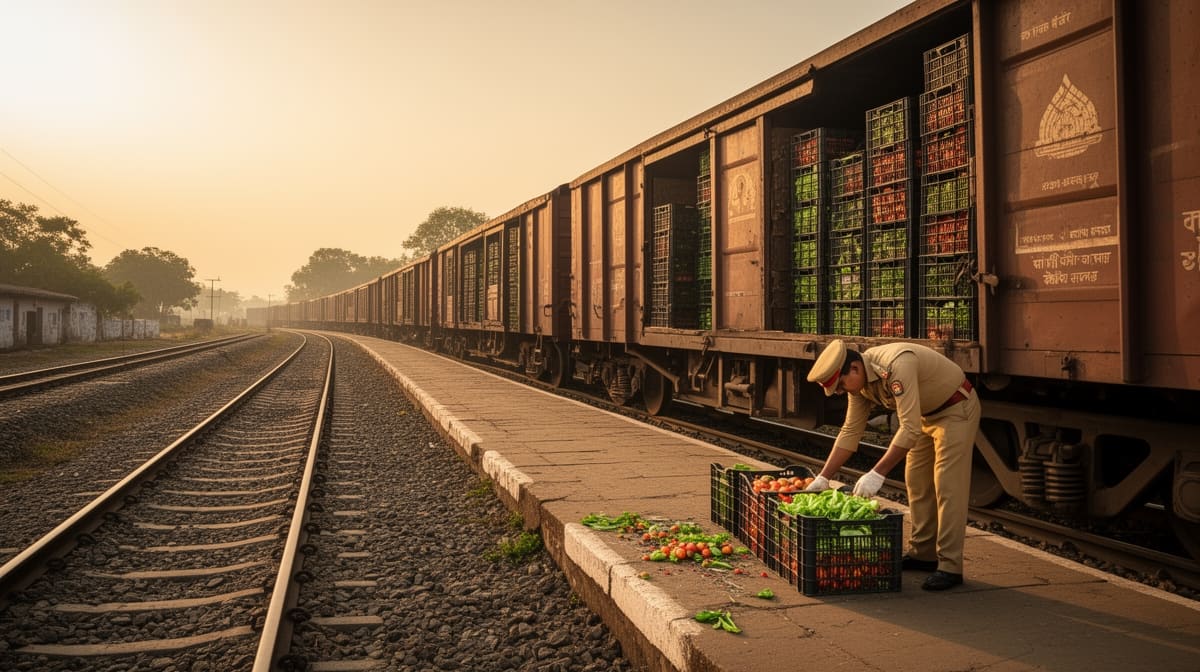
The respondent, M/s K.C. Enterprise, booked a trainload consignment of 850 bags of potatoes (50 kg each, totaling 42,500 kg) on 15.09.2009 from DKZ to NGC under Railway Receipt No. 212041708. The consignment was transported under trainload condition and marked with the remark: "wagon jointly examined found fit and water tight, trainload condition complied with, loaded direct from truck/cart to wagon, loading not supervised by Railway staff, bags not of uniform size, condition of contents not checked, outer not complained of, O.R." The consignment was booked at owner’s risk rate under Section 97 of the Railways Act, 1989.
Key Facts
- The consignment was loaded on 15.09.2009.
- The wagons were stranded at KIUL from 19.09.2009 to 25.09.2009 (6 days).
- On 25.09.2009, the Chief Goods Superintendent, NGC, issued a telegraphic message urging movement of the rake to prevent damage to perishable potatoes.
- The consignment reached destination on 27.09.2009.
- Upon unloading, 13,150 kg of potatoes were found wet, rotten, and emitting foul odor.
- The Railway issued Open-cum-Assessment Delivery Report (Exhibit A3) and Record of Joint Survey of Open Delivery (Exhibit A4), confirming damage.
- The damage breakdown: 13,799 kg total damage, less 5% salvage (689.95 kg), net damage 13,109.05 kg.
- The claimant submitted original invoices, delivery reports, and affidavits as evidence (Exhibits A1 - A10).
- The Railway submitted Railway Receipt, Forwarding Note (Exhibit R4), and Railway Board circulars (Exhibits R1 - R9).
- No oral evidence was adduced by either party.
Procedural History
- 15.09.2009: Consignment booked from DKZ to NGC.
- 25.09.2009: Railway issued telegraphic message urging movement of stranded rake.
- 27.09.2009: Consignment delivered in damaged condition.
- 12.10.2009: Claimant served notice under Section 106 of Railways Act.
- 05.02.2010: Claim Application filed before Railway Claims Tribunal, Guwahati (O.A. No. 5/2010).
- 10.05.2016: Railway Claims Tribunal awarded compensation of Rs. 2,52,611/- for damage.
- 26.02.2026: Appeal heard and reserved by Gauhati High Court.
- 13.03.2026: Judgment pronounced dismissing the appeal.
The Parties' Positions
For the Appellant (Railway):
- Contended that the consignment was booked at owner’s risk under Section 97.
- Relied on remarks in Railway Receipt to argue that loading was unsupervised and condition of contents unverified.
- Argued that burden of proving negligence lay on the claimant.
- Claimed non-production of original trade invoice invalidated the claim.
- Invoked Hari Sao v. State of Bihar to support denial of liability.
For the Respondent (Claimant):
- Argued that wet damage is distinct from shortage.
- Cited Railway Board Circular dated 24.09.1991, stating that "said to contain" remarks are irrelevant for wet damage.
- Relied on Union of India v. Laduram to show that defective packing must be explicitly recorded in forwarding note.
- Highlighted that Railway itself issued reports confirming leaky wagons and open doors.
- Emphasized that Railway had prior knowledge of perishability and failed to act.
Relief Sought
The Railway sought to set aside the Tribunal’s award of Rs. 2,52,611/- and dismiss the claim. The claimant sought confirmation of the award and compliance within a stipulated time.
The Legal Issue
Can a railway administration deny liability for wet damage to perishable goods under Section 97 of the Railways Act, 1989, merely because the consignment was booked at owner’s risk and the Railway Receipt contained "said to contain" remarks, when the Railway’s own documents confirm wagon leakage and delayed transit despite knowledge of perishability?
Arguments Presented
For the Appellant
The appellant argued that Section 97 of the Railways Act absolves the Railway of liability for loss or damage to goods booked at owner’s risk, unless the claimant proves negligence or misconduct by the Railway or its servants. It contended that the remarks on the Railway Receipt - "loading not supervised," "condition of contents not checked," and "O.R." - shifted the burden of proof to the consignor. It further argued that the absence of the original trade invoice prevented verification of the consignment’s value and quantity, rendering the claim unproven. The appellant relied on Hari Sao v. State of Bihar to assert that mere possession of goods does not imply liability for damage.
For the Respondent
The respondent countered that wet damage is fundamentally different from shortage or loss of quantity. It cited Railway Board Circular dated 24.09.1991, which explicitly states that "said to contain" remarks and unsupervised loading are irrelevant for claims of wet damage. The respondent emphasized that the Railway’s own documents - Open-cum-Assessment Delivery Report and Joint Survey Report - confirmed the wagon was leaky and the door was partially open, establishing negligence. It also relied on Union of India v. Laduram to argue that for the Railway to escape liability, the forwarding note must explicitly record both defective packing and its consequence, which was absent here. The Railway’s failure to move the rake despite a telegraphic warning confirmed its culpable delay.
The Court's Analysis
The Court undertook a detailed statutory and factual analysis. It first distinguished between claims of shortage and wet damage, noting that the Railway Board’s circular dated 24.09.1991 explicitly excludes "said to contain" remarks from being a defense in cases of wet damage. The Court held that such remarks are only relevant to quantity disputes, not to damage caused by environmental exposure during transit.
"It has been clearly indicated to Zonal Railways vide letter no. 77/TC III/49 dated 25.02.1977 that claims for damage by wet during transit are payable unless it is proved by the Railway that the goods were already in damaged condition at the time of booking."
The Court further examined the Forwarding Note (Exhibit R4) and found no adverse remark regarding defective packing or likelihood of wet damage. Under Union of India v. Laduram, the absence of such a remark meant the Railway could not shift blame to the consignor. The Court emphasized that the Railway had a duty to refuse booking if the packaging appeared defective, and its failure to do so constituted acquiescence.
The Court also found that the Railway’s own documents - Exhibits A3 and A4 - confirmed the wagon was leaky and the door was partially open. This constituted prima facie evidence of negligence under Section 97. The Court rejected the appellant’s reliance on Hari Sao, noting that case dealt with theft and unexplained loss, not wet damage caused by known environmental exposure.
The Court concluded that the Railway’s delay in moving the rake, despite explicit warning of perishability, was a critical failure. Knowledge of perishability, combined with failure to act, transformed the situation from a contractual risk allocation to a case of actionable negligence.
The Verdict
The appeal was dismissed. The Gauhati High Court upheld the Railway Claims Tribunal’s award of Rs. 2,52,611/- as compensation for wet damage to 13,109.05 kg of potatoes. The Court directed the Railway to comply with the award within 45 days from the date of judgment. No interest was awarded beyond the Tribunal’s order, and costs were not separately directed.
What This Means For Similar Cases
Wet Damage Cannot Be Dismissed on "Said to Contain" Remarks
- Practitioners must argue that "said to contain" or "owner’s risk" remarks are legally irrelevant for wet, rot, or moisture-related damage claims.
- Railway Board Circulars dated 24.09.1991 and 25.05.1977 are binding precedents and must be cited to override Railway defenses.
- Claims for wet damage must focus on transit conditions, not packaging or loading supervision.
Railway Negligence Is Presumed When Infrastructure Fails
- If Railway’s own inspection reports confirm leaky wagons, open doors, or delayed movement despite perishability warnings, negligence is established.
- The burden shifts to the Railway to prove the damage existed prior to booking - this is extremely difficult without pre-booking photographs or inspection records.
- Delay in transit of perishables, even if caused by operational reasons, constitutes actionable negligence if the Railway had prior knowledge.
Forwarding Note Must Explicitly Record Risk for Liability to Shift
- To invoke owner’s risk defenses, the Railway must record in the Forwarding Note both defective packing AND its specific consequence (e.g., "packaging defective, likely to cause wet damage").
- Generic remarks like "bags not uniform" or "loading unsupervised" are insufficient.
- Absent such explicit recording, the Railway remains liable under Section 97 even for owner’s risk consignments.