The Kerala High Court has reaffirmed the absolute liability of common carriers under the Carriers Act 1865 for damage to goods occurring during transit, irrespective of negligence. The judgment clarifies that subrogation rights arise automatically upon insurance settlement and that transhipment incidental to delivery remains within the scope of transit. This decision provides critical guidance for insurers, transporters, and consignors navigating liability disputes.
Background & Facts
The Dispute
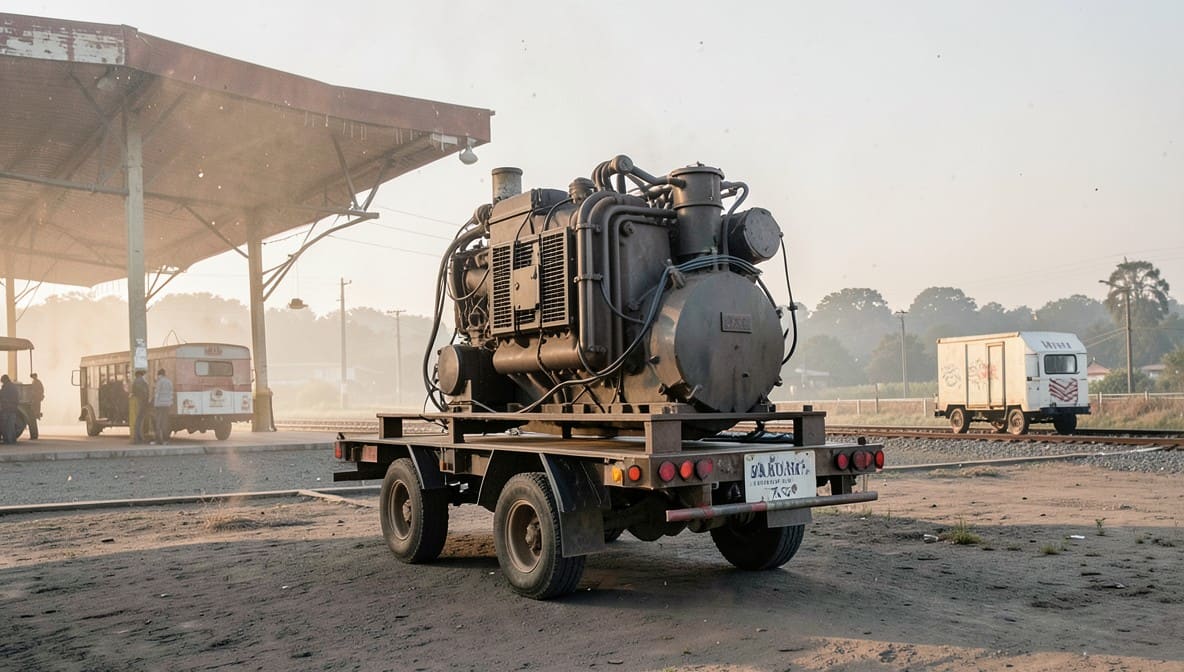
The dispute arose from the damage sustained by a transformer during transportation from Angamaly, Kerala to Khurja Traction Sub Station (TSS), Uttar Pradesh. The consignor, Transformers and Electricals Ltd., engaged Mahaveera Transport Pvt. Ltd. as the carrier under an invoice dated 19.02.2008 (Ext.A1). The transformer was insured under a policy held by The Oriental Insurance Company Ltd. (first plaintiff). After the transformer was damaged during transit, the insurer indemnified the consignor and filed a suit for recovery of Rs. 12,50,000 under the right of subrogation.
Key Facts
- The transformer was booked for transport from Angamaly to Khurja TSS on 19.02.2008.
- The consignment reached Khurja Railway Station on 17.03.2008, but Khurja TSS (the traction substation) was approximately 40 metres away.
- On 17.03.2008, emails (Ext.B1, Ext.B2) confirmed the consignment had not reached Khurja TSS and required transhipment to a smaller trailer due to obstructions.
- The consignor agreed to pay ₹ 80,000 for transhipment, as per email Ext.B4 dated 18.03.2008.
- During transhipment near Punchavadi Colony, Bulandshahr, the transformer toppled and was damaged on or about 19.03.2008.
- The carrier issued Ext.A5 on 02.06.2008, acknowledging the damage occurred while siding the vehicle, without accepting liability.
- The insurer’s preliminary survey report (Ext.A3) recorded the damage occurred on 19.03.2008 at Punchavadi, Khurja, due to toppling during transit.
- The insurer paid ₹ 12,50,000 to the consignor on 20.05.2008 under Ext.A10 (discharge voucher).
- Subrogation was effected via Ext.A11, issued by the Senior Manager (Marketing) of the consignor.
Procedural History
- 19.02.2008: Consignment booked under LR No. 07-06971.
- 17.03.2008: Consignment reached Khurja Railway Station; transhipment arranged.
- 19.03.2008: Transformer damaged during transhipment near Punchavadi.
- 02.06.2008: Carrier issued Ext.A5 acknowledging damage.
- 20.05.2008: Insurer paid indemnity to consignor.
- 25.06.2008: Ext.A11 (subrogation letter) issued.
- 10.02.2011: Suit (OS No. 106 of 2011) filed before Principal Sub Court, North Paravur.
- 12.04.2013: Trial court decreed the suit for Rs. 12,50,000 with interest.
- 20.05.2013: Appeal filed before Kerala High Court as RFA No. 655 of 2013.
- 02.07.2026: Judgment delivered by Division Bench.
The Parties' Positions
Appellants (Defendants - Mahaveera Transport):
- Argued that the damage occurred after the consignment reached its destination (Khurja Railway Station), and transhipment was a separate contract.
- Contended that the insurance policy did not cover transhipment beyond the contractual destination.
- Challenged the competency of the signatory to the plaint and the validity of Ext.A11 (subrogation).
- Asserted that no negligence was proven and no notice under Section 10 of the Carriers Act was given.
Respondents (Plaintiffs - Oriental Insurance & Transformers and Electricals):
- Maintained that Khurja TSS was the destination, not Khurja Railway Station.
- Argued that transhipment was part of the transit process to achieve the contractual destination.
- Submitted that Ext.A5 and Ext.A3 corroborated the occurrence of damage during transit.
- Relied on automatic subrogation under law and the competency of the Regional Manager to institute the suit.
Relief Sought
The plaintiffs sought recovery of Rs. 12,50,000 paid as indemnity, with interest at 12% per annum from the date of payment (20.05.2008) until realization, and costs of litigation. The defendants sought dismissal of the suit on grounds of non-coverage, lack of negligence, defective institution, and absence of notice.
The Legal Issue
The central questions were: (1) Whether damage occurring during transhipment to the final destination constitutes transit under the Carriers Act 1865; (2) Whether subrogation is valid without a formal letter if the consignor joins the suit; (3) Whether the suit is maintainable if signed by a principal officer without formal authorization; and (4) Whether proof of negligence is required to establish liability of a common carrier.
Arguments Presented
For the Appellant
The appellants relied on the distinction between contractual destination (Khurja Railway Station) and the final delivery point (Khurja TSS). They argued that transhipment was a separate commercial arrangement, not part of the original carriage contract, and thus outside the policy coverage. They cited State Bank of Travancore v. Kingston Computers to challenge the signatory’s competency and contended that Ext.A11 lacked authority. They further argued that without a finding of negligence, liability could not be imposed under the Carriers Act, and that Section 10 notice was not proved.
For the Respondent
The respondents relied on Ext.A5 and Ext.A3 to establish that the damage occurred before reaching Khurja TSS. They cited Bajaj Allianz v. State of Madhya Pradesh to argue that transhipment incidental to delivery remains within transit. They invoked Economic Transport Organisation v. Charan Spinning Mills to assert that subrogation arises automatically upon indemnity. They relied on United Bank of India v. Naresh Kumar to affirm that a principal officer may sign pleadings without formal authorization. They submitted that the Carriers Act 1865 imposes absolute liability, and Section 10 notice was proved via Ext.A4 and Ext.A4(a).
The Court's Analysis
The Court undertook a detailed examination of the factual record and legal principles governing common carriers. It first addressed the critical issue of whether the damage occurred during transit. The Court rejected the appellants’ argument that Khurja Railway Station was the destination, noting that Ext.A1 clearly specified Khurja TSS as the destination. Emails Ext.B1 and Ext.B2 confirmed the consignment had not reached the final destination. The carrier’s own letter Ext.A5 acknowledged the damage occurred while siding the vehicle en route to Khurja TSS.
"The notion of 'in transit' accepts that the movement of the goods may be interrupted by circumstances associated with the requirements of their transportation."
The Court then applied the Supreme Court’s reasoning in Bajaj Allianz v. State of Madhya Pradesh, holding that transhipment to overcome logistical barriers to reach the contractual destination is an integral part of transit. The ₹ 80,000 payment for transhipment was not a new contract but an incidental cost to complete the original carriage obligation.
On subrogation, the Court held that even if Ext.A11 lacked formal authority, the consignor had joined the suit as a plaintiff, thereby validating the claim. The Court further relied on Economic Transport Organisation v. Charan Spinning Mills, which established that subrogation arises by operation of law upon payment of the claim, rendering a formal letter unnecessary.
Regarding the competency of the signatory, the Court affirmed the trial court’s view that the Regional Manager of the insurer, as a principal officer, was competent to sign the plaint under Order 29 Rule 1 CPC. The Court distinguished State Bank of Travancore on facts, noting that the signatory here held a recognized position within the corporate hierarchy.
On the question of negligence, the Court held that the Carriers Act 1865 imposes absolute liability on common carriers, as affirmed in Nath Bros. v. Best Roadways. The carrier’s liability is akin to that of an insurer, and the burden lies on the carrier to prove an exception - such as act of God, inherent vice, or consignor’s fault. None of these exceptions were established. The Court noted that Section 10 notice was proved through postal acknowledgment (Ext.A4(a)).
The Verdict
The appeal was dismissed. The Court upheld the trial court’s decree, directing the appellants to pay Rs. 12,50,000 to the respondents, with interest at 9% per annum from 20.05.2008 until realization. Costs of Rs. 25,000 were awarded to the respondents. The Court held that the damage occurred during transit, subrogation was valid, the suit was properly instituted, and the carrier’s liability was absolute under the Carriers Act 1865.
What This Means For Similar Cases
Transit Includes Necessary Transhipment
- Practitioners must argue that any transhipment undertaken to overcome logistical barriers to reach the contractual destination remains within the scope of transit.
- Insurance claims cannot be denied merely because damage occurred during a transfer from a railway station to a final site.
- Carriers cannot evade liability by claiming transhipment was a separate contract unless explicitly agreed in writing.
Automatic Subrogation Is the Rule
- A formal subrogation letter is not mandatory; indemnity payment triggers subrogation by operation of law.
- If the insured joins the suit as a plaintiff, the insurer’s claim is validated even if the subrogation document is defective.
- Insurers should still issue subrogation letters for evidentiary clarity, but failure to do so does not defeat the claim.
Carrier Liability Is Absolute Unless Exception Proven
- In suits under the Carriers Act 1865, plaintiffs need not prove negligence.
- The burden shifts entirely to the carrier to prove one of the statutory exceptions.
- Courts will not entertain defenses based on lack of negligence unless the carrier adduces evidence of an exception.