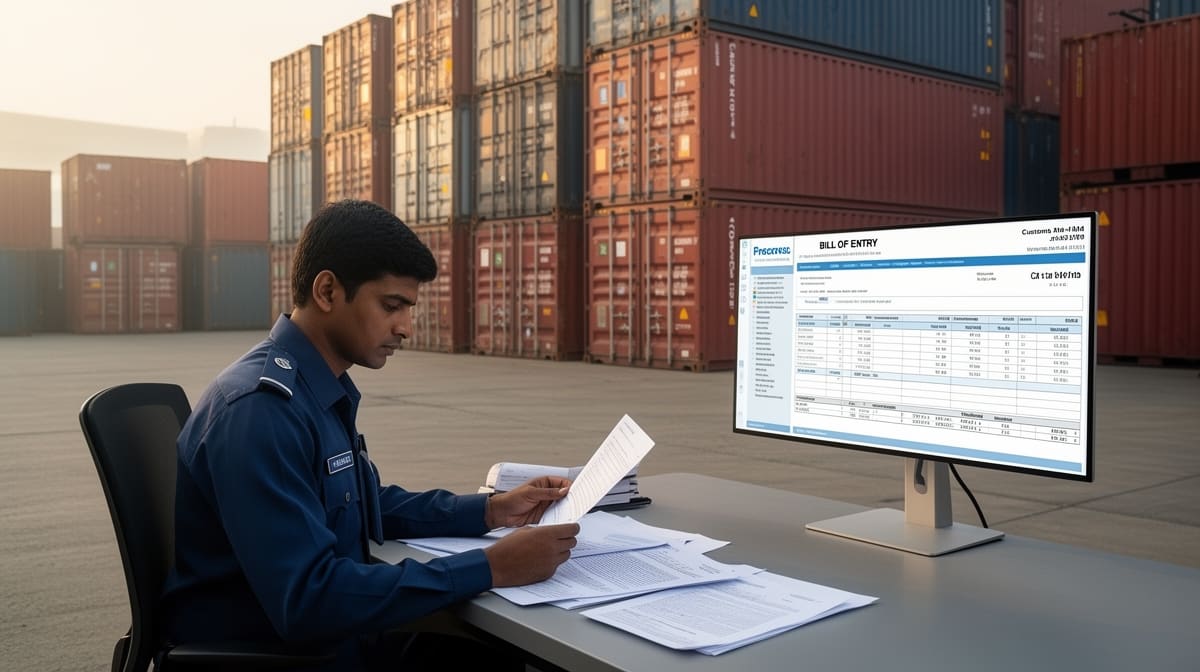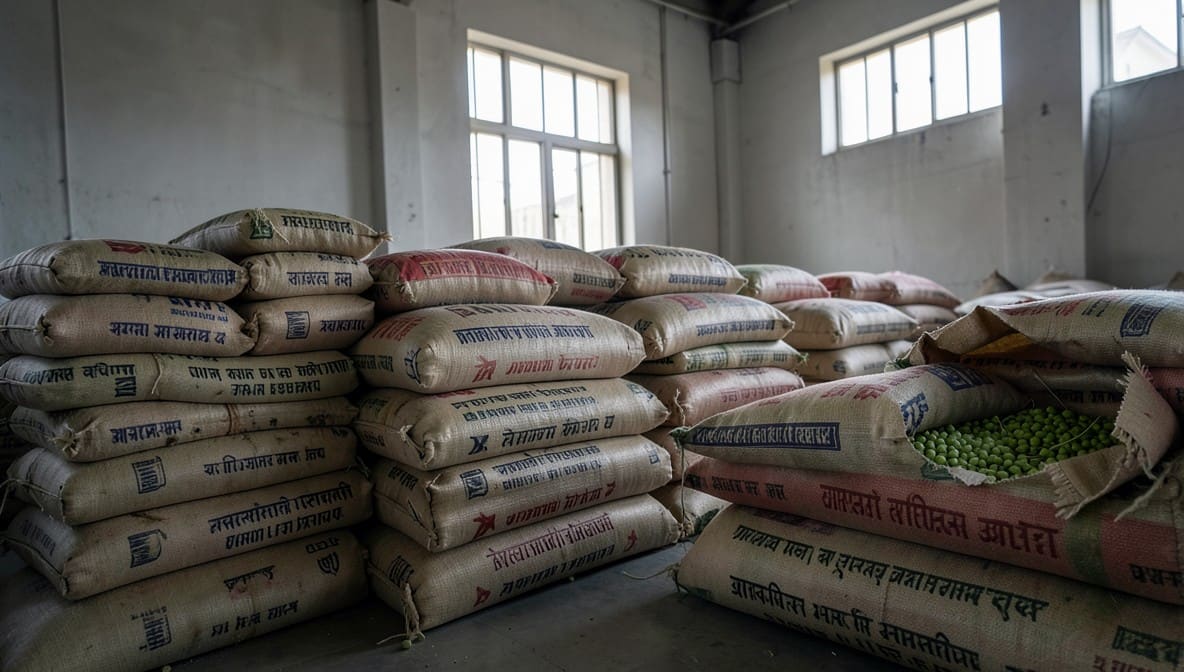
The Customs, Excise & Service Tax Appellate Tribunal has clarified a critical principle in customs law: a custodian of imported goods cannot be held liable for duty on discrepancies between declared and actual contents unless there is affirmative evidence that the container seal was tampered with while in its custody. This ruling reinforces the limited scope of custodial responsibility under the Customs Act, 1962, and sets a binding standard for enforcement agencies.
Background & Facts
The Dispute
The dispute arose from the Principal Commissioner of Customs, New Delhi, issuing a Show Cause Notice dated 27.09.2024 against M/s Container Corporation of India Limited (CONCOR), a public sector undertaking acting as custodian of imported goods at its Inland Container Depot (ICD) in Tughlakabad. The Commissioner proposed a demand of Rs. 51,80,776/- as customs duty and imposed penalties of Rs. 5,10,000/- under Section 112(a)(ii) and Rs. 2,00,000/- under Section 117 of the Customs Act, 1962. The basis was a discrepancy between the goods declared in the Import General Manifest (IGM) and those found during examination of five unclaimed containers.
Key Facts
- Five containers were identified for scrutiny: GESU-6789950/40, BEAU-2170195/20, KKTU-7320971/20, BEAU-2175999/20, and SCZU-7927305/20.
- IGM declared contents as: aluminum ingots, high-grade zinc ingots, N-5 face masks, and special-grade zinc ingots.
- CONCOR’s Inventory Report dated August/September 2023, submitted to obtain a No Objection Certificate (NOC) for disposal, stated the contents as cement blocks (40x20 cm).
- Customs conducted five joint examinations of these containers on: 26.09.2022, 17.05.2023, 19.05.2023, 16.05.2023, and 18.08.2023.
- Each examination was recorded in a Panchnama signed by customs inspectors, CONCOR representatives, security personnel, and surveyors.
- The examination reports consistently recorded the contents as cement blocks.
- Seal integrity was noted in three reports as "YES"; in two reports, no marking was made under the seal integrity column.
- CONCOR submitted seal registers and records in response to letters dated 19.04.2024 and 01.05.2024.
- Customs responded on 15.02.2025 with "no records found" and on 23.05.2025 with "no customs seals were issued" for the containers.
- For container KKTU-7320971/20, customs admitted it was marked for examination and had a customs seal, and the demand for this container was dropped.
- No Bill of Entry was filed for four containers; one had a Bill of Entry but was not cleared.
- Container weights matched the Bill of Lading.
Procedural History
- 27.09.2024: Show Cause Notice issued by Principal Commissioner of Customs, New Delhi.
- 30.06.2025: Order-in-Original passed confirming duty demand of Rs. 51,80,776/- and penalties of Rs. 5,10,000/- and Rs. 2,00,000/-.
- 27.02.2026: Hearing before Customs, Excise & Service Tax Appellate Tribunal (CESTAT), New Delhi.
- 30.03.2026: Final Order issued by CESTAT.
Relief Sought
CONCOR sought setting aside of the impugned order dated 30.06.2025, cancellation of the duty demand of Rs. 51,80,776/-, and quashing of penalties of Rs. 5,10,000/- and Rs. 2,00,000/-. It further sought a declaration that it was not liable for any duty or penalty under Section 45 of the Customs Act.
The Legal Issue
The central question was whether Section 45(3) of the Customs Act, 1962 imposes liability on a custodian for duty on imported goods when the declared contents differ from the actual contents, absent any evidence that the container seal was broken or tampered with during the custodian’s period of custody.
Arguments Presented
For the Appellant
CONCOR’s counsel argued that:
- Custodians operate on a "said to contain" basis and have no authority to open or inspect sealed containers.
- Only customs officers are empowered to examine container contents, and such examinations were conducted on multiple occasions between 2022 and 2023.
- The examination reports, signed by customs officials and CONCOR representatives, consistently recorded cement blocks as contents and made no mention of seal tampering.
- The absence of customs seal records for four containers, coupled with contradictory responses from customs ("no records found" vs. "no seals issued"), undermined the department’s claim that goods were substituted during CONCOR’s custody.
- The burden of proving pilferage or substitution lies on the department, which failed to produce any evidence of seal breach.
- Section 28(1) of the Customs Act, which imposes a time limit for demand, applies by analogy, and the delay of over nine years since unloading renders the demand time-barred.
- No violation of Handling of Cargo in Customs Area Regulations, 2009, was established.
For the Respondent
The Revenue contended that:
- As an approved custodian under Section 45, CONCOR had a statutory duty to ensure safe custody of goods and prevent tampering.
- The discrepancy between IGM and inventory report indicated that substitution occurred during CONCOR’s custody.
- The failure to maintain proper seal registers and provide records amounted to negligence.
- Section 45(3) imposes strict liability on custodians for pilferage, regardless of fault.
- The absence of customs seal records was due to CONCOR’s failure to cooperate, not the department’s lack of evidence.
The Court's Analysis
The Tribunal emphasized that Section 45(3) imposes liability only when goods are "pilfered" while in the custodian’s custody. The term "pilfered" implies unauthorized removal or substitution, which requires proof of breach of custody.
"So long as the seal of the container is intact, the custodian cannot be held responsible for the contents. However, if the seal is broken and the container is opened and the goods are pilfered or substituted, the custodian is responsible as per section 45(3) of this Act."
The Tribunal noted that the five joint examinations conducted by customs between 2022 and 2023 were the only instances where the contents were verified. These reports, signed by customs officials and CONCOR representatives, recorded cement blocks as contents and did not indicate any broken or substituted seals. The fact that customs officials participated in and signed these reports meant they accepted the contents as they were at the time of examination.
The Tribunal further observed that the Revenue failed to produce any evidence - such as seal comparison reports, surveillance footage, or witness testimony - that the seals were tampered with while the containers were under CONCOR’s control. The contradictory responses from customs regarding seal records further weakened the department’s case.
The Tribunal rejected the Revenue’s argument that strict liability applies irrespective of fault, stating that liability under Section 45(3) is contingent on actual pilferage, not mere discrepancy. The mere fact that the declared goods were not found does not prove substitution occurred during custody; the goods may never have been imported as declared.
The Tribunal also noted that the delay of over nine years since unloading, coupled with the absence of any timely action by customs, rendered the demand unreasonable and contrary to principles of natural justice.
The Verdict
The appeal was allowed. The Tribunal set aside the impugned order dated 30.06.2025, cancelled the demand of Rs. 51,80,776/- for customs duty, and quashed the penalties of Rs. 5,10,000/- under Section 112(a)(ii) and Rs. 2,00,000/- under Section 117. No further liability was imposed on CONCOR. The order directed that all records relating to the five containers be closed with no further action.
What This Means For Similar Cases
Custodian Liability Requires Proof of Seal Breach
- Practitioners must now insist that the Revenue produce affirmative evidence of seal tampering before any duty demand under Section 45(3) can be sustained.
- Examination reports signed by customs officers are conclusive proof of contents at the time of inspection; discrepancies after such reports cannot be attributed to the custodian without additional evidence.
Burden of Proof Lies with the Department
- The department cannot rely on conjecture or mere inconsistency between IGM and inventory reports.
- Failure to maintain seal records by customs does not shift the burden to the custodian; the department must prove its case with positive evidence.
Time Bar and Reasonable Delay Apply
- Although Section 45 has no explicit time limit, the principles of Section 28(1) and natural justice require demands to be raised within a reasonable time.
- Delays exceeding five to seven years, especially where customs had multiple opportunities to act, will likely render demands invalid.
Practical Takeaways for ICD Operators
- Maintain detailed, timestamped records of all joint examinations and seal inspections.
- Ensure all customs examination reports are signed and retained.
- Do not assume liability for discrepancies unless seal integrity is compromised during your custody.
- Challenge demands based on IGM-content mismatch without evidence of tampering.