The Bombay High Court has reaffirmed the mandatory nature of statutory provisions governing cooperative society elections, holding that any deviation from the prescribed procedure under the Maharashtra Cooperative Societies Act, 1960 and the Maharashtra Cooperative Societies (Committee Election) Rules, 2014 renders the election invalid. The judgment underscores that elections cannot be substituted by mere resolutions, even if unanimous, and directs immediate initiation of a lawful election process.
Background & Facts
The Dispute
The petitioners, members of a cooperative society in Maharashtra, challenged the validity of the society's managing committee election. The election was conducted without adhering to the statutory procedure prescribed under Section 73-CB of the Maharashtra Cooperative Societies Act, 1960 and the Maharashtra Cooperative Societies (Committee Election) Rules, 2014. Instead of following the mandated process, the society relied on a general body resolution to declare certain members elected unanimously.
Key Facts
- The society conducted an election for its managing committee without following the statutory procedure.
- A general body resolution was passed to elect members unanimously, bypassing the prescribed election process.
- The petitioners approached the High Court, challenging the validity of the election and the authority of the managing committee members.
Procedural History
- Date of Impugned Election: Not explicitly mentioned, but the resolution was passed prior to the writ petition.
- Writ Petition No. 5668 of 2026: Filed before the Bombay High Court challenging the election validity.
- 29.04.2026: Judgment delivered by the Bombay High Court.
Relief Sought
The petitioners sought a declaration that the election conducted was invalid and a direction to the Authorized Officer to initiate a fresh election process in accordance with the law.
The Legal Issue
The central question was whether an election conducted without following the statutory procedure under the Maharashtra Cooperative Societies Act, 1960 and the Rules of 2014 could be deemed valid, and whether a general body resolution could substitute the prescribed election process.
Arguments Presented
For the Petitioners
The petitioners contended that the election was conducted in violation of Section 73-CB of the Maharashtra Cooperative Societies Act, 1960 and the Maharashtra Cooperative Societies (Committee Election) Rules, 2014. They argued that the statutory framework is mandatory and cannot be bypassed by a mere resolution, even if unanimous. The absence of notification, eligibility scrutiny, nomination process, and opportunity for contest rendered the election invalid.
For the Respondents
The respondents, including the State of Maharashtra and the society, likely argued that the unanimous resolution passed by the general body was sufficient to elect the managing committee members, and that the statutory procedure was not strictly necessary in the absence of opposition.
The Court's Analysis
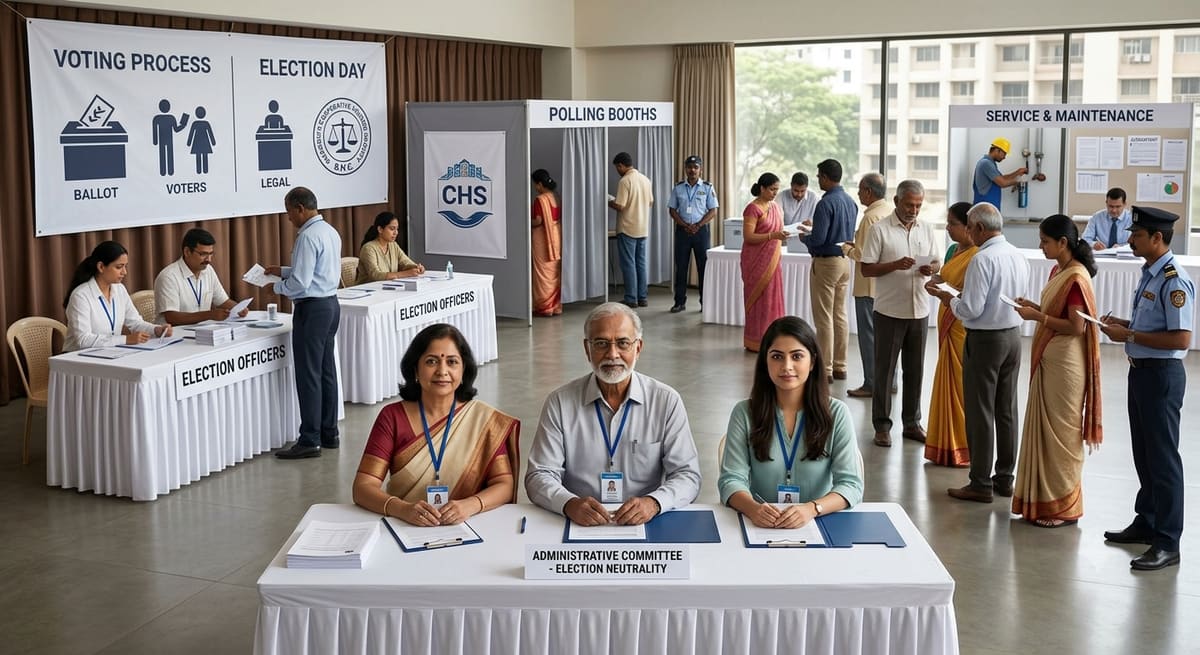
The Court held that the statutory provisions governing cooperative society elections are mandatory and cannot be substituted by a general body resolution. The Court emphasized that an election is not merely about the absence of opposition but about compliance with the prescribed procedure, which includes notification, eligibility scrutiny, nomination process, and opportunity for contest.
"The law governing such matter is mandatory. The provisions under Section 73-CB of the Maharashtra Cooperative Societies Act, 1960 are clearly laying down that election of managing committee must be conducted in manner prescribed. Further, the Maharashtra Cooperative Societies (Committee Election) Rules, 2014 are giving detailed procedure. When such statutory scheme is available, the members of society cannot, by their own convenience or understanding, adopt some different method and call it election."
The Court further observed that allowing such liberty would defeat the purpose of the statutory election machinery. It noted that even if all members agree, the law requires adherence to the election process. A mere resolution cannot substitute the entire statutory framework, and the persons elected through such a resolution cannot claim the right to continue as managing committee members.
The Verdict
The Court disposed of the writ petition with the following directions:
- The Authorized Officer is directed to initiate the election process immediately and declare the election programme within two weeks from the date of the judgment (29.04.2026).
- The Election Authority shall ensure the completion of the election process within the minimum possible period, strictly in accordance with the Rules of 2014.
- Until a newly elected managing committee assumes charge, the affairs of the society shall be managed under the supervision of the Authorized Officer.
- The writ petition is disposed of in these terms, with no order as to costs.
What This Means For Similar Cases
Statutory Compliance Is Non-Negotiable
- Cooperative societies must strictly adhere to the statutory procedure for elections under the Maharashtra Cooperative Societies Act, 1960 and the Rules of 2014.
- Mere resolutions, even if unanimous, cannot substitute the prescribed election process. Practitioners must ensure that all steps, including notification, eligibility scrutiny, nomination, and contest opportunity, are followed.
Role of the Authorized Officer
- The Authorized Officer is duty-bound to initiate corrective action when statutory provisions are violated. Passivity is not permissible, and immediate steps must be taken to restore legality.
- Societies and their legal advisors should proactively engage with the Authorized Officer to ensure compliance and avoid administrative lethargy.
Democratic Structure Must Be Upheld
- The judgment reinforces that cooperative societies are democratic institutions, and their elections must reflect this structure. Bypassing the statutory process undermines the democratic intent of the law.
- Legal practitioners should emphasize the importance of procedural compliance in maintaining the legitimacy of cooperative society governance.