The Allahabad High Court has affirmed that once an appeal against an eviction order is dismissed, the executing authority has no discretion to delay enforcement. This ruling reinforces the principle that administrative inaction in the face of a final judicial determination violates the rule of law and undermines public trust in land governance.
Background & Facts
The Dispute
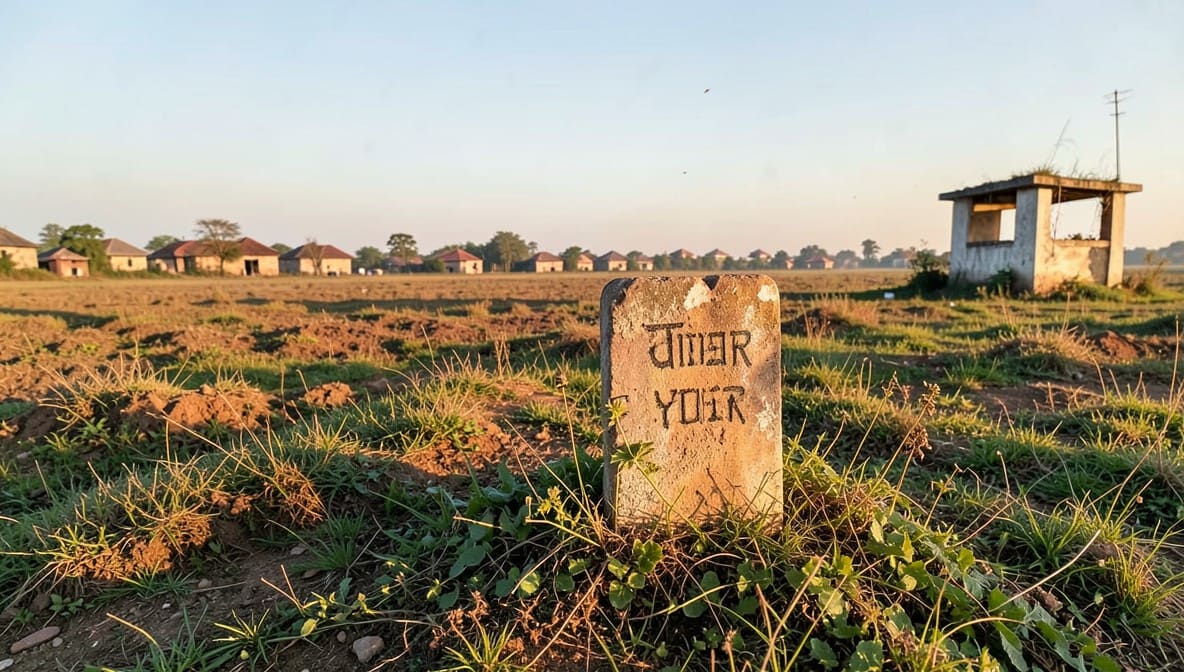
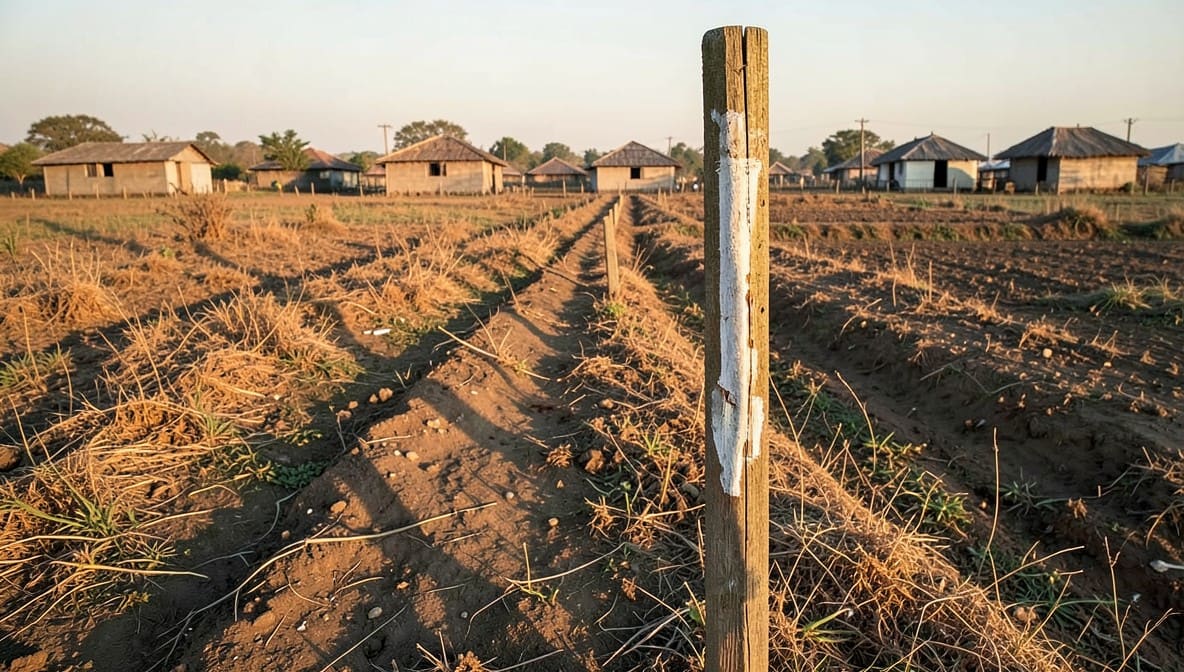
The petitioner, Ved Prakash Pathak, filed a Public Interest Litigation alleging unlawful encroachment upon Plot No. 336/0.020, recorded in the Khatauni as "Garaha" (pond), located in Village Pariyat, Pargana Barsathi, Tehsil Mariyahu, District Jaunpur. The encroachment was allegedly carried out by respondents 5, 6, and 7, who had constructed structures on the land without legal authority.
Key Facts
- Plot No. 336/0.020 is officially recorded in the Khatauni as "Garaha" (pond), indicating its classification as non-agricultural or common land.
- An eviction order dated 10.03.2025 was passed by the Tehsildar, Mariyahu, District Jaunpur, in Case No. 469 of 2025, directing the removal of encroachers.
- Despite the order, no execution took place for over six months.
- The petitioner brought the matter to the High Court via PIL on 27.08.2025, citing administrative inaction.
- The extract of the Khatauni, Page 17 of the paper book, was submitted as evidence confirming the land’s official status.
Procedural History
- 10.03.2025: Tehsildar, Mariyahu, issued eviction order in Case No. 469 of 2025.
- 11.09.2025: High Court issued directions in PIL No. 2722 of 2025, ordering respondents to file counter affidavits and directing the District Magistrate and Tehsildar to explain why the eviction order had not been executed.
- 11.09.2025: Court directed service of notice on respondents 5 to 7 through RPAD within three days.
- 11.09.2025: Court mandated that the District Magistrate and Tehsildar file personal affidavits explaining non-execution, including whether any appeal had been filed.
- 24.09.2025: Appeal filed by respondents 5 to 7 under Section 67(5) of the U.P. Revenue Code, 2006, was heard.
- 27.09.2025: The appellate authority dismissed the appeal, affirming the eviction order.
- 18.05.2026: Petitioner informed the Court that the appeal had been dismissed.
- 18.05.2026: Court disposed of the PIL with immediate directions for enforcement.
Relief Sought
The petitioner sought immediate enforcement of the eviction order dated 10.03.2025, and a direction to the Tehsildar and District Magistrate to complete execution without further delay.
The Legal Issue
The central question was whether the Tehsildar and District Magistrate are legally bound to execute an eviction order once all avenues of appeal have been exhausted and no stay remains in force.
Arguments Presented
For the Petitioner
The petitioner’s counsel argued that the eviction order, having been upheld after appellate review, acquired finality. Delay in execution amounted to a violation of the petitioner’s right to effective remedy under Article 21 and the principle of audi alteram partem. Reliance was placed on the statutory duty of revenue officers under the U.P. Revenue Code, 2006, to enforce lawful orders without undue delay.
For the Respondent
The State and Tehsildar did not contest the dismissal of the appeal but offered no justification for the six-month delay in execution. The District Magistrate’s affidavit confirmed the appeal’s dismissal but did not explain the inaction. No legal impediment, such as a stay order, was cited.
The Court's Analysis
The Court examined the statutory framework under Section 67 of the U.P. Revenue Code, 2006, which provides for appeals against orders of Tehsildars. The Court noted that once an appeal is dismissed, the original order stands affirmed and becomes executable. The Court emphasized that revenue officers are not arbiters of discretion once the appellate process concludes.
"The duty to execute a lawful order does not vanish because of administrative apathy. When the appellate authority affirms the eviction order, the Tehsildar becomes a mere instrument of the law, not a gatekeeper of its enforcement."
The Court rejected any notion that delay could be excused due to procedural backlog or resource constraints. It held that the failure to execute a final order, especially in cases of land encroachment, perpetuates injustice and encourages further violations. The Court also noted that the petitioner had pursued the matter through the proper forum - first before the Tehsildar, then through the appellate mechanism, and finally before the High Court via PIL - demonstrating due diligence.
The Verdict
The petition was disposed of with immediate effect. The Court directed the Tehsildar, Mariyahu, District Jaunpur, to enforce the eviction order dated 10.03.2025 within 14 days. The Court further directed that all proceedings under Section 67 of the U.P. Revenue Code, 2006, be brought to their logical conclusion, and that no further stay or injunction shall be granted without specific reasons recorded in writing. The District Magistrate was directed to submit a compliance report within 15 days.
What This Means For Similar Cases
Execution of Final Orders Is Non-Discretionary
- Practitioners must immediately move courts to compel execution once an appeal is dismissed, as delay is no longer a valid defense.
- Revenue officers who fail to execute final eviction orders can be held in contempt for willful disobedience.
PIL as a Tool for Administrative Accountability
- Public Interest Litigation remains a potent remedy when statutory authorities fail to act on final orders.
- Courts will not tolerate passive non-compliance, even in the absence of malafide intent.
Clarification on U.P. Revenue Code, 2006
- Section 67 appeals do not automatically stay execution unless a stay is expressly granted.
- Absence of a stay order after dismissal of appeal means immediate enforceability.
- Tehsildars must act as agents of the law, not as gatekeepers of enforcement.