In a significant intervention protecting informal settlers, the Bombay High Court has barred coercive demolition of structures while a regularisation application remains pending. The Court’s directive establishes a procedural safeguard for vulnerable homeowners, mandating timely adjudication and prohibiting unilateral enforcement actions by housing authorities.
Background & Facts
The Dispute
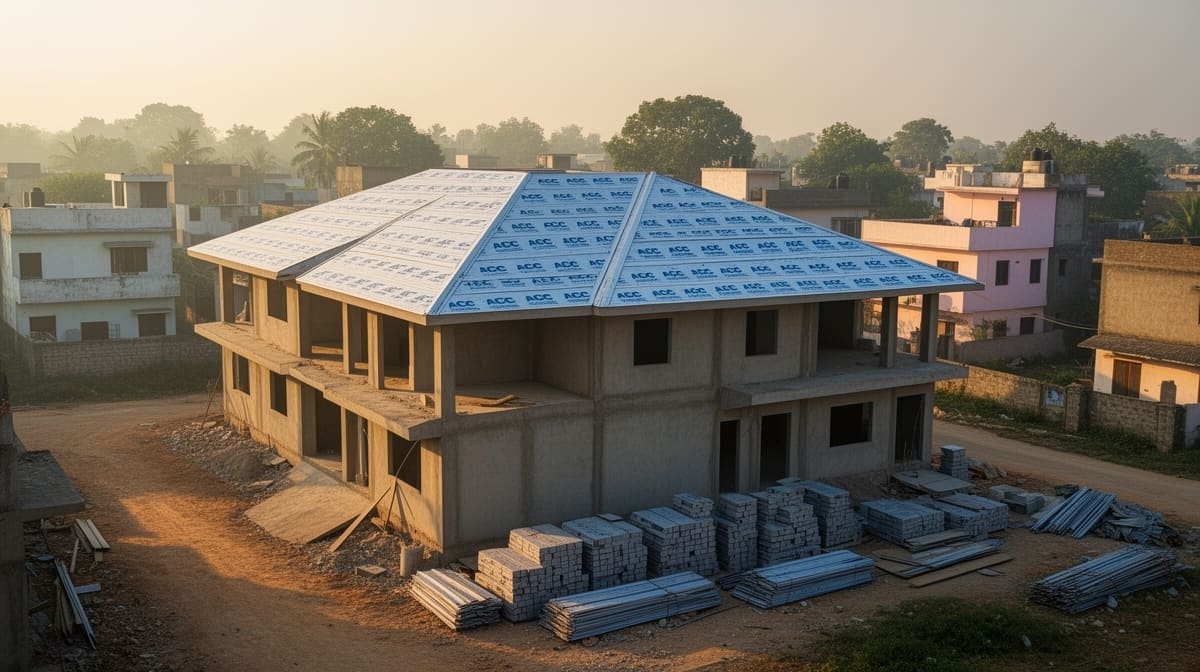
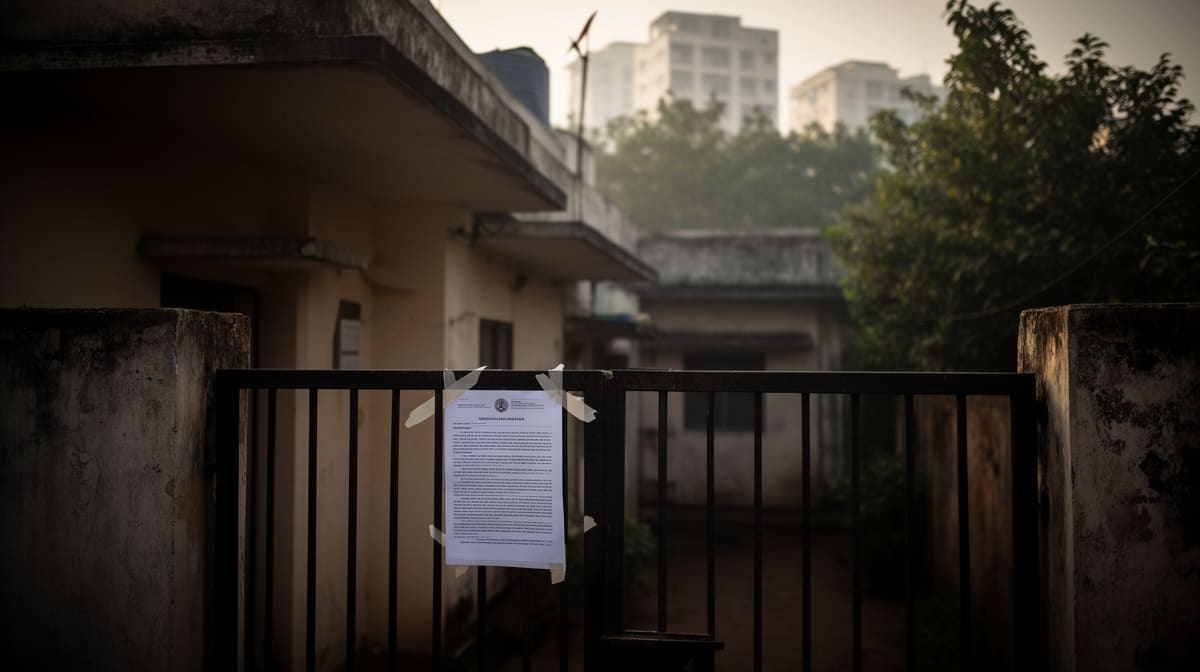
The appellant, Nasrin Abdul Karim Khan, had constructed a residential structure on land under the jurisdiction of the Mumbai Housing and Area Development Board (MHADA). Though the structure lacked formal approval, the appellant sought regularisation under applicable housing schemes. While her application was pending, MHADA officials visited the site and obtained an undertaking from her son, Fahim Abdul Karim Khan, to vacate the premises within two to three days, citing the absence of any court order.
Procedural History
- The appellant filed an appeal against an order of the lower forum, challenging MHADA’s intent to demolish her structure.
- During the pendency of the appeal, MHADA took coercive steps by securing a written undertaking for voluntary vacating.
- On March 6, 2026, the matter was listed for hearing on an interim application seeking protection of the structure.
- The appellant’s counsel, Mr. Devansh Shah, withdrew the appeal unconditionally but sought interim protection pending filing of the regularisation application.
Relief Sought
The appellant sought an interim stay on demolition of her structure and a direction to MHADA to adjudicate her regularisation application within a fixed timeframe, without resorting to coercive measures.
The Legal Issue
The central question was whether housing authorities may proceed with demolition of a structure while a regularisation application is pending, and whether the Court can mandate a time-bound adjudication process to prevent arbitrary enforcement.
Arguments Presented
For the Appellant
The appellant’s counsel argued that the undertaking obtained from her son was not legally valid, as he was not the owner or the applicant for regularisation. He further contended that demolition without adjudicating the regularisation application violated the principle of natural justice and the right to shelter under Article 21 of the Constitution. He relied on Olga Tellis v. Bombay Municipal Corporation to assert that eviction must follow due process and cannot precede substantive consideration of housing claims.
For the Respondent
MHADA did not file a formal written response but, through oral submissions, asserted that the structure was unauthorized and that its presence violated zoning and building regulations. The authority claimed that the undertaking was merely a procedural record and not a final enforcement action.
The Court's Analysis
The Court rejected the notion that the absence of a court order permits authorities to act unilaterally. It observed that the appellant had demonstrated a bona fide intention to regularise her structure and had undertaken to file the application within one week. The Court held that the right to shelter, though not absolute, must be balanced against procedural fairness.
"The Court cannot permit authorities to take coercive steps against a structure while a legitimate application for regularisation is pending, especially when the applicant has undertaken to file the same within a stipulated time."
The Court emphasized that MHADA, as a statutory body entrusted with housing policy, has a duty to adjudicate applications expeditiously. It noted that indefinite delay in deciding such applications effectively amounts to denial of remedy. The Court further held that the undertaking obtained from the appellant’s son, who was not the applicant, lacked legal standing and could not justify demolition.
The Court applied the doctrine of proportionality, finding that demolition would be a disproportionate response in the absence of a final determination on regularisation. It also invoked the principle of audi alteram partem - the right to be heard - by directing MHADA to pass a reasoned order.
The Verdict
The appellant succeeded. The Court held that no coercive action, including demolition, may be taken against the structure until the regularisation application is decided. It directed MHADA to adjudicate the application within eight weeks and to issue a speaking order.
What This Means For Similar Cases
Demolition Cannot Precede Regularisation Review
- Practitioners representing informal settlers may now invoke this judgment to seek immediate stay against demolition pending adjudication of regularisation applications.
- Authorities cannot rely on informal undertakings from non-applicants to justify enforcement.
- The burden shifts to the housing authority to demonstrate why a structure should not be regularised, not on the applicant to prove why it should be spared.
Time-Bound Adjudication Is Now Mandatory
- Housing authorities must now treat the eight-week timeline as a statutory expectation, not a suggestion.
- Failure to decide within this period may invite contempt proceedings or writ petitions for non-compliance.
- Reasoned orders are no longer optional - they are a legal requirement under this ruling.
Procedural Fairness Trumps Technical Violations
- Minor infractions in documentation or ownership history cannot justify immediate demolition if a bona fide application is pending.
- Courts will now scrutinize whether authorities have exhausted all avenues of regularization before resorting to force.
- This judgment reinforces that housing policy must be implemented with humanity, not just with rigidity.