The Bombay High Court has clarified that disputes concerning redevelopment of a co-operative housing society do not automatically fall within the exclusive jurisdiction of the Co-operative Court under Section 91 of the Maharashtra Co-operative Societies Act. The jurisdiction of the Civil Court remains intact unless the society's bye-laws expressly include redevelopment as one of its objects. This ruling reinforces the principle that statutory bars on civil court jurisdiction must be clearly evident from the plaint itself.
Background & Facts
The Dispute
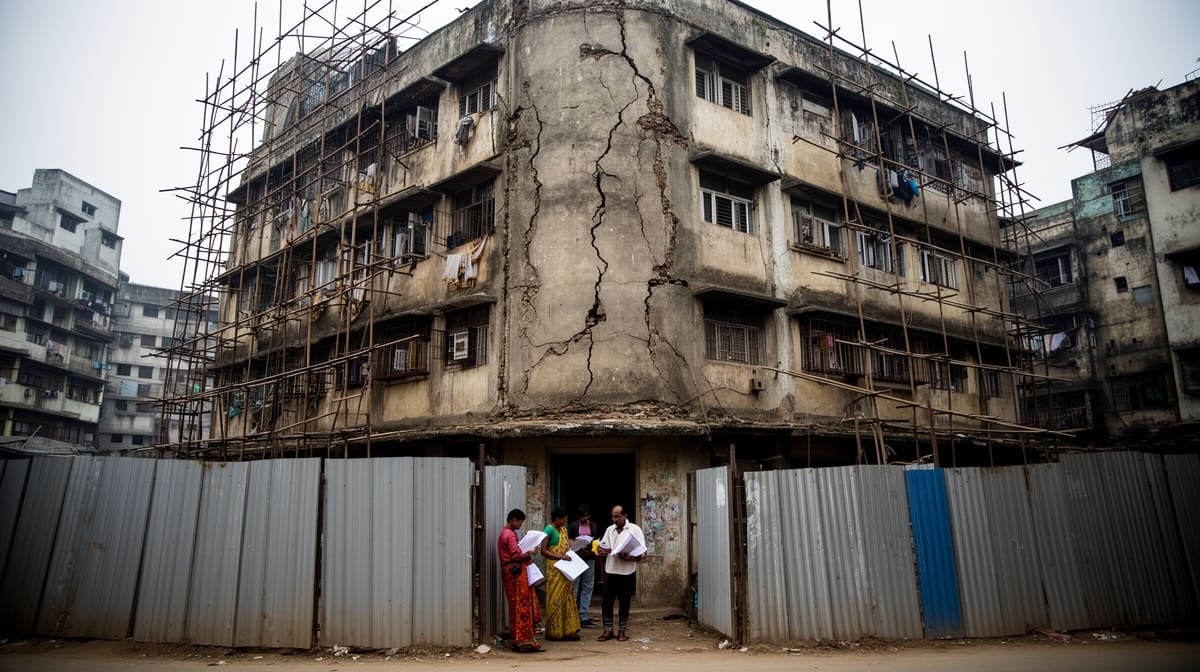
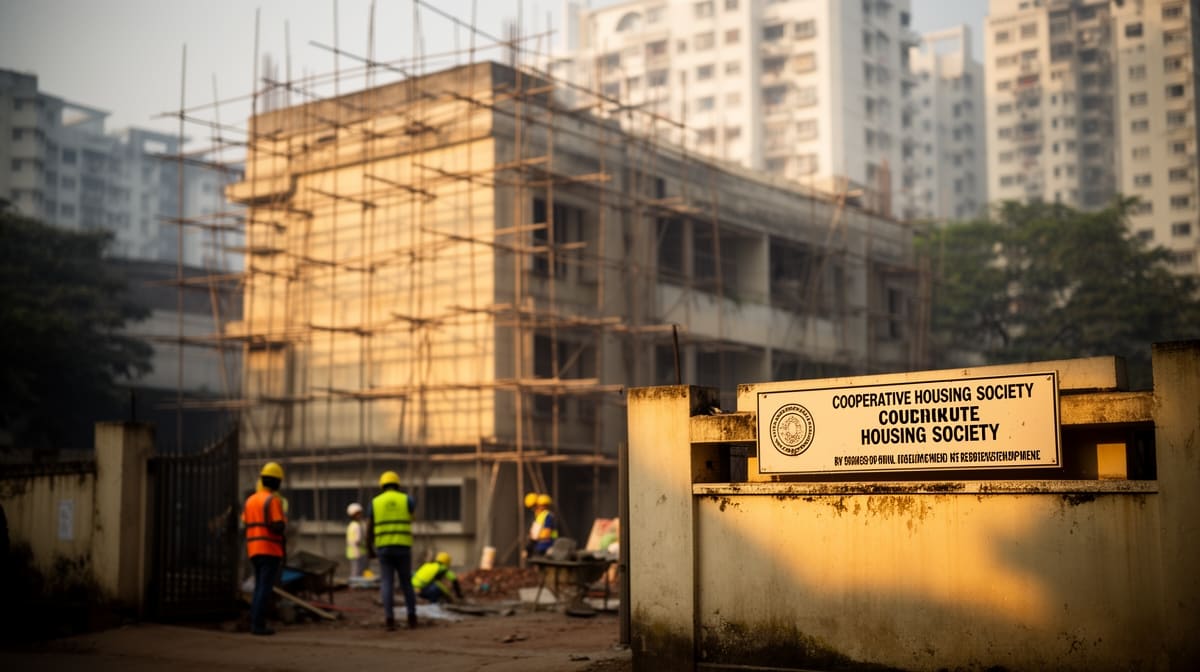
The appellants, Mrs. Amita Jiten Desai and Mr. Jiten Manubhai Desai, are members and residents of Flat Nos. 501 and 502 in Building 'C' of the New Chandrodaya Co-operative Housing Society Ltd. in Ghatkopar, Mumbai. The Society, along with its developer J Infraa Ventures Pvt. Ltd. and project management consultant Dilip Sanghvi Consultants, were named as respondents in a civil suit filed by the appellants. The suit challenged resolutions passed by the Society on 23rd December 2023 and 27th May 2024 relating to the redevelopment of the Society’s three buildings. The appellants alleged that the resolutions unfairly reduced the redevelopment entitlement of residents of Building 'C' compared to those of Buildings 'A' and 'B', omitted the garage entitlement of Plaintiff No. 1, and authorized soil testing and potential demolition without due process.
Key Facts
- The Society consists of three buildings: 'A', 'B', and 'C'
- Appellants reside in Flat Nos. 501 and 502 in Building 'C'
- The Society passed Resolution dated 23.12.2023 authorizing redevelopment work
- The Society passed Resolution dated 27.05.2024 approving a project report that reduced the carpet area for Building 'C' occupants and omitted the stilt garage of Plaintiff No. 1
- The developer, J Infraa Ventures Pvt. Ltd., communicated to the appellants that it was unaware of internal Society matters and had been granted permission for soil testing
- No development agreement had been executed at the time of filing the suit
- The appellants raised objections to the resolutions through written communications
- The bye-laws of the Society were not annexed to the plaint or placed before the Trial Court
Procedural History
- 23.12.2023: Society passes resolution for redevelopment
- 27.05.2024: Society passes resolution approving project report reducing entitlements for Building 'C'
- 2025: Civil Suit No. 2048 of 2025 filed in the Court of Civil Judge, Senior Division, Mumbai
- 28.01.2026: Trial Court dismisses suit under Order VII Rule 11(d) CPC, holding jurisdiction barred by Section 91 of MCS Act
- 15.02.2026: First Appeal No. 251 of 2026 filed before the Bombay High Court
- 23.03.2026: Judgment reserved
- 28.04.2026: Judgment pronounced by Justice Sharmila U. Deshmukh
The Parties' Positions
Appellants (Plaintiffs): Argued that redevelopment is not part of the Society’s business under Section 91 of the MCS Act, especially since the bye-laws were not shown to include redevelopment as an object. They contended that the suit sought protection of civil rights - including entitlement to area and garage, and injunction against demolition - which are exclusively within the domain of the Civil Court.
Respondent No. 1 (Society): Contended that all reliefs sought were directly linked to resolutions passed by the Society, which touch upon inter se rights of members and management of the Society, thus falling squarely within Section 91. They argued that the impleadment of the developer and consultant was immaterial as they acted as agents of the Society.
Respondent No. 2 (Developer): Admitted that redevelopment is not the business of the Society per settled law but argued that the dispute concerned management of the Society, which they claimed was covered under Section 91.
Respondent No. 3 (Consultant): Did not file a separate written submission but was represented by Respondent No. 1’s counsel.
Relief Sought
The appellants sought:
- Declaration that the resolutions dated 23.12.2023 and 27.05.2024 are illegal and unenforceable
- Declaration that residents of Building 'C' are entitled to equal redevelopment benefits as those of Buildings 'A' and 'B'
- Declaration of entitlement to a permanent alternate garage
- Permanent injunction against execution of any development agreement or demolition
- Costs
The Legal Issue
The central question was whether the jurisdiction of the Civil Court is barred under Section 91 of the Maharashtra Co-operative Societies Act, 1960 when a suit challenges resolutions relating to redevelopment, where the society’s bye-laws do not expressly include redevelopment as an object.
Arguments Presented
For the Appellant
Counsel for the appellants relied on Mohinder Kaur Kochar v. Mayfair Housing Private Limited and Pranav Constructions Limited v. Priyadarshini Co-operative Housing Society Limited, arguing that redevelopment is a distinct activity from initial construction and cannot be deemed part of the Society’s business unless expressly permitted by its bye-laws. He emphasized that the plaint sought civil rights - including injunction against demolition and declaration of entitlement - which are not subject to the Co-operative Court’s exclusive jurisdiction. He contended that the Trial Court erred by dismissing the plaint without examining the pleadings and by relying on extraneous material (bye-laws) not part of the record.
For the Respondent
Counsel for the Society argued that the entire suit was a disguised challenge to internal resolutions concerning member entitlements, appointment of developer, and management of common property - all of which fall under Section 91. He contended that the impleadment of the developer and consultant was merely procedural and did not alter the nature of the dispute, which remained between the Society and its members. Counsel for the developer echoed this, asserting that the suit was an illusory attempt to bypass the Co-operative Court by framing the dispute as civil.
The Court's Analysis
The Court undertook a meticulous analysis of Section 91 of the MCS Act, emphasizing that for the bar to apply, both the parties and the subject matter must fall within the specified categories. The Court held that the phrase "touching the business of the society" must be interpreted strictly and contextually.
"The initial construction of the property for a co-operative housing society is one of its prime objects. The two activities namely, initial construction of a building and its redevelopment are different activities... Such activity cannot be considered as 'touching the business' of the society."
The Court relied on Mohinder Kaur Kochar to affirm that redevelopment, even if authorized by the general body, is not inherently the business of the Society. It further held that the 2019 amendment to the MCS Act, which inserted Section 154B(1)(17) defining a housing society as one that may "demolish existing buildings and reconstruct or construct additional tenements", is an enabling provision - not an automatic expansion of the business definition.
The Court underscored that the determination of whether redevelopment is an object of the Society depends on the bye-laws, which were not part of the plaint. Under Order VII Rule 11 CPC, the Court is restricted to examining only the averments in the plaint. Extraneous documents, including bye-laws, cannot be considered at this threshold stage.
"Whether redevelopment forms part of the object of a housing society... is not a pure question of law. It is a mixed question of law and fact. Its determination depends upon the specific objects of the society as recorded in its bye-laws... Such an exercise would necessarily require evidence and adjudication on merits."
The Court distinguished Eknath Namdev Lashkare and JVPD Sterling, noting that those cases involved challenges to development agreements already executed, where the developer was clearly acting as an agent. Here, no such agreement existed, and the dispute was confined to the legality of resolutions.
The Court also rejected the argument of defective valuation, noting that no such objection was raised by the Trial Court in a manner requiring correction under Order VII Rule 11(b).
The Verdict
The First Appeal was allowed. The impugned order dated 28th January 2026 dismissing the suit under Order VII Rule 11(d) CPC was quashed and set aside. The civil suit (S.C. Suit No. 2048 of 2025) was restored to the file of the Trial Court for adjudication on merits. The judgment was stayed for four weeks from the date of pronouncement, i.e., until 26th May 2026, to allow for any application for stay to be filed in the Trial Court.
What This Means For Similar Cases
Redevelopment Is Not Automatically Business of the Society
- Practitioners must now establish whether the society’s bye-laws explicitly include redevelopment as an object before invoking Section 91
- A mere resolution passed by the general body is insufficient to convert redevelopment into "business of the society"
- Civil suits challenging redevelopment entitlements, area allocation, or seeking injunctions against demolition remain maintainable if bye-laws are silent
Threshold Rejection Under Order VII Rule 11 Requires Clear Bar
- Courts cannot dismiss suits at the threshold merely because the dispute involves a co-operative society
- The bar under Section 91 must be evident from the plaint itself - no reliance on external documents like bye-laws is permitted
- If the nature of the dispute hinges on factual questions (e.g., whether redevelopment is an object), the matter must proceed to trial
Developer and Consultant Impleadment Does Not Alter Jurisdiction
- The presence of a developer or consultant as a party does not transform a member-society dispute into a civil dispute
- However, if the suit seeks to challenge the validity of a development agreement or deed, jurisdiction may shift to the Civil Court
- The key remains the nature of the relief sought and the subject matter of the dispute