
The Supreme Court's judgment in Alok Kotahwala v. Jaipur Metro Rail Corporation Limited clarifies the scope of the right to hearing under Section 5A of the Land Acquisition Act, 1894 (LA Act). The Court held that while the opportunity of hearing is a mandatory safeguard, landowners cannot abandon proceedings and later claim denial of hearing. The judgment underscores that substantial compliance with procedural requirements is sufficient if the landowner fails to diligently pursue their objections. This ruling has significant implications for land acquisition disputes, particularly in balancing procedural fairness with the State’s power of eminent domain for public projects.
Background & Facts
The Dispute
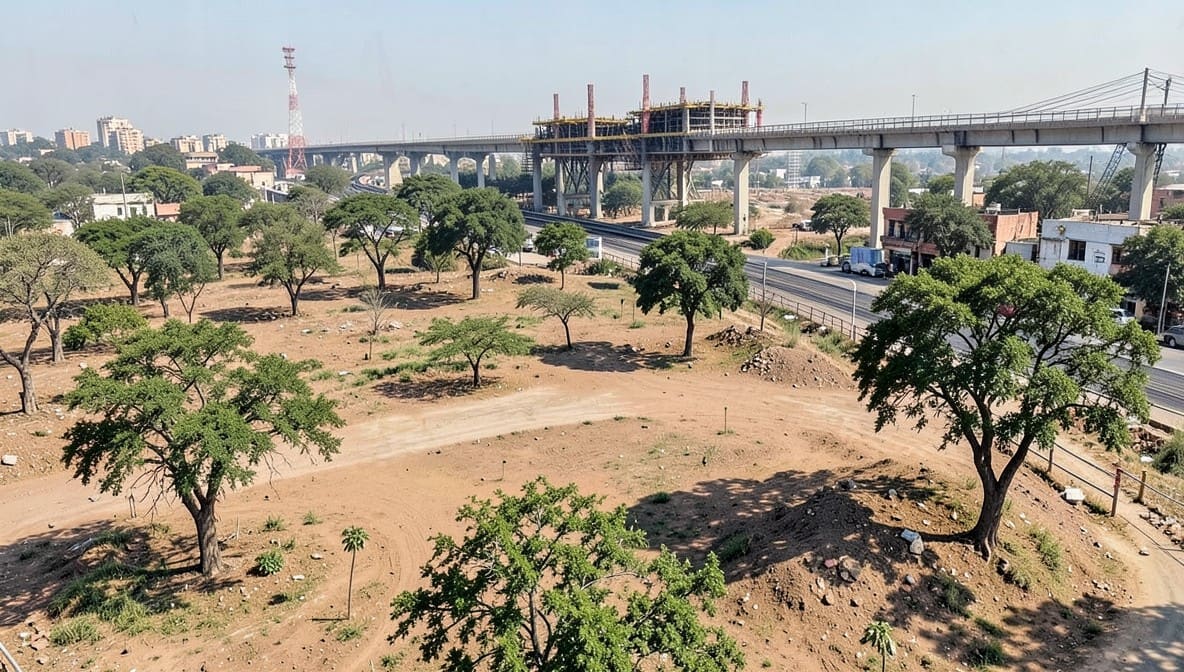
The appellants, landowners in Village Sheopura, Tehsil Sanganer, District Jaipur, challenged the acquisition of 27 hectares of land for the construction of a metro car depot under Phase II of the Jaipur Metro Rail Project. The acquisition was initiated by the Urban Development Department (UDD), Government of Rajasthan, under the LA Act.
Key Facts
- 26.05.2011: Notification issued under Section 4(1) of the LA Act proposing acquisition of the subject land.
- 27/28.06.2011: Appellants filed objections under Section 5A(1) of the LA Act before the Land Acquisition Officer (LAO).
- 18.08.2011 & 09.03.2012: Jaipur Metro Rail Corporation Limited (JMRCL) filed replies to the objections.
- 09.04.2012: Appellants failed to appear before the LAO or file a rejoinder. The LAO recorded that the file be sent for recommendation under Section 5A.
- 18.05.2012: LAO forwarded its report to the UDD, stating that the objections were not being considered as the land was required for public purpose.
- 05.07.2012: UDD issued a declaration under Section 6(1) of the LA Act for acquisition of the land.
- 11.07.2012: Notice issued under Section 9(3) of the LA Act by the LAO.
Procedural History
- 11.09.2012: Single Judge of the Rajasthan High Court granted interim stay of acquisition.
- 06.11.2012: Division Bench vacated the interim stay.
- 01.01.2014: Supreme Court disposed of SLP (Civil) No. 37292/2012, directing the High Court to adjudicate the writ petition expeditiously.
- 09.05.2023: Single Judge quashed the acquisition proceedings, holding that the appellants were not afforded an effective opportunity of hearing.
- 30.04.2026: Division Bench of the High Court set aside the Single Judge’s order, holding that the LAO’s report was sufficient and the appellants had failed to pursue their objections.
- 07.05.2026: LAO passed an award; compensation deposited before the competent court due to appellants’ refusal to accept it.
Relief Sought
The appellants sought:
- Quashing of the impugned judgment of the Division Bench.
- Restoration of the Single Judge’s order allowing the writ petition.
- Directions to the respondents to refrain from interfering with their land rights.
The Legal Issue
The central question was whether the LAO’s failure to afford the appellants an effective opportunity of hearing under Section 5A of the LA Act vitiated the acquisition proceedings, or whether there was substantial compliance with the statutory mandate.
Arguments Presented
For the Appellants
- Denial of Opportunity of Hearing: The LAO did not fix a further date of hearing after 09.04.2012 and abruptly forwarded its report on 18.05.2012 without affording a personal hearing.
- Non-Application of Mind: The LAO’s report merely copied the JMRCL’s replies without independent consideration of the objections.
- Failure to Conduct Inquiry: The LAO did not conduct a further inquiry as required under Section 5A(2).
- Alternative Lands Available: Appellants suggested lands belonging to RIICO, IOCL, JDA, and Rajasthan Housing Board as more suitable alternatives.
- Ecological Impact: The subject land was ecologically sensitive, with several trees that would be felled for the project.
- Lack of Reasons: The LAO’s report lacked reasons for rejecting the objections.
- Non-Placement of Record: The State Government issued the Section 6 declaration without the complete record of objections.
- No Urgency: The metro project’s DPR was not finalized, and the land was not immediately required.
Precedents Cited:
- Kamal Trading v. State of West Bengal (2012) 2 SCC 25
- Farid Ahmed v. Municipal Corporation of Ahmedabad (1976) 3 SCC 719
- Kedar Nath Yadav v. State of West Bengal (2017) 11 SCC 601
- Gojer Brothers Private Limited v. State of West Bengal (2013) 16 SCC 660
- Surinder Singh Brar v. Union of India (2013) 1 SCC 403
- Women Education Trust v. State of Haryana (2013) 8 SCC 99
- Shyam Nandan Prasad v. State of Bihar (1993) 4 SCC 255
- State of Mysore v. V.K. Kangan (1976) 2 SCC 895
For the Respondents
- Administrative Nature of Proceedings: The LAO acts as an administrative authority, not a quasi-judicial one, under Section 5A.
- Opportunity Granted: The LAO provided multiple dates for hearing, but the appellants wilfully absented themselves on 09.04.2012.
- Public Purpose: The metro project was for a public purpose, and the State Government independently applied its mind to the LAO’s report.
- Alternative Lands Unsuitable: Lands suggested by the appellants (RIICO, IOCL) were already earmarked for other public projects.
- Ecological Impact Minimal: A drone survey showed that the subject land was mostly vacant, with trees on a small portion. The impugned judgment directed compensatory plantation.
- No Flagrant Violation: There was substantial compliance with Section 5A, and the appellants’ objections lacked merit.
Precedents Cited:
- Aircraft Employees Housing Co-op Society Ltd. v. Secretary, Rural Development (1996) 11 SCC 475
- Rambhai Lakhabai Bhakt v. State of Gujarat (1995) 3 SCC 752
- Jayantilal Amratlal Shodhan v. F.N. Rana AIR 1964 SC 648
- Sam Hiring Co. v. A.R. Bhujbal (1996) 8 SCC 18
- HUDA v. Abhishek Goyal 2024 SCC OnLine SC 2991
- National Highways Authority of India v. Madhukar Kumar (2022) 14 SCC 661
The Court's Analysis
Legal Principles Under Section 5A
The Court reiterated that Section 5A of the LA Act engrafts a mandatory safeguard for landowners, affording them the right to:
- File objections within 30 days of the Section 4 notification.
- Be heard in person or through an authorized representative.
- Have their objections considered by the LAO, who must conduct a further inquiry if necessary.
- Receive a reasoned recommendation from the LAO, which the State Government must consider before issuing a Section 6 declaration.
The Court emphasized that denial of either limb of this right (filing objections or opportunity of hearing) vitiates the acquisition.
Precedential Survey
The Court surveyed key judgments on Section 5A to crystallize the legal position:
-
Mandatory Nature of Opportunity of Hearing:
- Farid Ahmed Abdul Samad (1976): Section 5A is mandatory; denial of hearing invalidates acquisition.
- Shyam Nandan Prasad (1993): Opportunity of hearing is a wholesome principle to protect landowners from arbitrary acquisition.
- Women Education Trust (2013): Audi alteram partem is a fundamental safeguard; non-compliance vitiates the Section 6 declaration.
-
Administrative vs. Quasi-Judicial Role of LAO:
- Jayantilal Amratlal Shodhan (1964): Proceedings under Section 5A are administrative, not quasi-judicial. The LAO submits a report, not a decision.
- Rambhai Lakhabai Bhakt (1995): If a landowner fails to appear despite notice, the LAO is not obliged to grant further opportunities.
- Sam Hiring Co. (1996): The LAO is not required to elaborately deal with objections; compliance with natural justice suffices.
-
Substance of Objections:
- The Court held that even if procedural lapses exist, acquisition cannot be invalidated if the objections lack substantive merit.
- New Okhla Industrial Development Authority v. Darshan Lal Bohra (2024): If objections are frivolous, procedural non-compliance does not vitiate acquisition.
Application to the Present Case
-
Opportunity of Hearing:
- The appellants appeared before the LAO on multiple dates but failed to appear on 09.04.2012 or file a rejoinder.
- The LAO’s order dated 09.04.2012 did not record a next date, but the appellants made no effort to ascertain the outcome until 18.05.2012.
- The Court held that the trajectory of proceedings did not evince any intention to deny hearing. The appellants’ lack of diligence precluded them from claiming denial of hearing.
-
Consideration of Objections:
- The LAO’s report summarized the objections and JMRCL’s replies, concluding that the land was required for public purpose.
- The phrase “objections are not being considered” meant that the objections were considered but not accepted, not that they were ignored.
- The State Government independently applied its mind to the LAO’s report before issuing the Section 6 declaration.
-
Merits of Objections:
- Publication of Notification: The appellants’ grievance that newspaper publication did not precede the Section 4 notification was rejected. The LA Act does not mandate prior publication; both gazette and newspaper publication were duly completed.
- Public Purpose: The metro car depot was held to be an indispensable operational component of the metro project, serving a public purpose. Changes in the DPR did not detract from this.
- Prior Survey: The Section 4 notification does not require a prior survey; the power to survey arises upon publication of the notification.
- Alternative Lands: The Court deferred to the expert planning authorities on the suitability of alternative lands. The appellants’ suggestion of RIICO/IOCL lands was rejected as they were earmarked for other projects.
- Excessive Acquisition: The DPR’s assessment of 27 hectares was upheld. The Court will not substitute its opinion for that of the authorities in the absence of manifest arbitrariness.
- Ecological Impact: The subject land was not classified as forest in any statutory record. The impugned judgment directed compensatory plantation, mitigating ecological concerns.
The Verdict
The Supreme Court dismissed the appeals, upholding the Division Bench’s impugned judgment. Key outcomes:
- The Single Judge erred in quashing the acquisition proceedings solely on procedural grounds.
- The LAO’s compliance with Section 5A was substantial, and the appellants’ objections lacked substantive merit.
- The interim order was vacated forthwith.
- The appellants were left to pursue remedies for enhanced compensation under the LA Act.
What This Means For Similar Cases
Opportunity of Hearing Must Be Effective, Not Ritualistic
- Landowners must diligently pursue their objections. Mere absence on a single date, without seeking adjournment or further hearing, precludes a claim of denial of hearing.
- Administrative authorities (like the LAO) are not bound by judicial formalities. Failure to grant a further opportunity, without mala fides, does not vitiate acquisition.
Substance Over Procedure
- Procedural lapses do not invalidate acquisition if the objections lack merit. Courts will examine the substance of objections to prevent frivolous challenges.
- Public purpose is a broad concept; courts defer to the State’s assessment unless there is manifest arbitrariness or mala fides.
Judicial Restraint in Land Acquisition Disputes
- Selection of land for acquisition is the exclusive domain of planning authorities. Courts will not substitute their opinion unless the decision is arbitrary or mala fide.
- Ecological concerns must be statutorily recognized (e.g., forest classification). Subsequent vegetation growth cannot frustrate planned public projects.
- Compensatory measures (e.g., plantation) can mitigate ecological impact, but acquisition cannot be invalidated solely on such grounds.





