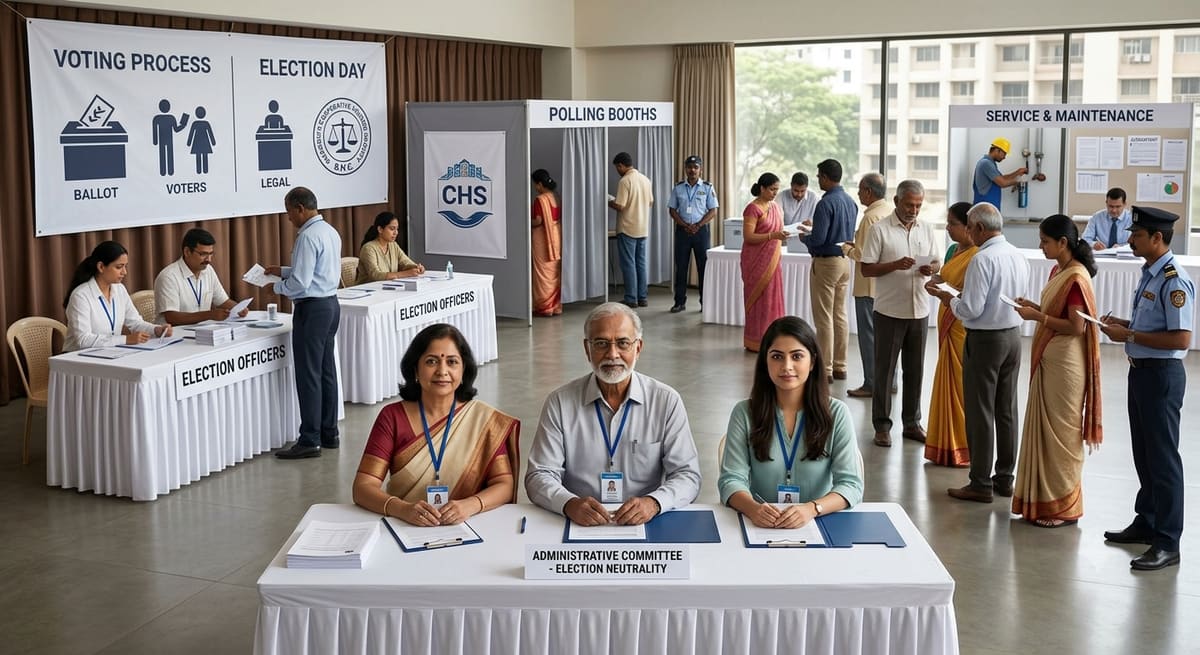
The Chhattisgarh High Court has reaffirmed that the appointment of a president in a cooperative society cannot be made by nomination when the statute mandates election. This judgment clarifies the procedural integrity required under the Chhattisgarh Co-operative Societies Act, 1960, and reinforces democratic governance in cooperative institutions.
Background & Facts
The Dispute
The petitioner, Dalip Singh, a member of Sarva Adiwasi Samaj, District Koriya, challenged the irregular appointment of Gorelal Yadav as President of Adim Jati Seva Sahkari Samiti Maryadit, Jharnapara (Registration No. 202). The appointment was made by Respondent No. 4, the Assistant Registrar Cooperative Societies, Baikunthpur, through an order dated 14.11.2024, which initiated a process of inviting details for appointment rather than conducting a formal election. The petitioner contends that this violates the statutory mandate under the Chhattisgarh Co-operative Societies Act, 1960 and the Rules, 1962, which require the post of President to be filled only through a democratic election conducted by the State Cooperative Election Commission.
Key Facts
- The petitioner is a duly enrolled member of Sarva Adiwasi Samaj, District Koriya, and is eligible to contest the post of President.
- The cooperative society, Adim Jati Seva Sahkari Samiti Maryadit, Jharnapara, is registered under Registration No. 202.
- On 14.11.2024, Respondent No. 4 initiated a nomination process instead of an election.
- Objections were raised by Sarva Adiwasi Samaj (Registration No. 4230) before the Collector and other authorities.
- An enquiry report submitted by the Senior Cooperative Inspector found Respondent No. 7 (Gorelal Yadav) ineligible and recommended his removal.
- Despite the enquiry findings and objections, no election has been conducted, and the post remains either irregularly occupied or vacant.
- The petitioner has no alternative forum to seek redressal except through this writ petition.
Procedural History
- 14.11.2024: Assistant Registrar, Baikunthpur, initiated appointment process for President without election.
- Prior to 14.11.2024: Objections filed by Sarva Adiwasi Samaj to the appointment process.
- Before 2026: Senior Cooperative Inspector submitted enquiry report recommending removal of Gorelal Yadav.
- 2026: Writ Petition No. 1997 of 2026 filed before the High Court of Chhattisgarh.
- 17.10.2025: This Court delivered judgment in W.P.(C) No. 5513 of 2025, directing that grievances under Section 49(8) be decided expeditiously.
- 27.04.2026: Present writ petition heard and disposed of by the Hon’ble Court.
The Parties' Positions
Petitioner’s Position: The appointment of President must be through election as mandated by the Chhattisgarh Co-operative Societies Act, 1960. Nomination is illegal, especially when eligibility is disputed and an enquiry report recommends removal. The petitioner seeks to contest the election and demands compliance with statutory procedure.
Respondents’ Position: The State and Cooperative authorities did not oppose the petitioner’s right to seek election but argued that the matter was sub judice in another proceeding. They relied on the earlier order dated 17.10.2025 in W.P.(C) No. 5513 of 2025 as binding precedent.
Relief Sought
The petitioner sought:
- Quashing or removal of the appointment of Respondent No. 7 as President.
- Direction to conduct a free and fair election for the post of President.
- Direction to conclude the pending removal proceedings against Respondent No. 7 within a stipulated time.
- Any other relief deemed fit in the interest of justice.
The Legal Issue
The central question was whether the post of President of a cooperative society under the Chhattisgarh Co-operative Societies Act, 1960 must be filled by election as mandated under Section 49(8), or whether nomination by administrative authorities is a legally permissible alternative.
Arguments Presented
For the Petitioner
The petitioner’s counsel relied on the statutory scheme of the Chhattisgarh Co-operative Societies Act, 1960, particularly Section 49(8), which mandates that elections for office bearers of cooperative societies shall be conducted by the State Cooperative Election Commission. He argued that nomination circumvents democratic principles, violates the spirit of the Act, and renders the cooperative structure non-compliant with its foundational governance norms. He cited the Court’s earlier decision in W.P.(C) No. 5513 of 2025 as binding precedent requiring expeditious adjudication of such grievances.
For the Respondent
The State and Cooperative authorities did not contest the legal requirement of election but submitted that the matter was already under consideration by the Joint Registrar, Koriya Division, under the Court’s earlier direction. They emphasized that no final order had been passed on the eligibility of Respondent No. 7 and that the pending removal proceedings must be concluded before any election is held.
The Court's Analysis
The Court acknowledged that the issue was squarely covered by its earlier judgment in W.P.(C) No. 5513 of 2025, which had directed that grievances under Section 49(8) be decided expeditiously. The Court noted that the appointment of President by nomination, in the face of statutory mandate for election, is procedurally flawed and undermines the democratic character of cooperative institutions. The Court observed that the enquiry report recommending removal of Respondent No. 7 further compounds the illegality of the current arrangement.
"This Court has not expressed any opinion on the merits of the case and the competent authority shall decide the matter independently in accordance with law."
The Court declined to directly quash the appointment or order an immediate election, recognizing that the Joint Registrar, Koriya Division, is the statutorily designated authority to adjudicate eligibility and procedural compliance. Instead, the Court directed the petitioner to file a fresh representation before Respondent No. 6, who must then decide the matter after affording a hearing to all parties and issuing a reasoned order.
The Court emphasized that while it is not substituting its opinion for that of the competent authority, it is enforcing the statutory obligation to follow due process. The direction to decide within 90 days ensures that administrative delay does not perpetuate illegality.
The Verdict
The writ petition is disposed of with directions. The petitioner shall file a fresh representation before Respondent No. 6 (Joint Registrar, Cooperative Societies, Koriya Division) within two weeks of receiving a certified copy of this order. Upon receipt, Respondent No. 6 shall decide the matter within 90 days, after affording a hearing to all parties and passing a reasoned order. The appointment of Respondent No. 7 remains subject to the outcome of this proceeding. No interim relief is granted, but the statutory mandate for election under Section 49(8) is reaffirmed.
What This Means For Similar Cases
Election Is Mandatory, Nomination Is Illegal
- Practitioners must challenge any administrative nomination of cooperative office bearers where the statute prescribes election.
- Any appointment made without election under Section 49(8) is voidable and subject to quashing.
- Cooperative societies cannot bypass elections on grounds of convenience, urgency, or administrative expediency.
Reasoned Orders Are Non-Negotiable
- Authorities must issue speaking orders that address all submissions, evidence, and legal provisions.
- Failure to provide reasons renders the order liable to be set aside on grounds of violation of natural justice.
- The 90-day timeline sets a new benchmark for administrative efficiency in cooperative disputes.
Pending Removal Proceedings Must Be Resolved First
- Before conducting an election, authorities must conclusively determine the eligibility of the incumbent.
- An ineligible office bearer cannot be allowed to remain in office pending election.
- Removal proceedings and election processes are interlinked and must be handled sequentially under statutory authority.