The Bombay High Court has affirmed that when structural integrity of aging buildings poses imminent risk to public safety, statutory notices for evacuation and demolition under Section 354 of the Mumbai Municipal Corporation Act prevail over minority objections, even where redevelopment disputes are pending. This ruling reinforces the primacy of technical safety assessments over procedural or political dissent in urban housing emergencies.
Background & Facts
The Dispute
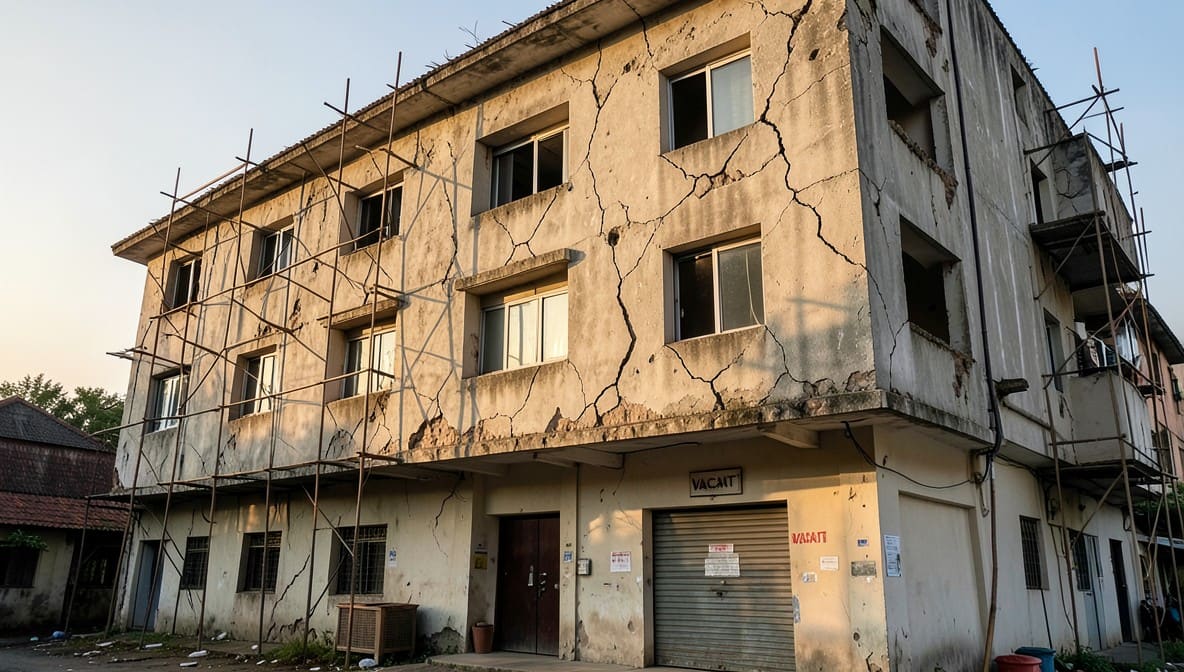
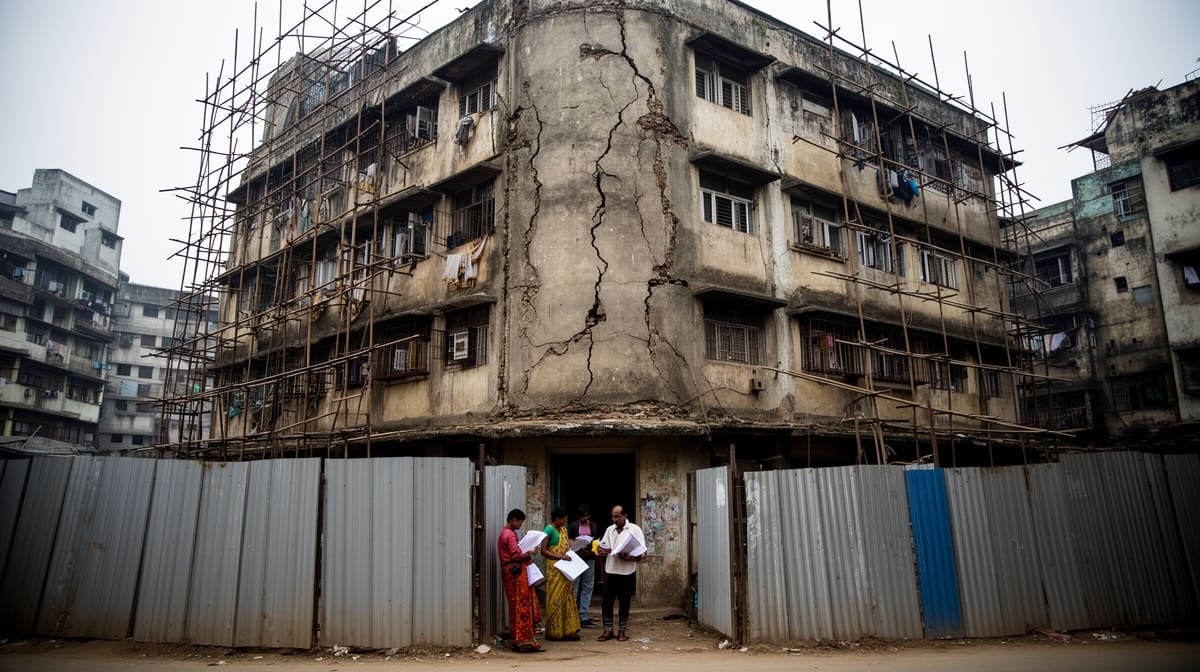
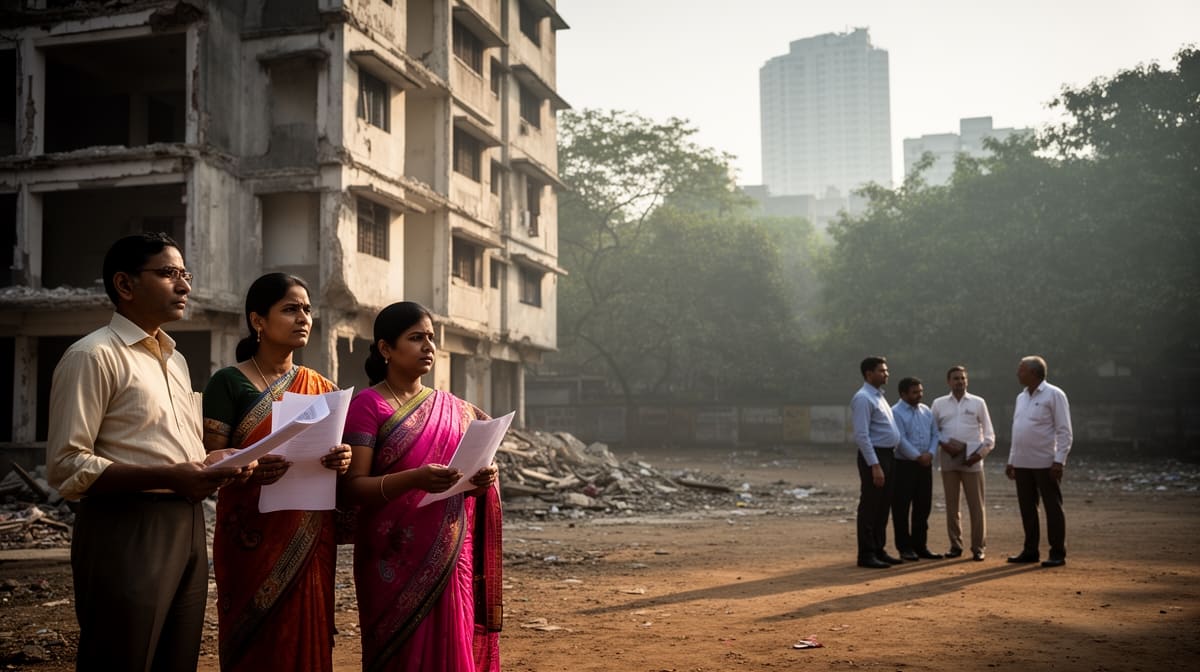
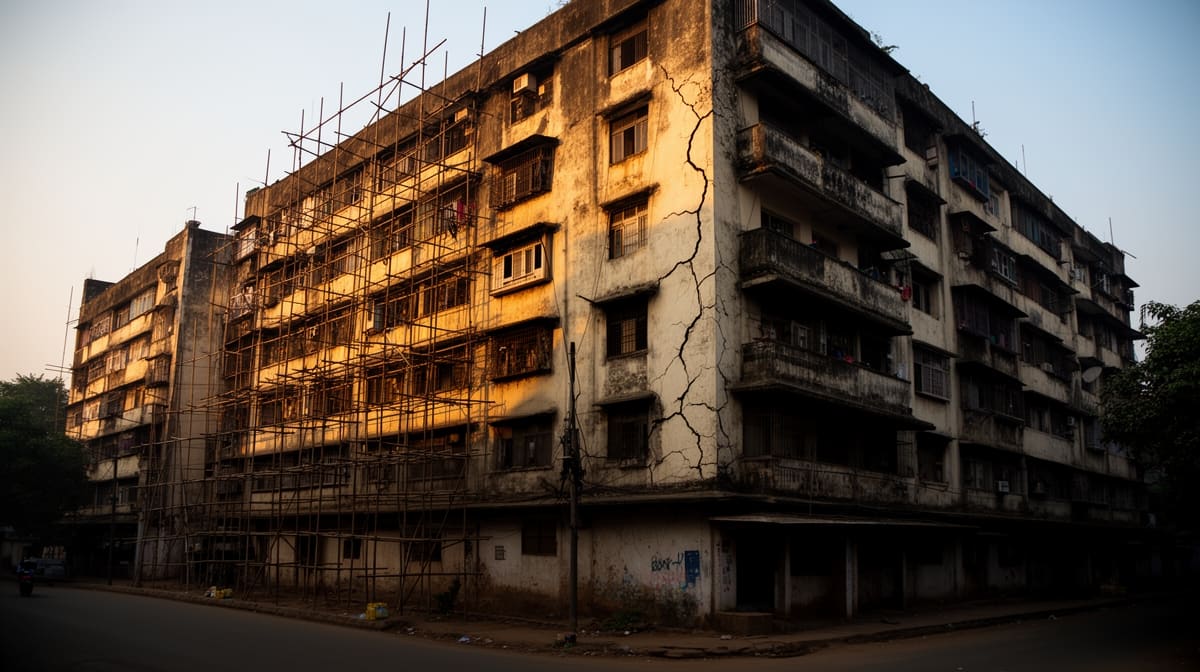
The appellants, 30 members of a 128-member cooperative housing society in Mumbai, challenged a statutory notice issued by the Municipal Corporation of Greater Mumbai under Section 354 of the Mumbai Municipal Corporation Act, 1888, directing evacuation of six residential buildings. The notice followed a Technical Advisory Committee (TAC) report concluding that all six buildings - constructed between 1965 and 2012 - were in C-1 category, meaning structurally unsound and requiring immediate demolition to prevent collapse.
Procedural History
- June 2025: Society, with majority approval, executed a Development Agreement with M/s. Puri Creators LLP.
- July 2025: Society-appointed auditor (M/s. Space Design & Development) classified Buildings A - E as C-1, Building F as C2-B.
- August 2025: Appellants commissioned an alternate audit (M/s. K.J. Karekar & Associates) classifying all buildings as C2-B, suggesting repairable conditions.
- September - October 2025: TAC convened two joint site inspections; appellants’ auditor failed to attend both, despite formal notices.
- November 2025: TAC submitted final report affirming C-1 classification and recommending immediate evacuation.
- November 2025: Corporation issued statutory notice under Section 354 MMC Act.
- December 2025: City Civil Court rejected appellants’ application for interim injunction.
- February 2026: Bombay High Court heard appeal against rejection of interim relief.
Relief Sought
The appellants sought a stay on the statutory notice, arguing that: (1) the TAC process violated natural justice due to absence of their auditor; (2) a neutral third-party audit should have been ordered; and (3) redevelopment was a pretext to override minority rights. They also contended that newer buildings (E and F) were not structurally compromised.
The Legal Issue
The central question was whether Section 354 of the Mumbai Municipal Corporation Act permits the Corporation to issue evacuation notices based on a Technical Advisory Committee’s findings, even when a minority of residents dispute those findings through an alternate structural audit, and when the dissenting party fails to participate in the official verification process.
Arguments Presented
For the Appellant
The appellants argued that the TAC proceedings violated principles of natural justice because their appointed structural auditor was not properly notified of the joint site inspections. They contended that the Corporation should have appointed an independent, neutral auditor to resolve conflicting reports, rather than relying on the Society’s auditor. They further asserted that the redevelopment motive was disguised as safety concern, citing that only two of six buildings were over 60 years old, and that the majority’s approval of redevelopment was legally contestable in a pending suit.
For the Respondent
The Corporation and Society countered that due process was fully followed: notices were issued, both reports were considered, and the TAC conducted a physical inspection with full access to all documentation. The absence of the appellants’ auditor was voluntary and unexplained. The TAC’s report, corroborated by photographic evidence and technical analysis, demonstrated imminent risk to life and property. The Corporation emphasized its statutory duty under Section 354 to act preemptively in public interest, especially where buildings are classified as C-1. The Developer’s appointment, approved by 80% of voting members, was legally valid and not subject to minority veto.
The Court's Analysis
The Court examined the statutory mandate under Section 354 MMC Act, which empowers the Corporation to issue notices for evacuation where buildings are deemed dangerous to public safety. It held that the Corporation’s duty is not to adjudicate between competing expert opinions but to act on credible, procedurally sound assessments that demonstrate imminent peril.
"The TAC members have physically verified the buildings and only thereafter come to the final conclusion. Even though the Auditor of the Plaintiffs remained absent on both occasions... the TAC report has duly considered the Report and observations of the Auditor appointed by the Plaintiffs."
The Court found no perversity in the TAC’s methodology. The failure of the appellants’ auditor to attend two scheduled inspections - despite written notices - undermined their claim of procedural unfairness. The Court emphasized that technical expertise, not procedural delay, must govern safety determinations. The fact that the Society’s auditor’s report was detailed, building-specific, and corroborated by photographs carried greater weight than the appellants’ generalized repair-oriented assessment.
The Court also rejected the argument that redevelopment motive invalidated the safety notice. It held that public safety under Section 354 is not contingent on the purpose of redevelopment; if a building is structurally unsound, the Corporation must act regardless of whether the owner seeks to redevelop or merely repair.
Regarding the minority’s rights, the Court noted that while democratic processes within cooperative societies must be respected, the right to life and safety under Article 21 of the Constitution overrides property rights when structural collapse is imminent. The appellants, representing only 23% of the society, could not block action affecting 98 others.
The Verdict
The appellants lost. The Bombay High Court upheld the Corporation’s statutory notice under Section 354 MMC Act, holding that public safety based on TAC findings supersedes minority objections, especially when dissenting parties fail to participate in official verification. The interim injunction was vacated, and the trial court’s order dismissing the application for stay was confirmed.
What This Means For Similar Cases
Structural Safety Trumps Procedural Disputes
- Practitioners must prioritize technical credibility over procedural objections when challenging municipal demolition notices.
- Absence from official inspections, even if alleged, will be construed as waiver unless documented proof of non-receipt is provided.
- Courts will not order third-party audits merely because of conflicting reports - procedural fairness is measured by opportunity to participate, not by outcome preference.
Minority Rights Have Limits in Public Safety Emergencies
- In cooperative societies, majority decisions on redevelopment cannot be stalled by minority litigation if structural danger is established.
- Pending suits challenging redevelopment agreements do not automatically stay safety-related municipal actions.
- Courts will weigh imminent risk to life more heavily than property interests or contractual disputes.
TAC Reports Carry Presumptive Validity
- Municipal Technical Advisory Committees’ reports, especially when based on physical inspection and cross-examination of expert inputs, are entitled to presumptive validity.
- Practitioners must challenge TAC reports on substantive grounds (e.g., flawed methodology, lack of data) rather than procedural delays caused by non-cooperation.
- Failure to submit complete audit reports (e.g., missing Proforma-B tests) weakens the credibility of opposing expert opinions.