The Punjab and Haryana High Court has reaffirmed that civil courts retain jurisdiction over possession disputes involving residential land within abadi deh, even when the defendant claims the land is shamlat deh. The judgment underscores that such jurisdictional objections require concrete proof and cannot be sustained on mere assertion.
Background & Facts
The Dispute
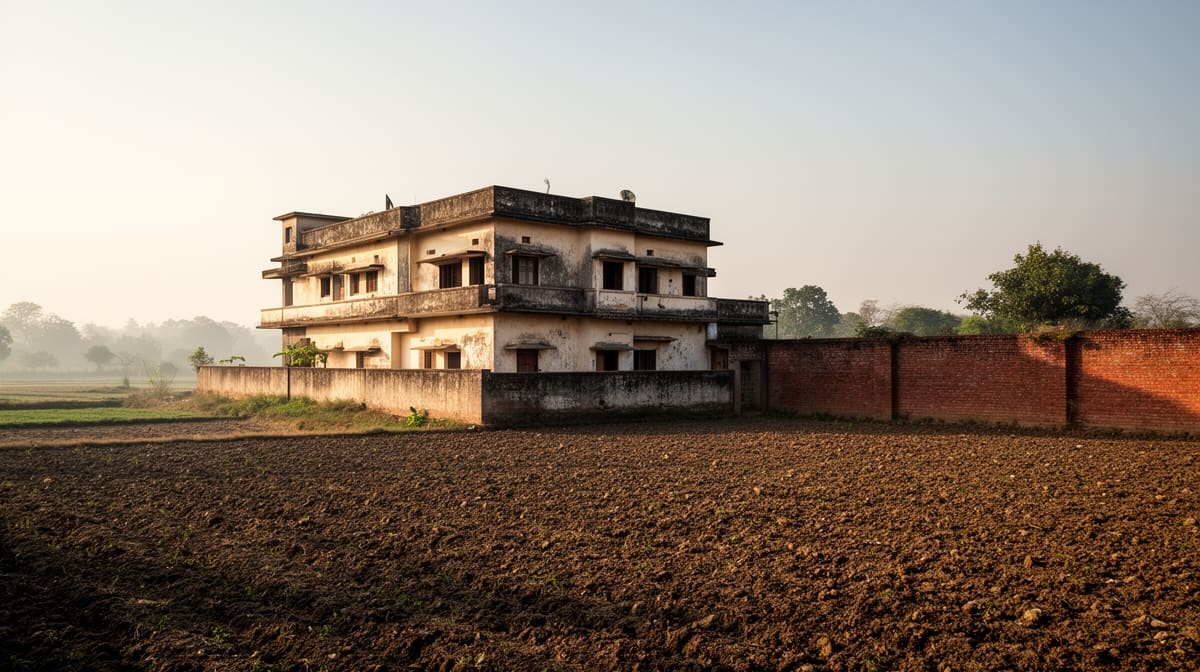
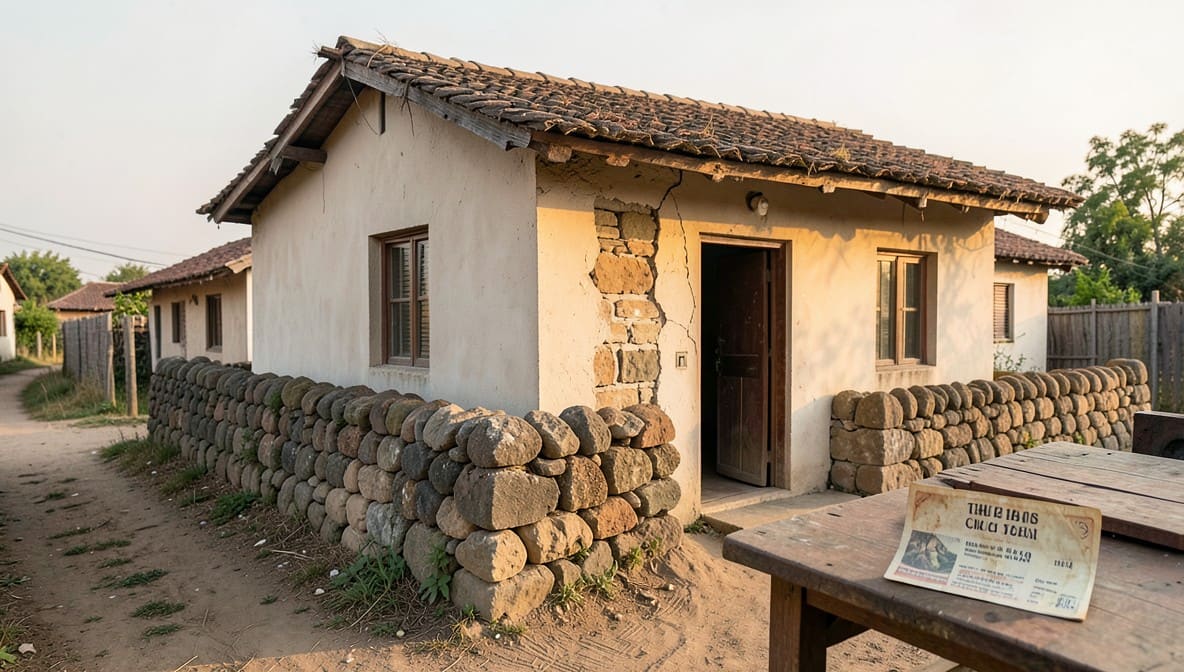
The plaintiff, Bir Singh, filed a suit for permanent injunction against the Gram Panchayat, Jamalpur, seeking to restrain it from demolishing his residential house. He claimed continuous, peaceful, and settled possession of the property for over 40 years. The defendant, the Gram Panchayat, alleged that the house was constructed on shamlat deh land - common village land belonging to the Panchayat - and sought to remove it as encroachment.
Key Facts
- The suit property is depicted in Site Plan Ex.P1, marked with red colour, located within the abadi deh of Jamalpur village.
- Bir Singh has resided in the house with his family since at least the 1950s.
- He produced Ex.P2, a Chulha tax receipt issued by the Panchayat, evidencing recognition of his occupation.
- He also produced a ration card as proof of residence.
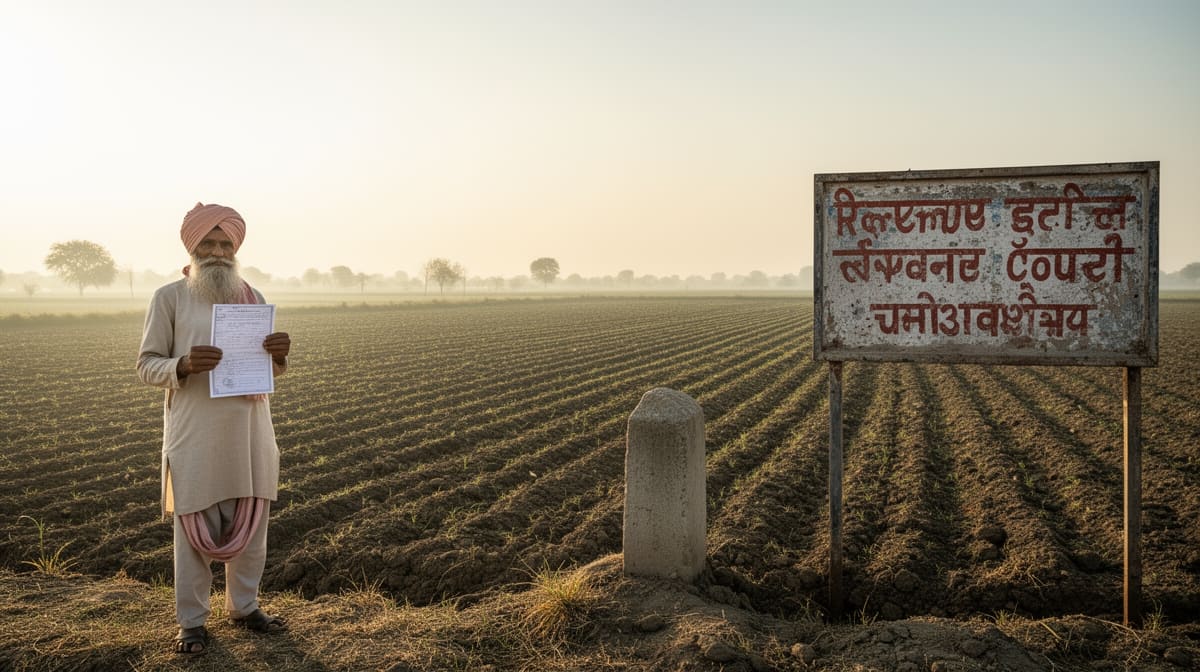
- The Panchayat relied on Jamabandi Ex.D1 and Aks-Sajra Ex.D2 to claim the property fell within Khasra No.133/24.
- No demarcation or survey was conducted to physically link the suit property to Khasra No.133/24.
- The Lambardar and another village resident testified that the property has always been part of the abadi deh.
- Their testimonies remained unchallenged in cross-examination.
Procedural History
- 1994: Gram Panchayat allegedly commenced action to remove the structure.
- 1998: Suit filed by Bir Singh before the Civil Court.
- 15.06.1998: Trial Court decreed the suit for permanent injunction, holding that the plaintiff had established long-standing possession within abadi deh and that the Panchayat failed to prove encroachment.
- 25.02.1999: First Appellate Court dismissed the Panchayat’s appeal, affirming the trial court’s findings.
- 24.03.2026: Regular Second Appeal heard by the High Court.
- 01.04.2026: Judgment pronounced dismissing the appeal.
Relief Sought
The plaintiff sought a permanent injunction to prevent the Panchayat from demolishing his house and dispossessing him. The defendant sought dismissal of the suit on grounds of lack of civil court jurisdiction and alleged encroachment.
The Legal Issue
The central question was whether the jurisdiction of the Civil Court is barred under the Punjab Village Common Lands (Regulation) Act or similar statutes merely because the defendant alleges that the disputed land is shamlat deh, without proving that the specific property in question forms part of such land.
Arguments Presented
For the Appellant
The appellant, Gram Panchayat, contended that the dispute fell exclusively within the domain of authorities empowered under special statutes governing village common lands. It relied on Dalip Singh v. Baljeet, 2025 NCPHHC-150531, and Bhartu v. Ram Sarup, 1985 RRR 353 (P&H) DB, to argue that civil courts have no jurisdiction where the land is claimed to be shamlat deh. It asserted that the plaintiff’s possession was unlawful and that the Panchayat had the statutory right to remove encroachments.
For the Respondent
The respondent, Bir Singh, argued that the concurrent findings of the Courts below were based on proper appreciation of evidence and did not raise any substantial question of law warranting interference in a second appeal. He emphasized that the Panchayat failed to prove that the suit property corresponded to Khasra No.133/24 and that the evidence established his long-standing possession within abadi deh, which is protected under common law.
The Court's Analysis
The Court emphasized that the scope of interference in a Regular Second Appeal is narrow and confined to cases where findings are perverse, based on misreading of evidence, or involve a substantial error of law. It noted that the plaintiff’s possession, spanning over four decades, was corroborated by independent witnesses, including the Lambardar, and supported by documentary evidence such as the Chulha tax receipt and ration card.
"No demarcation was carried out at any stage to identify the suit property with reference to the revenue record. In disputes of this nature, the identity of the property assumes central importance, and the burden lay heavily upon the defendant, who asserted encroachment, to establish such identity."
The Court held that the Panchayat’s reliance on Jamabandi and Aks-Sajra was insufficient because there was no evidence linking the physical site of the house to the revenue record. The burden of proving that the disputed land was shamlat deh rested squarely on the defendant, and its failure to discharge this burden rendered its claim speculative.
Regarding jurisdiction, the Court reiterated that exclusion of civil court jurisdiction must be strictly construed. A mere assertion of shamlat deh status, without substantiating evidence, cannot oust the jurisdiction of the Civil Court. The Court distinguished the cited precedents, noting that in those cases, the nature of the land as shamlat deh was clearly established, unlike here.
"The exclusion of jurisdiction of the Civil Court is not to be readily inferred and must be strictly construed. Such exclusion would operate only where the dispute squarely falls within the ambit of the special statute and the foundational facts, namely that the land is shamlat deh, stand established."
The Court concluded that the suit was for protection of possession - a classic civil remedy - and no alternative forum existed to grant such relief. The findings of the Courts below were therefore upheld.
The Verdict
The appeal was dismissed. The judgment of the trial court dated 15.06.1998 and the first appellate court order dated 25.02.1999 were affirmed. The plaintiff’s suit for permanent injunction was upheld, and the Gram Panchayat was permanently restrained from demolishing the house or dispossessing the plaintiff. All pending applications were disposed of.
What This Means For Similar Cases
Possession in Abadi Deh Is Protected Even Without Title
- Practitioners must argue that long-standing, peaceful possession within abadi deh, even without formal title, is sufficient to invoke civil court protection.
- Evidence such as tax receipts, ration cards, and village witness testimony can establish possession where documents are absent.
- Courts will not permit eviction without due process, even if the land is claimed as common property.
Mere Allegation of Shamlat Deh Does Not Bar Civil Court Jurisdiction
- A defendant cannot defeat civil court jurisdiction by merely asserting that land is shamlat deh.
- The burden of proof lies on the defendant to establish that the specific property in dispute is part of the common land, with documentary and physical evidence.
- Courts will not accept revenue records as conclusive unless they are demonstrably linked to the actual site of the structure.
Demarcation Is Essential in Land Disputes
- In all land possession cases, parties must produce demarcation maps or surveys that physically connect the disputed property to revenue records.
- Failure to demarcate renders claims speculative and legally insufficient.
- Practitioners should always request demarcation orders or expert surveys when challenging possession claims.