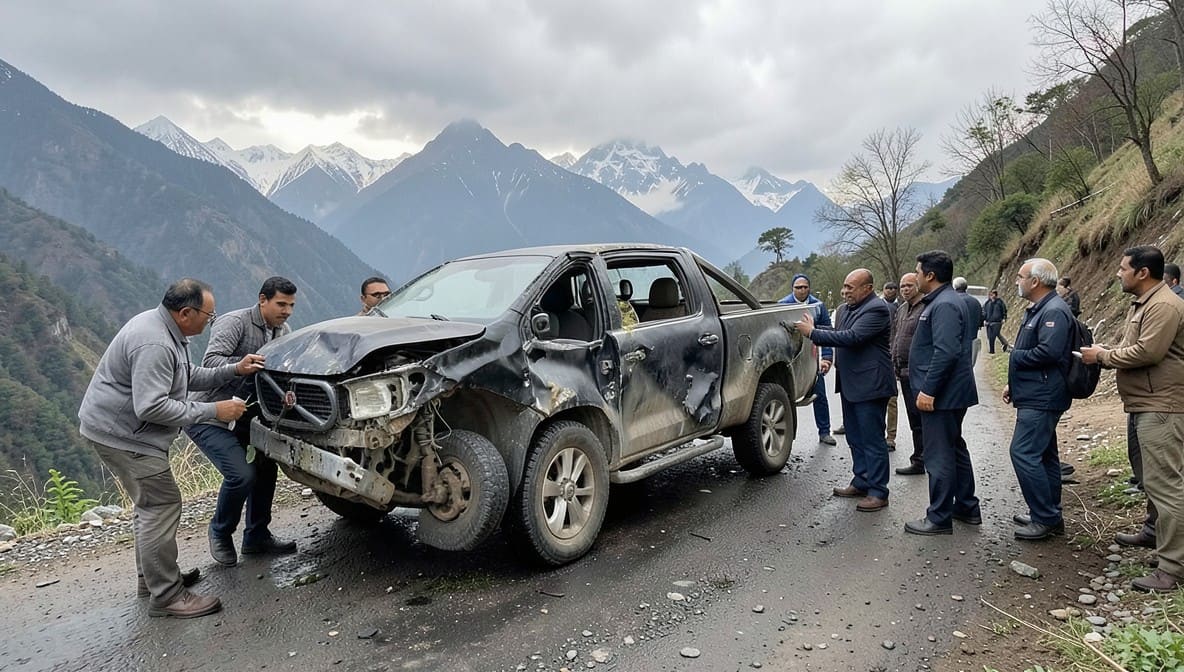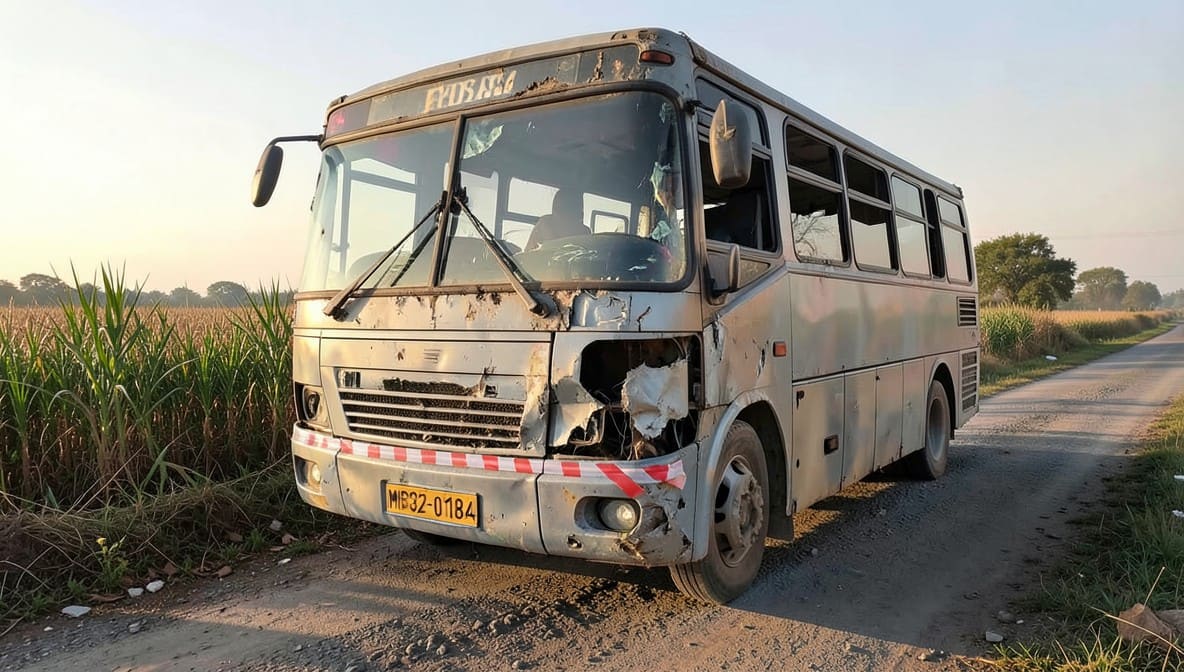
The Madhya Pradesh High Court has clarified that insurance companies cannot rely on investigator reports based on unverified digital content or unexamined witnesses to challenge the identity of a vehicle involved in an accident. The judgment underscores the necessity of admissible evidence and the burden of proof resting squarely on the insurer when alleging fraud.
Background & Facts
The Dispute
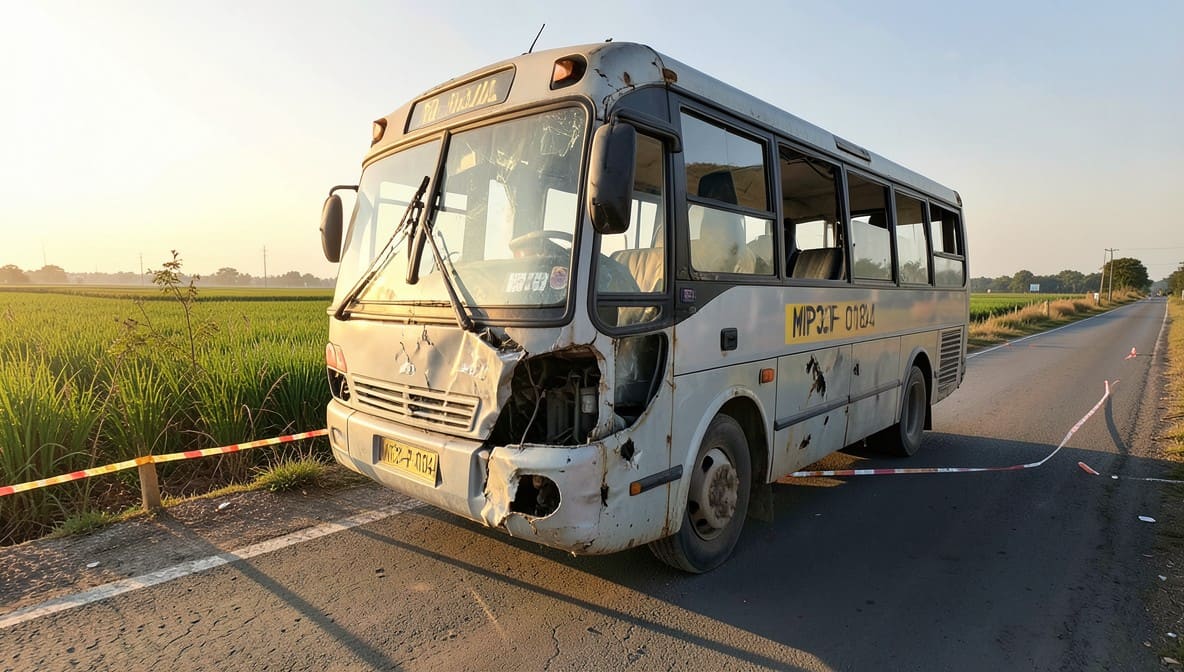
The appellant, IFFCO Tokio General Insurance Co. Ltd., challenged the award dated 30.06.2025 passed by the III Additional Member, Motor Accidents Claims Tribunal, Datia, in MACC No. 264/2022. The Tribunal held that the accident occurred involving a bus bearing registration number MP32-P-0184, which was insured by the appellant. The insurer contended that the actual vehicle involved was MP32-P-0791, an uninsured bus, and that the claimants had falsely implicated the insured vehicle to secure compensation.
Key Facts
- The accident occurred on 08.11.2022 near the field of Bahadur Singh Dangi on the Bhander-Datia road.
- Rajesh Gupta died, and Ashutosh Sharma, Manoj Kumar Sharma, Angad Ahirwar, and Sanjeev Prajapati sustained injuries.
- Five separate Motor Accident Claim Cases were filed: MACC No. 264/2022 (by Rajesh Gupta’s legal representatives), MACC No. 55/2023, MACC No. 75/2023, MACC No. 76/2023, and MACC No. 105/2023.
- All five cases were clubbed together for trial.
- The insurer appointed Dinesh Gupta as its Investigator (D.W.1) and Bahadur Singh Dangi as a witness (D.W.2).
- The insurer relied on a YouTube video and a newspaper article to assert that MP32-P-0791 was the accident vehicle.
- The affidavit of Bahadur Singh Dangi (Ex.D/10), sworn on 13.05.2025, claimed the accident involved MP32-P-0791, but the date was manually altered and the notary’s signature was incomplete.
- The insurer did not examine the person who uploaded the YouTube video, the newspaper correspondent, or the editor.
- The insurer did not produce any RTO records to prove that MP32-P-0791 was uninsured.
- The insurer did not summon the owner of MP32-P-0791 or any police officer involved in the investigation.
- The mechanical inspection report (Ex.P/47) dated 09.11.2022 confirmed damage to MP32-P-0184.
- The crime details form (Ex.P/5) and seizure memo (Ex.P/23) did not record the registration number of the accident vehicle.
Procedural History
- 08.11.2022: Accident occurred.
- 09.11.2022: Crime details form prepared; mechanical inspection of vehicle conducted.
- 13.05.2025: Affidavit of Bahadur Singh Dangi (Ex.D/10) sworn and filed.
- 30.06.2025: Motor Accidents Claims Tribunal, Datia, awarded compensation holding MP32-P-0184 was the accident vehicle.
- 07.04.2026: Miscellaneous Appeal No. 7958 of 2025 filed before the High Court of Madhya Pradesh, Gwalior.
- 07.04.2026: Civil Revision No. 1065/2025 decided simultaneously, confirming the Tribunal’s findings.
The Parties' Positions
For the Appellant (IFFCO Tokio): Argued that MP32-P-0791 was the uninsured vehicle involved in the accident. Claimed the insurer’s investigator, Dinesh Gupta, had gathered credible evidence through YouTube footage and newspaper reports. Alleged police collusion in concealing the true registration number. Asserted that the claimants had substituted the insured bus to fraudulently claim compensation.
For the Respondents (Claimants): Contended that the insurer failed to prove MP32-P-0791 was uninsured. Argued that the YouTube video and newspaper article were inadmissible hearsay. Stated that the affidavit of Bahadur Singh Dangi was tampered with and the witness was tutored. Emphasized that the burden to disprove the insured status of the vehicle lay with the insurer, not the claimants.
Relief Sought
The appellant sought to set aside the Tribunal’s award and hold that the accident involved the uninsured bus MP32-P-0791, thereby denying liability. The respondents sought affirmation of the award and costs.
The Legal Issue
The central question was whether an insurer’s investigator, appointed under Rule 25 of The Central Motor Vehicles (Fifth Amendment) Rules, 2022, can record witness statements and submit reports based on unverified digital content as admissible evidence to rebut the identity of the accident vehicle, and whether the burden to prove a vehicle’s uninsured status lies with the insurer or the claimants.
Arguments Presented
For the Appellant
The appellant relied on Rule 25 of The Central Motor Vehicles (Fifth Amendment) Rules, 2022, to assert that insurers have the right to appoint investigators to verify claims. It argued that the report of Dinesh Gupta (D.W.1), based on a YouTube video and newspaper article, was sufficient to cast doubt on the Tribunal’s finding. It further contended that the omission of the registration number in the crime details form and seizure memo indicated police negligence or collusion. The insurer claimed that since the owner of MP32-P-0791 did not produce an insurance policy, it was reasonable to infer the vehicle was uninsured.
For the Respondent
The respondents countered that Rule 25 does not empower investigators to record witness statements or conduct investigations akin to police officers under CrPC. They argued that the YouTube video was unauthenticated, the newspaper article was not corroborated, and the affidavit of Bahadur Singh Dangi was tampered with. They emphasized that the insurer bore the burden to prove the uninsured status of MP32-P-0791 and failed to produce any RTO records or summon the vehicle’s owner. The respondents maintained that the Tribunal correctly relied on the mechanical inspection report and the absence of credible evidence from the insurer.
The Court's Analysis
The Court undertook a rigorous analysis of the evidentiary value of the insurer’s investigation. It held that Rule 25 of the 2022 Rules permits insurers to verify claims and submit reports to the DCP for the purpose of obtaining Call Detail Records (CDR) of the driver, but it does not confer upon investigators the authority to record witness statements or conduct formal investigations under CrPC.
"Investigator cannot record statements. However, in order to verify the correctness of the accident, if he tries to collect evidence from the record and on the basis of the same, submits his report alleging that accident is a forged one, then such a report will have no sanctity in the eye of law because it cannot be treated as a judgment."
The Court found that Dinesh Gupta (D.W.1) had no documented appointment, no training, and no authority to record statements. His reliance on a YouTube video uploaded by an unknown person, without examining the uploader or producing the original memory card, rendered the evidence inadmissible. The newspaper article was similarly uncorroborated, with no witness from the publication examined.
Regarding Bahadur Singh Dangi (D.W.2), the Court observed that his affidavit (Ex.D/10) was back-dated and altered, and he had not disclosed the registration number during his examination-in-chief. His appearance as a witness only after the affidavit was filed, coupled with the absence of a summons, indicated he was a tutored witness. The Court noted that even the investigator had not contacted him during his initial inquiry, suggesting the witness was fabricated post hoc.
The Court further held that the insurer’s assertion that MP32-P-0791 was uninsured was unsupported by any documentary evidence from the RTO. The burden to prove the defense of non-insurance lay with the insurer, not the claimants. The insurer’s attempt to shift this burden was legally impermissible.
"Presumptions and surmises which are being drawn by Insurance Company are contrary to law and they want to tie a cart before a horse which is not permissible."
The Court also rejected the insurer’s allegations of police collusion, noting that no police officer was summoned as a witness. The mechanical inspection report confirming damage to MP32-P-0184 remained unchallenged.
The Court concluded that the insurer had fought the case on self-generated assumptions and inadmissible evidence, and the Tribunal’s findings were fully supported by the record.
The Verdict
The appeal was dismissed. The High Court affirmed the award dated 30.06.2025 of the Motor Accidents Claims Tribunal, Datia, in MACC No. 264/2022, holding that the accident involved the insured bus MP32-P-0184. The insurer’s challenge based on an unqualified investigator’s report, unverified digital content, and an unauthenticated affidavit was rejected. No monetary relief was modified, as the award stood affirmed in full.
What This Means For Similar Cases
Investigator Reports Are Not Substitutes for Evidence
- Practitioners must ensure that insurer-appointed investigators do not purport to record witness statements or conduct formal investigations.
- Reports based on social media content, newspaper clippings, or hearsay are inadmissible unless the original source is examined and authenticated.
- Any investigator’s report can only serve as a basis to apply for CDR under Rule 25, not as standalone proof of fraud.
Burden of Proving Non-Insurance Rests on the Insurer
- Insurers cannot rely on the absence of a policy copy from the claimant to infer non-insurance.
- The insurer must produce RTO records or summon the vehicle owner to prove the vehicle was uninsured.
- Courts will not accept speculative assertions or reverse burdens of proof.
Tutored Witnesses and Tampered Documents Will Be Penalized
- Affidavits with altered dates and incomplete notarization will be treated as unreliable.
- Witnesses who appear only after an affidavit is prepared, without being summoned, will be deemed tutored.
- Courts will draw adverse inferences against parties that fabricate or manipulate evidence.