The Madhya Pradesh High Court has clarified that insurance investigators appointed under the Central Motor Vehicles Rules cannot act as legal investigators with powers to record witness statements or substitute judicial evidence. The judgment underscores the necessity of legally admissible proof in motor accident claims and rejects speculative allegations against claimants and police.
Background & Facts
The Dispute
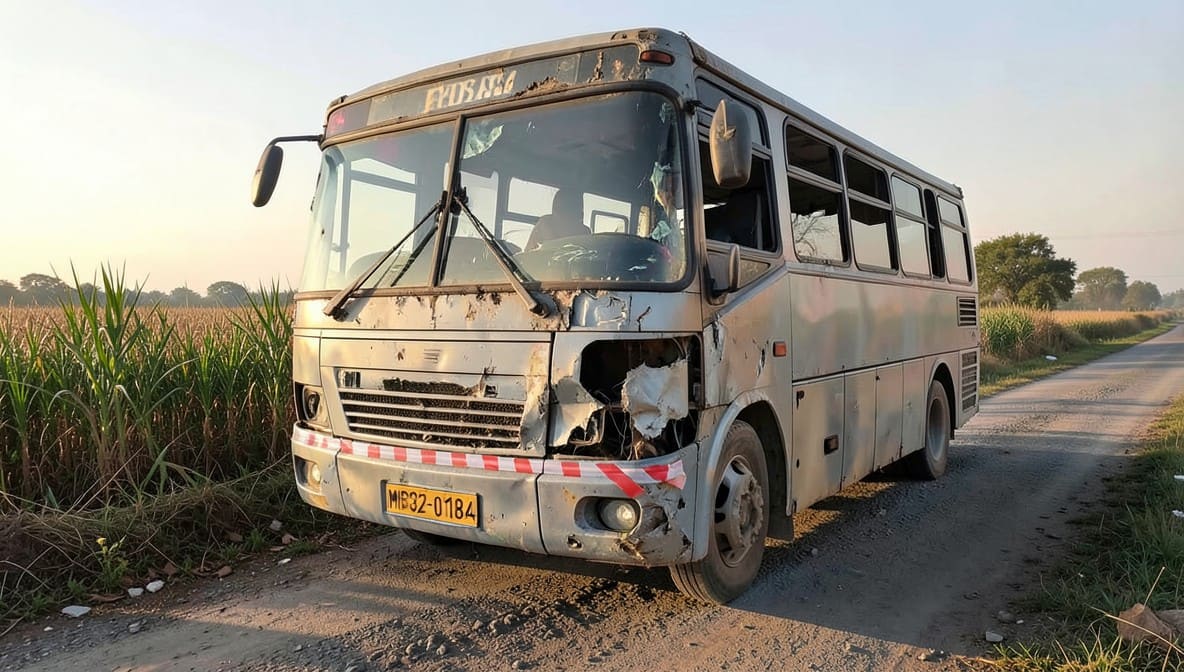
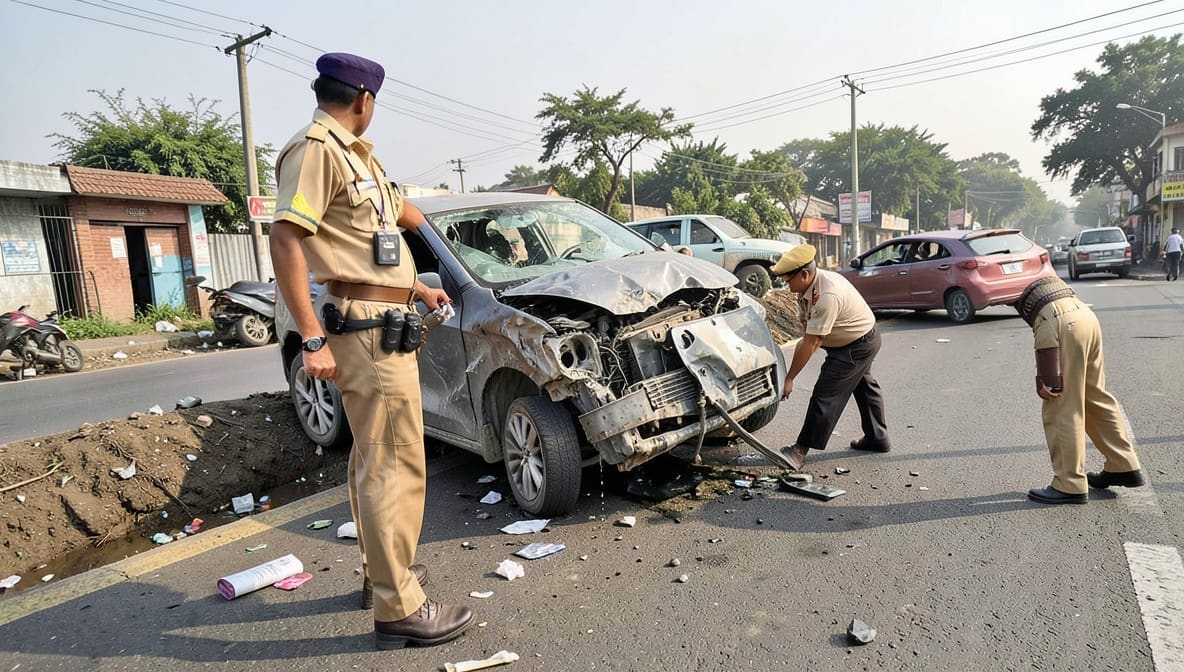
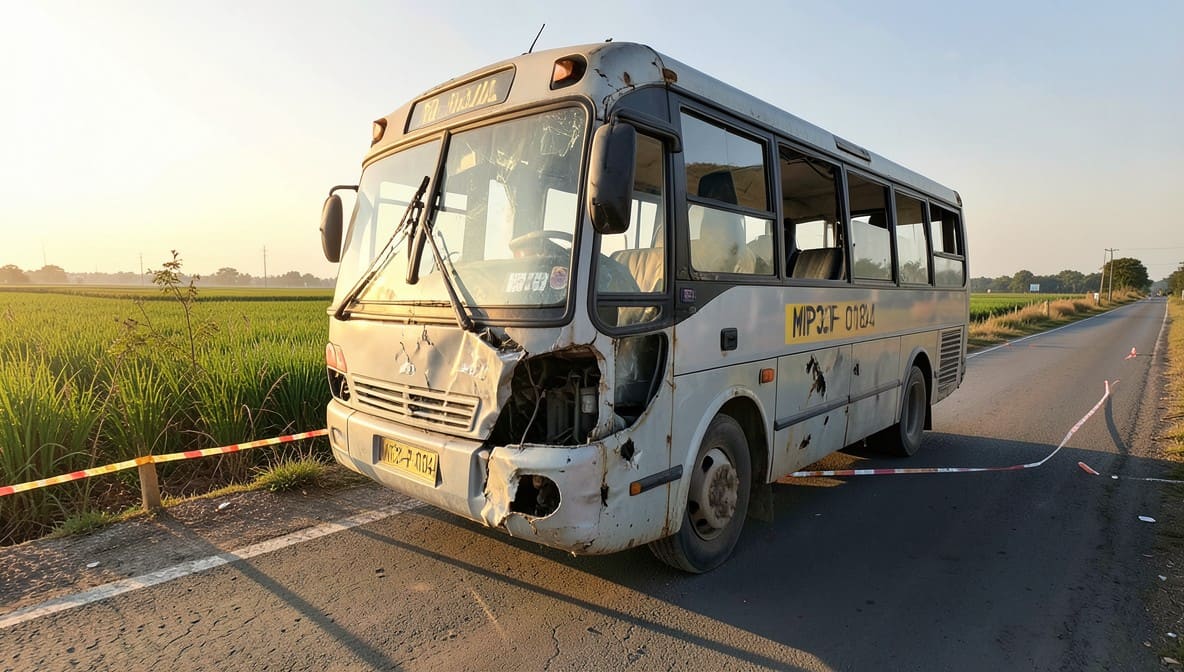
The dispute arose from a motor accident on 08.11.2022 near Bahadur Dangi’s field on the Bhander-Datia road, where a bus overturned, resulting in the death of Rajesh Gupta and injuries to four others, including Sanjeev Prajapati (alias Sonu). Five separate claims were filed before the Motor Accidents Claims Tribunal (MACT), Datia, which were clubbed together. The central factual dispute was whether the bus involved was MP32-P-0184 (insured) or MP32-P-0791 (uninsured). The insurance company, IFFCO Tokio General Insurance Co. Ltd., alleged that the uninsured bus MP32-P-0791 was deliberately substituted to fraudulently claim compensation.
Key Facts
- The accident occurred on 08.11.2022.
- The crime details form (Ex. P/5) was prepared by police on 09.11.2022 at 10:00 AM but did not mention the bus registration number.
- The seizure memo (Ex. P/23) also omitted the registration number.
- Mechanical inspection report (Ex. P/47), dated 09.11.2022, confirmed damage to bus MP32-P-0184.
- The Insurance Company appointed Dinesh Gupta as Investigator (D.W.1) but failed to produce his appointment order or proof of qualifications.
- Dinesh Gupta conducted his investigation in January 2023, over two months after the accident.
- He relied on an unverified YouTube video and a newspaper article, neither of which were authenticated by the uploader or journalist.
- The Insurance Company filed an affidavit (Ex. D/10) by Bahadur Singh Dangi (D.W.2), sworn on 13.05.2025, claiming the accident involved MP32-P-0791.
- The affidavit’s date was manually altered, and the notary’s signature lacked proper authentication.
- Bahadur Singh Dangi was not summoned as a witness prior to filing the affidavit and had not disclosed the bus number during his examination-in-chief.
- The Insurance Company never summoned the owner of MP32-P-0791 or any police officer involved in the investigation.
- No CDR (Call Detail Record) was sought from either bus’s driver, despite the legal provision under Rule 25 of the Central Motor Vehicles (Fifth Amendment) Rules, 2022.
Procedural History
- 08.11.2022: Accident occurred.
- 09.11.2022: Crime details form and mechanical inspection report prepared.
- 2022 - 2023: Five MACT claims filed (MACC No. 264/2022 to MACC No. 105/2023).
- 30.06.2025: III Additional Member, MACT, Datia, passed award holding accident involved MP32-P-0184 and awarded compensation.
- 2025: M.A. No. 7959/2025 (Insurance Company) and M.A. No. 8076/2025 (Claimant) filed before the High Court.
- 07.04.2026: Judgment delivered by the High Court.
The Parties' Positions
Appellant (IFFCO Tokio): Alleged that MP32-P-0791 was uninsured and involved in the accident; claimed the insured bus MP32-P-0184 was falsely implicated. Relied on the report of Dinesh Gupta (D.W.1) and affidavit of Bahadur Singh Dangi (D.W.2) to support this.
Respondents (Claimants): Maintained that MP32-P-0184 was the accident vehicle. Argued that the Insurance Company failed to prove its allegations and relied on inadmissible evidence.
Relief Sought
- IFFCO Tokio: Dismissal of the MACT award and declaration that the accident involved MP32-P-0791.
- Sanjeev Prajapati: Enhancement of compensation awarded under the head of pain and suffering from Rs. 25,000 to Rs. 85,000.
The Legal Issue
Can an insurance company’s private investigator, appointed under Rule 25 of the Central Motor Vehicles (Fifth Amendment) Rules, 2022, record witness statements and submit reports that are admissible as evidence in a Motor Accidents Claims Tribunal proceeding? And can such reports override official police records and mechanical inspection reports in the absence of corroboration?
Arguments Presented
For the Appellant
The Insurance Company contended that Rule 25 of the Central Motor Vehicles (Fifth Amendment) Rules, 2022, empowers insurers to appoint investigators to verify claims. It argued that Dinesh Gupta’s report, based on YouTube footage and newspaper reports, along with Bahadur Singh Dangi’s affidavit, established that MP32-P-0791 was the accident vehicle. It further alleged police negligence for omitting the registration number in the crime report and seizure memo, suggesting collusion to facilitate a fraudulent claim.
For the Respondent
The claimants argued that the Insurance Company failed to prove its allegations. They emphasized that the insurer never summoned the owner of MP32-P-0791, never obtained CDRs, and never produced the source of the YouTube video or newspaper article. The affidavit of Bahadur Singh Dangi was tampered with and filed without proper procedure. The claimants maintained that the MACT’s findings, supported by the mechanical inspection report and police records, were reliable and should be upheld.
The Court's Analysis
The Court conducted a rigorous analysis of the legal authority of insurance investigators under Rule 25 of the Central Motor Vehicles (Fifth Amendment) Rules, 2022. It held that while insurers may verify claims, they do not possess the powers of an investigating officer under the CrPC or BNSS. The Court emphasized:
"Investigator cannot record statements. However, in order to verify the correctness of the accident, if he tries to collect evidence from the record and on the basis of the same, submits his report alleging that accident is a forged one, then such a report will have no sanctity in the eye of law because it cannot be treated as a judgment. Furthermore, opinion of a witness/Investigator cannot be treated as relevant for the purposes of deciding claim petitions because he is not an expert."
The Court found that Dinesh Gupta (D.W.1) had no appointment order, no training credentials, and no authority to record statements. His reliance on unverified YouTube footage and newspaper reports rendered his report inadmissible. The Court noted:
"Unless and until the person who had video-graphed the video-clip of the ill-fated Bus and had uploaded the same on Youtube is examined and the memory card in which said video was saved is produced, it cannot be said that the video uploaded on Youtube channel by some unknown person was primary evidence."
Regarding Bahadur Singh Dangi (D.W.2), the Court observed that his affidavit (Ex. D/10) was backdated, manually altered, and not filed under Order 18 Rule 4 CPC. His testimony did not match the affidavit, and he was not summoned prior to filing. The Court concluded:
"Bahadur Singh Dangi (DW2) is not a reliable witness and the conduct of the Insurance Company in producing a tutored witness is deplorable."
The Court further rejected the Insurance Company’s allegation of police collusion, noting that no police officer was summoned as a witness. The mechanical inspection report (Ex. P/47), which confirmed damage to MP32-P-0184, remained unchallenged. The Court held that the burden to prove the bus was uninsured lay with the insurer, which failed to produce any RTO records.
"The submission made by Insurance Company that it is an admitted fact that Bus No. MP32-P-0791 was an uninsured Bus is false and contrary to law."
The Court also criticized counsel for the appellant for making unsubstantiated allegations, stating:
"It is always expected that a Lawyer would not make any false and misleading statement... this conduct of Shri Tomar was not like that of an officer of the Court."
The Verdict
The Insurance Company’s appeal (M.A. No. 7959/2025) was dismissed. The claimant’s appeal (M.A. No. 8076/2025) was allowed. The compensation awarded under the head of pain and suffering was enhanced from Rs. 25,000 to Rs. 75,000. The MACT’s award dated 30.06.2025 was affirmed in all other respects. The Court directed that the enhanced amount be paid within 8 weeks.
What This Means For Similar Cases
Insurance Investigators Cannot Substitute Judicial Evidence
- Practitioners must treat private investigator reports as mere opinions unless supported by legally admissible evidence.
- No investigator appointed by an insurer can record witness statements or substitute for police or court evidence.
- Reliance on YouTube videos, newspaper clippings, or unauthenticated affidavits will be rejected unless the source is examined and documents produced.
Burden of Proof Lies with the Insurer
- Insurers must prove their defense - including non-insurance of a vehicle - through official records (RTO, insurance databases), not surmises.
- Claimants are not obligated to prove the insured status of a vehicle not in their possession.
- Allegations of police collusion require direct evidence and summoning of police officers as witnesses.
Affidavits Must Be Properly Filed and Authenticated
- Affidavits filed as documents under Order 18 Rule 4 CPC must be properly sworn, dated, and notarized without manual alterations.
- Witnesses who only appear after an affidavit is prepared risk being labeled as "tutored" or "pocket" witnesses.
- Courts will scrutinize timing, authentication, and consistency between affidavit and testimony.