The Himachal Pradesh High Court has upheld the award of the Motor Accident Claims Tribunal, Sirmaur, rejecting the appeal of Shriram General Insurance Company against compensation awarded to the family of a deceased mechanic. The Court held that the insurance company failed to prove that the deceased was traveling as an unauthorized passenger, thereby disentitling it from denying liability under the insurance policy.
Background & Facts
The Dispute
The respondents No.1 to 3 filed a claim petition under Section 166 of the Motor Vehicles Act, 1988 (MV Act) seeking compensation of Rs.21,00,000 for the death of Abdul Jabbar, who was a partner in M/s Rajesh Tractor Workshop and a trained mechanic. The claim was filed against Dalel Singh (respondent No.1) and his insurer, Shriram General Insurance Company (appellant herein).
Key Facts
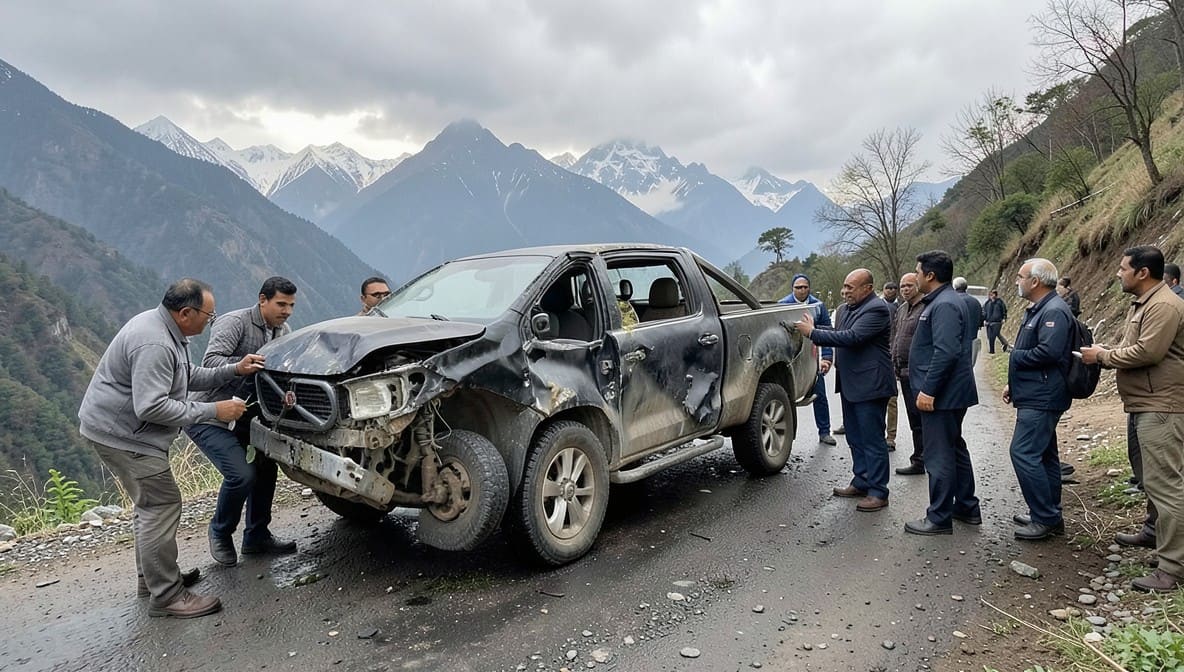
- On 05.06.2010, Abdul Jabbar was traveling in a pick-up vehicle (registration No.HP-17B-1900) driven by Dalel Singh to Rajgarh via Dadahu-Bacher Bag road to repair a Road Roller belonging to Dalel Singh.
- The vehicle was insured with Shriram General Insurance Company.
- The vehicle went off the road and rolled down a hill due to rash and negligent driving by Dalel Singh, resulting in fatal injuries to Abdul Jabbar, who died on the spot.
- Abdul Jabbar was aged about 22 years and was earning Rs.15,000 per month as a partner and skilled mechanic.
- The claim petition was filed on 29.02.2010 before the Motor Accident Claims Tribunal-I, Sirmaur District at Nahan.
Procedural History
- 13.09.2011: Issues framed by the Tribunal.
- 15.10.2012: Tribunal allowed the claim petition and awarded compensation of Rs.8,67,400 with 7.5% interest from the date of filing of the petition until payment, against respondent No.1. The insurer was directed to indemnify the award.
- 2013: Appeal filed by the insurer before the High Court (FAO No.50 of 2013).
- 20.06.2026: Appeal reserved.
- 21.07.2026: Appeal dismissed.
The Parties' Positions
The insurer contended that the deceased was traveling as an unauthorized/gratuitous passenger, thereby disentitling the claimants from claiming compensation from the insurer. The respondents No.1 to 3 supported the award, asserting that the deceased was traveling with tools and spare parts for repairing the Road Roller, thus not an unauthorized passenger.
Relief Sought
The appellant sought quashing and setting aside of the impugned award dated 15.10.2012, with a prayer to absolve itself of liability under the insurance policy.
The Legal Issue
The central question was whether the insurance company could avoid liability under the insurance policy without proving that the deceased was traveling as an unauthorized passenger.
Arguments Presented
For the Appellant
The insurer argued that the deceased was traveling as an unauthorized passenger in the goods vehicle, which disentitled the claimants from claiming compensation from the insurer. It relied on the terms of the insurance policy to assert that the vehicle was being plied in violation of its conditions.
For the Respondent
The respondents No.1 to 3 supported the award, contending that the Tribunal had correctly appreciated the evidence and held that the deceased was traveling with tools and spare parts for repairing the Road Roller, thus not an unauthorized passenger. They relied on the admission of Dalel Singh (RW-1) that the deceased was carrying tools for repair.
The Court's Analysis
The Court examined the burden of proof placed on the insurance company to establish a breach of the insurance policy. It relied on the judgment of the Supreme Court in National Insurance Co. Ltd. v. Swaran Singh, (2004) 3 SCC 297, which held that the insurance company must not only raise a defence but also establish the breach on the part of the owner of the vehicle. The burden of proof to establish that the deceased was traveling as an unauthorized passenger was on the insurance company.
The Court observed that the insurance company failed to lead any evidence to prove that the deceased was traveling as an unauthorized passenger. It noted that the claimants and the owner of the vehicle had consistently stated that the deceased was traveling with tools and spare parts for repairing the Road Roller, an admission also made by Dalel Singh in his testimony.
"The burden to prove the breach of a terms of insurance policy rests squarely on the party which complains of such breach. The test which can be applied in such a situation would be that which party would fail if no evidence is led or the onus is not discharged. In the present case, the answer would be the appellant-Insurance Company."
The Court held that the insurance company failed to discharge the burden placed upon it and, therefore, the contention raised by the insurer was not tenable.
The Verdict
The appeal filed by the insurer was dismissed. The impugned award dated 15.10.2012, passed by the Motor Accident Claims Tribunal-I, Sirmaur District at Nahan, HP, was upheld. The insurer was directed to indemnify the award of Rs.8,67,400 with 7.5% interest from the date of filing of the petition until payment.
What This Means For Similar Cases
Burden of Proof Lies on the Insurer
- The Court reiterated that the burden to prove a breach of the insurance policy lies on the insurer.
- The insurer must lead cogent evidence to establish that the claimant was traveling as an unauthorized passenger.
- Failure to discharge this burden disentitles the insurer from denying liability.
Documentary and Oral Evidence Must Align
- The Court emphasized the importance of consistency between documentary evidence and oral testimony.
- Admissions made by the owner of the vehicle in his testimony can be crucial in determining the status of the passenger.
Insurance Exclusion Clauses Are Not Self-Proving
- The Court held that insurance exclusion clauses cannot be invoked without proof of breach.
- The insurer must establish the breach on the part of the owner of the vehicle to avoid liability.
Practical Implications for Practitioners
- Practitioners must ensure that the insurer leads specific evidence to prove a breach of the insurance policy.
- Mere assertion of a breach without evidence is insufficient to absolve the insurer of liability.
- The Court's approach underscores the importance of thorough preparation and evidence collection in motor accident claims involving insurance disputes.