The Customs, Excise & Service Tax Appellate Tribunal (CESTAT) Allahabad has clarified that the mere presence of foreign origin markings on goods is insufficient to establish smuggling under the Customs Act, 1962. The Tribunal emphasized that the burden of proof lies squarely on the revenue to demonstrate the illegal importation through corroborative evidence, not speculative inferences.
Background & Facts
The Dispute
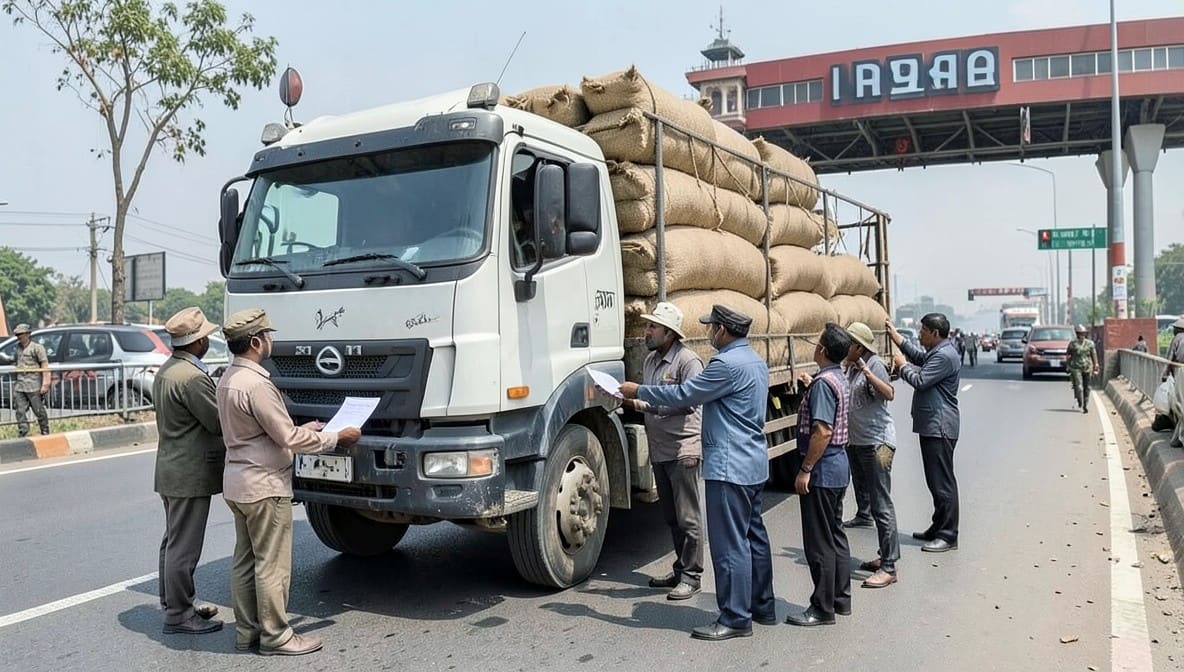
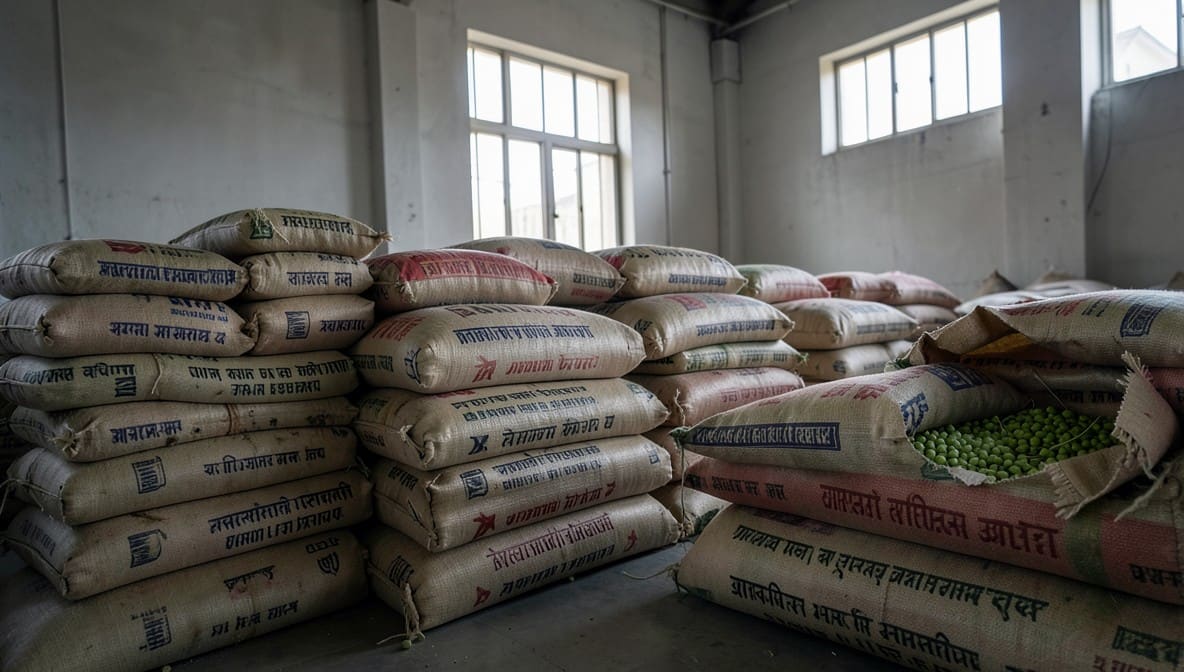
The appellant, M/s Rakesh Pandey, a trader based in Deoria, Uttar Pradesh, was accused by Customs authorities of smuggling 45,655 kgs of green peas of Canadian origin into India through the Indo-Nepal border. The goods were seized on 12.10.2021 from four trucks parked near his godown and office. A Show Cause Notice dated 08.04.2022 was issued under Section 111(b) of the Customs Act, 1962, seeking confiscation of the goods and the trucks, along with a penalty of Rs. 5 lakhs.
Key Facts
- The seized goods were packed in sacks marked with the words: 'Canadian origin green peas - premium quality'
- The seizure occurred at the appellant’s godown in Deoria, approximately 500 km from the Indo-Nepal border
- No interception or seizure took place at a customs station, international border, or any notified checkpoint
- The goods are not notified under Section 123 of the Customs Act, 1962, meaning they are not prohibited or restricted imports
- The only evidence relied upon by the Department were: (i) statements of the appellant and truck drivers, and (ii) the markings on the sacks
- No documentary proof of false invoices, smuggling route, or involvement of border agents was produced
- The Department did not verify the authenticity of purchase documents submitted by the appellant
Procedural History
- 12.10.2021: Seizure of 45,655 kgs of green peas and four trucks at appellant’s godown in Deoria
- 08.04.2022: Show Cause Notice issued under Section 111(b) of the Customs Act, 1962
- 23.03.2023: Order-in-Original passed by Additional Commissioner imposing penalty of Rs. 5 lakhs and confiscation of goods
- 24.01.2024: Order-in-Appeal by Commissioner (Appeals) upholding the Order-in-Original
- 12.03.2026: Hearing before CESTAT Allahabad
- 24.03.2026: Final Order pronounced by CESTAT Allahabad
Relief Sought
The appellant sought: (i) setting aside of the impugned order dated 24.01.2024, (ii) quashing of the confiscation order for 45,655 kgs of green peas, (iii) cancellation of the penalty of Rs. 5,00,000, and (iv) cancellation of the redemption fine of Rs. 18,26,200/- imposed under Section 112(b).
The Legal Issue
The central question was whether foreign origin markings on goods, without corroborative evidence of smuggling route, method, or intent, are sufficient to establish a violation of Section 111(b) of the Customs Act, 1962.
Arguments Presented
For the Appellant
Shri Prakhar Shukla, Advocate, argued that the Department failed to discharge its burden of proof under Section 111(b). He contended that: (i) the seizure was not made at a customs station or near an international border, rendering the presumption of smuggling inapplicable; (ii) the statements of the appellant and drivers were uncorroborated and not recorded under Section 138B; (iii) the markings on the sacks were not conclusive proof of smuggling, as legally imported goods often bear foreign branding; and (iv) the Tribunal in M/s Gagan Deorah (2024) had squarely held that foreign markings alone cannot prove smuggling.
For the Respondent
Shri A.K. Choudhary, Authorised Representative for the Revenue, relied on the findings of the lower authorities and reiterated that the presence of 'Canadian origin' markings on the sacks indicated illegal importation. He did not produce any evidence of the smuggling route, border crossing, or falsified documents, nor did he examine the persons whose statements were relied upon.
The Court's Analysis
The Tribunal observed that the seizure occurred at a private godown in Deoria, far from any international border or customs checkpoint. Under Section 111(b), the revenue must prove that the goods were smuggled into India. However, Section 123 does not notify green peas as a restricted item, placing the full burden of proof on the Department.
"Foreign markings or foreign origin of goods by itself does not render the goods as smuggled. Burden to prove the smuggled nature of goods is on the Revenue. Such burden was not discharged by adducing any positive tangible evidence."
The Tribunal relied on the precedent set in M/s Gagan Deorah (2024) (Tri.-Cal.), which held that in a liberalized economy, foreign goods are freely imported and widely available in the market. Mere presence of foreign labels cannot be equated with smuggling. The Tribunal further cited Commissioner of Customs v. Monoranjan Bainik (2004), Godari Rai v. Commissioner of Customs (2003), and Jitendra Pawar v. Commissioner of Customs (2003), all affirming that the revenue must produce tangible, corroborative evidence.
The Tribunal noted that the statements of the appellant and drivers were not recorded under Section 138B of the Customs Act, which mandates personal examination of witnesses whose statements are relied upon. Without such compliance, the statements were inadmissible as evidence.
The only remaining evidence - the markings on the sacks - was deemed insufficient to prove the serious allegation of smuggling. The Tribunal emphasized that the Department failed to establish: (i) the place of smuggling, (ii) the method of entry, (iii) the time of import, or (iv) the persons involved.
The Verdict
The appeal was allowed. The Tribunal set aside the impugned order dated 24.01.2024, quashed the confiscation order for 45,655 kgs of green peas, cancelled the penalty of Rs. 5,00,000, and cancelled the redemption fine of Rs. 18,26,200/- imposed under Section 112(b). The goods were ordered to be released to the appellant without any further liability.
What This Means For Similar Cases
Foreign Markings Are Not Proof of Smuggling
- Practitioners must challenge seizures based solely on foreign labels, especially for non-notified goods
- The burden of proving smuggling rests entirely on the revenue - not on the importer to prove innocence
- In cases involving consumer goods, food items, or textiles, foreign branding is common and lawful
Corroborative Evidence Is Mandatory
- Revenue must produce: (i) border crossing records, (ii) falsified invoices, (iii) witness testimony examined under Section 138B, or (iv) GPS/transport trail evidence
- Unverified statements, even if consistent, are inadmissible without personal examination
- Failure to verify purchase documents or trace the supply chain renders the case unsustainable
Procedural Compliance Under Section 138B Is Non-Negotiable
- Any statement relied upon in adjudication must be recorded under Section 138B
- Failure to examine the declarant invalidates the entire case
- This applies equally to truck drivers, warehouse staff, or intermediaries