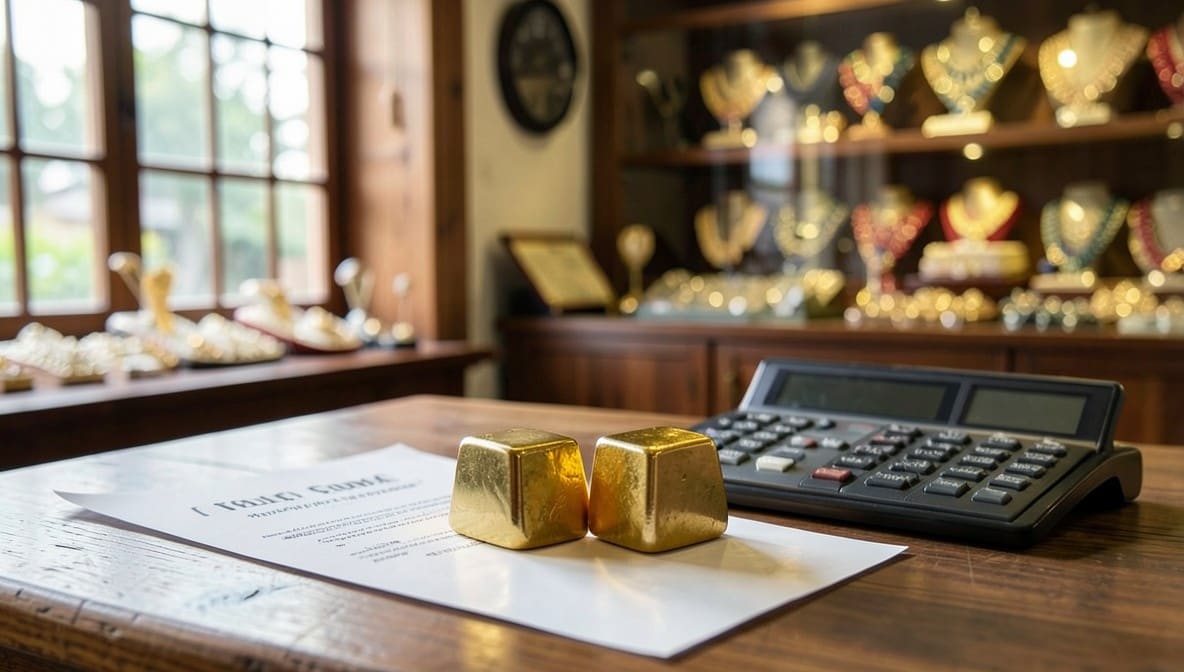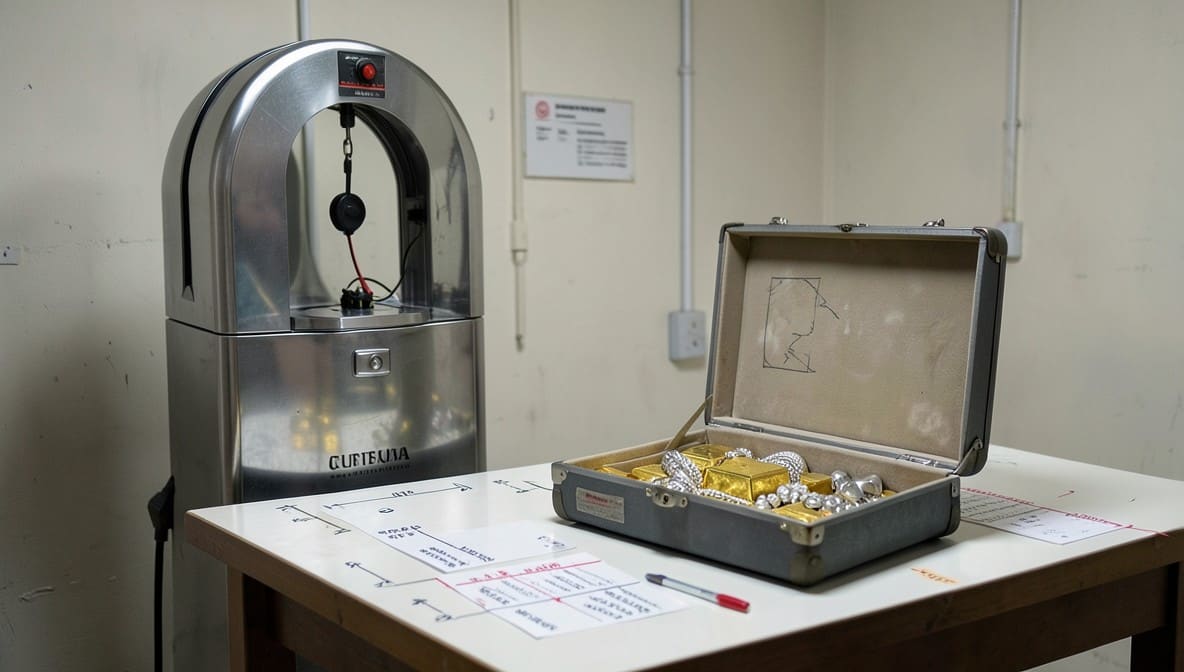
The Customs, Excise & Service Tax Appellate Tribunal upheld the Commissioner (Appeals) order that set aside the confiscation of gold and penalties, emphasizing that a "reasonable belief" is a prerequisite for invoking the statutory presumption under Section 123 of the Customs Act, 1962. The decision reshapes the evidentiary burden in town seizures of alleged smuggled goods.
Background & Facts
The Dispute
The Revenue (Commissioner, Customs (Preventive) Lucknow) appealed against the order of the Commissioner (Appeals) dated 07.05.2025, which had set aside the confiscation of gold bars and Indian currency seized from several respondents. The core contention was whether the seized gold constituted "smuggled goods" warranting confiscation under Section 111 and whether the statutory presumption under Section 123 could be invoked.
Key Facts
- 12.12.2023: Special intelligence officers of the Directorate of Revenue Intelligence (DRI) intercepted Shri Mahesh Kumar Soni, Shri Gopi Krishna Soni and Shri Diler Abbas at Charbagh Railway Station, Lucknow, around 20:30 hrs while they were boarding Train No.12533 Pushpak Express to Mumbai.
- During a personal search of a trolley bag, officers recovered:
- 43 cut pieces of yellow-coloured bars and 2 pieces of yellow-coloured metal (total weight 5,541 grams).
- Indian currency of Rs 68,80,000.
- Laboratory analysis (Report No. S-1) confirmed the metal was gold with 99.49% purity; two other samples showed gold-silver-copper alloys.
- No licit documents (receipt, bill of entry, etc.) were produced at the time of seizure.
- 13.12.2023: Statements of the three respondents were recorded under Section 108 of the Customs Act.
- 09.02.2024: Show-Cause Notice proposing confiscation of the gold (valued at Rs 3,32,28,900) under Section 111 and the cash under Section 121.
- 29.02.2024: Respondents filed a reply to the notice.
- 15.12.2023: DRI visited the premises of M/s G.S. Gold, Mumbai; the office was locked and uncooperative.
- 02.01.2024: Summons issued to Shri Shyam Soni (proprietor of M/s G.S. Gold) - he failed to appear.
- The respondents, through M/s G.S. Gold, produced GST-compliant purchase invoices, stock registers, and GST returns showing legitimate domestic procurement of the gold.
- 07.05.2025: Commissioner (Appeals) set aside the confiscation and penalties, finding the seizure lacked reasonable belief.
- 10.08.2026: Hearing of the appeals before the Tribunal.
- 14.08.2026: Tribunal delivered the present order.
Procedural History
- 17.05.2024: Additional Commissioner of Customs (Preventive), Lucknow, ordered absolute confiscation of the gold and cash and imposed penalties on the respondents.
- 07.05.2025: Commissioner (Appeals) set aside the confiscation and penalties.
- 2026: Revenue filed combined appeals (Customs Appeal Nos. 70148-70152 of 2026) before the Customs, Excise & Service Tax Appellate Tribunal, Allahabad Regional Bench.
- 10.08.2026: Tribunal heard the matter.
- 14.08.2026: Tribunal delivered the final order.
Parties' Positions
- Revenue (Appellant) argued that the quantity of gold, absence of foreign markings, and the DRI’s intelligence created a reasonable belief of smuggling, thereby justifying the statutory presumption under Section 123 and the confiscation.
- Respondents (Respondent) contended that the gold was lawfully purchased by M/s G.S. Gold, fully accounted for in GST returns, and that the statements recorded under Section 108 were not voluntary and lacked corroboration. They asserted that the seizure was a town seizure without any reasonable belief of smuggling.
Relief Sought
- Revenue: Set aside the Commissioner (Appeals) order, reinstate confiscation of 5,541 g of gold and Rs 68,80,000 cash, and impose penalties under Sections 112 and 114AA of the Customs Act.
- Respondents: Uphold the Commissioner (Appeals) order, release the seized cash with interest, and confirm that no confiscation or penalty is applicable.
The Legal Issue
The tribunal had to resolve two intertwined questions: (1) Whether, on the facts, the Revenue had a reasonable belief that the seized gold was of smuggled origin, thereby permitting the invocation of the statutory presumption under Section 123 of the Customs Act, 1962; and (2) Whether the statements recorded under Section 108 of the Customs Act could be relied upon as substantive evidence to sustain confiscation and penal liability.
Arguments Presented
For the Appellant (Revenue)
- The sheer quantity of gold (5,541 g) and the absence of any licence or transport documents indicated illicit possession.
- DRI’s intelligence and the interception at a railway station provided a basis for a reasonable belief of smuggling.
- The respondents failed to produce any foreign-origin documentation; therefore, the burden shifted to them under Section 123.
- Statements under Section 108 were admissible as they were recorded by a gazetted officer.
For the Respondent
- The gold was purchased domestically by M/s G.S. Gold, with GST-compliant invoices, stock registers, and returns covering the period April 2023 to November 2023; the stock on hand exceeded the seized quantity.
- No foreign markings or embossments were found on the gold; purity alone does not prove foreign origin.
- The statements under Section 108 were pre-typed, signed under duress, and the respondents were illiterate, rendering them involuntary and inadmissible without corroboration.
- The seizure was a town seizure, not at a customs point; therefore, the statutory “reasonable belief” prerequisite was not satisfied.
The Court's Analysis
The Tribunal began by interpreting the statutory framework of Section 123. It held that the presumption of smuggling operates only when the seizure is made on a reasonable belief that the goods are smuggled. This belief must be founded on objective circumstances existing at the time of seizure, not on post-seizure conjecture.
"The existence of such reasonable belief cannot be founded upon conjectures, assumptions or mere suspicion, but must be supported by objective circumstances existing at the time of seizure itself."
The Tribunal examined the factual matrix:
- The gold was seized from a trolley bag in a railway station (a town seizure), with no foreign markings, serial numbers, or embossments.
- The only evidence of foreign origin was the DRI’s intelligence report, which the Tribunal found insufficient to constitute a reasonable belief.
- The laboratory report merely confirmed purity; it did not link the gold to any foreign source.
Consequently, the Tribunal concluded that the foundational requirement of reasonable belief was absent, rendering the statutory presumption under Section 123 inapplicable. Without that presumption, the burden of proof remained on the Revenue to prove smuggling, which it failed to do.
Regarding the admissibility of Section 108 statements, the Tribunal noted that the statutory safeguards under Section 138B require that such statements be recorded voluntarily, with the maker examined as a witness, and the affected party given an opportunity for cross-examination. The respondents demonstrated that the statements were pre-typed, signed under fear, and that the respondents were illiterate. The Tribunal found no evidence that the procedural safeguards were complied with; therefore, the statements could not be treated as conclusive evidence.
The Tribunal also evaluated the documentary evidence produced by M/s G.S. Gold. The GST invoices, stock registers, and returns were deemed genuine and demonstrated that the gold was lawfully procured and accounted for. The Tribunal rejected the Revenue’s allegation that these documents were fabricated, noting the absence of any forensic examination to support such a claim.
Finally, the Tribunal addressed the penalties under Sections 112 and 114AA. Since the confiscation itself was unsustainable, the consequential penalties could not stand. The Tribunal therefore upheld the Commissioner (Appeals) order that set aside both the confiscation and the penalties.
The Verdict
The Tribunal dismissed the Revenue’s appeals. It upheld the Commissioner (Appeals) order, thereby:
- Setting aside the absolute confiscation of 5,541 grams of gold under Sections 111(b) and 111(d) of the Customs Act.
- Setting aside all penalties imposed on the respondents under Sections 112 and 114AA.
- Directing the release of the seized cash amounting to Rs 68,80,000 to the respondents, with applicable interest, forthwith.
What This Means For Similar Cases
Reasonable Belief Is a Threshold, Not a Form-Filling Exercise
Practitioners must ensure that any customs seizure is predicated on concrete, contemporaneous evidence establishing a reasonable belief of smuggling. Mere quantity, lack of paperwork, or intelligence reports without corroboration will not satisfy the threshold.
- Document the presence of foreign markings, import licences, or credible forensic links at the time of seizure.
- In town seizures, the burden of proof remains on the Revenue; the presumption under Section 123 cannot be invoked automatically.
Statements Under Section 108 Require Strict Safeguards
Customs officials must adhere to the procedural safeguards of Section 138B when recording statements. Voluntariness, proper examination of the maker as a witness, and opportunity for cross-examination are mandatory.
- Avoid pre-typed statements; ensure the declarant signs a handwritten statement after being read out.
- If the statement’s admissibility is challenged, the burden shifts to the Revenue to produce corroborative evidence.
Documentary Evidence Can Overturn Presumptions
Robust GST-compliant invoices, stock registers, and returns can effectively rebut allegations of smuggling. Courts will scrutinise the authenticity of such documents; however, absent forensic challenges, they carry significant evidentiary weight.
- Maintain meticulous records and be prepared to produce them promptly during investigations.
- Ensure that all transport documents, even for interstate movement, comply with applicable notifications (e.g., Notification 3/2018-Central Tax).