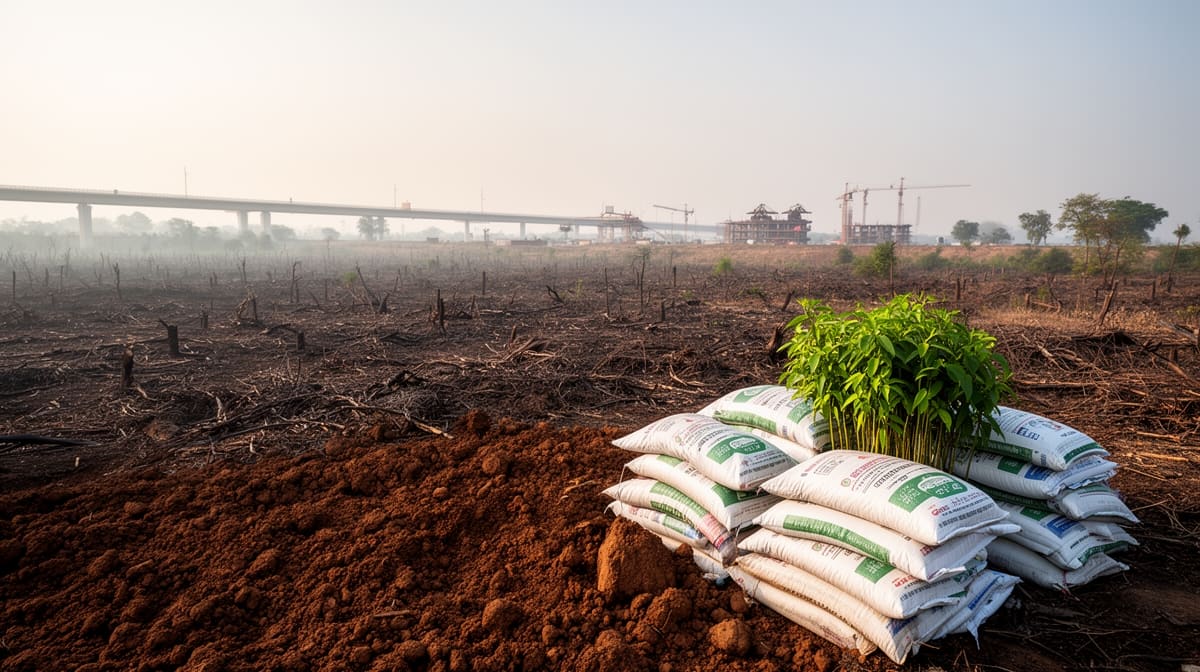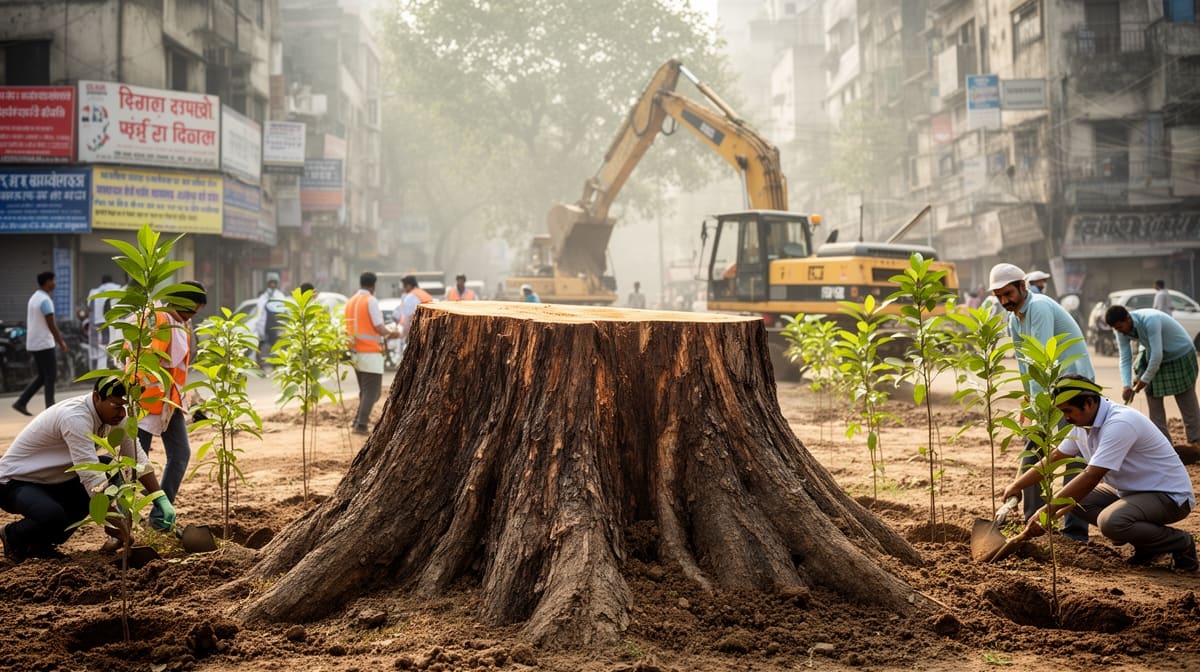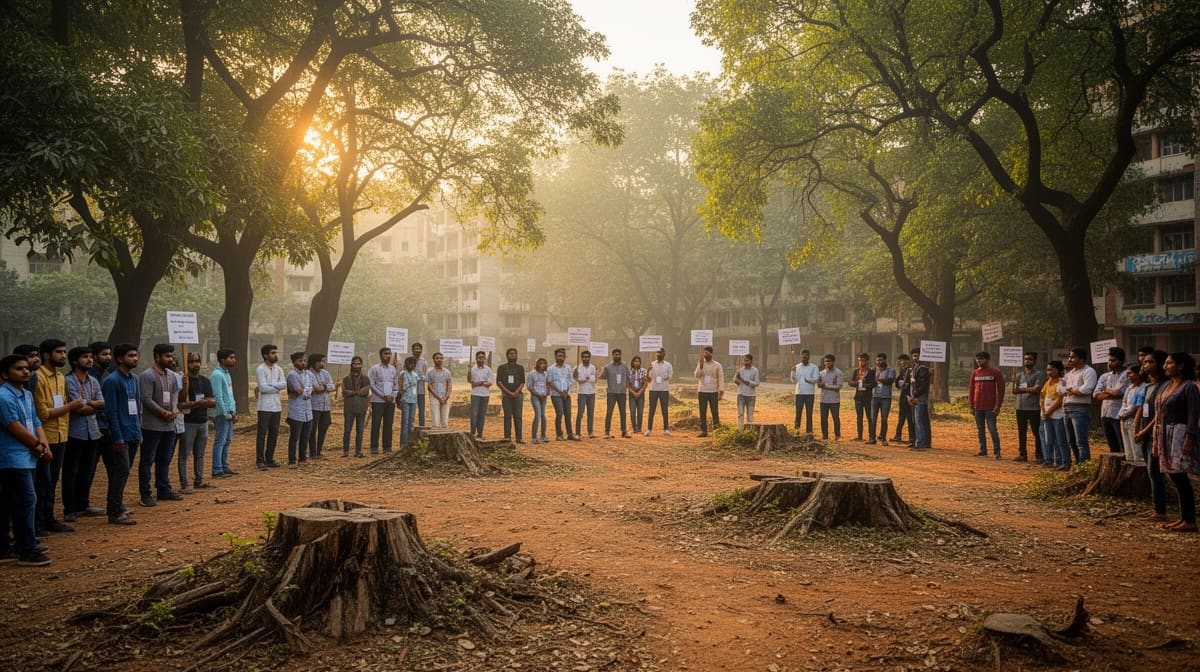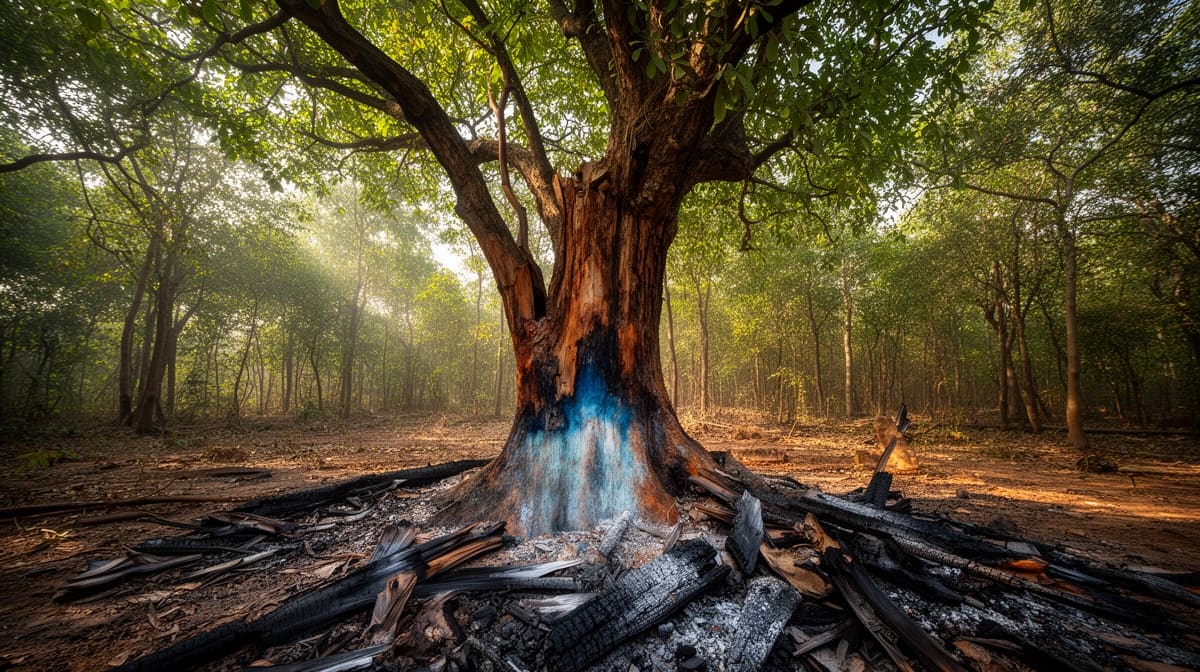
The Madhya Pradesh High Court has issued urgent directives to enforce a complete ban on the extraction of Salai Gond and Dhavda Gond sap from forest trees, recognizing widespread ecological damage and systemic non-compliance. This ruling underscores the judiciary’s role in safeguarding forest ecosystems when administrative inaction threatens irreversible environmental harm.
Background & Facts
The Dispute
The petitioner, through public interest litigation, challenged the continued illegal extraction of sap from Salai and Dhavda trees in the Forest Division of Burhanpur, despite a formal ban issued on 14 February 2024. The extraction, carried out under purported licenses, has led to severe degradation of these ecologically significant tree species. An investigation report by the Divisional Forest Officer revealed that 89% of Salai trees and 73% of Dhavda trees have been damaged, with artificial chemicals being used to accelerate sap flow, further accelerating tree mortality.
Procedural History
- The petition was filed as a public interest litigation under Article 226 of the Constitution.
- No prior judicial intervention had been sought despite repeated complaints from local communities and forest officials.
- The State initially sought time to take instructions, indicating lack of immediate corrective action.
Relief Sought
The petitioner sought immediate cessation of all sap extraction activities, protection of damaged trees from deliberate destruction, and accountability for officials permitting or ignoring violations. Special emphasis was placed on preventing the burning of trees to conceal evidence of chemical use.
The Legal Issue
The central question was whether the State has a legal obligation under environmental statutes and constitutional duties to enforce a pre-existing ban on sap extraction when evidence of large-scale ecological damage is documented and unchallenged.
Arguments Presented
For the Petitioner
The petitioner relied on the principle of sustainable development and the public trust doctrine, arguing that the State, as trustee of natural resources, cannot permit commercial exploitation that leads to irreversible forest degradation. Reference was made to M.C. Mehta v. Union of India to establish the State’s affirmative duty to protect the environment. The investigation report was presented as conclusive evidence of violation and harm.
For the Respondent/State
The State did not dispute the findings of the investigation report but contended that enforcement was a matter of administrative logistics and that licenses were issued in good faith. No legal defense was offered to justify continued extraction in contravention of the 2024 ban.
The Court's Analysis
The Court held that the existence of a clear, unambiguous ban order dated 14 February 2024 created a non-discretionary duty on the State to enforce it. The Court rejected the notion that administrative convenience could override statutory and constitutional obligations. The use of artificial chemicals and the burning of trees to destroy evidence were characterized as deliberate acts of environmental sabotage.
"The State cannot turn a blind eye to documented ecological destruction merely because enforcement requires effort. The forest is not a commodity to be exploited but a public trust to be preserved."
The Court emphasized that the right to a healthy environment under Article 21 includes the protection of biodiversity and forest cover. The scale of damage - nearly nine out of ten Salai trees affected - constituted a prima facie violation of the Forest (Conservation) Act, 1980 and the Wildlife (Protection) Act, 1972, even in the absence of specific prosecution.
The Court further noted that the failure to act despite clear evidence amounted to a breach of natural justice and procedural accountability under administrative law.
The Verdict
The petitioner succeeded. The Court held that the 2024 ban on sap extraction must be strictly enforced without exception, and that officials responsible for non-compliance will face disciplinary action. The Court also mandated protection of trees targeted for destruction and imposed a duty to report breaches directly to the Court.
What This Means For Similar Cases
Enforcement of Environmental Bans Is Non-Discretionary
- Practitioners must now argue that any pre-existing environmental prohibition, once documented and unchallenged, creates a mandatory duty on authorities.
- Administrative delays or claims of resource constraints cannot justify continued violations.
- Public interest litigants can rely on official investigation reports as prima facie evidence of violation.
Destruction of Evidence Triggers Judicial Sanctions
- Burning trees or tampering with forest resources to conceal illegal activity constitutes aggravated environmental misconduct.
- Courts may impose direct accountability on forest officials, including suspension or contempt proceedings, upon proof of complicity.
- Evidence of deliberate destruction strengthens the case for interim relief and expedited hearings.
Public Trust Doctrine Applies to Non-Protected Species
- Even trees not classified as "protected" under wildlife laws are covered under the public trust doctrine when their ecological role is significant.
- Salai and Dhavda trees, though not listed in Schedules of the Wildlife Act, support soil conservation, biodiversity, and tribal livelihoods - making their protection constitutionally mandated.
- This expands the scope of environmental litigation beyond endangered species to include ecologically critical flora.