The National Green Tribunal, Pune Bench, has admitted a petition challenging a series of public notices issued by the Nashik Municipal Corporation for the felling of over a thousand trees, finding substantial environmental and procedural concerns. The case raises critical questions about compliance with the Maharashtra (Urban Areas) Protection and Preservation of Trees Act, 1975, particularly regarding mandatory disclosures in tree felling notices and the unlawful delegation of authority to municipal officers.
Background & Facts
The Dispute
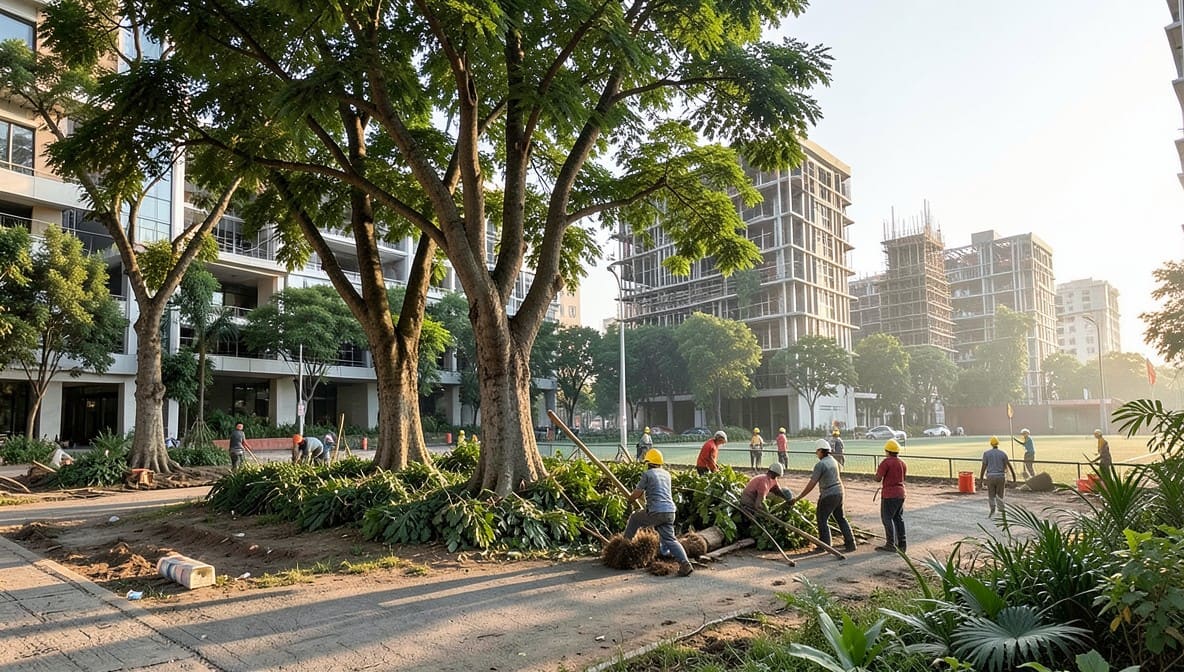
The applicant, Manav Uthaan Manch, Nashik, has challenged 15 public notices issued by Tree Officers of the Nashik Municipal Corporation between 09.01.2026 and 25.02.2026 under Section 8(2) and 8(3) of the Maharashtra (Urban Areas) Protection and Preservation of Trees Act, 1975. These notices propose the removal or transplantation of more than 1,000 trees across the city, including trees of the Ficus family - specifically Peepal, Vad, and Nandruk - which are classified as heritage trees under judicial precedent. The stated purpose is preparation for the Sinhastha Kumbh Mela 2027.
Key Facts
- The notices were published in local newspapers and affixed on tree sites as required under Section 8(3) of the Tree Act.
- The applicant contends that none of the notices disclose:
- The age of the trees proposed for felling
- Whether any tree is a heritage tree
- The criteria used to determine fitness for felling
- The rationale for felling specific trees
- The notices reference the Sinhastha Kumbh Mela 2027 as justification, but no environmental impact assessment or expert committee report is attached.
- The applicant annexed English translations of the notices as Exhibit "J Colly" (pages 218-A onwards).
- The applicant specifically highlights that Peepal trees, explicitly protected by the Bombay High Court in 2015, are included in the proposed felling list.
- No Tree Authority has been constituted in Nashik District since the enactment of the Act.
- The Municipal Commissioner is acting as the Tree Officer, but without constitution of a formal Tree Authority.
Procedural History
- 09.01.2026: First notice (No. 410/2026) issued by Nashik Municipal Corporation.
- 04.02.2026 to 25.02.2026: Twelve additional notices issued, totaling 15 notices.
- 17.02.2026: Last notice (No. 463/2026) issued.
- 27.03.2026: Original Application No. 34 of 2026 (WZ) filed before the National Green Tribunal, Western Zone Bench, Pune.
The Parties' Positions
Applicant (Manav Uthaan Manch): Argues that the notices are legally invalid for failing to comply with mandatory disclosures under Section 8(3) of the Tree Act. Relies on two key judgments: (i) Public Interest Litigation No. 41 of 2006 (Bombay HC, 08.05.2015), which prohibited felling of Ficus trees; and (ii) Rohit Manohar Joshi v. Tree Authority, Thane (Bombay HC, 18-23.04.2018), which held that Municipal Commissioners may only exercise Tree Authority powers in emergencies, not routinely. Further, the applicant contends that the absence of a constituted Tree Authority renders the Commissioner’s actions ultra vires.
Respondents (State of Maharashtra & Ors.): Did not appear or file any counter-affidavit at the time of admission. The Tribunal noted the absence of any rebuttal or justification from the respondents.
Relief Sought
The applicant seeks:
- Quashing of all 15 public notices dated 09.01.2026 to 25.02.2026.
- A direction to constitute a statutory Tree Authority for Nashik Municipal Corporation.
- A prohibition on felling any tree of the Ficus species (Peepal, Vad, Nandruk) without prior approval from the Chief Conservator of Forests.
- A direction to conduct a scientific audit of all trees within municipal limits before any felling is permitted.
The Legal Issue
The central question is whether public notices issued under Section 8(3) of the Maharashtra (Urban Areas) Protection and Preservation of Trees Act, 1975, are legally valid when they omit mandatory disclosures such as tree age, heritage status, and justification for felling, and whether the Municipal Commissioner can lawfully exercise Tree Authority powers in the absence of a constituted Tree Authority and without demonstrating an emergent situation.
Arguments Presented
For the Appellant/Petitioner
The applicant’s counsel relied on Public Interest Litigation No. 41 of 2006 (Bombay HC, 08.05.2015), which held that Ficus trees - due to their ecological and cultural significance - cannot be felled merely on the basis of 1:3 replacement ratios. The Court had directed that alternative alignments or road reductions be explored to preserve such trees. The applicant argued that the current notices directly contravene this binding precedent by including Peepal trees in the felling list.
Further, counsel cited Rohit Manohar Joshi v. Tree Authority, Thane (Bombay HC, 18-23.04.2018), which clarified that the second part of Section 3(4) permits Municipal Commissioners to act as Tree Authority only in emergencies or exceptional circumstances, not as a routine substitute. The applicant emphasized that no emergency has been claimed or proven in this case.
Additionally, counsel invoked Abhijeet Mohan Anturkar v. Tree Authority, Pune (2026 SCC OnLine Bom 966), which held that notices must contain sufficient details - location, reason, and tree specifics - to enable meaningful public objection. The absence of such details renders the notice procedurally defective.
For the Respondent/State
No arguments were presented by the respondents. The Tribunal noted the absence of any reply affidavit or counter-submission from the State or Municipal Corporation.
The Court's Analysis
The Tribunal examined the statutory framework under Section 8(3) of the Maharashtra Tree Act, which mandates that any public notice for tree felling must:
"specifically mention in the advertisement, if the tree to be felled is a heritage tree; and (vi). determine the age of the tree being felled as per the criteria and method as may be notified by the Government."
The Court observed that none of the 15 notices contain any of these mandatory disclosures. The notices merely state the number of trees to be removed and the purpose, without identifying species, age, heritage status, or justification.
The Tribunal further noted that the Bombay High Court in Rohit Manohar Joshi had unequivocally held that the power of Municipal Commissioners under Section 3(4) is not a routine substitute for a Tree Authority. It is an emergency provision, triggered only when the Tree Authority is non-functional or unconstituted. The Court in that case emphasized that such powers must be exercised sparingly and with expert consultation.
In this case, the Nashik Municipal Corporation has not constituted a Tree Authority for years, yet continues to issue felling notices under the guise of the Commissioner acting as Tree Officer. The Tribunal found this to be a systemic violation of statutory intent.
The Court also referenced Abhijeet Mohan Anturkar, where the High Court held that notices must provide sufficient information to enable citizens to raise objections. A notice that requires citizens to visit a website to obtain tree details fails the test of transparency and accessibility.
The Tribunal concluded that the notices are not merely defective - they are legally void for non-compliance with mandatory statutory conditions. The omission of heritage tree identification and tree age is not a minor irregularity but a fundamental breach of the Act’s protective purpose.
The Verdict
The National Green Tribunal admitted the application and directed the issuance of notices to the respondents. The Tribunal ordered the respondents to file detailed reply affidavits within two weeks, addressing:
- The legal basis for issuing notices without a constituted Tree Authority;
- The criteria used to determine tree age and heritage status;
- The justification for felling Ficus species in light of the 2015 Bombay HC order;
- The steps taken to consult horticultural experts as mandated by Rohit Manohar Joshi;
- The reasons for omitting mandatory disclosures under Section 8(3).
The matter is listed for further hearing on 24.04.2026. No interim stay on tree felling was granted, but the Tribunal emphasized that any felling prior to the next hearing shall be subject to judicial review.
What This Means For Similar Cases
Procedural Compliance Is Non-Negotiable
- Practitioners must now insist that all tree felling notices under the Maharashtra Tree Act contain: tree age, heritage status, and justification for felling.
- Notices that direct the public to websites for details are legally insufficient and vulnerable to quashing.
- Municipal corporations must ensure that notices are self-contained and comply with Section 8(3) in letter and spirit.
Emergency Powers Cannot Be Routine
- Municipal Commissioners cannot assume Tree Authority powers merely because no Tree Authority exists.
- Any invocation of Section 3(4) must be accompanied by a sworn affidavit demonstrating an emergent situation.
- Routine felling under the guise of "administrative convenience" is now explicitly prohibited.
Heritage Trees Receive Judicial Protection
- Ficus species (Peepal, Vad, Nandruk) are now judicially recognized as non-fellable except under extraordinary circumstances.
- Any proposal to fell such trees must be accompanied by a report from the Chief Conservator of Forests.
- Replacement ratios (e.g., 1:3) are irrelevant for heritage trees; preservation is the only acceptable outcome.