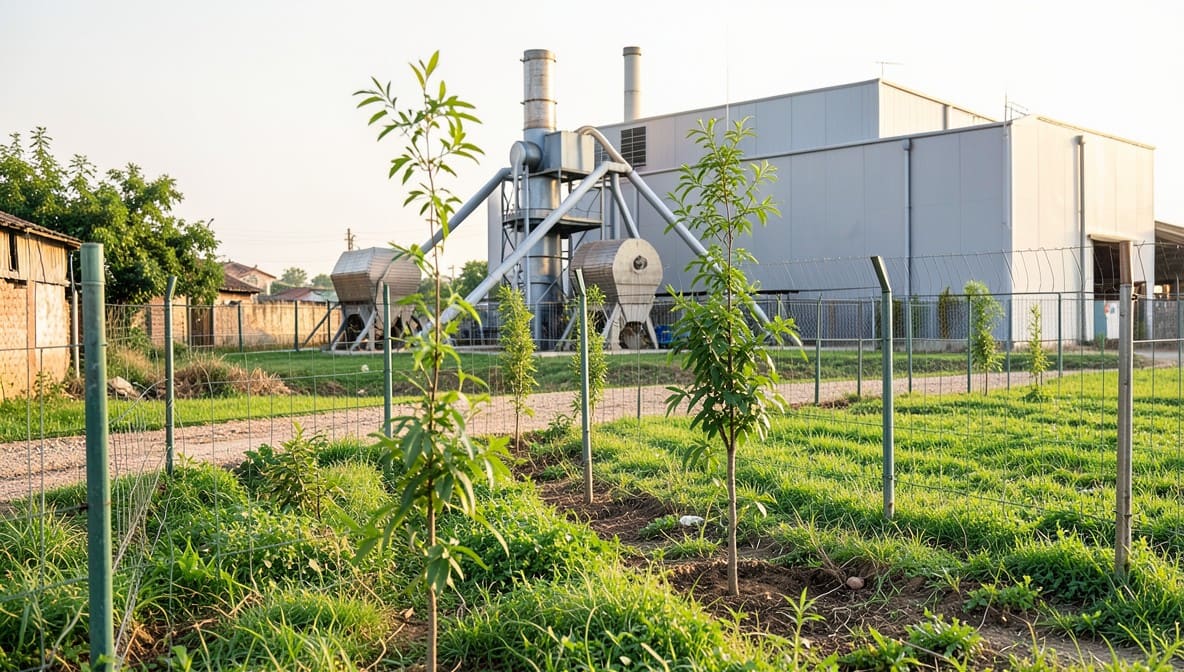
The National Green Tribunal’s judgment in K. Hariharan v. State of Tamil Nadu reaffirms that environmental safeguards cannot be waived for public infrastructure projects, even when backed by administrative orders. The Tribunal’s insistence on enforceable afforestation obligations sets a critical precedent for balancing development with ecological accountability.
Background & Facts
The Dispute
The applicant, a resident of Vengadamangalam, challenged the proposed construction of a Police Academy on 25 acres of land classified as 'Grazing Land' and 'Government Poramboke Meikkal' in Sy. Nos. 15, 16/2, and 22. He alleged that 10,000 trees would be felled, causing irreversible ecological damage. The project, initiated by the Tamil Nadu Police Department, required tree removal under the Tamil Nadu Tree Conservation Act and the Forest (Conservation) Act, 1980.
Procedural History
- January 2022: Vengadamangalam Panchayat passed a resolution to transfer Sy. No. 22 to the Police Department.
- December 2024: Government Order (Ms.) No. 562 authorized transfer of 20 acres from Sy. No. 22 to the Police Department and conversion of 20 acres in Sy. No. 99/1 to 'Meikkal'.
- April 2025: District Forest Officer directed the Police Department to submit a compensatory afforestation plan at a 1:10 ratio.
- May 2025: District Level Green Committee granted conditional permission for removal of 1,975 Eucalyptus trees, subject to planting 19,750 saplings.
- October 2025: Forest Range Officer confirmed no prior plantation existed in Sy. No. 15, and only 605 trees remained in Sy. No. 16/2 - neither of which were part of the transferred land.
Relief Sought
The applicant sought an injunction against tree felling and demanded identification of an alternative site for the Police Academy to preserve the ecological integrity of the grazing land.
The Legal Issue
The central question was whether compensatory afforestation at a 1:10 ratio, mandated by the District Level Green Committee, constitutes a binding environmental obligation even when the project serves a public purpose, and whether allegations of large-scale tree felling can be dismissed without verified data.
Arguments Presented
For the Petitioner
The applicant argued that the claim of 10,000 trees being felled was not merely speculative but based on the scale of land conversion from ecologically sensitive grazing land to institutional use. He cited T.N. Godavarman Thirumulpad v. Union of India to assert that any tree felling, regardless of species or location, triggers mandatory compensatory afforestation under Section 2 of the Forest (Conservation) Act, 1980. He further contended that the absence of objections during public consultation does not negate the duty to protect biodiversity.
For the Respondent
The State contended that the project was lawful, with all procedural requirements met. The District Level Green Committee had granted conditional permission after reviewing the afforestation plan. The Police Department had submitted a detailed action plan, and the actual number of trees to be removed was only 1,975 Eucalyptus, not 10,000 as alleged. The State relied on M.C. Mehta v. Union of India to emphasize that public infrastructure projects must be allowed to proceed with reasonable environmental safeguards.
The Court's Analysis
The Tribunal rejected the applicant’s claim of 10,000 trees being felled as unsubstantiated, noting that the actual inventory conducted by the District Forest Officer identified only 1,975 Eucalyptus trees eligible for removal. The Court emphasized that environmental harm must be proven with factual evidence, not surmise.
"The allegation that 10,000 trees will be cut is a mere surmise and there is no truth in the same."
The Tribunal affirmed that the District Level Green Committee’s conditional approval, including the 1:10 afforestation ratio, was legally binding. It held that the obligation to plant 19,750 saplings is not discretionary but a statutory condition under the Tamil Nadu Tree Conservation Rules and the National Afforestation Programme. The Court distinguished this case from those where afforestation is merely aspirational, stating that compliance must be monitored and enforced.
The Tribunal also noted that the land transferred (Sy. No. 22) was not ecologically equivalent to Sy. Nos. 15 and 16/2, which remained under Forest Department control. The presence of 2,218 trees on the transferred land, of which only 1,975 were to be removed, further undermined the applicant’s claim of massive deforestation.
The Verdict
The applicant’s petition was dismissed. The Court held that compensatory afforestation at a 1:10 ratio is a mandatory condition for lawful tree felling, even for public infrastructure. The Police Department must plant and nurture 19,750 saplings as per the approved action plan, with monitoring by the Forest Department.
What This Means For Similar Cases
Compensatory Afforestation Is Not Optional
- Practitioners must treat 1:10 afforestation ratios as non-negotiable conditions, not suggestions.
- Any project involving tree felling must submit a verified, site-specific planting plan approved by the District Green Committee.
- Failure to plant saplings constitutes a continuing violation, actionable under Section 22 of the NGT Act, 2010.
Public Interest Does Not Override Environmental Due Process
- Even projects with broad public benefit - such as police academies, hospitals, or roads - must comply with procedural environmental norms.
- Public consultation alone cannot substitute for statutory environmental clearances.
- Courts will not accept generalized claims of ecological harm without field inventory data.
Documentation Trumps Allegation
- Petitioners must rely on official records, inventory reports, and committee minutes, not estimates.
- The burden shifts to the petitioner to produce credible evidence of tree count or ecological impact.
- Courts will dismiss claims based on speculative figures, as seen here with the 10,000-tree allegation.