The Madhya Pradesh High Court has clarified that petitioners aggrieved by possession notices under the SARFAESI Act may directly approach the High Court under Article 226 when the Debts Recovery Tribunal is functionally inoperative, provided they promptly file an application under Section 17 and comply with procedural safeguards. This ruling balances the statutory requirement of exhausting remedies with the practical reality of institutional dysfunction.
Background & Facts
The Dispute
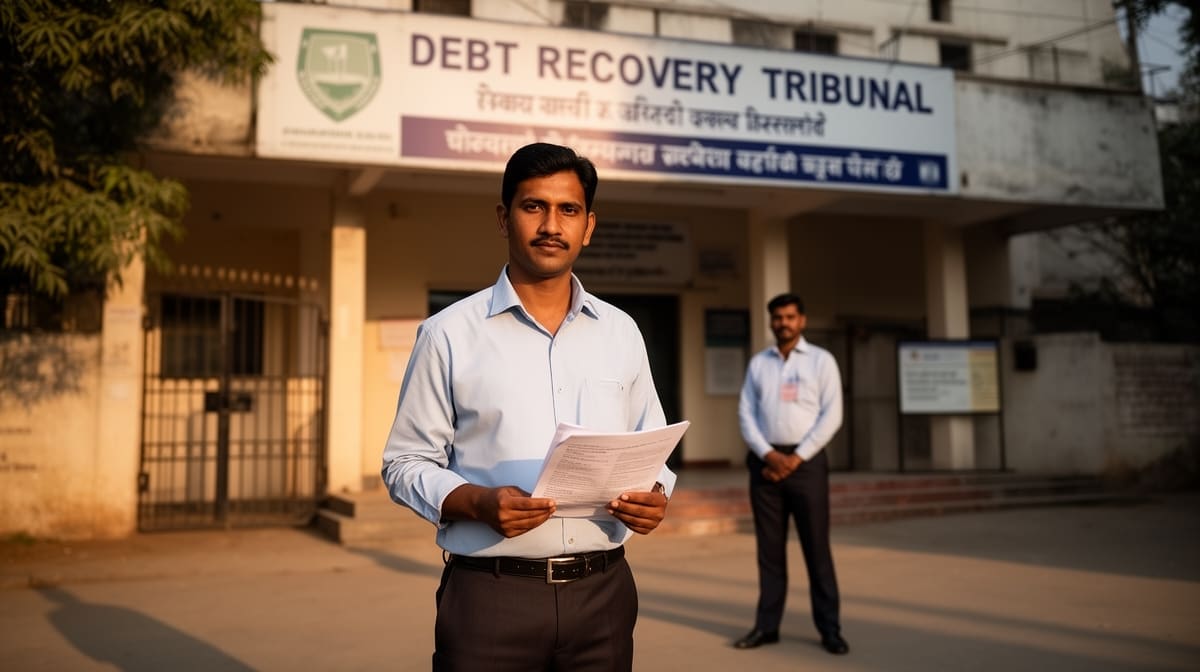
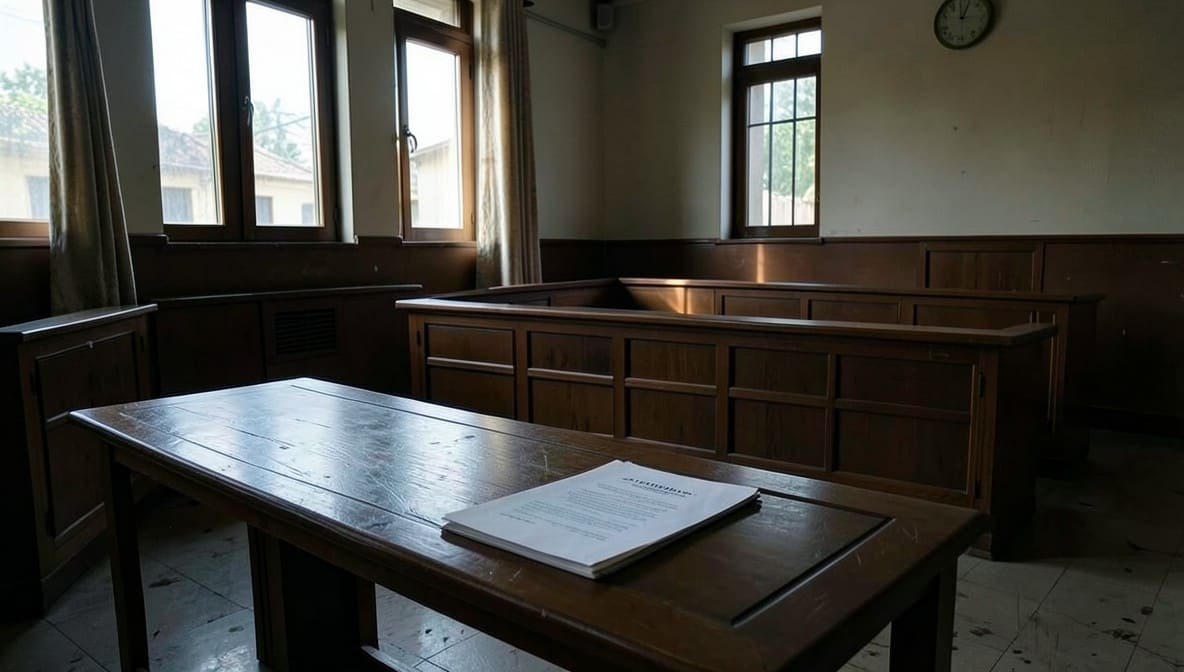
The petitioners, Smt. Niranjana and others, are borrowers whose secured assets are subject to enforcement proceedings initiated by the respondent bank under the Securitisation and Reconstruction of Financial Assets and Enforcement of Security Interest Act, 2002 (SARFAESI Act). A possession notice was issued pursuant to an order under Section 14 of the Act, threatening physical takeover of the mortgaged property. The petitioners challenged this notice before the High Court, contending that the Debts Recovery Tribunal (DRT) at Jabalpur was not functional due to the vacant post of Presiding Officer.
Key Facts
- The secured asset in question is a residential/commercial property mortgaged to the respondent bank
- The bank initiated enforcement proceedings under Section 13(4) of the SARFAESI Act after default in repayment
- A possession notice under Section 14 was issued on an unspecified date prior to the petition
- The petitioners did not file an application under Section 17 of the SARFAESI Act before approaching the High Court
- The DRT at Jabalpur has been non-functional since the post of Presiding Officer became vacant
- No Presiding Officer has been appointed or assigned additional charge to hear cases from Jabalpur jurisdiction
- The petitioners allege repeated attempts to approach DRT were futile due to administrative inaction
Procedural History
- Date of default: Not specified in judgment, but assumed to precede issuance of possession notice
- Date of possession notice: Not specified, but issued prior to filing of writ petition
- Date of filing of Writ Petition: 2026 (exact date not stated, but adjudicated on 13.05.2026)
- Date of respondent’s objection: Raised during hearing on 13.05.2026, citing lack of prior DRT application
- Date of Coordinate Bench order cited: Order in W.P. No. 12124/2026 (M/S D.G Oil Foods Pvt. Ltd. v. Indian Bank) issued prior to 13.05.2026
- Date of Apex Court judgment cited: 01.04.2026 (E. Muthuranthinasabathy & Others v. M/S. Sri International & Others)
- Date of present order: 13.05.2026
The Parties' Positions
For the Petitioners
- Argued that the DRT at Jabalpur is non-functional due to prolonged vacancy of the Presiding Officer
- Asserted that filing an application under Section 17 would be an exercise in futility
- Relied on the principle that constitutional remedies under Article 226 are available when statutory remedies are rendered ineffective
- Cited the Supreme Court’s recent direction in E. Muthuranthinasabathy as precedent for judicial intervention in such circumstances
For the Respondent / Bank
- Contended that Section 17 of the SARFAESI Act mandates exhaustion of remedy before approaching the High Court
- Relied on the Coordinate Bench’s order in W.P. No. 12124/2026, which dismissed a similar petition for non-compliance with Section 17
- Argued that the petitioners’ failure to approach DRT was a procedural defect warranting dismissal
Relief Sought
The petitioners sought quashing of the possession notice issued under Section 14 of the SARFAESI Act and a direction to the bank to refrain from taking possession of the secured assets until the DRT adjudicates their Section 17 application.
The Legal Issue
Can a petitioner directly approach the High Court under Article 226 of the Constitution challenging a possession notice under the SARFAESI Act, when the statutory remedy under Section 17 is rendered ineffective due to the non-functioning of the Debts Recovery Tribunal?
Arguments Presented
For the Petitioner
The petitioners relied on the Supreme Court’s judgment in E. Muthuranthinasabathy & Others v. M/S. Sri International & Others (dated 01.04.2026), which recognized that the statutory requirement to approach the DRT under Section 17 is not absolute when the tribunal is functionally defunct. They argued that the constitutional right to access justice under Article 226 cannot be denied merely because a statutory forum is paralyzed by administrative delay. The absence of a Presiding Officer for an extended period, they submitted, renders the Section 17 remedy illusory and not a viable alternative.
For the Respondent
The respondent bank contended that Section 17 of the SARFAESI Act is a mandatory precondition to invoking the writ jurisdiction of the High Court. It cited the Coordinate Bench’s order in W.P. No. 12124/2026, which held that even if the DRT is slow, it cannot be treated as non-existent. The bank argued that the petitioners had not exhausted the statutory remedy and that the High Court should not entertain the petition on grounds of administrative inefficiency, which is not a legal justification to bypass statutory procedure.
The Court's Analysis
The Court acknowledged the general rule that Section 17 of the SARFAESI Act provides the exclusive remedy for borrowers aggrieved by enforcement actions. However, it emphasized that this rule is not inflexible. The Court observed that the Supreme Court in E. Muthuranthinasabathy had explicitly recognized that when the DRT is rendered non-functional due to prolonged vacancy of the Presiding Officer, the remedy under Section 17 ceases to be an effective or practical alternative.
"The statutory remedy under Section 17 is not a mere procedural formality; it is a substantive right. But when the forum meant to adjudicate that right is rendered inoperative by administrative neglect, the constitutional remedy under Article 226 cannot be denied."
The Court distinguished the Coordinate Bench’s order in W.P. No. 12124/2026 on the ground that it did not involve a prolonged and documented functional vacuum at the DRT. Here, the absence of a Presiding Officer had created a de facto denial of access to justice. The Court held that the petitioners’ failure to file a Section 17 application was not a jurisdictional bar but a procedural lapse that could be cured by immediate compliance.
The Court further noted that the SARFAESI Act itself contemplates interim relief under Section 17, and that the DRT must act expeditiously. It therefore directed the petitioners to file the application within seven days, with a deposit of 10% of the dues, to preserve the statutory framework while ensuring access to justice.
The Verdict
The writ petition is disposed of with the following directions: (i) The petitioners shall file an application under Section 17 of the SARFAESI Act within seven days from today, along with a deposit of 10% of the amount due as on date; (ii) The DRT, Jabalpur, shall take up the application as soon as it becomes functional and decide it expeditiously; (iii) Until the interim relief is decided, the status quo of the secured assets shall be maintained; (iv) The petitioners shall communicate this order to the Registrar, DRT, Jabalpur, within seven working days; (v) If there is excessive delay in appointing a Presiding Officer or in hearing the application, the parties may approach this Court; (vi) The auction purchaser and bank shall comply with Rule 9(1) of the Security Interest (Enforcement) Rules, 2002. The Court clarified that no opinion is expressed on the merits of the case.
What This Means For Similar Cases
Statutory Forums Cannot Be Used to Deny Constitutional Remedies
- Practitioners may now invoke Article 226 when statutory tribunals like DRTs are non-functional due to prolonged vacancies or administrative paralysis
- The burden shifts to the respondent to prove that the statutory forum is operational and accessible
- Mere existence of a tribunal is insufficient; functionality must be demonstrated
Procedural Compliance Can Be Curative, Not Dispositive
- Failure to file a Section 17 application is not fatal if cured promptly under court direction
- Courts may permit curative compliance even after filing a writ petition, provided the delay is explained and remedial steps are taken immediately
- Deposit of 10% of dues is now a recognized condition for maintaining status quo
DRT Functional Status Must Be Documented
- Advocates must collect and submit evidence of DRT non-functionality (e.g., court notices, registry records, absence of hearing dates)
- Judicial orders citing non-functionality of DRTs will now carry precedential weight in other jurisdictions
- The judgment creates a new benchmark: if no case has been heard for over six months due to vacancy, the forum may be deemed non-functional