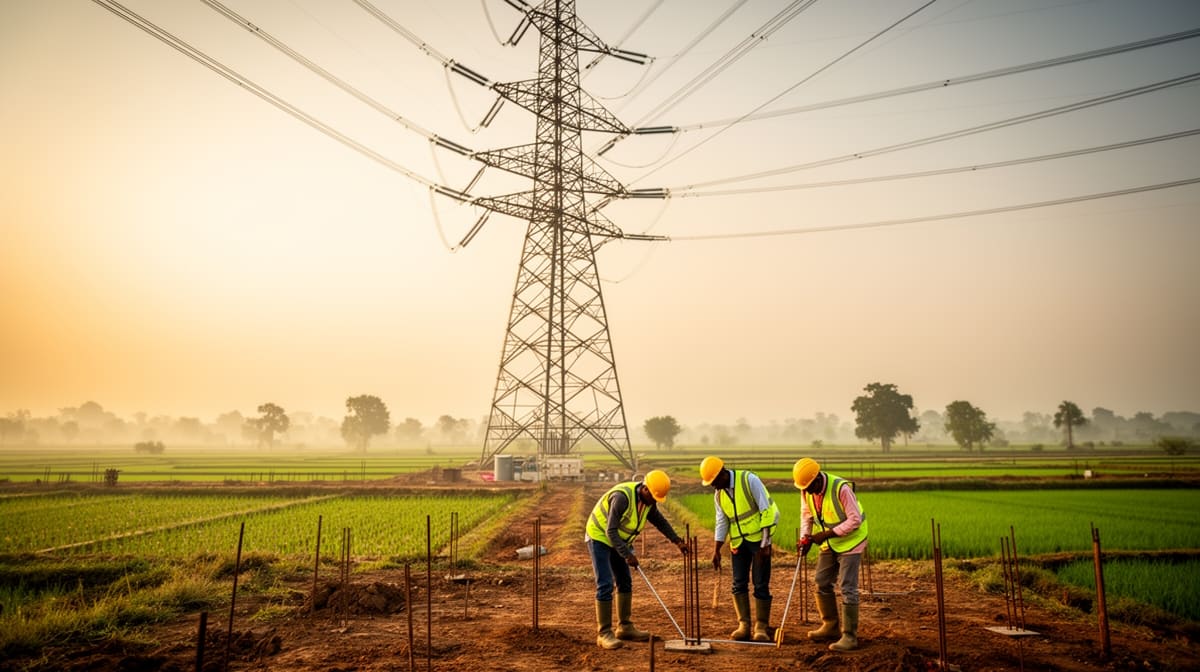
The Allahabad High Court has clarified that utility providers need not obtain consent from private landowners when laying electric lines along public roads, reinforcing the distinction between public infrastructure and private property rights. This ruling resolves recurring disputes over rural electrification projects and sets a clear doctrinal boundary for regulatory compliance under the Works of Licensees Rules, 2006.
Background & Facts
The Dispute
The petitioner, Jai Prakash Singh, filed a Public Interest Litigation seeking to restrain the State of Uttar Pradesh and six other respondents from installing electric poles and overhead lines on the residential properties of villagers in Arazi Devara, Karkhiya (Katiya), Raunapar, District Azamgarh, specifically on Arazi No. 4266. The petitioner alleged that the respondents were proceeding with the installation without obtaining consent from affected residents, in violation of statutory norms.
Key Facts
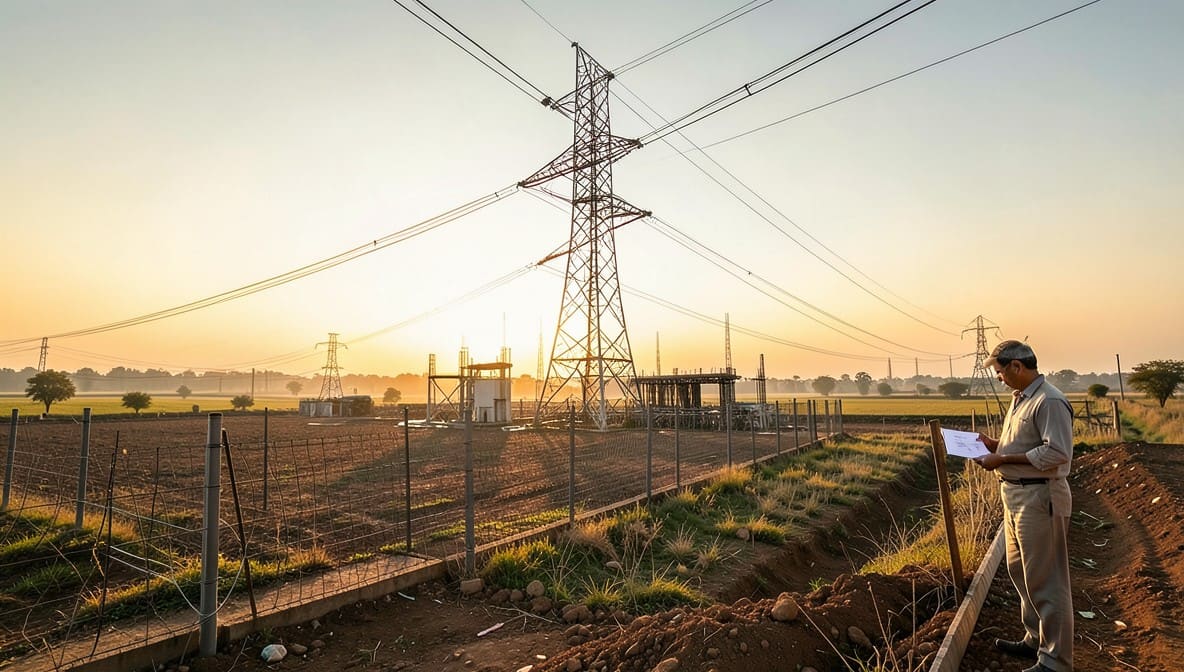
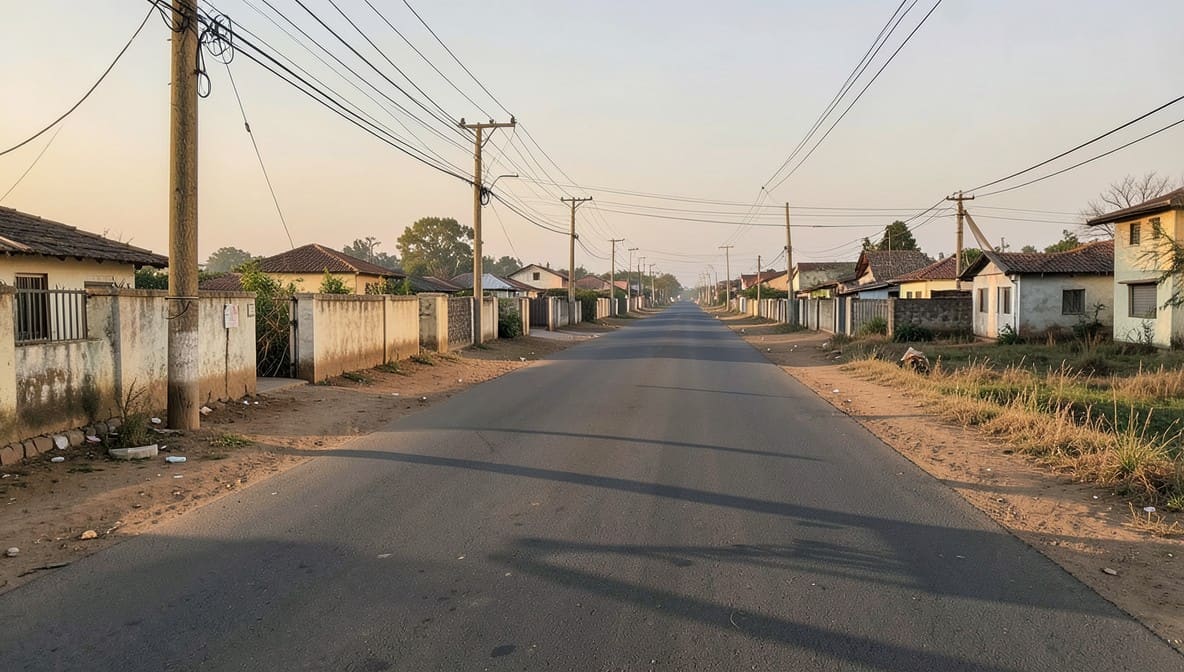
- The proposed electricity line is to be laid along the public road adjacent to residential properties, not on private land or buildings
- The villagers raised objections based on general safety concerns, including risk of electrocution, fire hazards, and structural damage to homes
- No specific allegations were made regarding encroachment, trespass, or physical use of private property for pole placement
- The petitioner did not produce any evidence of poles being erected on private land or buildings
- The petitioner relied on The Works of Licensees Rules, 2006, to argue that prior consent of owners or occupiers was mandatory
Procedural History
- 2025: A prior PIL, PIL No. 3310 of 2025, filed by one Gorakh Ram, raised identical objections regarding the same electrification project
- Before 2026: The earlier PIL was dismissed by the Court after a factual report confirmed the line was being laid along the public road
- 2026: The present PIL (PIL No. 484 of 2026) was filed by Jai Prakash Singh, raising substantially the same grounds
- 04 May 2026: Hearing concluded and judgment delivered by the Division Bench
The Parties' Positions
Petitioner’s Position: The installation violates Rule 3 of The Works of Licensees Rules, 2006, which requires prior written consent from owners or occupiers before any work is carried out on their land or buildings. The petitioner argued that even proximity to homes constitutes use of private property and thus triggers the consent requirement.
Respondents’ Position: The electricity line is being laid exclusively along the public road, which is not owned or occupied by any private individual. Rule 3 applies only when the licensee uses private land or buildings. Since no such use is occurring, the rule is inapplicable. The respondents also noted that the same issue had been adjudicated and dismissed in the earlier PIL.
Relief Sought
The petitioner sought a direction to the respondents to immediately halt the installation of electric poles and lines until written consent is obtained from every affected landowner or occupier, and to ensure compliance with The Works of Licensees Rules, 2006.
The Legal Issue
Does Rule 3 of The Works of Licensees Rules, 2006 require prior consent from owners or occupiers when an electricity line is laid along a public road, and not on any private land or building?
Arguments Presented
For the Petitioner
The petitioner’s counsel, Sharad Kumar Pandey and Rajesh Kumar Singh, contended that Rule 3(1)(a) mandates consent whenever any electric supply line is laid "against" any building or "on" any land, regardless of ownership. They argued that the proximity of poles to residential structures creates a de facto use of private space and that safety concerns trigger the statutory obligation to obtain consent. They further asserted that the dismissal of the earlier PIL did not bar this petition as it was filed by a different petitioner acting in public interest.
For the Respondent
The respondents’ counsel, Jagdish Pathak and Chetan Chatterjee, countered that Rule 3 applies only when the licensee uses the land or building of an owner or occupier. Since the poles are being installed on public road land - owned by the State and meant for public infrastructure - the rule has no application. They emphasized that the rule’s proviso only comes into play when objections are raised about works on private property, which is not the case here. They also highlighted that the project follows standard utility practices and that the earlier dismissal of PIL No. 3310 of 2025 established the factual basis.
The Court's Analysis
The Court undertook a textual and contextual interpretation of Rule 3 of The Works of Licensees Rules, 2006. It observed that the rule distinguishes between works carried out on private property and those carried out on public land. The phrase "in, through, or against, any building, or on, over or under any land whereon, whereover or whereunder any electric supply-line or works has not already been lawfully laid down or placed by such licensee" clearly refers to private land or buildings.
"Once the line is being laid along the road and not by using the land and building of the owner or occupier, the above provision would have no application."
The Court noted that the petitioner had not demonstrated any physical occupation, encroachment, or use of private property for the installation. General apprehensions about safety, without evidence of actual violation of the rule, cannot override statutory language. The Court further held that the dismissal of the earlier PIL on identical facts precluded relitigation on the same ground, reinforcing the principle against abuse of process.
The Court also clarified that the proviso to Rule 3 - requiring written permission from the District Magistrate - is triggered only when objections are raised regarding works on private property. Since no such property is involved, the requirement for District Magistrate’s permission does not arise.
The Verdict
The petition was dismissed. The Court held that the installation of electric poles along the public road does not require prior consent under Rule 3 of The Works of Licensees Rules, 2006, as no private land or building is being used. No injunction was granted, and the respondents were permitted to proceed with the electrification project without further delay.
What This Means For Similar Cases
Consent Is Not Required for Public Right-of-Way Installations
- Practitioners must distinguish between private property and public land when challenging utility installations
- Objections based on proximity or perceived risk, without proof of physical use of private land, will not sustain legal challenges under Rule 3
- Municipalities and utilities can proceed with linear infrastructure projects along roads without obtaining individual consents
Precedent Bars Repetitive PILs on Identical Facts
- Courts will treat successive PILs on the same subject matter and factual matrix as an abuse of process
- Petitioners cannot circumvent prior dismissals by changing the name of the petitioner while maintaining identical grounds
- This reinforces judicial efficiency and discourages strategic litigation in public utility matters
Regulatory Clarity for Infrastructure Projects
- The judgment provides clear guidance to DISCOMs and state agencies on compliance thresholds under the Works of Licensees Rules, 2006
- It reduces administrative delays in rural electrification and other linear infrastructure projects
- Legal advisors should now advise clients that Rule 3 applies only to works directly impacting private land or buildings, not to public corridors