The Kerala High Court has delivered a landmark ruling that fundamentally reshapes the legal landscape for broadband and cable operators using electricity poles for infrastructure. In a consolidated judgment addressing over 40 writ petitions, the Court held that the Telecommunications (Right of Way) Rules, 2024, establish a uniform, statutory ceiling on recurring pole rental charges, rendering higher demands by the Kerala State Electricity Board and municipal corporations legally unsustainable. This decision affirms that wired internet and cable television services are telecommunication services under central law, and their use of public infrastructure is governed not by state-level executive orders but by a comprehensive national regulatory framework.
Background & Facts
The Dispute
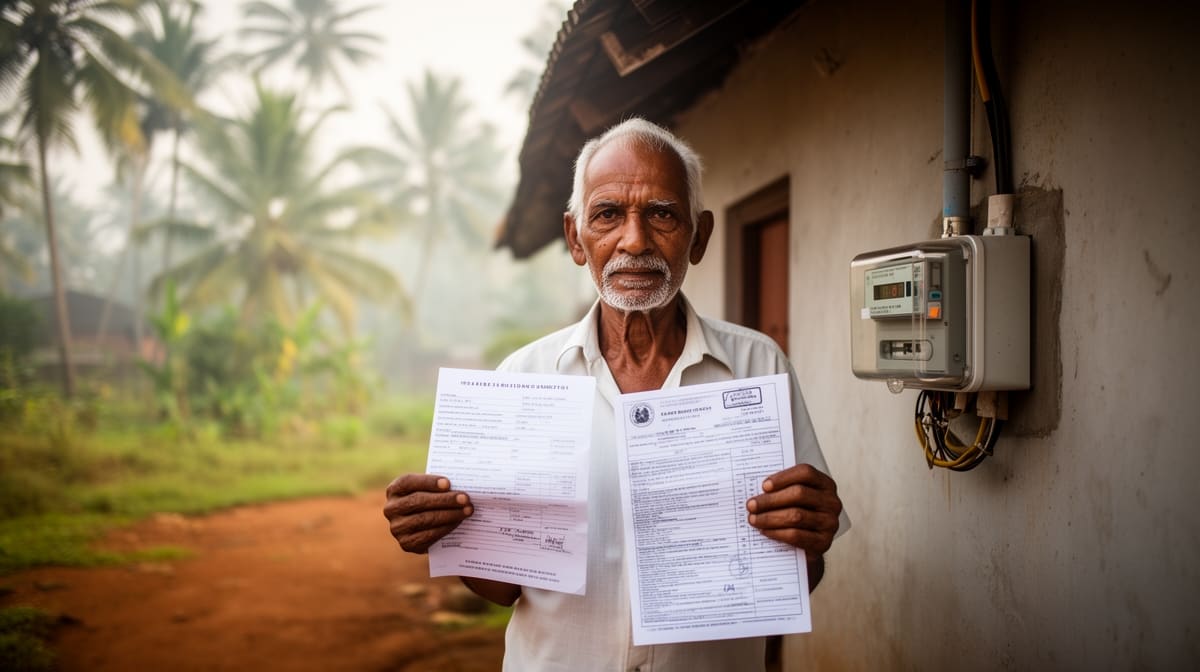
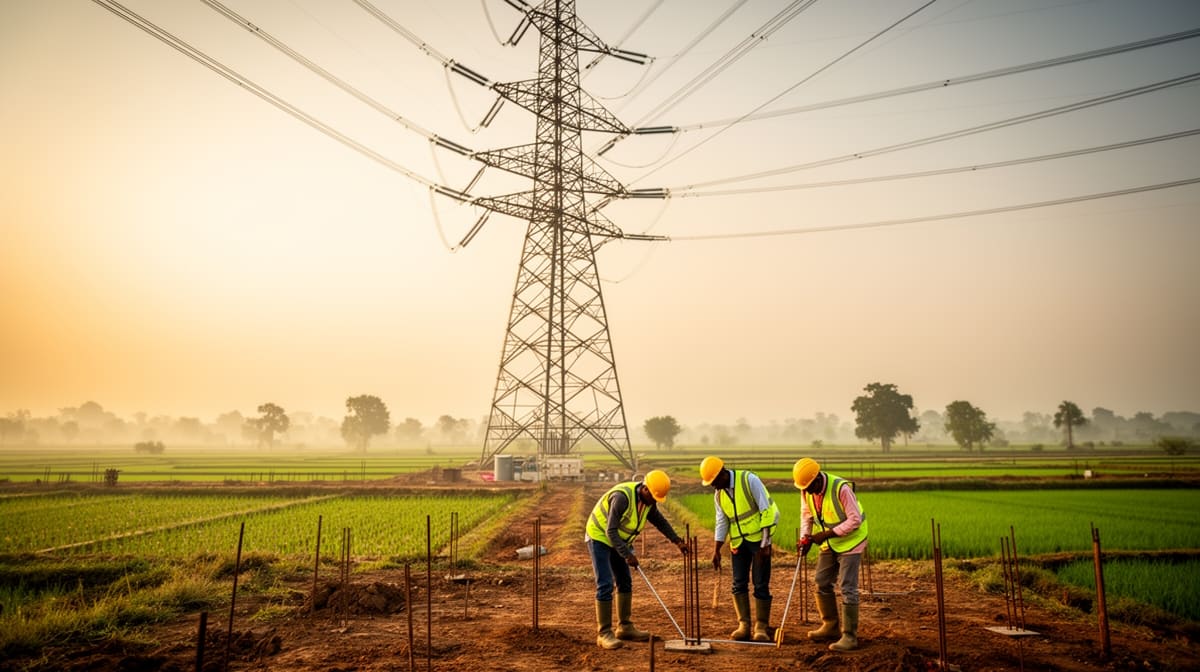
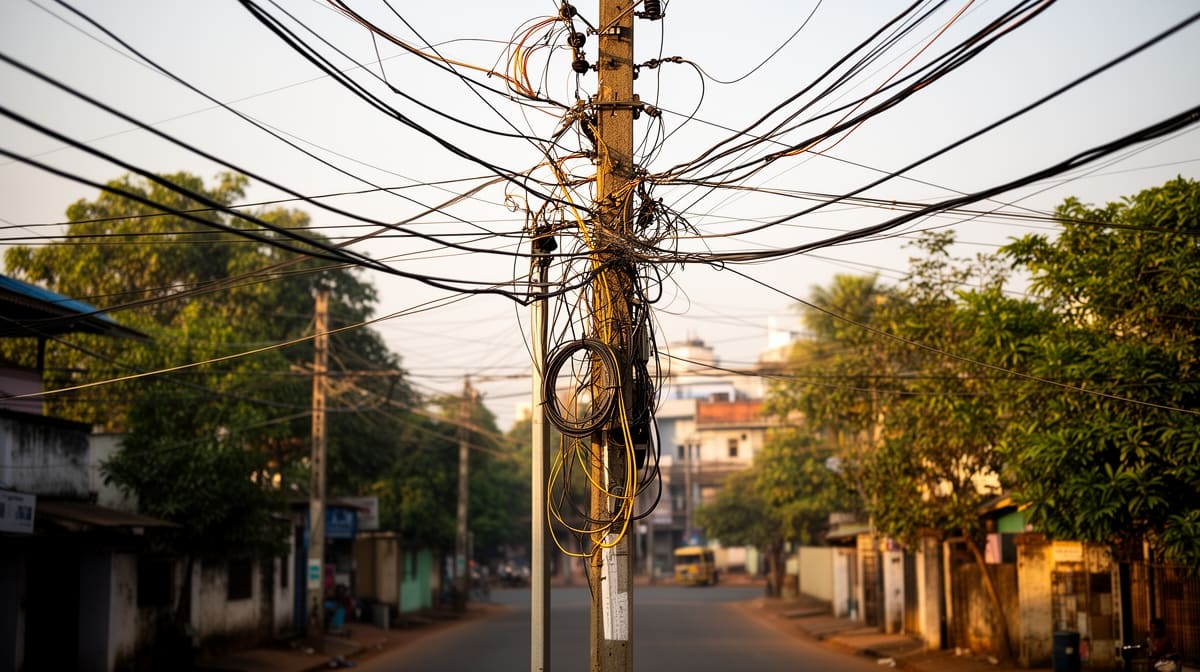
The dispute arose from demands by the Kerala State Electricity Board Limited (KSEBL) and the Thrissur Municipal Corporation for pole rental fees from cable television and wired broadband service providers. These providers, including Asianet Satellite Communications Limited and other local operators, use overhead electricity poles to string optical fibre cables that deliver both cable TV signals and broadband internet to subscribers. The respondents claimed that these operators were using the poles for high-capacity data transmission akin to mobile telecom infrastructure and demanded rates ranging from Rs.300 to Rs.686 per pole per annum, based on internal Board Orders and municipal resolutions.
Procedural History
The case involved 40 consolidated writ petitions filed between 2018 and 2025, challenging demand notices issued over multiple financial years:
- 2011 - 2021: Pole rentals were governed by settlement agreements and periodic Board Orders, with rates fixed at Rs.250 - Rs.320 per urban pole.
- February 2021: The Government of Kerala issued GO(MS) No. 9/2021/Power, fixing uniform rates of Rs.300 (urban) and Rs.145 (rural) per pole per annum for optical fibre cable deployment.
- August 2022: The Indian Telegraph Right of Way (Amendment) Rules, 2022, capped recurring compensation at Rs.100 per pole per annum for street furniture, including electricity poles.
- 2024: The Telecommunications (Right of Way) Rules, 2024, superseded prior rules and explicitly included electricity poles within the definition of "street furniture".
- Despite these statutory developments, KSEBL and Thrissur Corporation continued demanding higher rates, leading to the filing of writ petitions under Article 226.
Relief Sought
The petitioners sought quashing of all demand notices issued in excess of the statutory ceilings, a declaration that their services qualify as telecommunication services under the Telecommunications Act, 2023, and directions to revise pole rental demands strictly in accordance with the Right of Way Rules. They also sought protection against coercive actions such as cable dismantling.
The Legal Issue
The central question was whether the use of electricity poles by wired broadband and cable television operators for laying optical fibre cables constitutes "telecommunication" under the Telecommunications Act, 2023, and whether the Telecommunications (Right of Way) Rules, 2024, override state-level administrative orders fixing higher pole rental charges.
Arguments Presented
For the Petitioner
The petitioners argued that:
- Their services - cable TV and wired broadband - are expressly classified as "telecommunication services" under the TRAI Act, 1997, by virtue of the Central Government’s Notification dated 09.01.2004.
- The Telecommunications Act, 2023, defines "telecommunication" broadly to include transmission of data, video, and signals via wire or optical systems, which encompasses their fibre-optic networks.
- They hold valid Unified Licences under the Indian Telegraph Act, 1885, which continue under Section 61 of the 2023 Act, making them "authorised entities" and thus "facility providers" under Section 10(a).
- Electricity poles are "street furniture" under Rule 2 of the 2024 Rules, and the Rules cap recurring compensation at Rs.100 per pole per annum.
- The Electricity Act, 2003, does not override the 2024 Rules, as Section 175 explicitly states that the Act is "in addition to and not in derogation of other laws."
- The Supreme Court in Kerala State Electricity Board v. Indian Aluminium Co. Ltd. affirmed that KSEBL is a non-profit public utility, not a commercial entity entitled to generate ancillary revenue at will.
For the Respondent
The respondents contended that:
- The petitioners are commercial operators providing internet and cable TV services, not "facility providers" under the Telecommunications Act, 2023, as they do not hold Access Service Licences.
- The use of poles is a permissive activity under Section 51 of the Electricity Act, 2003, and pole rentals constitute legitimate non-tariff revenue to offset tariff pressures.
- The Right of Way Rules, 2024, apply only to new infrastructure providers expanding connectivity in unserved areas, not to established operators like the petitioners.
- The Government Orders of 2021 were temporary pandemic measures and do not bind KSEBL beyond their stated duration.
- The Thrissur Corporation, as a distribution licensee under the Electricity Act, has independent authority to fix pole rents distinct from KSEBL.
- The petitioners’ failure to execute new agreements since 2021 constitutes a breach of contractual obligations.
The Court's Analysis
The Court undertook a meticulous analysis of the statutory architecture governing telecommunication services and infrastructure access. It began by examining the definition of "telecommunication" under Section 2(p) of the Telecommunications Act, 2023, which includes transmission of any message - sign, signal, sound, video, or data - by wire, optical, or electromagnetic systems. The Court held that the transmission of television signals and broadband data through fibre-optic cables strung on electricity poles falls squarely within this definition.
The Court then turned to the classification of cable services. It emphasized that the Central Government’s Notification dated 09.01.2004, issued under Section 2(k) of the TRAI Act, 1997, explicitly notified "cable services" as telecommunication services. This classification was further reinforced by the 2011 amendment to the Cable Television Networks (Regulation) Act, 1995, which designated TRAI as the regulatory authority for cable services. The Court noted that the 2023 Act did not repeal this notification; instead, it preserved existing classifications under Section 61, which saves all rules and orders framed under the Telegraph Act.
The Court next addressed the petitioners’ status as "facility providers." It held that the term, as defined in Section 10(a), includes any authorised entity under the Act. The petitioners, holding Unified Licences issued under the Telegraph Act, 1885, and continuing under Section 61 of the 2023 Act, qualify as authorised entities. Therefore, they are entitled to invoke the right-of-way mechanism under Section 11.
The Court then examined the applicability of the Telecommunications (Right of Way) Rules, 2024. It found that Rule 2 explicitly defines "street furniture" to include "posts or poles," and Rule 11(8) limits recurring compensation for telecommunication lines to Rs.100 per pole per annum. The Court rejected the respondents’ argument that these Rules apply only to new entrants, noting that the Rules contain no such limitation and apply to all facility providers.
The Court also dismissed the contention that the Electricity Act, 2003, overrides the Right of Way Rules. It held that Section 175 of the Electricity Act explicitly states that its provisions are "in addition to and not in derogation of other laws." Further, Section 51 permits distribution licensees to engage in other businesses, but does not confer a right to impose arbitrary charges inconsistent with central legislation. The Court cited Kerala State Electricity Board v. Indian Aluminium Co. Ltd. to underscore that KSEBL is a public utility bound by policy and statutory obligations, not a profit-seeking enterprise.
"The statutory ceiling of Rs.100 per pole per annum under the 2024 Rules is not a concession but a legislative mandate designed to ensure affordable and equitable access to public infrastructure for universal connectivity. To permit utilities to impose higher charges based on internal policy or revenue needs would defeat the very purpose of the national telecom policy and the constitutional imperative of digital inclusion."
The Court also noted that the Government of Kerala, on 17.07.2025, issued an order affirming the applicability of the 2024 Rules across the state, effectively cancelling all prior guidelines. This administrative clarification reinforced the binding nature of the central framework.
The Verdict
The petitioners succeeded. The Court held that the Telecommunications (Right of Way) Rules, 2024, govern the levy of recurring charges for the use of electricity poles by telecommunication service providers. The statutory ceiling of Rs.100 per pole per annum for overground telecommunication lines is binding on all public entities, including KSEBL and municipal corporations. All demand notices issued in excess of this amount are quashed. The respondents are directed to revise their demands strictly in accordance with the statutory rates applicable for each period and to refund any excess amounts collected.
What This Means For Similar Cases
Right of Way Rules Override State-Level Revenue Policies
- Practitioners must now argue that any demand for pole rent exceeding Rs.100 per annum per pole is ultra vires the Telecommunications (Right of Way) Rules, 2024.
- State electricity boards and municipal corporations cannot rely on internal Board Orders or council resolutions to justify higher charges.
- The burden shifts to the respondent to prove that the infrastructure use falls outside the definition of "telecommunication line" or "street furniture" - a high threshold given the broad statutory definitions.
Cable and Broadband Services Are Legally Indistinguishable for Right of Way Purposes
- Operators providing cable TV, IPTV, or wired broadband over the same fibre network are entitled to the same statutory compensation ceiling.
- The nature of the transmitted content (video or data) is irrelevant; only the infrastructure use matters.
- Any attempt to classify such operators as "mobile service providers" for higher charges is legally untenable and arbitrary.
Statutory Continuity Protects Pre-Existing Licences
-
Operators holding Unified Licences or authorisations under the Telegraph Act, 1885, continue to enjoy rights under the 2023 Act by virtue of Section 61.
-
The repeal of the Telegraph Act does not extinguish existing rights; they are preserved and deemed to have been issued under the new Act.
-
Legal challenges to pole rent demands must be framed as violations of central statutory ceilings, not merely contractual disputes.
-
Practitioners should immediately review all pending pole rent demands and issue legal notices invoking the Rs.100 per annum ceiling.
-
In litigation, cite the 2024 Rules, Section 61 of the Telecommunications Act, and the 2004 Notification as binding authorities.
-
Avoid framing arguments solely under the Cable Television Act or Electricity Act; the central telecom framework now governs.
-
File applications under Section 11 of the Telecommunications Act for formal right-of-way permissions to preempt future disputes.