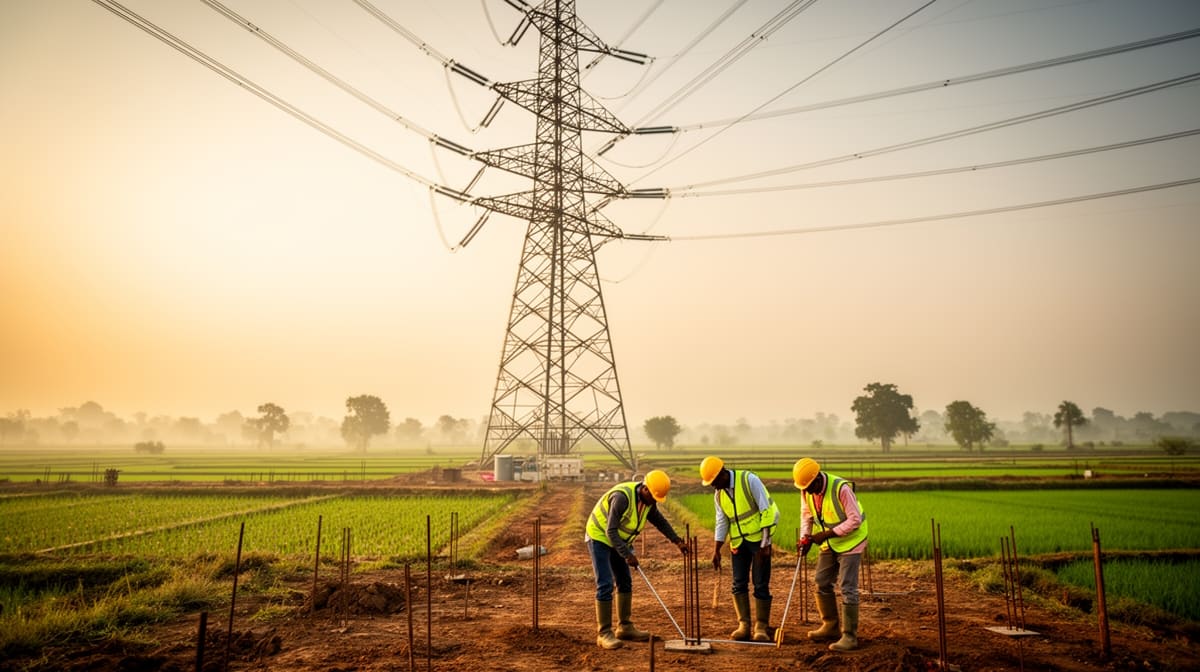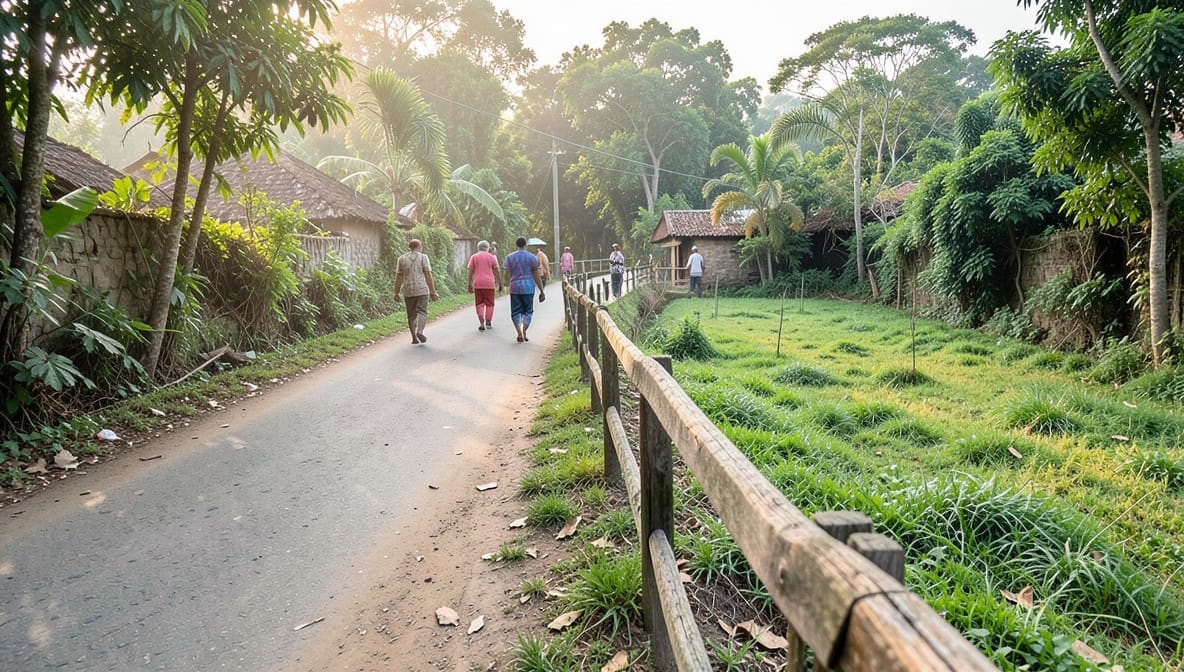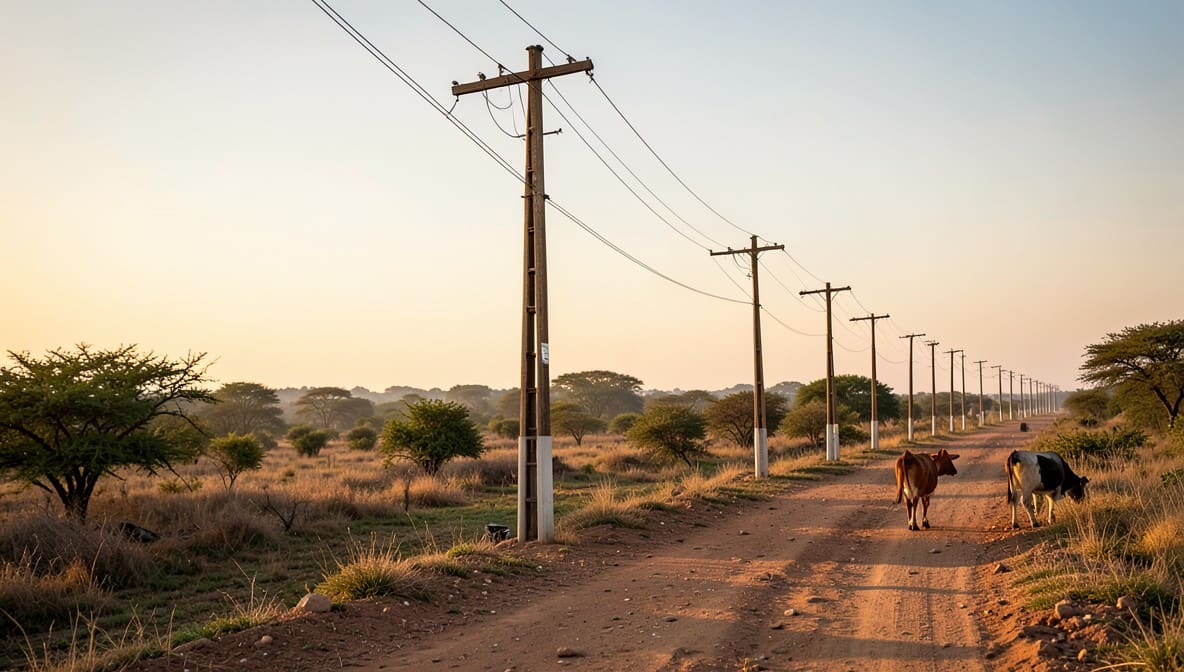
The Rajasthan High Court has clarified that the erection of non-intrusive electricity poles for solar transmission lines over village pasture land does not constitute a change in land use, rendering prior Gram Panchayat consent mandatory. This ruling upholds the public interest in clean energy infrastructure while safeguarding community land rights.
Background & Facts
The Dispute
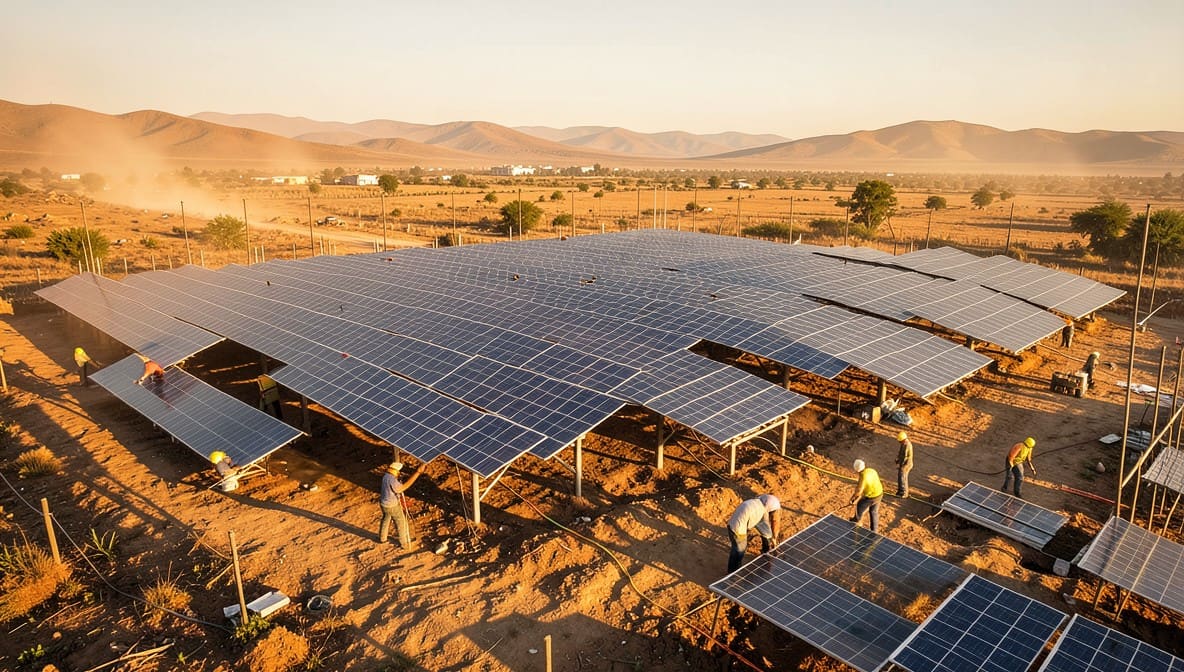
The petitioner, Ms Solar Power, a firm engaged in solar energy generation, was sanctioned a 2.52 MW solar power plant under the PM-Kusum Yojana at Village Smrithnagar, Gram Panchayat Jatipura, in Khasra No. 1909. The project required the installation of 33 KV/11 KV transmission lines connecting to the Grid Sub-Station. Despite obtaining a Letter of Intent from Jodhpur Vidyut Vitran Nigam Limited dated 28.03.2024 and a Power Purchase Agreement with Rajasthan Urja Vikas and IT Services Ltd. dated 05.09.2024, the petitioner faced obstruction from multiple authorities over proposed alignment of transmission poles across land under Gram Panchayat control.
Key Facts
- The petitioner’s project is part of a state and national initiative to promote renewable energy under the PM-Kusum Yojana.
- The proposed transmission line alignment passes through four Khasras under Gram Panchayat Jatipura: Khasra No. 1885 (gochar/pasture land), Khasra No. 1886 (public pathway), Khasra No. 1886@1 (public road), Khasra No. 1895 (waterflow/public utility land), and Khasra No. 1811 (adjacent to government institutions).
- The petitioner applied for NOCs from the Gram Panchayat, Forest Department, Public Works Department, and other authorities between October and December 2025.
- On 31.10.2025 and 01.11.2025, the Gram Panchayat and other respondents issued notices refusing NOCs.
- On 12.12.2025, the Public Works Department cancelled its earlier NOC, and the Forest Department rejected the application.
- The petitioner filed the writ petition on 15.03.2026.
- On 25.03.2026, the Court directed the District Collector, Jodhpur, to constitute a committee to resolve the dispute within two days.
- The committee, chaired by the Sub-Divisional Officer, submitted its report on 07.04.2026.
- The report confirmed that all authorities except the Gram Panchayat had granted consent.
- The Gram Panchayat refused NOC citing Rule 169(7) of the Rajasthan Panchayati Raj Rules, 1996, claiming the land was protected pasture and public utility land.
Procedural History
- 15.03.2026: Writ Petition No. 3496/2026 filed before the High Court of Judicature for Rajasthan at Jodhpur.
- 25.03.2026: Court directed District Collector to constitute a committee and submit report within two days.
- 07.04.2026: Committee submitted report confirming consent from all authorities except Gram Panchayat.
- 08.04.2026: Hearing before Court; District Collector appeared and submitted report.
- 20.04.2026: Order reserved.
- 23.04.2026: Judgment pronounced.
The Parties' Positions
Petitioner’s Position: The erection of electricity poles is a minimal, non-intrusive, and temporary use of land that does not alter the nature of pasture or public utility land. No statutory provision mandates prior Gram Panchayat NOC for such infrastructure under the Kusum Yojana. Delay would breach the Power Purchase Agreement and undermine national clean energy goals.
Respondents’ Position: The Gram Panchayat, as custodian of community land under Rule 169(7) of the Rajasthan Panchayati Raj Rules, 1996, is legally bound to prevent any use of pasture land for non-grazing purposes. The proposed poles would encroach upon protected land and set a dangerous precedent.
Relief Sought
The petitioner sought:
- Quashing of all impugned NOC denials and cancellations dated 31.10.2025, 01.11.2025, and 12.12.2025.
- Direction to the District Collector to facilitate project completion as per directive dated 14.06.2024.
- Direction to respondents to issue NOCs for erection of poles and transmission lines.
- Direction to all respondents to refrain from interfering with project commissioning.
The Legal Issue
The central question was whether prior No Objection Certificate (NOC) from the Gram Panchayat is mandatory for the erection of electricity poles over gochar/pasture land and public utility land under Rule 169(7) of the Rajasthan Panchayati Raj Rules, 1996, where the use is non-intrusive, non-exclusive, and does not alter the land’s nature or use.
Arguments Presented
For the Petitioner
The petitioner’s counsel argued that the installation of electricity poles is a transient, non-encroaching, and public infrastructure activity permitted under the National Solar Mission and Kusum Yojana. No provision in the Rajasthan Panchayati Raj Rules, 1996, or any other statute requires prior NOC for such minimal use. The Gram Panchayat’s refusal was arbitrary and disproportionate, especially since all other authorities had granted consent. The petitioner emphasized that grazing and waterflow would remain unaffected, and the poles would be erected outside the prescribed Right of Way (ROW) limits. Reliance was placed on the principle of public interest and the imperative of clean energy transition.
For the Respondent
The Gram Panchayat, through its counsel, contended that Khasra Nos. 1885, 1887, and 1895 are legally protected as gochar/pasture land and public utility land under Rule 169(7) and Section 28 of the Rajasthan Tenancy Act, 1955. Any use of such land for commercial infrastructure, even without physical enclosure, constitutes a prohibited change in land use. The Gram Panchayat, as a statutory custodian of community assets, has a fiduciary duty to protect these lands from any form of alienation or degradation. The counsel argued that permitting poles here would open the floodgates to commercial exploitation of common property resources.
The Court's Analysis
The Court examined the nature of the proposed activity and the scope of Rule 169(7) of the Rajasthan Panchayati Raj Rules, 1996. It distinguished between outright diversion or alienation of pasture land and the non-intrusive, non-exclusive installation of electricity poles.
"It is well settled that gochar/pasture land is reserved for grazing purposes and ordinarily cannot be diverted for non-grazing use except in accordance with law. However, the issue in the present case is not one of diversion or alienation of land, but rather whether the erection of electricity poles, without any element of enclosure or exclusive possession, results in a change in the nature or user of such land."
The Court noted that the poles would be erected outside the prescribed ROW limits of 15 and 30 meters for roads, and would not obstruct pathways or waterflow. Grazing would continue uninterrupted. The Court further observed that no statutory provision explicitly requires Gram Panchayat consent for such infrastructure under the Kusum Yojana.
The Court emphasized that while Gram Panchayats have a duty to protect community land, this authority must be exercised reasonably and proportionately. The refusal to grant NOC, when all other authorities had consented, was found to be arbitrary and contrary to the larger public interest in renewable energy.
"While the Panchayat is undoubtedly duty-bound to safeguard community interests, such authority must be exercised in a manner that is reasonable, proportionate, and aligned with larger public interest."
The Court also highlighted the national imperative to reduce greenhouse gas emissions and meet India’s renewable energy targets. Any delay in commissioning a project under the Kusum Yojana undermines not only contractual obligations but also environmental and energy security goals.
The Verdict
The writ petition was allowed. The Court held that prior NOC from the Gram Panchayat is not mandatory for the erection of electricity poles over gochar/pasture land where the use is non-intrusive and does not alter the land’s nature. The petitioner and concerned authorities are directed to ensure that poles on Khasra Nos. 1886 and 1895 do not obstruct public pathways or natural waterflow. All respondents are directed to issue necessary permissions forthwith in accordance with the report dated 07.04.2026. The stay application and all pending applications are disposed of.
What This Means For Similar Cases
Non-Intrusive Infrastructure Does Not Require Gram Panchayat NOC
- Practitioners may now argue that temporary, non-encroaching installations like transmission poles, streetlights, or telecom towers on common land do not trigger mandatory NOC requirements under Rule 169(7) if they do not alter land use.
- The burden shifts to the Gram Panchayat to prove actual obstruction or change in land use, not mere theoretical risk.
Public Infrastructure Overrides Local Obstruction
- Projects under national clean energy schemes (e.g., Kusum Yojana, Rooftop Solar) now have stronger legal footing against local-level delays.
- Courts will prioritize national public interest in renewable energy over blanket denials by local bodies absent concrete harm.
Procedural Compliance Must Be Reasonable
- Gram Panchayats cannot use Rule 169(7) as a blanket veto against infrastructure.
- Consent from other statutory authorities (PWD, Forest, Revenue) carries significant weight and may override a lone objection.
- Any refusal must be documented with specific, measurable harm - not generalized claims of land degradation.