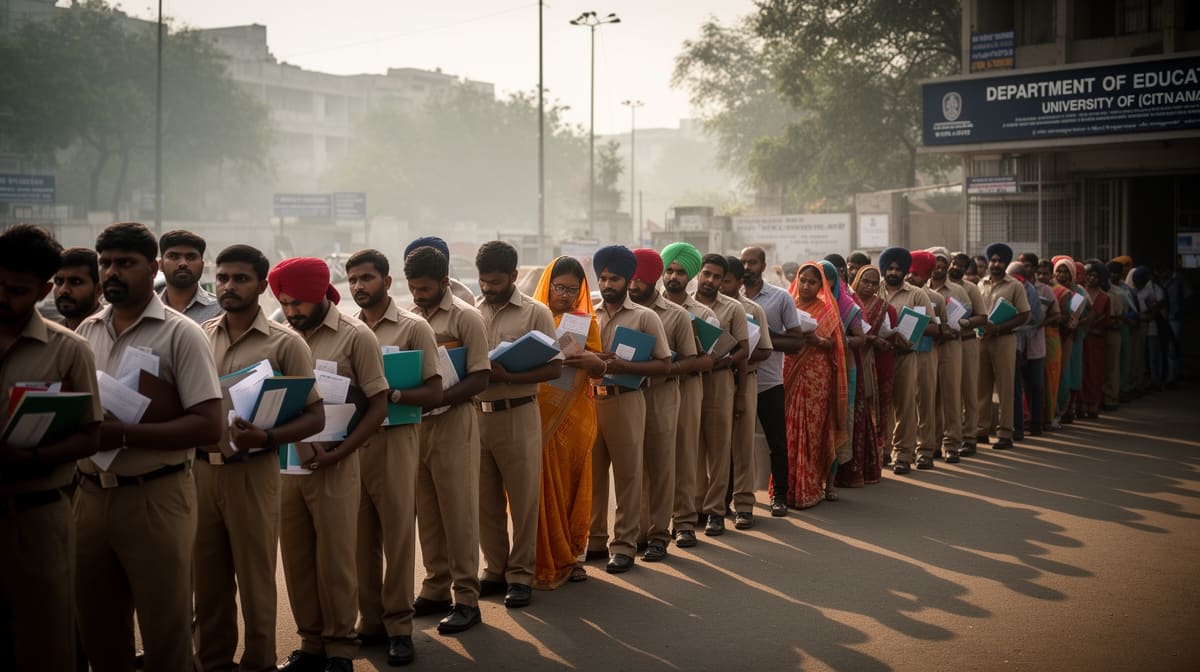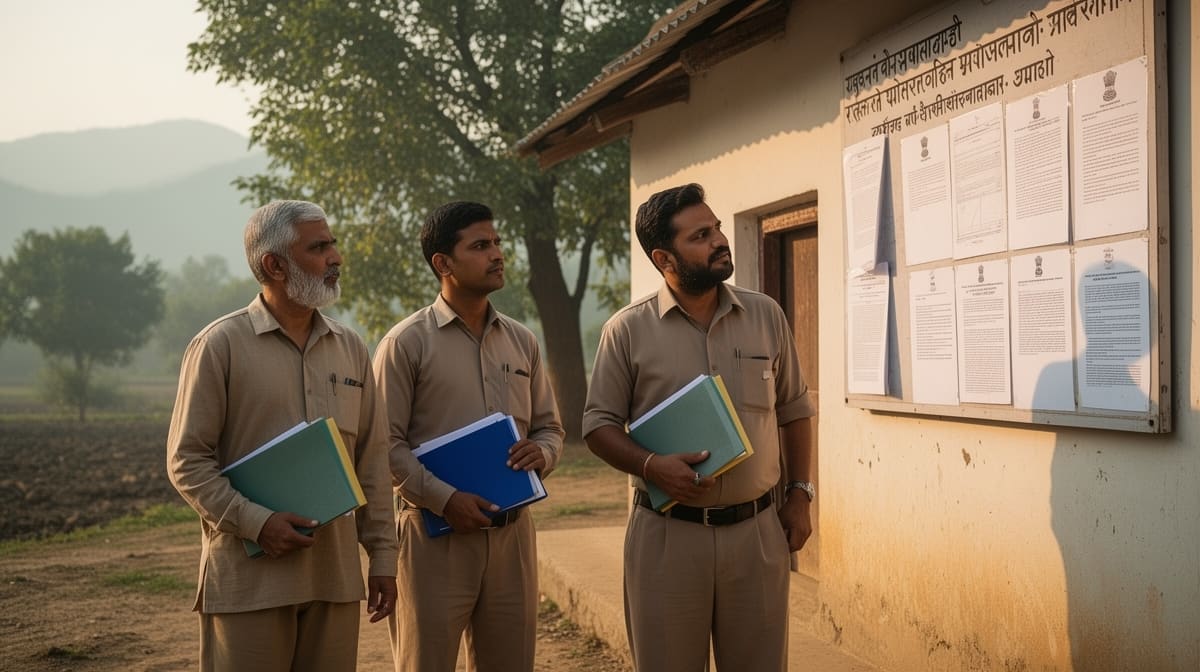
The Central Administrative Tribunal has delivered a decisive ruling affirming that long-serving daily rated workers, who have completed seven years of continuous service under sanctioned posts and are paid from designated heads, cannot be denied regularization merely on the ground of being labeled as 'casual labour'. This judgment reinforces statutory rights under SRO 64 of 1994 and upholds the constitutional guarantee of equality against arbitrary state action.
Background & Facts
The Dispute
The petitioners - Abdul Majid, Rajesh Kumar, and Mohd Rafiq - are daily rated workers (DRWs) engaged by the State of Jammu & Kashmir in the Rural Development Department. Abdul Majid began service on 7 October 1993, Rajesh Kumar on 11 January 1994, and Mohd Rafiq on 1 January 1994. All three have worked continuously without break for over 25 years, completing seven years of service by October 2000, January 2001, and January 2001 respectively. Their wages have been paid from the government head earmarked for DRWs, and they have performed duties identical to those of regular employees.
Procedural History
- 2003: Petitioners filed SWP No. 892/2003 before the High Court of Jammu & Kashmir seeking regularization under SRO 64 of 1994.
- 18 February 2016: High Court directed respondents to consider regularization of eligible petitioners within two months.
- 2016: Empowered Committee, constituted under Govt. Order No. 139-F of 2015, rejected petitioners’ cases on the ground they were 'casual labour', despite no such category being recognized under SRO 64.
- 20 April 2018: Director, Rural Development, recommended regularization under Govt. Order No. 103-RD-PR.
- 10 December 2018: High Court closed contempt proceedings after respondents submitted compliance report.
- 2020: Transfer Application No. 492/2020 filed before the Central Administrative Tribunal, Jammu Bench, seeking enforcement of the 2016 High Court order.
Relief Sought
The petitioners sought regularization of their services with effect from the date they completed seven years of continuous service, along with all consequential benefits including arrears of pay, pension, and other service entitlements.
The Legal Issue
The central question was whether SRO 64 of 1994 mandates regularization of daily rated workers who have completed seven years of continuous service, paid from designated DRW heads, even if the state classifies them as 'casual labour' - and whether prolonged inaction despite a binding judicial direction violates Article 14 of the Constitution.
Arguments Presented
For the Petitioner
The petitioners relied on State of J&K v. Mushtaq Ahmed Sohail (2013) and Ashok Kumar v. State of J&K (2003), which held that continuous service of seven years under sanctioned posts, with wages paid from DRW heads, qualifies a worker for regularization under SRO 64 of 1994. They emphasized that their engagement was not temporary or seasonal but integral to departmental functioning. They also invoked the principle of parity, citing that junior co-petitioners from the same writ petition had already been regularized, while they remained excluded.
For the Respondent
The state contended that petitioners were engaged as 'casual labour' under Rule 7 of SRO 64 of 1994, which permits temporary engagement, and that such workers are ineligible for regularization. They argued that the Empowered Committee’s 2016 rejection was final and that the 2016 High Court order was merely directory, not mandatory. They further claimed petitioners suppressed material facts by not disclosing their 'casual labour' status.
The Court's Analysis
The Tribunal conducted a rigorous statutory interpretation of SRO 64 of 1994, particularly Rule 4, which provides for regularization of DRWs after seven years of continuous service if paid from designated heads. The petitioners’ wage records (Annexure-IV) conclusively showed payment from DRW heads, not casual labour heads. The Tribunal rejected the state’s attempt to reclassify petitioners as 'casual labour', noting that the term has no legal standing under SRO 64 for regularization purposes.
"The Empowered Committee's 2016 observation that petitioners are 'casual labour' is mechanical, perverse, and ignores the settled law and factual matrix."
The Tribunal distinguished Uma Devi (2006), clarifying that it was intended to curb illegal appointments, not to deny regularization to workers in duly sanctioned posts with continuous service. The Tribunal emphasized that the Supreme Court in Jaggo v. Union of India (2024) had condemned the systemic misuse of temporary labels to evade long-term obligations, calling such practices exploitative and unconstitutional.
The Tribunal further held that the state’s nine-year delay in implementing the 2016 High Court order, coupled with the regularization of junior colleagues, constituted clear violation of Article 14. The principle of legitimate expectation was invoked, noting that petitioners had relied on the judicial direction and continued service with the expectation of regularization.
The Verdict
The petitioners won. The Central Administrative Tribunal held that SRO 64 of 1994 compels regularization of daily rated workers who have completed seven years of continuous service and are paid from designated DRW heads. The Tribunal directed immediate regularization with effect from the respective dates of completing seven years of service and ordered all consequential benefits to be paid within three months.
What This Means For Similar Cases
Regularization Is Not Discretionary
- Practitioners must now argue that SRO 64 of 1994 creates a statutory right, not a discretionary benefit, for DRWs meeting the seven-year threshold.
- Any refusal based on labels like 'casual labour' or 'temporary' is legally unsustainable if the worker is paid from DRW heads and has served continuously.
Parity Under Article 14 Is Binding
- If junior employees in identical roles are regularized, exclusion of senior employees without objective justification violates Article 14.
- Tribunals and courts will now scrutinize differential treatment in regularization cases with heightened scrutiny.
Delay by State Cannot Defeat Legitimate Expectation
-
Prolonged inaction (over nine years) after a judicial direction constitutes abuse of process.
-
Practitioners should cite Jaggo v. Union of India to argue that systemic delay in regularization amounts to exploitation and violates constitutional morality.
-
Actionable Tip: File applications under Section 25 of the Administrative Tribunals Act, 1985 to enforce judicial directions where state agencies delay implementation.
-
Evidence Strategy: Always secure wage payment records and appointment orders to prove payment from DRW heads - not casual labour heads.