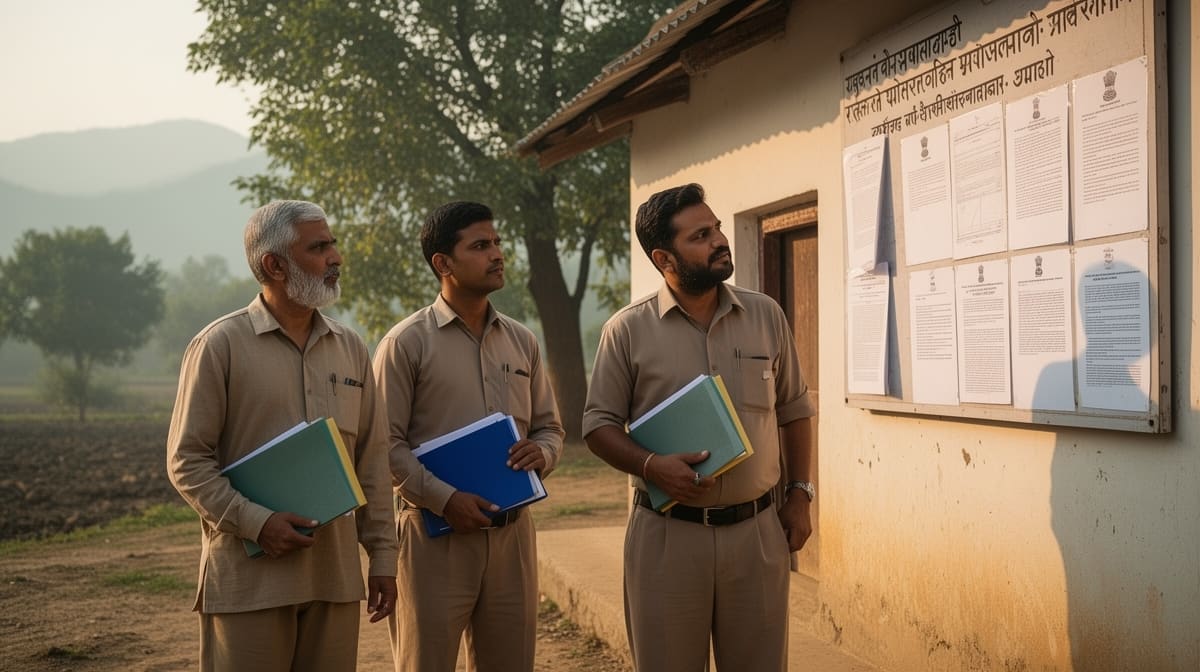
The Chhattisgarh High Court has affirmed that a daily wage worker who has rendered continuous service for 240 days or more in a calendar year is entitled to regularization and protection under the Industrial Disputes Act, 1947. The judgment reinforces the principle that prolonged service, even without formal appointment, creates a legitimate expectation of permanency, and termination during pending proceedings is illegal.
Background & Facts
The Dispute
The petitioner, Chief Superintendent of Post Offices, Raigarh Division, challenged the award passed by the Central Government Industrial Tribunal-cum-Labour Court, Jabalpur, in Case No. CGIT/LC/R/102/2012, which directed the reinstatement of Shri Subhash Singh Malakar, a daily wage driver, with continuity of service, full back-wages, and regularization on the post of driver. The dispute arose from the petitioner’s refusal to regularize the workman despite his long and continuous service from 28.07.1993 until his termination on 13.05.2013.
Key Facts
- The workman was engaged as a daily wage driver on 28.07.1993 to fill a vacant post in the Raigarh Divisional Post Office.
- He performed duties as a Jeep Driver continuously from 28.07.1993 to 13.05.2013.
- He worked for 240 days or more in each calendar year during this period, as claimed and supported by documentary evidence.
- His services were terminated on 13.05.2013 while the reference under Section 10 of the Industrial Disputes Act, 1947, was pending before the Assistant Labour Commissioner.
- The workman submitted 21 documents as evidence, including:
- Ex. W/1: Experience certificate dated 27.12.2002, confirming service since 28.07.1993
- Ex. W/2: Payment record dated 23.08.1993
- Ex. W/3: Payment slip dated 03.09.1993
- Ex. W/4: Representation dated 21.04.2008 seeking regularization
- Ex. W/5 to W/6: Letters addressed to authorities
- Ex. W/7 to W/20: Monthly payment slips spanning 1993 to 2013
- Ex. W/21: Application to Assistant Labour Commissioner
- The management did not produce any official records to disprove the workman’s claim of continuous service or the existence of a vacant sanctioned post.
- The management witness, D.K. Panda, Superintendent of Post, Raigarh, testified that the workman was not sponsored through the Employment Exchange and did not complete 240 days annually.
Procedural History
- 28.07.1993: Workman engaged as daily wage driver
- 27.12.2002: Experience certificate issued (Ex. W/1)
- 21.04.2008: First formal representation for regularization submitted
- 13.05.2013: Services terminated during pendency of reference
- 2012: Reference made under Section 10 of the Industrial Disputes Act, 1947
- 10.08.2017: Labour Court awarded reinstatement with continuity, back wages, and regularization
- 13.05.2013 to 2017: Proceedings pending before Labour Court
- 15.01.2018: Writ Petition No. 156 of 2018 filed before Chhattisgarh High Court
- 01.04.2026: Judgment delivered by High Court
Relief Sought
The petitioner sought quashing of the Labour Court’s award dated 10.08.2017, arguing that the workman failed to prove 240 days of continuous service per year and that his termination was lawful. The workman sought enforcement of the award: reinstatement with continuity of service, full back-wages from 13.05.2013, regularization, and payment of amounts with 9% interest if delayed.
The Legal Issue
The central question was whether a daily wage worker who has worked for 240 days or more in a calendar year over a prolonged period is entitled to regularization and protection under Section 25F of the Industrial Disputes Act, 1947, and whether termination during pendency of a reference is legally permissible.
Arguments Presented
For the Appellant/Petitioner
The petitioner contended that the workman failed to establish continuous service of 240 days in any calendar year. It relied on the testimony of D.K. Panda, who denied that the workman was formally engaged against a sanctioned post and claimed no records supported the 240-day threshold. It argued that the Labour Court erred in relying on self-serving documents and oral testimony without corroboration from official records. The petitioner further submitted that since the workman was never formally appointed, he could not claim rights under Section 25F, which applies only to "workmen" as defined under the Act.
For the Respondent/State
The workman’s counsel argued that the 21 documents submitted, including payment slips and an experience certificate, collectively established a pattern of continuous employment for over two decades. He emphasized that the management failed to produce any official register, attendance records, or appointment orders to rebut the claim. He cited State of Haryana v. Rattan Singh and Workmen of Mysore Silk Mills v. Mysore Silk Mills to argue that prolonged service, even on daily wages, creates a legitimate expectation of regularization, especially when the employer has not followed due process under Section 25F. He further stressed that termination during pendency of a reference is a violation of natural justice and statutory protection.
The Court's Analysis
The High Court undertook a detailed review of the evidence presented before the Labour Court. It noted that the workman had submitted 21 documents spanning two decades, including payment slips from 1993 to 2013, an experience certificate issued by the department itself, and multiple representations seeking regularization. The Court observed that the management, despite having the duty to maintain official records, failed to produce any document to disprove the workman’s claim of continuous service.
"The management has not produced any record to show that the workman was not engaged against a vacant sanctioned post or that he did not work for 240 days in any calendar year. In such circumstances, the presumption under Section 114 of the Evidence Act operates in favour of the workman."
The Court held that the Labour Court correctly appreciated the evidence and applied the settled principle that when an employer retains a worker for a prolonged period, especially in a vacant sanctioned post, and fails to regularize him despite repeated requests, the worker acquires a legitimate expectation of permanency. The Court further emphasized that Section 25F of the Industrial Disputes Act, 1947, applies not merely to formally appointed workmen but to those who have been in continuous service for over 240 days in a year, regardless of the nature of their initial engagement.
The Court also held that termination during the pendency of a reference under Section 10 is illegal and amounts to victimization. The Labour Court’s award, which included reinstatement, continuity of service, and back wages, was therefore legally sound and justified.
The Verdict
The petition was dismissed. The High Court upheld the Labour Court’s award dated 10.08.2017, directing the reinstatement of the workman with continuity of service from 28.07.1993, regularization on the post of Driver, and payment of full back-wages from 13.05.2013 to the date of reinstatement. The Court confirmed the direction that if payment is delayed beyond 30 days from the date of notification of the award, the amount shall carry 9% interest per annum from the date of the award until realization.
What This Means For Similar Cases
Continuous Service Trumps Formal Appointment
- Practitioners must argue that prolonged daily wage service (240+ days/year) creates a de facto employment relationship, triggering protections under Section 25F even without formal appointment.
- Employers cannot evade statutory obligations by claiming "contractual" or "daily wage" status when the worker has been integrated into the organization for over a decade.
Burden of Proof Lies with the Employer
- When a workman produces consistent documentary evidence of service, the burden shifts to the employer to disprove it with official records.
- Failure to maintain or produce attendance, payroll, or appointment records will result in adverse inference under Section 114 of the Indian Evidence Act.
Termination During Reference Is Per Se Illegal
- Any termination of service during pendency of a reference under Section 10 of the ID Act is void and constitutes victimization.
- Labour Courts and High Courts will not hesitate to reinstate workers and award back wages in such cases, regardless of the employer’s procedural objections.
Documentation Is Critical
- Daily wage workers should retain all payment slips, experience certificates, and written representations.
- Legal practitioners should prioritize collecting and organizing such documents early in litigation to establish the factual foundation for regularization claims.
Statutory Compliance Is Non-Negotiable
- Employers must follow Section 25F before terminating any workman who has completed 240 days of service in a year - notice, reasons, and payment of compensation are mandatory.
- Non-compliance renders termination illegal and opens the door to reinstatement and back wages.