The Punjab & Haryana High Court has issued critical directions to ensure the integrity of municipal elections in Dinanagar, District Gurdaspur. The judgment mandates videography of the oath administration and voting process, permits detained councillors to participate, and directs compliance within 10 days, reinforcing the principles of free and fair elections under the Punjab Municipal (President and Vice President) Election Rules, 1994.
Background & Facts
The Dispute
The petitioners, elected councillors of the Municipal Council Dinanagar, District Gurdaspur, filed a writ petition seeking directions to ensure their participation in the first meeting for administering oath and electing the President and Vice President. The elections for the 15 wards were held on 13.06.2026, with the petitioners securing a majority in 8 wards. The petitioners apprehended that they would be prevented from taking oath or participating in the election process, thereby vitiating the elections.
Key Facts
- Elections held: 13.06.2026 for 15 wards of Municipal Council Dinanagar
- Petitioners' majority: 8 out of 15 wards
- Support: Local MLA, also a member of the Municipal Council, supports the petitioners
- Apprehension: Petitioners feared exclusion from oath administration and voting process
- Legal framework: Punjab Municipal (President and Vice President) Election Rules, 1994 (hereinafter 1994 Rules)
- Authority: Deputy Commissioner, Gurdaspur, responsible for convening the first meeting
Procedural History
- 18.03.2026: Punjab & Haryana High Court passed an order in Sukhwinder Kaur v. State of Punjab and others (CWP-8201-2026) directing that all elected members, including those detained or arrested, be allowed to participate in Panchayat Samiti elections
- 26.06.2026: Present writ petition (CWP-19523-2026) filed seeking similar directions for Municipal Council elections
The Parties' Positions
For the Petitioners
- Argued that despite their majority, they might be prevented from taking oath or participating in the election process
- Relied on the precedent set in Sukhwinder Kaur to seek directions for free and fair elections
- Submitted that the Deputy Commissioner should be directed to convene the first meeting within a stipulated timeframe
- Proposed videography of the meeting to ensure transparency
For the Respondent (State of Punjab)
- Assured the Court that the State would ensure free and fair elections
- Conceded that the directions issued in Sukhwinder Kaur would apply to the present case
- Agreed to videograph the meeting at the petitioners' expense
- Submitted that no councillor would be restrained from participating, including those under preventive detention or arrest
Relief Sought
The petitioners sought:
- Directions to the Deputy Commissioner, Gurdaspur, to convene the first meeting for oath administration and election of President/Vice President within a specified timeframe
- Permission for all elected councillors, including those detained or arrested, to participate in the meeting
- Videography of the meeting to ensure transparency
- Compliance with the principles of free and fair elections as enshrined in the 1994 Rules
The Legal Issue
The central question was whether the Deputy Commissioner, Gurdaspur, could be directed to ensure the free and fair conduct of the first meeting of the Municipal Council, including:
- Administering oath to all elected councillors without discrimination
- Allowing detained or arrested councillors to participate in the meeting
- Videographing the meeting to prevent any irregularities
- Complying with the timeline prescribed under the 1994 Rules
Arguments Presented
For the Petitioners
- Cited the precedent in Sukhwinder Kaur v. State of Punjab and others to argue that the Court had already established the principle of allowing detained councillors to participate in elections
- Contended that the apprehension of exclusion was not baseless, given the history of electoral disputes
- Submitted that videography was essential to ensure transparency and prevent malpractices
- Argued that the 1994 Rules mandated the Deputy Commissioner to convene the first meeting without delay
For the Respondent (State of Punjab)
- Assured the Court that the State would ensure free and fair elections and that no councillor would be restrained from participating
- Conceded that the directions in Sukhwinder Kaur would apply to the present case
- Agreed to videograph the meeting at the petitioners' expense
- Submitted that the apprehensions of the petitioners were unfounded and based on imagination
The Court's Analysis
The Court observed that the State had already conceded to the applicability of the directions issued in Sukhwinder Kaur. The Court emphasized the importance of ensuring free and fair elections, particularly in light of the petitioners' apprehensions. The following key principles were established:
-
Right to Participate: Every elected councillor, including those under preventive detention or arrest, has the right to participate in the first meeting for oath administration and election of office-bearers. The Court held:
"In case, any of the Municipal councillor is under preventive detention or arrest on the date of 1st meeting of Municipal Council Dinanagar, such Municipal councillor will be allowed to participate in the said meeting so as to take oath in the 1st meeting by the authority concerned under whom he/she has been detained on the date fixed by the Deputy Commissioner concerned and he/she will also be allowed to participate in the election process for the post of President and Vice President."
-
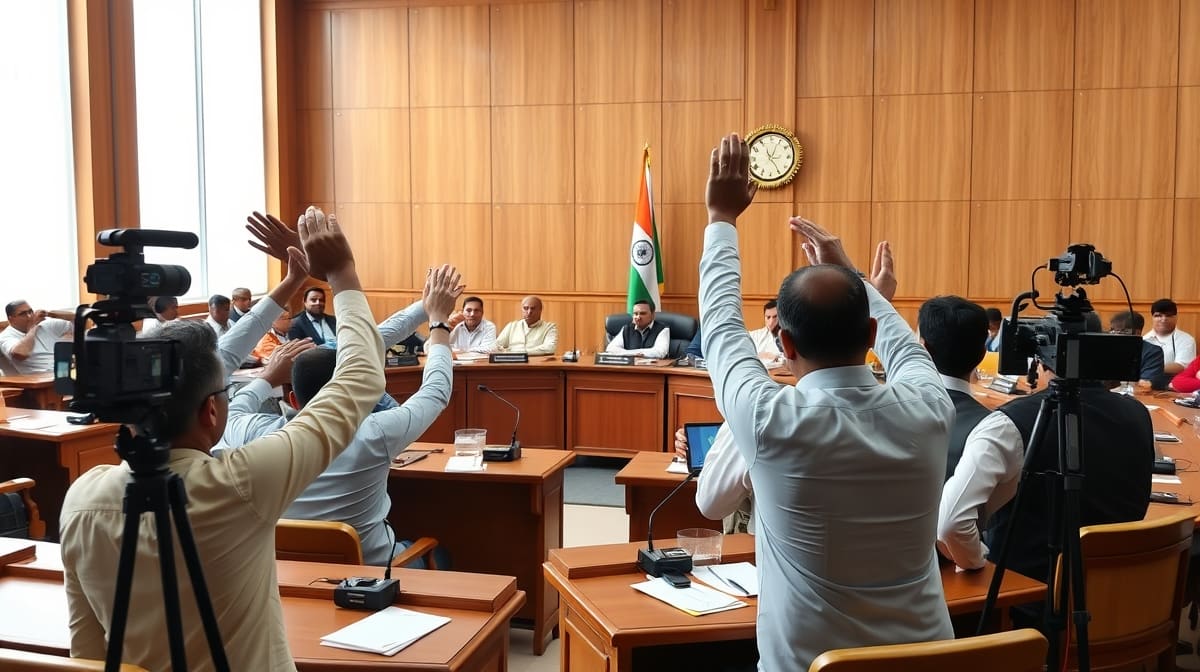
Videography for Transparency: The Court directed that the first meeting be videographed to ensure clarity regarding oath administration and voting. The videography would capture:
- The number of councillors administered oath
- The voting process, including the raising of hands for each candidate
-
Supervision of Detained Councillors: The Court mandated that the participation of detained or arrested councillors would be supervised by the authority under whom they were detained, ensuring their right to vote was protected.
-
Applicability of Precedent: The Court extended the directions issued in Sukhwinder Kaur to the present case, reinforcing the principle that electoral processes must be inclusive and transparent.
-
Timeline for Compliance: The Court directed the Deputy Commissioner, Gurdaspur, to convene the first meeting within 10 days of receiving a copy of the order, ensuring timely compliance with the 1994 Rules.
The Verdict
The Punjab & Haryana High Court disposed of the writ petition with the following directions:
-
Videography: The first meeting of the Municipal Council Dinanagar for oath administration and election of President/Vice President shall be videographed at the petitioners' expense.
-
Participation of Detained Councillors: Any councillor under preventive detention or arrest shall be allowed to participate in the meeting under the supervision of the detaining authority.
-
Applicability of Precedent: All directions issued in Sukhwinder Kaur v. State of Punjab and others shall apply to the present case.
-
Timeline: The Deputy Commissioner, Gurdaspur, shall convene the first meeting within 10 days of receiving a copy of the order.
What This Means For Similar Cases
Ensuring Free and Fair Elections
This judgment reinforces the principle that electoral processes must be inclusive and transparent. Key takeaways for practitioners include:
- Inclusivity: Courts will intervene to ensure that all elected representatives, including those detained or arrested, are allowed to participate in electoral processes
- Transparency: Videography of meetings can be mandated to prevent irregularities and ensure accountability
- Precedent Application: Directions issued in similar cases can be extended to analogous situations, reinforcing legal consistency
Role of Authorities in Electoral Processes
- Deputy Commissioner's Responsibility: The Deputy Commissioner is legally bound to convene meetings within the prescribed timeline and ensure compliance with electoral rules
- Supervision of Detained Members: Authorities detaining councillors must facilitate their participation in meetings, ensuring their rights are not infringed
Practical Implications for Local Governance
- Dispute Resolution: This judgment provides a legal framework for resolving disputes arising from apprehensions of exclusion or malpractices in municipal elections
- Judicial Oversight: Courts will exercise oversight to ensure compliance with electoral rules, particularly in cases where free and fair elections are at risk
- Cost of Transparency: Parties may be required to bear the cost of measures like videography to ensure transparency, provided the State agrees to implement such measures