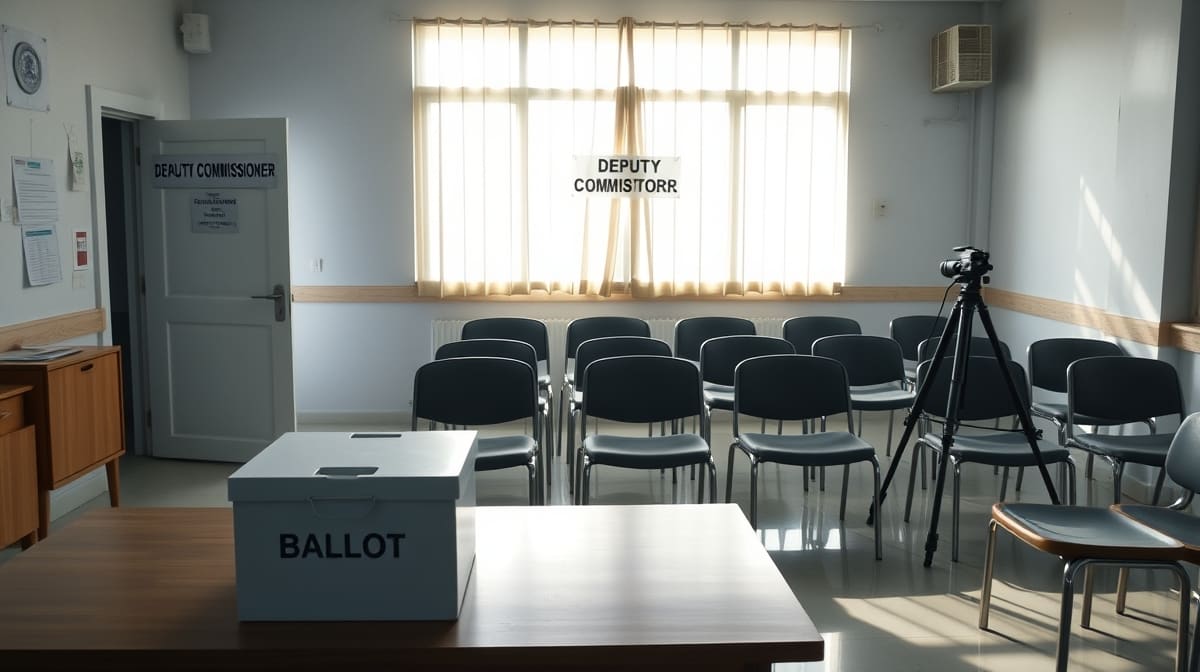
The Punjab and Haryana High Court has laid down critical procedural safeguards for panchayat elections, reinforcing that transparency, voter autonomy, and administrative neutrality are non-negotiable pillars of democratic local governance. In a decisive order, the Court mandated videography, secret ballot, and a change in venue to prevent coercion and ensure public confidence in the electoral process.
Background & Facts
The Dispute
The petitioners, residents and concerned citizens of Dera Baba Nanak in Gurdaspur district, sought judicial intervention to ensure free, fair, and transparent elections for the posts of Chairman and Vice-Chairman of the Panchayat Samiti, scheduled for 17.03.2026. They alleged that the election process, to be conducted at the office of the Sub-Divisional Magistrate (SDM), was vulnerable to undue influence, intimidation, and administrative bias. The petitioners expressed grave concern that police officials were already visiting households of electors to pressure them, undermining the secrecy and voluntariness of voting.
Key Facts
- Elections for Chairman and Vice-Chairman of Panchayat Samiti, Dera Baba Nanak, were scheduled for 17.03.2026.
- The election venue was initially proposed to be the office of the SDM, which petitioners argued lacked neutrality.
- Police had reportedly begun visiting households of electors prior to the election date, raising fears of intimidation.
- The petitioners sought three primary remedies: (i) videography of the entire election process, (ii) use of secret ballot papers, and (iii) relocation of the election to the office of the Deputy Commissioner.
- No formal complaint or FIR had been filed prior to the petition; relief was sought proactively to prevent electoral malpractice.
Procedural History
- 13.03.2026: Writ Petition No. 7832 of 2026 filed before the Punjab and Haryana High Court.
- 13.03.2026: Notice issued and accepted by the Additional Advocate General on behalf of the State.
- 13.03.2026: Hearing held before Justices Harsimran Singh Sethi and Vikas Suri.
- 13.03.2026: Judgment delivered orally on the same day.
Relief Sought
The petitioners sought:
- Mandatory videography of the entire election process.
- Conduct of elections through secret ballot papers.
- Relocation of the election venue from the SDM’s office to the office of the Deputy Commissioner.
- Provision of adequate security to electors to ensure they could vote without fear or coercion.
The Parties' Positions
Petitioners: Argued that the existing arrangements created a high risk of voter intimidation and compromised the constitutional right to free and fair elections under Article 243K. They emphasized that the SDM’s office, being part of the executive machinery, was not a neutral venue.
Respondent-State: Accepted the concerns raised and agreed in principle to all three remedies, subject to cost-sharing for videography. The State assured the Court that no elector would be prevented from voting, including those in police or judicial custody.
The Legal Issue
The central question was whether the State has a constitutional and statutory obligation to ensure free, fair, and transparent panchayat elections through procedural safeguards such as videography, secret ballot, and neutral venue, particularly when there is a credible apprehension of coercion.
Arguments Presented
For the Petitioner
Counsel relied on the foundational principle that local self-government is a constitutional imperative under Part IX of the Constitution. They cited State of Punjab v. Baldev Singh to argue that any procedural irregularity that undermines voter autonomy renders the election voidable. They emphasized that the presence of police at voters’ homes constituted indirect coercion, violating the spirit of Kesavananda Bharati v. State of Kerala on democratic integrity.
For the Respondent
The Additional Advocate General conceded the validity of the petitioners’ concerns and affirmed the State’s commitment to electoral fairness. He stated that the State had no interest in suppressing voter will and was willing to adopt all recommended safeguards, including videography at the petitioners’ cost and relocation of the venue to the Deputy Commissioner’s office.
The Court's Analysis
The Court observed that the State’s cooperative stance reflected a mature understanding of its constitutional duty under Article 243K, which mandates the superintendence, direction, and control of panchayat elections to be vested in the State Election Commission. The Court noted that while the State is not obligated to bear the cost of videography, it is duty-bound to facilitate it when requested to ensure transparency.
"The right to vote is not merely a statutory right but a constitutional right, and its exercise must be free from any form of pressure or influence. The presence of police at voters’ homes, even if not overtly coercive, creates a chilling effect that undermines the very foundation of democratic participation."
The Court further held that the SDM’s office, being an executive administrative unit, could reasonably be perceived as biased. The Deputy Commissioner’s office, as the highest civil authority in the district, was deemed a more neutral and credible venue. The Court emphasized that the use of secret ballot papers was not merely a procedural formality but a substantive safeguard against vote-buying and intimidation.
The Court also addressed the issue of electors in custody, holding that their right to vote must be preserved. It directed that such individuals be brought to the polling station under security, allowed to cast their vote, and then returned to custody immediately thereafter.
The Verdict
The petition succeeded. The Court directed that:
- The elections scheduled for 17.03.2026 shall be videographed at the cost of the petitioners.
- Voting shall be conducted exclusively through secret ballot papers.
- The election shall be held in the office of the Deputy Commissioner, Dera Baba Nanak, instead of the SDM’s office.
- All electors, including those in police or judicial custody, shall be permitted to vote on the election day and shall be returned to custody immediately after casting their vote.
- No elector shall be restrained or pressured in any manner from exercising their right to vote.
- The order shall be binding on all authorities, including jail authorities.
What This Means For Similar Cases
Secret Ballot Is Non-Negotiable in Panchayat Elections
- Practitioners must now treat the use of secret ballot papers as a mandatory procedural requirement in all panchayat elections, not a discretionary formality.
- Any deviation from secret ballot must be justified with compelling reasons and will be subject to judicial scrutiny.
Venue Neutrality Is a Constitutional Imperative
- Elections must be held in venues perceived as neutral by the electorate - typically the Deputy Commissioner’s office or designated polling centers under the State Election Commission.
- Using executive offices like those of the SDM or Tehsildar creates a presumption of bias and invites legal challenge.
Custodial Voters Must Be Enabled to Vote
-
The right to vote extends to persons in police or judicial custody.
-
Authorities must make logistical arrangements to transport such voters to polling stations under security, without delay or denial.
-
Failure to facilitate voting by custodial electors may render the entire election process vulnerable to nullification.
-
Practitioners representing petitioners in similar matters should immediately file applications seeking videography and venue change in pending panchayat election disputes.
-
State authorities must proactively notify electors of their right to vote even while in custody, and coordinate with jail authorities well in advance of election dates.
-
This judgment sets a precedent for all districts in Punjab and Haryana - and may be persuasive in other states - that transparency measures are not optional but essential to uphold the integrity of local democracy.
-
The Court’s willingness to act on a petition filed just four days before the election underscores the judiciary’s readiness to intervene swiftly to protect electoral rights.
-
The cost-sharing model for videography (petitioners bear cost, State facilitates) provides a practical template for future cases where public interest demands transparency but public funds are constrained.