Topic

local governance

9 articlesLatest September 2026
Section 12(4) deadline for no-confidence meeting is mandatory; postponement quashed despite police assistance claim | West Bengal Panchayat Act : Calcutta HC
Case Law Analysis
|Calcutta High Court

Section 12(4) deadline for no-confidence meeting is mandatory; postponement quashed despite police assistance claim | West Bengal Panchayat Act : Calcutta HC

The Calcutta High Court held that the fifteen-working-day period mandated by Section 12(4) of the West Bengal Panchayat Act for a no-confidence meeting cannot be extended, even when police support is lacking, and reinstated the ousted Pradhan. This enforces strict statutory compliance for gram panchayats statewide.

Section 36 MVP Act | Sarpanch Must Prove Service of Statutory Notice for Monthly Meetings to Avoid Disqualification : Bombay HC
Case Law Analysis
|Bombay High Court

Section 36 MVP Act | Sarpanch Must Prove Service of Statutory Notice for Monthly Meetings to Avoid Disqualification : Bombay HC

The Bombay High Court has ruled that a Sarpanch cannot escape disqualification under Section 36 of the Maharashtra Village Panchayat Act merely by asserting that meetings were held - the burden lies squarely on the Sarpanch to prove formal notice was served to all members. This sets a critical precedent for rural governance, making procedural rigor non-negotiable in panchayat administration and empowering villagers to challenge opaque decision-making.

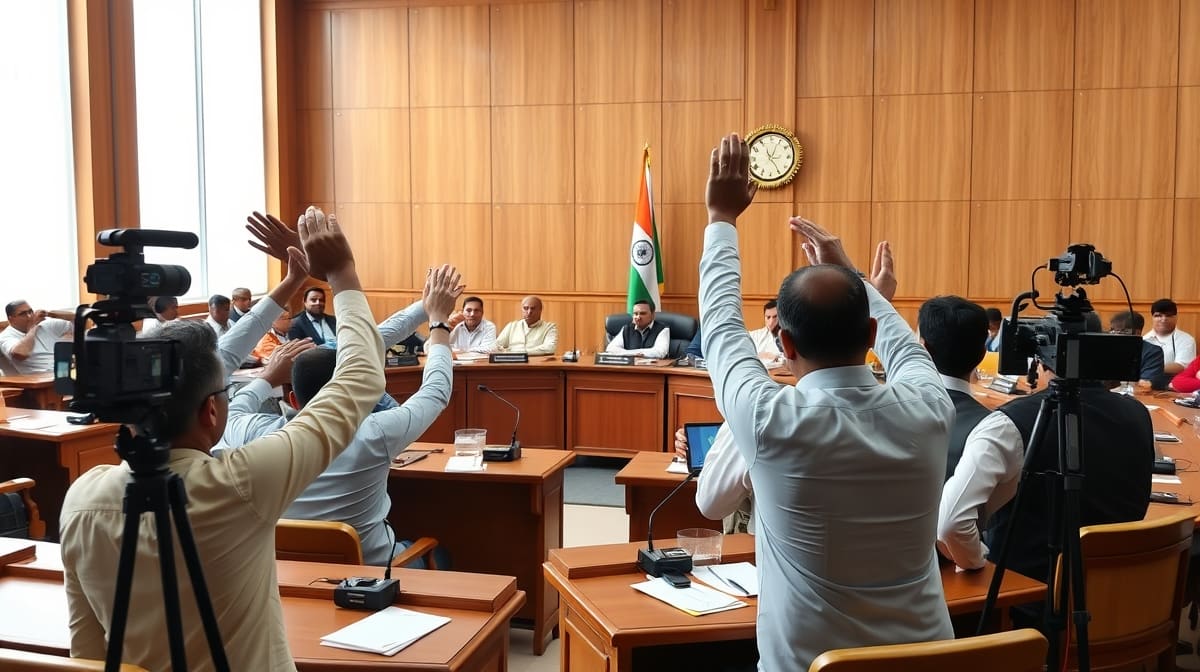
Punjab Municipal Election Rules 1994 | Detained Councillors Must Be Allowed to Take Oath & Vote; Videography Mandatory for Transparency : Punjab & Haryana HC
|Punjab and Haryana High Court

Punjab Municipal Election Rules 1994 | Detained Councillors Must Be Allowed to Take Oath & Vote; Videography Mandatory for Transparency : Punjab & Haryana HC

The Punjab & Haryana High Court ruled that detained councillors cannot be barred from taking oath or participating in municipal elections, ensuring their right to vote under the Punjab Municipal Election Rules, 1994. The Court mandated videography of the election process and directed the Deputy Commissioner to comply within 10 days, reinforcing transparency and procedural fairness in local governance.

Panchayat May Install Handrails to Prevent Pathway Encroachment Under BNSS | Kerala HC Affirms Local Body’s Right to Protect Public Property
Case Law Analysis
|Kerala High Court

Panchayat May Install Handrails to Prevent Pathway Encroachment Under BNSS | Kerala HC Affirms Local Body’s Right to Protect Public Property

The Kerala High Court has ruled that a panchayat’s installation of a handrail to demarcate a public pathway from adjacent private land does not constitute an unlawful obstruction under the Bharatiya Nagarik Suraksha Sanhita. This clarifies that local bodies may use non-intrusive physical barriers to prevent encroachment and preserve public access, reinforcing the autonomy of gram panchayats in managing community infrastructure without requiring formal land acquisition.

Rule 3(3) Chhattisgarh Panchayat Rules | Seven-Day Clear Notice Mandatory for No-Confidence Motion: CGHC Quashes Defective Proceedings
Case Law Analysis
|Chhattisgarh High Court

Rule 3(3) Chhattisgarh Panchayat Rules | Seven-Day Clear Notice Mandatory for No-Confidence Motion: CGHC Quashes Defective Proceedings

Chhattisgarh High Court ruled that a no-confidence motion against a Sarpanch is invalid if the seven-day clear notice requirement under Rule 3(3) of the Chhattisgarh Panchayat Rules, 1994, is not strictly complied with. The judgment reinforces procedural fairness in local governance, ensuring elected representatives cannot be removed without proper notice to all members.

Rule 3(3) Chhattisgarh Panchayat Rules, 1994 | Seven Clear Days' Notice Mandatory for Sarpanch No-Confidence Motion : CGHC
Case Law Analysis
|Chhattisgarh High Court

Rule 3(3) Chhattisgarh Panchayat Rules, 1994 | Seven Clear Days' Notice Mandatory for Sarpanch No-Confidence Motion : CGHC

The Chhattisgarh High Court quashed a no-confidence motion against a Sarpanch for failing to provide seven clear days' notice between dispatch and meeting dates, as required under Rule 3(3). This reinforces that procedural compliance in local governance is not discretionary - even minor timing lapses invalidate removal proceedings, protecting elected representatives from arbitrary ouster.

Section 142 Panchayati Raj Act | Recovery Order Before Final Adjudication Violates Natural Justice : Himachal Pradesh HC
Case Law Analysis
|Himachal Pradesh High Court

Section 142 Panchayati Raj Act | Recovery Order Before Final Adjudication Violates Natural Justice : Himachal Pradesh HC

The Himachal Pradesh High Court ruled that imposing financial penalties under Section 142 of the Panchayati Raj Act before concluding adjudication on a show-cause notice breaches principles of natural justice. The court emphasized that premature recovery orders against local body officials are procedurally unfair and legally untenable.