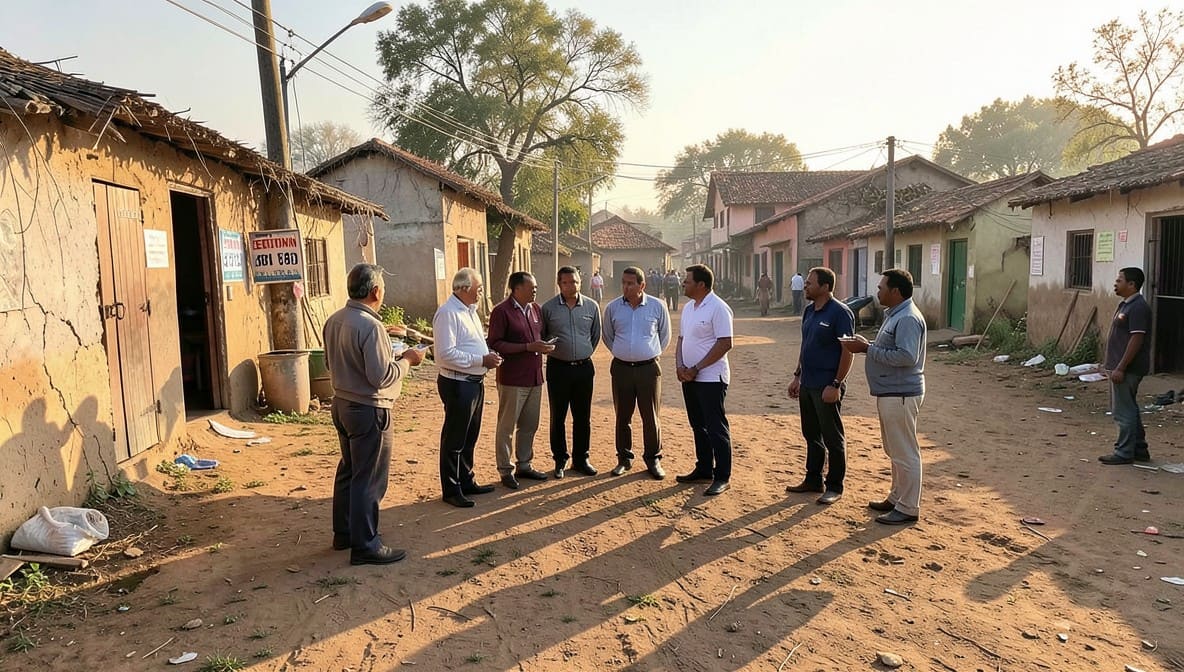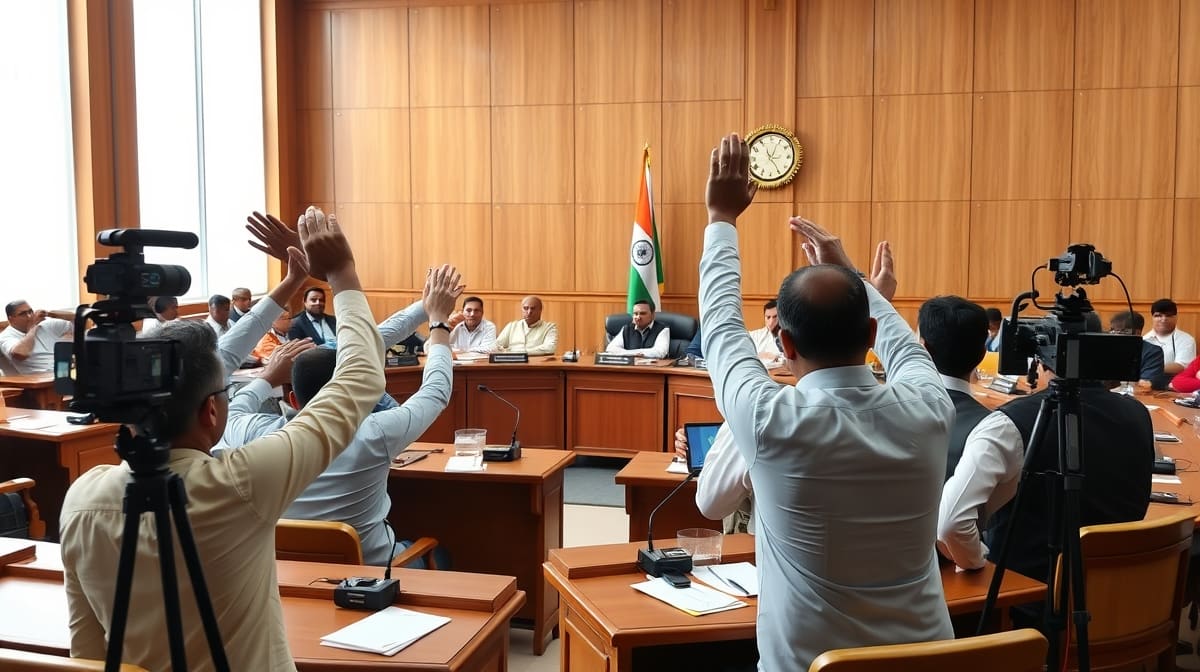
The Karnataka High Court recently addressed a critical procedural question in local governance: whether withdrawals of support by panchayat members after submitting a No Confidence Motion request can invalidate the motion. While refusing to stall the meeting, the Court directed the jurisdictional Assistant Commissioner to ensure a free and fair voting process, emphasizing the importance of procedural integrity in democratic institutions at the grassroots level.
Background & Facts
The Dispute
The petitioner, Smt Hemavathi S, is the elected President of Bettahalasooru Grama Panchayat (the third respondent). She challenged a notice dated 17.06.2026 issued by the Assistant Commissioner, Bangalore North Taluk (second respondent), convening a No Confidence Motion Meeting on 06.07.2026 at 11:00 a.m. The notice was issued pursuant to an application filed by 21 out of 26 members of the panchayat seeking her removal.
Key Facts
- The petitioner was elected as President of Bettahalasooru Grama Panchayat
- On an unspecified date, 21 members submitted a request for a No Confidence Motion against the petitioner
- Subsequent to the request, 11 members filed a representation stating they support the petitioner
- Out of these 11 members, 6 had initially joined the request for the No Confidence Motion but later stated they did not support it
- The petitioner alleged that documents signed for other purposes were being misused to project support for the motion
- The meeting was scheduled for 06.07.2026 under the notice dated 17.06.2026
Procedural History
- 17.06.2026: Notice issued by the Assistant Commissioner (R2) convening the No Confidence Motion Meeting (Annexure-D)
- Date unspecified: Petitioner filed the present writ petition under Articles 226 and 227 of the Constitution of India
- 03.07.2026: The writ petition came up for preliminary hearing before the High Court
Relief Sought
The petitioner sought:
- Quashing of the notice dated 17.06.2026 issued by the second respondent
- An interim order to stay the No Confidence Motion Meeting scheduled for 06.07.2026
The Legal Issue
The central question before the Court was whether post-request withdrawals of support by panchayat members for a No Confidence Motion could invalidate the motion, and if so, whether the Court should intervene to stall the meeting under Articles 226 and 227 of the Constitution.
Arguments Presented
For the Petitioner
Sri Jayakumar S. Patil, learned Senior Counsel for the petitioner, argued:
- The notice for the No Confidence Motion was based on an application by 21 members, but 11 members subsequently withdrew support
- Out of these 11, 6 members who had initially joined the request later stated they did not support the motion
- The documents signed by these members for other purposes were being misused to project support for the motion
- The Court should intervene to prevent an unfair and manipulated voting process
For the Respondents
Sri Bopanna Belliappa, learned Additional Government Advocate for the first and second respondents, contended:
- The Court should not interfere at this stage, as the meeting must proceed as scheduled
- The jurisdictional Assistant Commissioner would chair the meeting and ensure a free and fair voting process
- Post-request withdrawals should not invalidate the motion, as the initial request was valid under the relevant rules
The Court's Analysis
The Court observed that the petitioner’s grievance was based on circumstances arising after the request for the No Confidence Motion. While the Court refrained from stalling the meeting, it emphasized the procedural integrity of the voting process. The Court noted:
"If the petitioner draws support from the circumstances that are post the request for No Confidence Motion, the meeting must go on. However, the jurisdictional Assistant Commissioner, who will have to chair the meeting as required under the Rules, must ensure that the 'No Confidence Motion' is put to vote in a free and fair manner without room for any allegation."
The Court’s reasoning rested on two key principles:
- Post-request withdrawals do not invalidate the motion: The Court implicitly held that once a valid request for a No Confidence Motion is made, subsequent withdrawals of support do not affect its validity. The meeting must proceed as scheduled.
- Procedural fairness is paramount: While the Court did not intervene to stall the meeting, it directed the Assistant Commissioner to ensure a free and fair voting process, thereby addressing the petitioner’s concerns about potential manipulation.
The Verdict
The Court disposed of the writ petition with the following directions:
- The No Confidence Motion Meeting scheduled for 06.07.2026 would proceed as planned
- The Assistant Commissioner (second respondent) was directed to chair the meeting and ensure the motion was put to vote in a free and fair manner
- No specific relief was granted to quash the notice or stay the meeting, but the Court’s observations serve as a guideline for procedural compliance
What This Means For Similar Cases
Post-Request Withdrawals Do Not Invalidate the Motion
This judgment clarifies that withdrawals of support after the submission of a No Confidence Motion request do not invalidate the motion. Practitioners should note:
- Once a valid request is made under the relevant Panchayat Raj Rules, the meeting must proceed as scheduled
- Courts are unlikely to intervene to stall the meeting based on post-request withdrawals, unless there is evidence of fraud or procedural irregularity
Procedural Fairness Is Non-Negotiable
While the Court allowed the meeting to proceed, it underscored the importance of procedural fairness. Key takeaways include:
- The presiding officer (in this case, the Assistant Commissioner) must ensure the voting process is free from manipulation or coercion
- Allegations of misuse of documents or signatures must be addressed during the meeting rather than through judicial intervention
- Practitioners should focus on ensuring compliance with procedural rules rather than seeking judicial stalling of the meeting
Limited Scope for Judicial Intervention
The judgment highlights the limited scope for judicial intervention in No Confidence Motion proceedings:
- Courts are reluctant to interfere unless there is a clear violation of statutory rules or gross procedural irregularity
- The burden of proof lies on the aggrieved party to demonstrate substantial injustice or fraud to warrant judicial intervention
- Practitioners should exhaust administrative remedies before approaching courts for relief in such matters