The Madras High Court has reaffirmed the state’s non-negotiable duty to reclaim government poromboke lands illegally occupied by private institutions, directing immediate enforcement under the Tamil Nadu Land Encroachment Act, 1905. This judgment establishes a clear judicial mandate for restoring public land to its intended communal use, particularly for educational infrastructure serving underprivileged communities.
Background & Facts
The Dispute
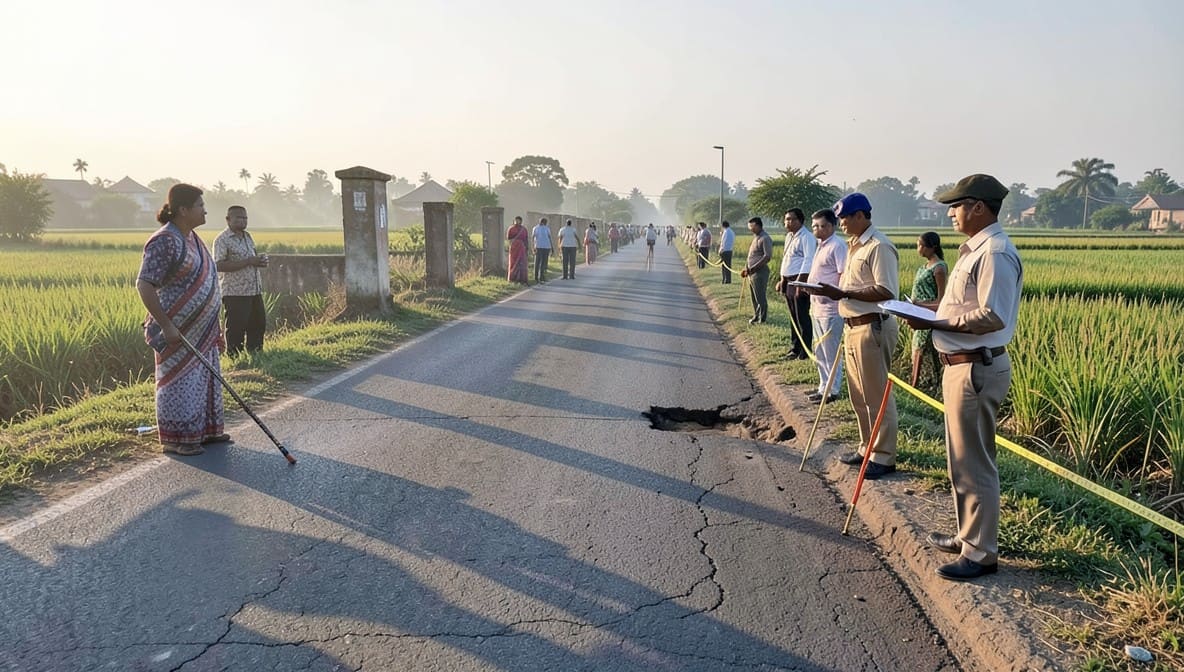
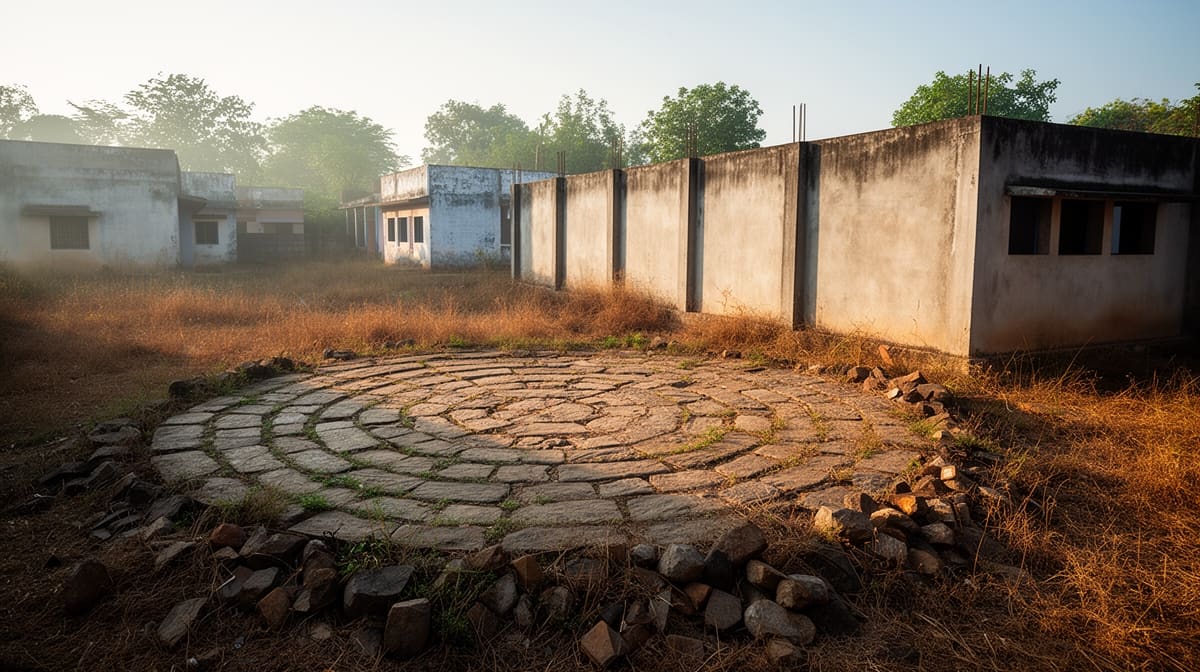
The petitioner, Konambedu Gramma Pothu Nalla Sangham, a community body representing local residents, alleged that substantial portions of government poromboke land - classified as Kallanguthu (stone ground), Pallam (pit), and Kalam (threshing floor) - in Survey Numbers 320, 323, and 333 had been illegally encroached upon by St. Peters Institute of Higher Education and Research and its managing trust. These lands, historically used for village-level public functions including threshing, water catchment, and community gatherings, were now occupied by college buildings, compound walls, and roads.
Procedural History
- 2021: Writ petition filed under Article 226 of the Constitution seeking removal of encroachments and restoration of land for public use.
- Interim Direction: Court directed the District Collector to conduct a survey and submit a report.
- District Revenue Officer’s Report: Confirmed illegal encroachments totaling over 10,000 square meters across three survey numbers, with structures including college buildings and compound walls.
- Suo Motu Impleadment: The Avadi Municipal Corporation was added as the 10th respondent to ensure enforcement capability.
Relief Sought
The petitioner sought a writ of mandamus directing respondents to:
- Remove all illegal structures on poromboke lands
- Restore the land for public purposes including a school playground, auditorium, laboratory, library, and toilet facilities for Avadi Municipal Government High School
- Submit a report on action taken within a stipulated timeframe
The Legal Issue
The central question was whether the state authorities have a legal obligation to remove encroachments on government poromboke land, even when occupied by educational institutions, and whether a writ of mandamus lies to compel such action under the Tamil Nadu Land Encroachment Act, 1905.
Arguments Presented
For the Petitioner
The petitioner relied on the principle that poromboke lands are held in public trust and cannot be alienated or encroached upon without statutory authority. Citing State of Tamil Nadu v. K. Srinivasan, the petitioner argued that educational institutions, however noble their purpose, cannot claim immunity from land laws. The petition emphasized the constitutional duty under Article 21 to provide basic educational infrastructure, which could be fulfilled only by reclaiming these lands.
For the Respondent
The 4th and 5th respondents, representing the educational institution, did not appear. The 10th respondent, Avadi Corporation, acknowledged the encroachments but cited procedural delays and lack of resources as impediments to eviction. The Additional Government Pleader for the Revenue authorities conceded the legality of the encroachments but urged judicial restraint, suggesting administrative remedies.
The Court's Analysis
The Court examined the classification of the subject lands in the Re-survey and Re-settlement ‘A’ Register, which clearly designated them as Sarkar Poromboke - government land reserved for public use. The Court held that such lands are not subject to private acquisition or informal occupation, regardless of the nature of the occupant.
"Poromboke lands are not merely vacant plots; they are public assets held in trust by the state for the benefit of the community, especially for essential civic infrastructure. The fact that an educational institution occupies them does not convert illegality into legitimacy."
The Court distinguished State of Tamil Nadu v. K. Srinivasan, where temporary occupation for public benefit was permitted, from the present case where permanent structures were erected without any statutory sanction. The Court emphasized that the Tamil Nadu Land Encroachment Act, 1905, provides a clear statutory mechanism for eviction, and administrative inaction cannot override this duty.
The Court further noted that the Avadi Municipal Corporation, as the local authority responsible for public infrastructure, had both the legal mandate and the practical capacity to execute the eviction. The suo motu impleadment was justified to ensure enforceability.
The Verdict
The petitioner succeeded. The Court held that poromboke lands cannot be retained through illegal encroachment, even by educational institutions, and directed the Avadi Municipal Corporation to initiate eviction proceedings under the Tamil Nadu Land Encroachment Act, 1905, within twelve weeks. The District Collector was mandated to monitor compliance.
What This Means For Similar Cases
Poromboke Land Is Inalienable
- Practitioners must treat any claim of private use over poromboke land as legally untenable, regardless of the occupant’s public-spirited intent
- Municipal corporations and revenue authorities cannot defer action on grounds of resource constraints
- Any structure erected without formal grant or lease is prima facie illegal
Mandamus Is Available for Public Land Restoration
- Writs of mandamus are maintainable to compel state agencies to act on encroachments of public land
- Courts will not defer to administrative delay when constitutional rights to education and public infrastructure are at stake
- The burden shifts to the state to prove lawful possession, not to the petitioner to prove illegality
Educational Institutions Are Not Exempt
- Schools and colleges cannot claim moral or educational superiority to evade land laws
- Public funding or educational purpose does not override statutory land classifications
- Alternative sites must be identified by institutions before occupying government land