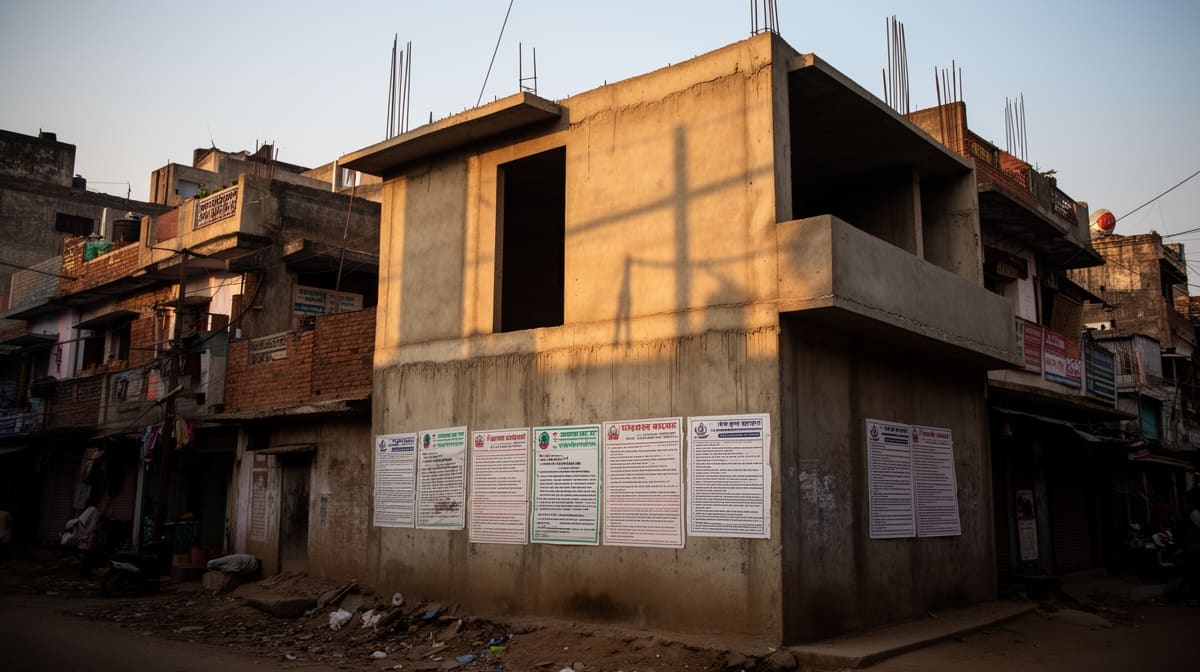
The Bombay High Court has affirmed that coercive demolition of a residential structure cannot proceed while a statutory remedy for regularization remains pending. This ruling reinforces the principle that procedural fairness demands exhaustion of available legal avenues before state action extinguishes property rights.
Background & Facts
The Dispute
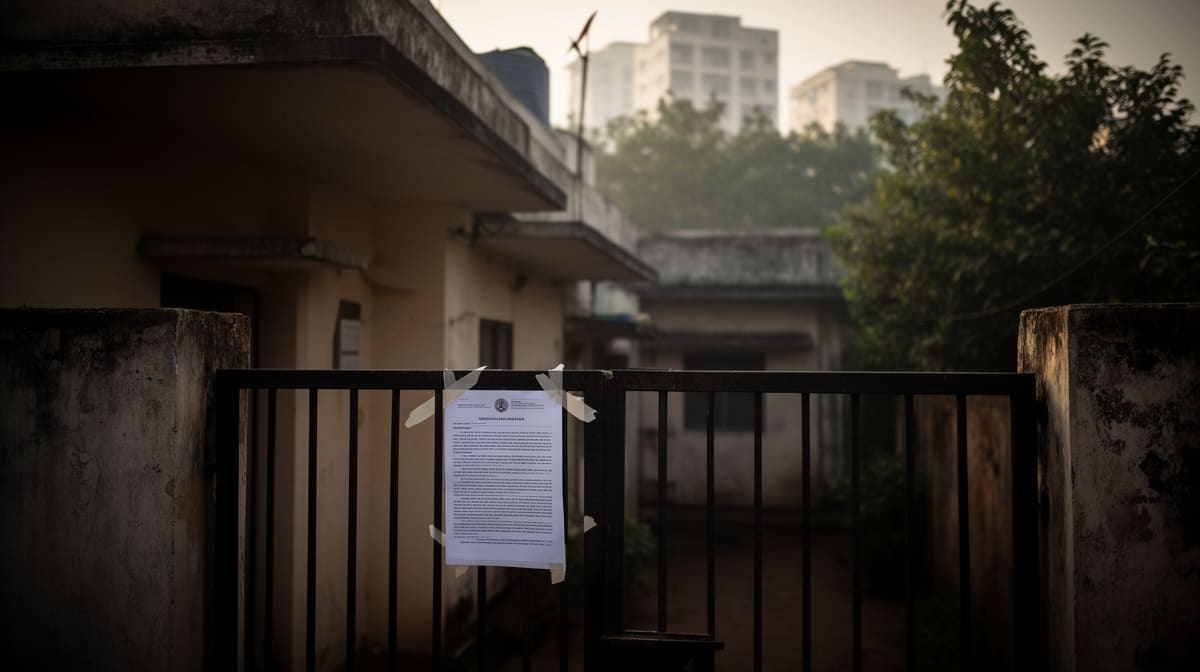
The petitioner, Smt. Puja W/o Krishna Sonekar, owns a residential house in Nagpur that the Nagpur Municipal Corporation alleges is an unauthorized construction under the Maharashtra Regional and Town Planning Act, 1966. On 19 February 2026, the Corporation issued a notice under Section 53 of the MRTP Act intimating intent to demolish the structure.
Procedural History
- The petitioner received the demolition notice on 19.02.2026.
- Prior to the notice, she had submitted an application for regularization of the construction.
- On 05.02.2025, the Nagpur Municipal Corporation rejected her regularization application (page 33).
- The petitioner intends to challenge this rejection through a statutory appeal under Section 47 of the MRTP Act, which is yet to be filed.
- Fearing imminent demolition, she filed a writ petition seeking interim protection.
Relief Sought
The petitioner sought an interim stay on any coercive demolition action until she could file and pursue her statutory appeal under Section 47, arguing that demolition would render her legal remedy infructuous.
The Legal Issue
The central question was whether the right to seek statutory redressal under Section 47 of the MRTP Act precludes immediate demolition of a structure pending the filing of such an appeal, particularly when the petitioner has demonstrated a bona fide intention to avail the remedy.
Arguments Presented
For the Petitioner
The petitioner’s counsel argued that Section 47 of the MRTP Act provides an efficacious statutory remedy to challenge the rejection of regularization. Denying interim protection would violate the principle of natural justice and render the statutory appeal meaningless. Reliance was placed on the doctrine that procedural fairness requires opportunity to be heard before deprivation.
For the Respondent
The Corporation’s counsel conceded that the notice was validly issued under Section 53 but did not contest the availability of the Section 47 remedy. The State’s Advocate General acknowledged the petitioner’s intent to file an appeal but argued that the notice itself did not constitute final action and that demolition could proceed if the structure was clearly unauthorized.
The Court's Analysis
The Court examined the interplay between enforcement powers under Section 53 and appellate remedies under Section 47. It emphasized that while the Corporation has authority to act against unauthorized construction, such power must be exercised in a manner that respects the statutory appeal mechanism.
"The petitioner has not been given an opportunity to exhaust her statutory remedy under Section 47. To permit demolition now would effectively nullify the very right conferred by the statute."
The Court noted that the petitioner had acted promptly - filing the writ petition within five days of the notice - and had demonstrated a clear intention to challenge the rejection of regularization. The Court held that the existence of a statutory appeal does not merely confer a right - it imposes a duty on the State to suspend coercive action until that right is exhausted.
The Court rejected the notion that the mere issuance of a demolition notice justifies immediate enforcement, particularly where the property is residential and the petitioner has taken concrete steps toward regularization.
The Verdict
The petitioner succeeded. The Court held that demolition cannot proceed while a statutory appeal under Section 47 of the MRTP Act remains pending, and directed the respondents to refrain from any coercive action for one week to allow the petitioner to file her appeal.
What This Means For Similar Cases
Statutory Remedies Must Be Given Effect
- Practitioners must immediately seek interim relief when a statutory appeal exists and demolition is threatened.
- Courts will prioritize preserving the efficacy of statutory remedies over administrative expediency.
- A mere notice of demolition does not equate to finality; the right to appeal must be meaningfully protected.
Residential Structures Warrant Greater Procedural Caution
- Courts are more likely to grant interim stays where the subject property is a residence, recognizing the heightened impact on fundamental rights.
- The burden shifts to the authority to demonstrate why immediate demolition is necessary despite pending remedies.
Timing Is Critical for Interim Relief
- Filing a writ petition within days of receiving a demolition notice strengthens the claim for urgency.
- Evidence of prior attempts at regularization (e.g., application submissions) significantly bolsters the petitioner’s case for protection.