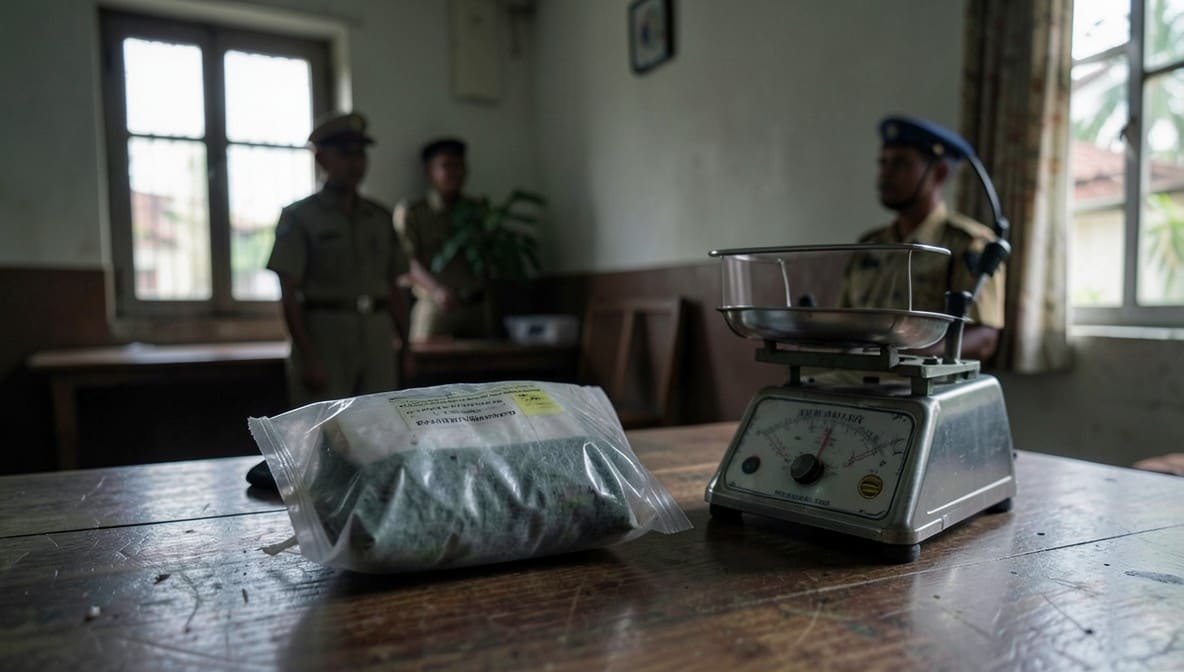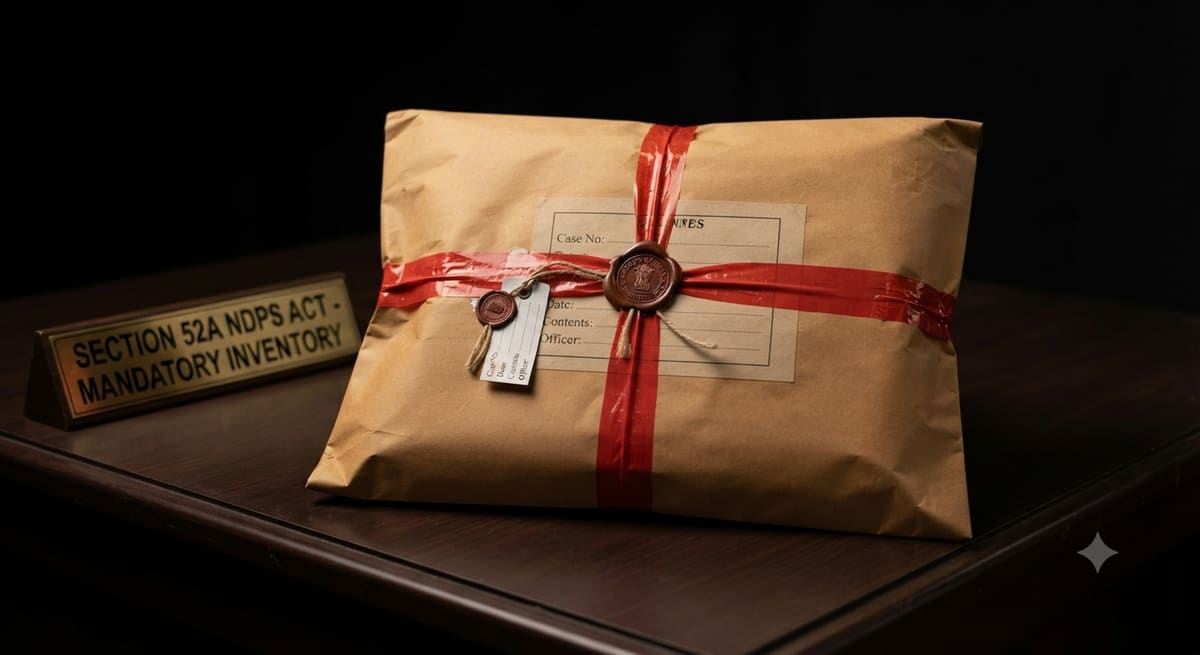
The Kerala High Court has underscored the mandatory compliance of Section 52A of the Narcotic Drugs and Psychotropic Substances Act, 1985 (NDPS Act) in cases involving contraband possession. In this judgment, the Court set aside a conviction under Section 22(c) of the NDPS Act after finding that the prosecution failed to tender the inventory prepared under Section 52A as primary evidence, thereby vitiating the trial. The case has been remanded for fresh evidence on the inventory, highlighting the critical procedural safeguards under the NDPS Act.
Background & Facts
The Dispute
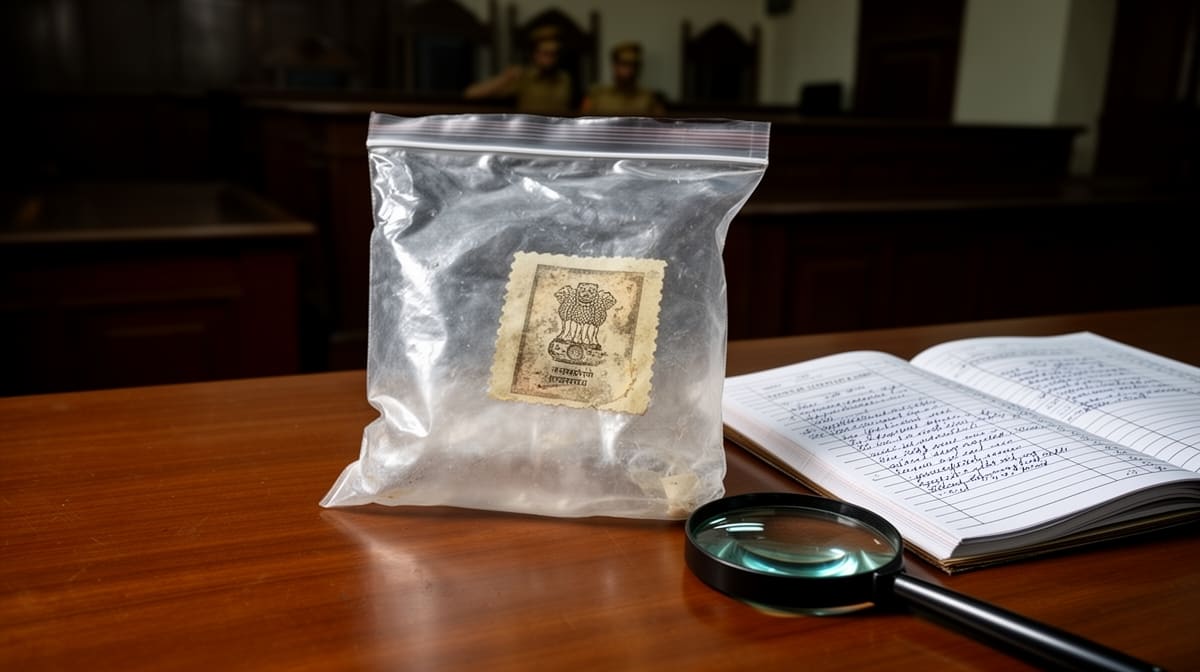
The appellant, Hafis, was accused of possessing 9 LSD (Lysergic Acid Diethylamide) stamps weighing 0.190 grams on 27.06.2018 at around 5:55 pm, allegedly in contravention of Section 22(c) of the NDPS Act. The prosecution alleged that this constituted an offence under the NDPS Act, leading to his arrest and subsequent trial.
Key Facts
The appellant was nabbed on 27.06.2018 with 9 LSD stamps (total weight: 0.190 grams)
The offence was registered under Crime No. 26/2018 of Aluva Excise Range Office, Ernakulam
The prosecution relied on the testimony of PW1 to PW7, documentary evidence (Exts. P1 to P13), and MO1 (material object)
The defence examined DW1 during the trial
The contraband was not physically produced in court, nor was the inventory prepared under Section 52A of the NDPS Act tendered in evidence
Procedural History
27.06.2018: Offence registered under Crime No. 26/2018 for possession of LSD stamps
SC No. 564/2019: Trial commenced before the Special Court under NDPS Act (Additional District Court), North Paravur
During trial: Evidence recorded from PW1 to PW7, Exts. P1 to P13, and MO1 marked; DW1 examined for defence
Judgment dated [not specified in text]: Special Judge convicted the appellant under Section 22(c) of the NDPS Act and sentenced him to:
Rigorous imprisonment for 10 years
Fine of ₹1,00,000 (in default, additional rigorous imprisonment for 6 months)
Crl.A No. 467/2024: Appeal filed before the Kerala High Court challenging the conviction
The Parties' Positions
For the Appellant/Accused
Argued that Section 52A of the NDPS Act was not complied with, as the inventory of the seized contraband was neither prepared nor tendered in evidence
Contended that the contraband itself was not produced before the court, rendering the prosecution’s case unsustainable
Relied on the Supreme Court’s decision in Bharat Aambale v. State of Chhattisgarh to argue that non-compliance with Section 52A vitiates the trial
For the Respondent/State
Submitted that the Special Judge had discussed the inventory prepared under Section 52A(2) of the NDPS Act in paragraph 33 of the judgment
Argued that the inventory contained the Magistrate’s certificate under Section 52A(3), and thus, non-compliance could not be alleged
Relied on Bharat Aambale to contend that procedural lapses under Section 52A are not fatal unless they render the prosecution’s case doubtful
Relief Sought
The appellant sought:
Setting aside of the conviction and sentence imposed by the Special Court
Remand of the case for fresh evidence on the tendering of the inventory prepared under Section 52A of the NDPS Act
Acquittal on grounds of procedural non-compliance
The Legal Issue
The central questions before the Court were:
Whether the Special Court erred in convicting the appellant without tendering the inventory prepared under Section 52A of the NDPS Act as primary evidence?
Whether the prosecution’s failure to produce the contraband or its inventory vitiates the trial under the NDPS Act?
Whether the judgment of the Special Court requires interference on grounds of procedural non-compliance?
Arguments Presented
For the Appellant
Non-compliance with Section 52A: The prosecution failed to tender the inventory prepared under Section 52A of the NDPS Act, which is mandatory for proving possession of contraband
Denial of fair trial: The appellant was deprived of the opportunity to cross-examine witnesses on the genuineness of the inventory, as it was not marked in evidence
Reliance on Bharat Aambale: Cited the Supreme Court’s holding that Section 52A compliance is mandatory, and non-compliance renders the trial unsustainable unless the prosecution proves substantial compliance or that the lapse does not affect its case
For the Respondent
Substantial compliance: Argued that the Special Judge had discussed the inventory in the judgment, implying compliance with Section 52A
No prejudice: Contended that the appellant failed to demonstrate how the non-compliance prejudiced his case
Reliance on Bharat Aambale: Emphasized that procedural lapses are not fatal unless they create discrepancies in the prosecution’s evidence
The Court's Analysis
The Court undertook a detailed examination of Section 52A of the NDPS Act and its judicial interpretation, particularly the Supreme Court’s decision in Bharat Aambale v. State of Chhattisgarh. The key observations were:
Mandatory Nature of Section 52A:
"It is well settled law that when the contraband is decisive in finding an offence committed by the accused on the basis of its possession or use, it is the duty of the prosecution to prove the allegation beyond reasonable doubt, either by producing the contraband in physical form or the inventory prepared by the Magistrate under Section 52A of the NDPS Act before the court and tendering the same in evidence to justify the recovery of the same in the manner known to law."
The Court emphasized that Section 52A(4) makes the inventory, photographs, and samples drawn under Section 52A(2) primary evidence in NDPS trials, notwithstanding the Indian Evidence Act or CrPC. Thus, tendering the inventory is not merely procedural but mandatory for conviction.
Failure to Tender Inventory:The Court noted that while the inventory prepared under Section 52A was produced before it, the prosecution had failed to tender it in evidence during the trial. This deprived the appellant of the opportunity to cross-examine witnesses on its authenticity, rendering the trial procedurally flawed.
Application of Bharat Aambale Principles:The Court relied on the ten-point summary laid down in Bharat Aambale, particularly:
Point (III): Inventory prepared under Section 52A is primary evidence, irrespective of whether the contraband is produced in court
Point (V): Non-compliance with Section 52A is not fatal only if the prosecution’s case remains unshaken by other evidence
Point (IX): The initial burden lies on the accused to show non-compliance on a preponderance of probabilities, after which the prosecution must prove compliance beyond reasonable doubt
In this case, the Court found that the prosecution failed to discharge its burden of proving compliance with Section 52A, as the inventory was not tendered in evidence.
Distinction from Rajwant Singh v. State of Haryana:The Court distinguished the present case from Rajwant Singh, where the accused had failed to raise any cogent evidence of non-compliance with Section 52A. Here, the appellant successfully demonstrated the non-tendering of the inventory, shifting the burden to the prosecution.
The Verdict
The Kerala High Court allowed the appeal and set aside the conviction and sentence imposed by the Special Court. The matter was remanded to the Special Court for the limited purpose of:
Recording fresh evidence on the tendering of the inventory prepared under Section 52A of the NDPS Act
Rendering a fresh judgment after hearing both sides
The Special Court was directed to expedite the trial and complete it within six weeks from the date of receipt of the judgment. The appellant, who was in custody, was to remain in continuation of his earlier custody, as bail was not granted under Section 37 of the NDPS Act due to the commercial quantity of the contraband.
What This Means For Similar Cases
Section 52A Compliance Is Non-Negotiable
Primary evidence requirement: The judgment reaffirms that Section 52A(4) of the NDPS Act elevates the inventory, photographs, and samples to the status of primary evidence. Failure to tender these documents in evidence vitiates the trial, regardless of whether the contraband is produced physically.
Prosecution’s burden: Once the accused demonstrates non-compliance with Section 52A, the prosecution must prove substantial compliance or that the lapse does not affect its case beyond reasonable doubt.
Procedural Safeguards Override Substantial Compliance
Beyond Bharat Aambale: While Bharat Aambale held that procedural lapses are not fatal if the prosecution’s case remains unshaken, this judgment clarifies that non-tendering of the inventory is a fatal flaw. The Court emphasized that procedural safeguards under Section 52A are not mere formalities but critical for ensuring a fair trial.
Cross-examination rights: The judgment underscores the accused’s right to cross-examine witnesses on the genuineness of the inventory. Non-tendering deprives the accused of this right, rendering the trial unfair and unsustainable.
Remand for Fresh Evidence: A Cautionary Tale
Limited scope of remand: The Court remanded the case only for tendering the inventory, not for re-examining the entire evidence. This signals that procedural compliance must be scrupulously followed from the outset.
Practical takeaway: Practitioners must ensure that:
The inventory under Section 52A is prepared in the presence of the accused (as far as possible)
The inventory is tendered in evidence during trial, along with photographs and samples
The Magistrate’s certificate under Section 52A(3) is obtained and marked
Any lapse in compliance is addressed immediately to avoid acquittal on technical grounds
Strategic implications: Defence counsel should scrutinize NDPS trials for Section 52A compliance, as non-compliance can be a potent ground for acquittal. Prosecution must ensure strict adherence to avoid remands or acquittals.