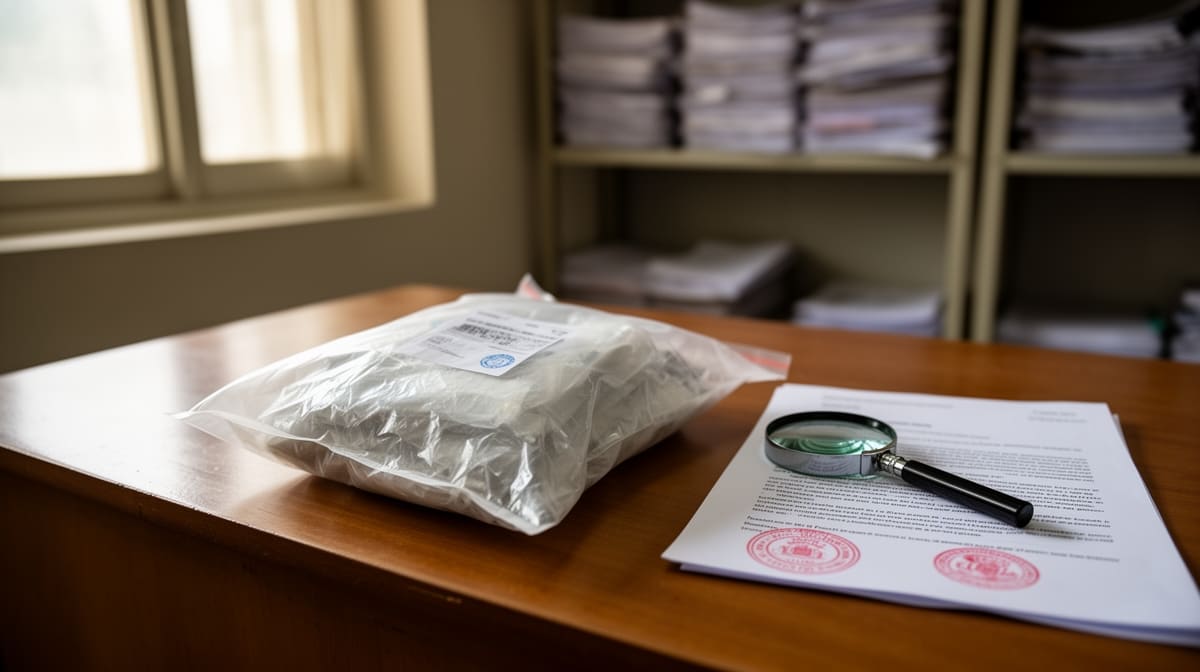
The Madhya Pradesh High Court has set aside convictions under the Narcotic Drugs and Psychotropic Substances Act, 1985, holding that non-compliance with mandatory procedures under Section 52-A renders the prosecution’s primary evidence inadmissible, even where the accused are alleged to have possessed large quantities of contraband. The judgment underscores that procedural rigor is not a technicality but a constitutional safeguard in drug cases carrying severe penalties.
Background & Facts
The Dispute
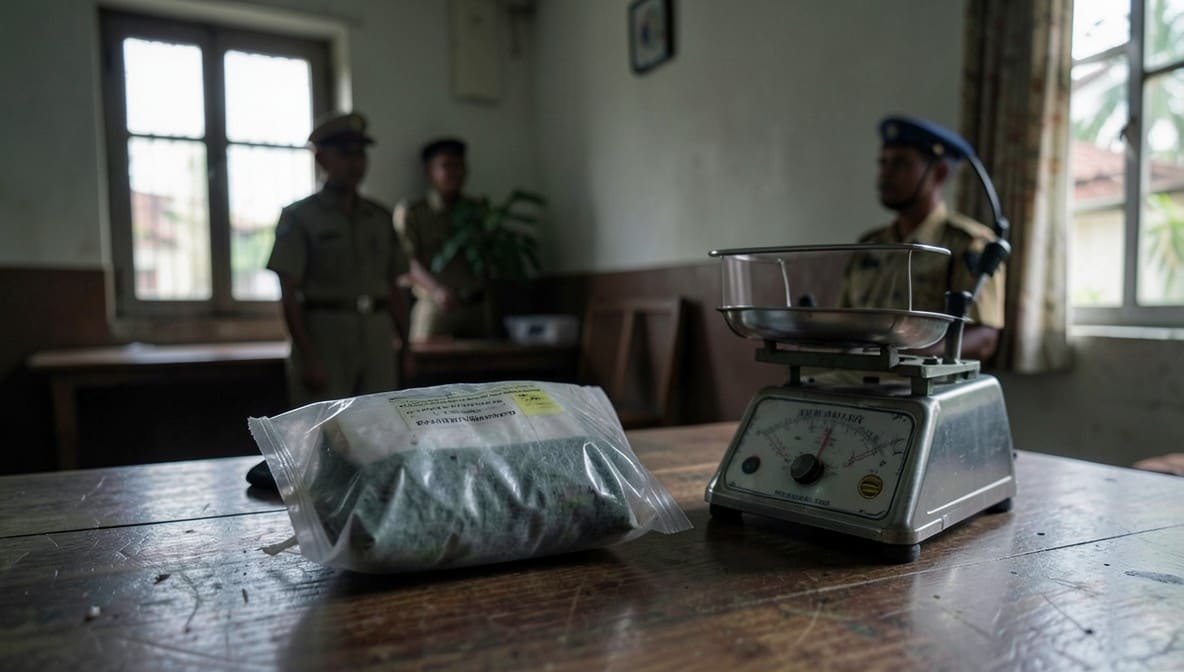
The appellants, Veer Singh and Mukesh Prasad Vishwakarma, were convicted by the Special Judge (NDPS Act), District Rewa, for offences under Section 8 read with Section 20(b)(ii-C) and Section 29 of the NDPS Act. The prosecution alleged that 10 quintals of ganja were recovered from a truck owned by Veer Singh and driven by him, with Mukesh Prasad as a cleaner. The contraband was allegedly found in 50 sacks, each containing 10 packets of 2 kg. The trial court convicted both accused based on recovery, witness testimony, and an FSL report.
Procedural History
- 21 January 2019: Recovery of ganja from truck MP 20 HB 3344 at Chorhata, Rewa.
- 22 January 2019: FIR registered; accused arrested; seizure memo prepared.
- 24 January 2019: 25-gram sample (A-1) sent to FSL Sagar.
- 27 June 2019: Proceedings under Section 52-A conducted before Naib Tehsildar.
- 8 May 2019: Charges framed against appellants and co-accused.
- 20 March 2023: Trial court convicted appellants; acquitted co-accused Manoj Pandey.
- 26 February 2026: Madhya Pradesh High Court allowed appeal and acquitted appellants.
Relief Sought
The appellants sought acquittal on grounds of grave procedural violations under Section 50 and Section 52-A of the NDPS Act, including: joint consent panchnama, mixing of contraband without segregation, failure to obtain magistrate-certified samples, undated documents, non-production of photographs, and non-compliance with the 2022 Seizure Rules. They argued that these lapses rendered the FSL report and seized material unreliable.
The Legal Issue
The central question was whether non-compliance with Section 52-A of the NDPS Act, particularly in the drawing and certification of representative samples before a Magistrate, vitiates the entire prosecution case when such samples constitute primary evidence under the Act.
Arguments Presented
For the Appellant
Counsel for the appellants relied on Simarnjit Singh v. State of Punjab, Mohammed Khalid v. State of Telangana, and Bharat Aambale v. State of Chhattisgarh to argue that Section 52-A mandates that representative samples must be drawn in the presence of a Magistrate and certified by him. The prosecution failed to produce photographs of the seized ganja, did not attach the Rojnamcha Sanha of the Section 52-A proceedings, and the samples were drawn from only one sack out of 25, without verifying the contents of others. The FSL report (Ex. P-41) was thus rendered inadmissible as primary evidence. The appellants also highlighted that the 2022 NDPS Seizure Rules require segregation of similar packets into lots before sampling, which was entirely ignored.
For the Respondent
The State contended that minor discrepancies in procedure cannot vitiate a conviction where the recovery and possession are otherwise established. It relied on State of M.P. v. Dhirendra and Bharat Aambale to argue that the trial court had correctly appreciated the evidence and that the accused failed to demonstrate prejudice from the procedural lapses. The State maintained that the accused had not cross-examined witnesses on these issues and that the overall case remained intact.
The Court's Analysis
The Court undertook a meticulous review of the procedural compliance under Section 52-A and the 2022 NDPS Seizure Rules. It held that Section 52-A(4) explicitly declares the magistrate-certified inventory, photographs, and sample list as primary evidence. The FSL report, which formed the cornerstone of the prosecution’s case, was derived from samples drawn without magistrate supervision, rendering it legally inadmissible.
"The process of drawing of samples has to be in the presence and under the supervision of the Magistrate and the entire exercise has to be certified by him to be correct."
The Court noted that PW-8, the Investigating Officer, admitted that photographs of the Section 52-A proceedings were not annexed to the charge sheet, and the application under Section 52-A (Ex. P-47) was undated. The Magistrate drew samples from only one sack, despite 25 sacks being sealed, and made no effort to verify whether the contents were uniform. This violated Rule 8(2) of the 2022 Rules, which requires representative sampling from each lot.
The Court further observed that the mixing of ganja from 50 sacks into a homogeneous mass without prior segregation into lots of similar packets was a direct contravention of Rule 3(1) and 3(3). The absence of photographs, undated documents, and failure to produce the seized material before the court raised a reasonable doubt about tampering.
The Court distinguished Bharat Aambale, where procedural lapses were held non-fatal due to overwhelming corroborative evidence. Here, the prosecution’s case rested entirely on the FSL report and the seized material, both of which were tainted by non-compliance. The Court emphasized that in cases involving severe punishment, procedural safeguards are not optional but mandatory.
The Verdict
The appeal was allowed. The Madhya Pradesh High Court acquitted both appellants, holding that the failure to comply with Section 52-A rendered the primary evidence inadmissible and the conviction unsustainable. The Court found that the prosecution failed to discharge its burden of proving compliance beyond reasonable doubt, and the procedural defects created a reasonable doubt about the integrity of the seized contraband.
What This Means For Similar Cases
Primary Evidence Must Be Legally Valid
- Practitioners must ensure that Section 52-A proceedings are completed before any sample is drawn, and that the Magistrate certifies the inventory, photographs, and sample list.
- FSL reports derived from uncertified samples are inadmissible as primary evidence under Section 52-A(4).
- Prosecution must exhibit all documents related to Section 52-A proceedings in the charge sheet; failure to do so invites acquittal.
Sampling Must Follow Segregation Rules
- Seized contraband must be classified by physical properties and packed separately before sampling.
- For ganja, samples must be drawn from each lot of up to 40 identical packets, not from a single sack.
- Mixing contraband without segregation violates Rule 3(1) and renders the entire recovery suspect.
Procedural Lapses Are Fatal in NDPS Cases
- Mere assertion of non-compliance by the accused is insufficient, but once raised with specific evidence, the burden shifts to the prosecution to prove substantial compliance.
- Undated documents, missing photographs, and failure to produce seized material before court create adverse inferences.
- Courts will not uphold convictions where the chain of custody is broken or primary evidence is compromised, even if the accused appear guilty.