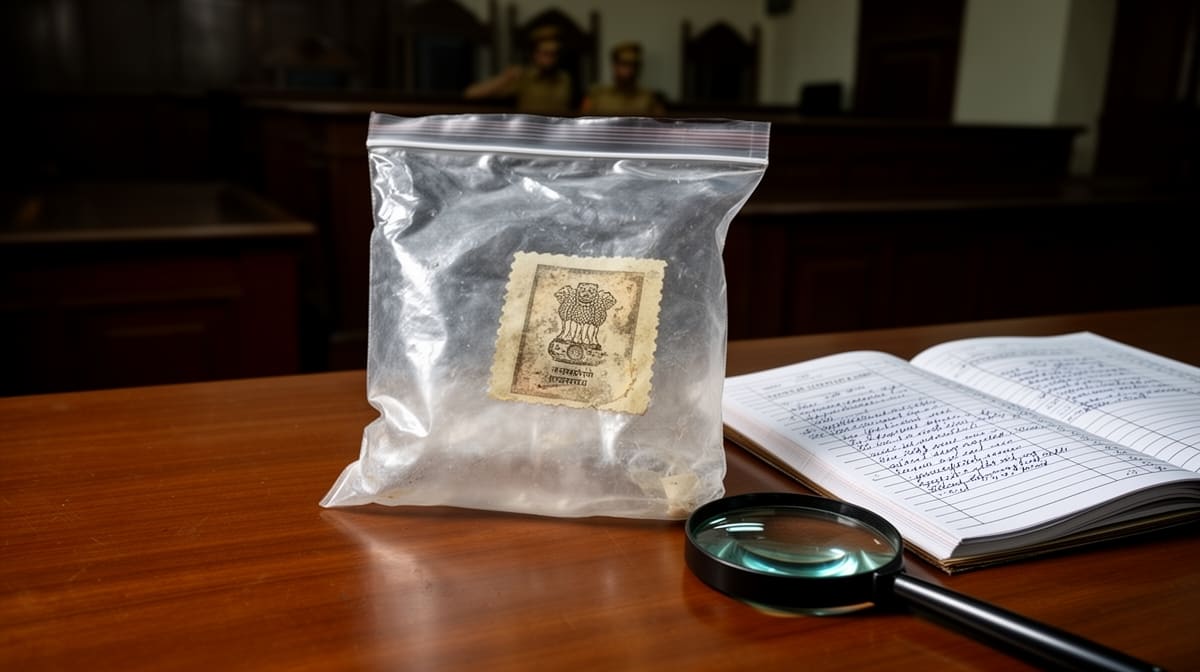
The Gauhati High Court set aside convictions under Section 20(b)(ii)(C) of the NDPS Act, emphasizing that mandatory procedural safeguards under Section 52A - inventory preparation and magistrate-sealed sampling - are essential for sustaining a prosecution.
Background & Facts
The Dispute
The appellants, Hobiqul Islam and Nijut Bormoholia, were convicted by a Special Judge, Udalguri, on 22.12.2022 for possession of cannabis. Both were sentenced to ten years’ rigorous imprisonment and a fine of Rs. 1,00,000 each, with six months’ simple imprisonment for default of fine.
Key Facts
- 15.02.2020: Officer-in-Charge, Mazbat Police Station received reliable information about transportation of ganja in a swift dezire vehicle (Reg. No. AS 12 P 3916) from Lalpani to Mazbat.
- 15.02.2020, 11:00 AM: Naka-checking at Bahipukhuri Line No. 12 intercepted the vehicle; occupants identified as the appellants.
- 15.02.2020, 10:46 AM: PW-5 (S.I. Ruhit Kr. Chetry) led police to the vehicle; six white plastic packets containing approximately 30 kg of suspected ganja were seized.
- 15.02.2020, 2:30 PM: A further 75 kg of suspected ganja was recovered from the residence of Jayanta Daimary at Rowta; the accused could not be apprehended.
- 15.02.2020: FIR (Mazbat PS Case No. 12/2020) was lodged under Section 20(c) NDPS Act.
- 16.02.2020: Seizure lists and contraband were produced before the Magistrate; however, the court later found that the sample was drawn at the police station, not in the presence of the Magistrate.
- 19.02.2020: Forensic laboratory expert (PW-6) confirmed the presence of cannabis in the seized material.
- 22.12.2022: Trial court convicted both appellants under Section 20(b)(ii)(C) NDPS Act, imposing the sentences noted above.
- 30.07.2026: Appeals (Criminal Appeal No. 144/2026 and No. 192/2023) were heard before Hon’ble Mr. Justice Mridul Kumar Kalita.
- 24.08.2026: Judgment delivered, setting aside the convictions.
Procedural History
- 22.12.2022: Special Judge, Udalguri, sentenced appellants under Section 20(b)(ii)(C) NDPS Act.
- 30.07.2026: Appeals filed (Criminal Appeal No. 144/2026 by Hobiqul Islam; Criminal Appeal No. 192/2023 by Nijut Bormoholia).
- 24.08.2026: Gauhati High Court delivered common judgment, allowing both appeals.
The Parties' Positions
- Appellants: Contended that the prosecution failed to produce an inventory as mandated by Section 52A NDPS Act and that samples were not sealed before a Magistrate, rendering the seizure evidence inadmissible.
- State of Assam: Asserted that ocular evidence and testimony of PW-5 and PW-7 established conscious possession of the contraband, satisfying the burden of proof.
Relief Sought
The appellants sought quashing of the conviction and sentence, and their immediate release from custody.
The Legal Issue
What is the effect of non-compliance with the mandatory procedural requirements of Section 52A of the NDPS Act, 1985 - specifically the preparation of an inventory and the sealing of samples in the presence of a Magistrate - on a conviction under Section 20(b)(ii)(C) of the NDPS Act?
Arguments Presented
For the Appellant
The counsel relied on the proposition that Section 52A is mandatory, and any lapse defeats the prosecution’s case. They cited precedents that emphasize strict adherence to inventory and magistrate-sealing requirements, arguing that the prosecution’s failure to produce an inventory and to demonstrate magistrate presence rendered the seizure evidence inadmissible. Consequently, the conviction could not stand.
For the Respondent
The State argued that the testimony of PW-5 and PW-7, together with ocular evidence, established that the appellants were in possession of the seized ganja. It maintained that the lack of a formal inventory did not prejudice the trial, and that the conviction was therefore sustainable.
The Court's Analysis
The Court began by reiterating that Section 52A of the NDPS Act, 1985 imposes mandatory procedural safeguards to ensure the integrity of seized narcotic material. It noted that the Supreme Court, in several rulings, has treated the provisions of Section 52A as jurisdictional - non-compliance cannot be cured by subsequent evidence.
"The provisions contained in Section 52A of the NDPS Act, 1985 are held to be mandatory in nature in several rulings of the Apex Court."
The Court examined the prosecution’s evidence. While PW-5 described the seizure of 30 kg and 75 kg of ganja, the Court found that none of the seizure witnesses (PW-1 to PW-4) could positively attest to the physical recovery of the contraband at the place of seizure. Their signatures on seizure lists were obtained at the police station or at their residences, not at the site of recovery, undermining the credibility of the inventory.
Furthermore, the Court observed that the forensic sample was drawn at the police station, contrary to the statutory requirement that the sample be sealed in the presence of a Magistrate. The absence of a contemporaneous inventory and the failure to demonstrate magistrate-sealing broke the chain of custody, rendering the seized material’s evidentiary value doubtful.
The Court evaluated the State’s reliance on ocular evidence and the testimony of PW-5 and PW-7. It held that while ocular evidence can be persuasive, it cannot substitute for the statutory safeguards designed to prevent tampering. The Court emphasized that the prosecution bears the burden of proving the seizure beyond reasonable doubt, and procedural lapses under Section 52A constitute a fatal defect.
In light of these findings, the Court concluded that the trial court erred in convicting the appellants. The conviction could not be sustained where the mandatory procedural requirements were not fulfilled.
The Verdict
Both appeals are allowed. The Court set aside the impugned judgment dated 22.12.2022 and acquitted the appellants of charges under Section 20(b)(ii)(C) of the NDPS Act, 1985. The appellants are to be released forthwith, and the trial court records are directed to be sent back to the concerned court.
What This Means For Similar Cases
Mandatory Compliance with Section 52A
- Prosecutors must ensure that an inventory of seized narcotics is prepared before the material is taken into custody.
- Samples must be sealed in the presence of a Magistrate; any deviation can invalidate the seizure.
- Failure to comply gives the defence a strong ground to seek acquittal, irrespective of other evidence.
Evidentiary Weight of Ocular Testimony
- Ocular observations alone are insufficient where statutory safeguards are breached.
- Courts will scrutinize the chain of custody and may discount eyewitness accounts if procedural lapses exist.
- Defence counsel should highlight any non-compliance with Section 52A to undermine the prosecution’s case.
Impact on NDPS Prosecutions
- Law enforcement agencies must train officers on the procedural mandates of Section 52A.
- Documentation of inventory and magistrate-sealing must be contemporaneous and verifiable.
- Appeals challenging NDPS convictions will likely succeed if procedural defects are demonstrated.