The Madhya Pradesh High Court has reaffirmed that an insurance company cannot evade statutory liability under the Motor Vehicles Act merely because the offending vehicle lacked a valid fitness certificate, unless the insurer proves a direct causal link between that breach and the accident. This ruling reinforces the protective intent of the Act towards victims of motor accidents and clarifies the limits of policy-based defenses available to insurers.
Background & Facts
The Dispute
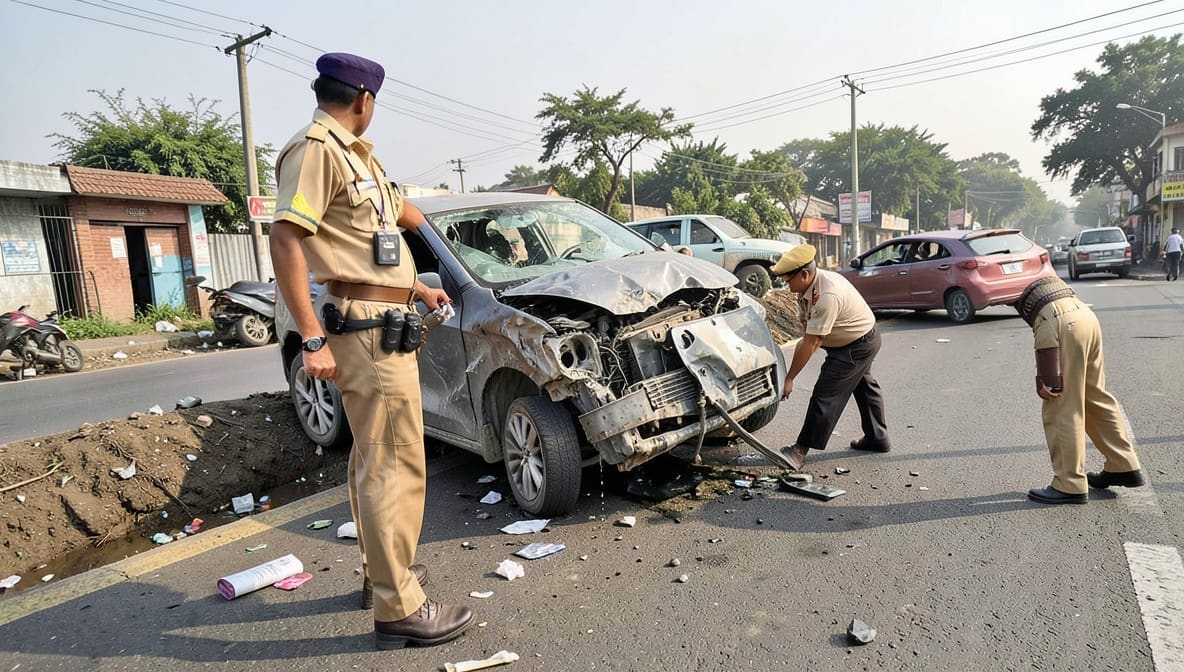
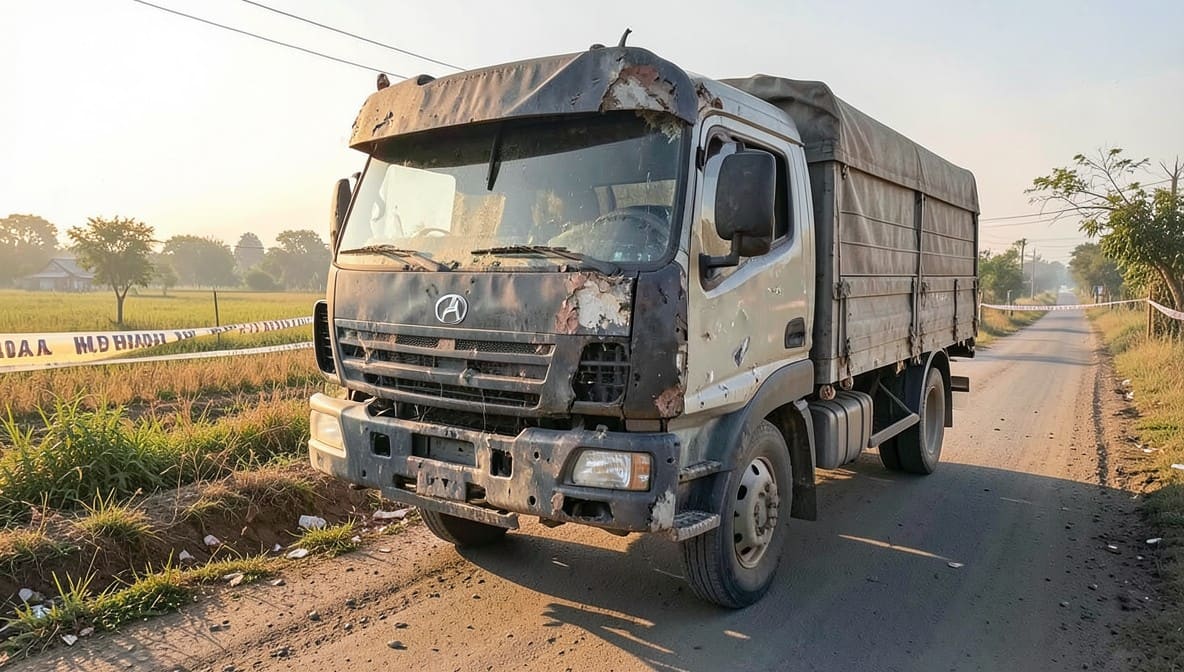
The appellant, The New India Insurance Company Ltd., appealed against the award dated 03.05.2018 passed by the 1st Additional Motor Accident Claims Tribunal, Hoshangabad, in Claim Case No.113/2015. The Tribunal awarded compensation of Rs.34,77,125/- along with interest at 7.5% per annum from the date of filing of the claim petition to the respondents, the legal heirs of Jeevanlal Gaur, who died in a motor accident on 16.02.2015. The accident involved a truck bearing registration No. MP-04-HE-1662, insured by the appellant.
Key Facts
- The accident occurred on 16.02.2015 at Hoshangabad, Madhya Pradesh
- The deceased, Jeevanlal Gaur, was a pedestrian struck by the insured truck
- The truck was insured under a third-party liability policy issued by the appellant
- The appellant challenged the award on grounds that the truck did not possess a valid fitness certificate at the time of the accident
- The FIR was lodged on 17.02.2015, one day after the accident
- The claimants submitted documents including the post-mortem report, police report, and proof of dependency
- The Tribunal accepted the claimants’ evidence and rejected the insurer’s objections regarding delay in FIR and contributory negligence
Procedural History
- 16.02.2015: Motor accident resulting in death of Jeevanlal Gaur
- 17.02.2015: FIR lodged with local police
- 15.03.2015: Claim petition filed before the Motor Accident Claims Tribunal, Hoshangabad (Claim Case No.113/2015)
- 03.05.2018: Tribunal awarded compensation of Rs.34,77,125/- with 7.5% interest from the date of filing
- 20.06.2018: Appellant filed M.A. No.3311/2018 before the High Court of Madhya Pradesh at Jabalpur
- 23.06.2026: Judgment delivered by Justice Ratnesh Chandra Singh Bisen
The Parties' Positions
Appellant (Insurance Company): Argued that the truck’s lack of a valid fitness certificate under Sections 56 and 66 of the Motor Vehicles Act constituted a fundamental breach of policy conditions, thereby absolving the insurer of liability. Also contended that delay in FIR cast doubt on the vehicle’s involvement and that the deceased’s contributory negligence was ignored. Further, claimed the income assessment was inflated and not adjusted for income tax.
Respondents (Claimants): Maintained that the Tribunal correctly appreciated the evidence and that the absence of a fitness certificate, without proof of causal connection to the accident, cannot override statutory liability under Section 149 of the Motor Vehicles Act. Emphasized that the insurer failed to discharge the burden of proving nexus between the breach and the accident.
Relief Sought
The appellant sought setting aside of the Tribunal’s award, exemption from liability, and dismissal of the claim petition. The respondents sought affirmation of the award and dismissal of the appeal.
The Legal Issue
Can an insurance company avoid its statutory liability under Section 149 of the Motor Vehicles Act, 1988, solely on the ground that the offending vehicle lacked a valid fitness certificate, without proving that such absence contributed to the occurrence of the accident?
Arguments Presented
For the Appellant
The appellant relied on Amrit Paul Singh v. Tata AIG General Insurance Co. Ltd. and two prior orders of the same High Court - M.A. No.1707/2013 and M.A. No.1927/2022 - to argue that non-possession of a fitness certificate is a statutory violation under Sections 56 and 66 of the Motor Vehicles Act, which voids the insurance contract. It contended that such a breach is per se a fundamental violation of policy terms, entitling the insurer to deny liability. It further argued that the delay in lodging the FIR and the absence of eyewitnesses undermined the claim’s credibility.
For the Respondent
The respondents relied on Oriental Insurance Co. Ltd. v. Manoj and others, 2013 SCC OnLine MP 10886, to assert that the absence of a fitness certificate, without evidence of its causal connection to the accident, does not absolve the insurer of liability under Section 149. They emphasized that the insurer’s burden is not merely to show a breach, but to prove that the breach materially contributed to the accident. They also argued that the prior decision in Oriental Insurance was binding on coordinate benches and had been consistently followed, including in M.A. No.1044/2018.
The Court's Analysis
The Court undertook a detailed examination of the statutory framework under the Motor Vehicles Act, particularly Sections 56, 66, and 149. It noted that while Sections 56 and 66 mandate fitness certification for commercial vehicles, these are regulatory provisions aimed at road safety, not contractual conditions that automatically vitiate insurance liability.
"The insurer must further establish that such breach had contributed to the occurrence of the accident."
The Court held that the decision in Oriental Insurance Co. Ltd. v. Manoj and others laid down a clear and binding precedent: mere non-compliance with fitness requirements cannot be equated with a fundamental breach of policy terms unless the insurer proves a direct nexus between the defect and the accident. The Court emphasized that the purpose of Section 149 is to ensure compensation to victims, and allowing insurers to escape liability on technical grounds would defeat this legislative intent.
The Court distinguished Amrit Paul Singh, noting that it involved absence of a permit - a different statutory violation with distinct legal consequences under Section 68. It also found the appellant’s reliance on M.A. No.1707/2013 and M.A. No.1927/2022 misplaced, as those cases involved different factual matrices and were not on point.
The Court further held that the delay in lodging the FIR, standing alone, cannot cast doubt on the vehicle’s involvement, especially where the police report and post-mortem were consistent with the claimants’ version. The Tribunal’s assessment of income and dependency was found to be reasonable and supported by evidence.
The Verdict
The appeal was dismissed. The High Court affirmed the award dated 03.05.2018 of the Motor Accident Claims Tribunal, Hoshangabad, which granted compensation of Rs.34,77,125/- with interest at 7.5% per annum from the date of filing of the claim petition. The record was directed to be sent back to the Tribunal. All pending interlocutory applications were disposed of.
What This Means For Similar Cases
Fitness Certificate Absence Alone Is Not a Defense
- Practitioners must now argue that insurers bear the burden of proving causal nexus between a regulatory breach (e.g., expired fitness certificate) and the accident
- Mere non-production of a fitness certificate, without expert testimony or accident reconstruction evidence, is insufficient to deny liability
- Claimants should insist on strict application of Oriental Insurance v. Manoj in all similar cases
Statutory Liability Trumps Technical Policy Defenses
- Section 149 of the Motor Vehicles Act imposes strict liability on insurers for third-party claims
- Policy exclusions based on statutory violations are void if they conflict with the Act’s protective purpose
- Courts will not permit insurers to use administrative non-compliance as a shield against compensation obligations
Delay in FIR Is Not Fatal to Claims
- Delay in lodging FIR, especially in fatal accidents where immediate medical attention is prioritized, is not a ground to reject claims
- Corroborative evidence such as post-mortem reports, police inquest, and witness statements must be weighed holistically
- Tribunals and courts must avoid applying rigid procedural standards that disadvantage victims